{{ site.specific_data.Twitter }}
'No One Is Watching': How Trump Reversed Biden’s Crackdown on Gun Trafficking

'No One Is Watching': How Trump Reversed Biden’s Crackdown on Gun Trafficking

This story was originally published by ProPublica

Marianna Mitchem grew up in the Denver suburbs, where she played high school soccer. One day in April 1999, her team faced off against a nearby rival, Columbine High. The next day, two teenagers went on a shooting rampage at Columbine, killing more than a dozen people.

The massacre left an imprint on Mitchem. After graduating from Providence College, she joined the Bureau of Alcohol, Tobacco, Firearms and Explosives. “Fearing for my friends and watching what was happening — you don’t forget things like that,” she told me. “I wanted to make a difference.”

She started in the ATF’s Denver office as an industry operations investigator, the bureau’s term for inspectors who ensure that firearms dealers are conducting the required background checks on buyers and maintaining sales records. When the bureau found discrepancies, it tended to settle for reprimands and improvement plans, rarely going so far as to revoke a dealer’s license.

In 2021, things started to change. The country was experiencing a surge of deadly violence, with homicides up more than a third since 2019, and the administration of President Joe Biden was desperate to reverse the trend. For years, data had shown that a large share of guns used in shootings came from a small fraction of dealers, and that guns that were trafficked — sold by stores to straw purchasers (people other than the intended users) or resold on the street — were far more likely to be used in shootings.

Acting on this data, the administration in June 2021 announced what became known as “zero tolerance”: Dealers found to be willfully violating the law would lose their licenses, period. Revocations spiked, from fewer than 50 in 2019, 2020 and 2021 to a record 181 in 2023.

Also in 2021, Biden’s attorney general, Merrick Garland, started urging federal prosecutors to prioritize gun violence. A year later, Congress passed a law that added a firearms trafficking conspiracy charge to the federal criminal code, a crucial new tool for prosecutors.

After 2021, the homicide rate started falling, which criminologists attributed to several factors, including repair of the social fabric since the coronavirus pandemic and a closing of the breach in police-community relations that followed the 2020 murder of George Floyd. One other factor got less attention: the clampdown on the illegal flow of firearms.

The Biden administration struggled to broadcast its gains on public safety, and Donald Trump won election in 2024 partly by vowing to restore order. By the time Trump reentered the White House, Mitchem had risen to associate assistant director for industry operations, overseeing inspectors across the country. “We were making incredible progress on trafficking, on violent crime,” she said late last year.

But the Trump administration, driven both by gun-lobby advocacy and its own political priorities, quickly set about undoing much of its predecessor’s moves to combat gun violence. It repealed the zero-tolerance policy, going so far as to invite revoked dealers to reapply for new licenses. It shifted hundreds of ATF agents to immigration work. And it scaled back on prosecutions for gun trafficking. The White House declined to comment, referring questions to the ATF and the Department of Justice.

The homicide rate fell further last year, but criminologists warn against complacency, because the illicit gun trade is a classic pipeline problem: The harm can take a while to make itself felt. Research has found that the typical “time to crime” for trafficked firearms ranges up to about three years, which means that any positive lag of the anti-trafficking efforts of the Biden years would still be in effect now, with any negative effects of the Trump pullback lying in the years to come.

Among those now sounding the alarm is Mitchem. Dismayed at the policy reversal, she left the ATF last spring, after 21 years, and joined Everytown, the gun-safety group founded by Michael Bloomberg.

“Just because no one is watching the trafficking pipelines right now doesn’t mean guns aren’t flowing through it. It just means they’re not being intercepted,” she told me.

“And as you walk away from that, and you don’t have your focus on that anymore,” she added, “that pipeline is going to be flowing, and we are going to start to see the violent crime impact from that over time.”

Read NowShow less
How White House Steered $620M Pentagon Contract To Company Linked To Trump Jr.

How White House Steered $620M Pentagon Contract To Company Linked To Trump Jr.

This story was originally published by ProPublica

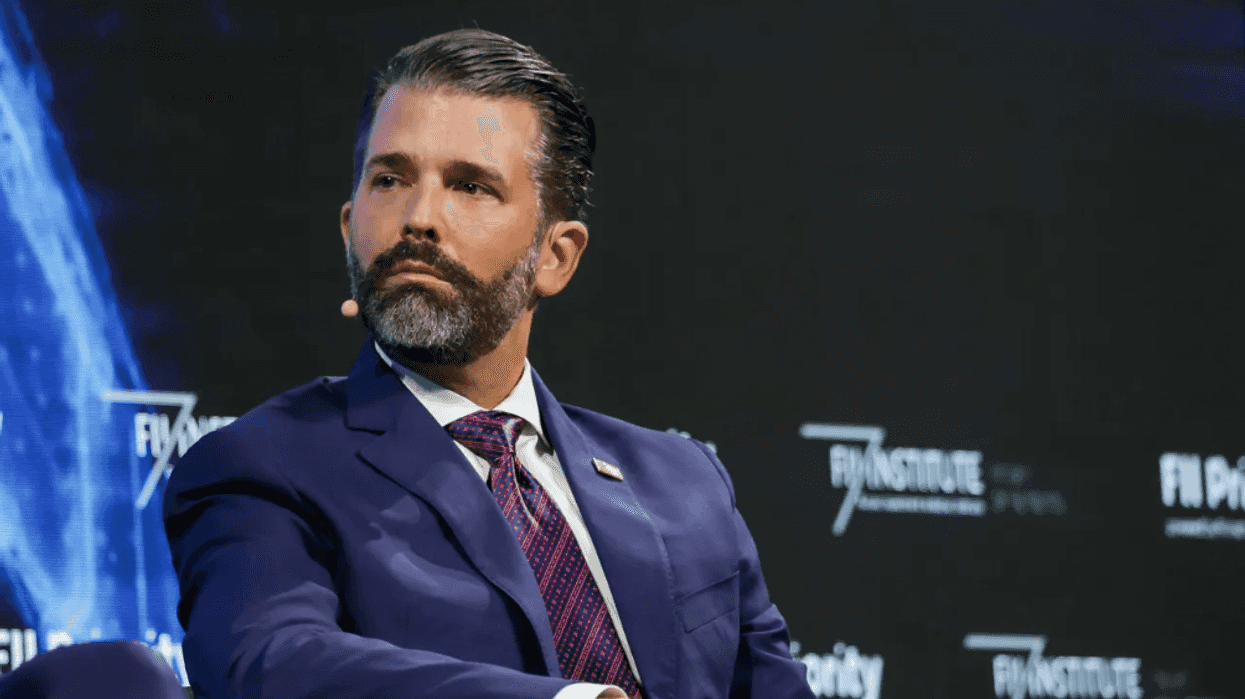
When the Pentagon announced a $620 million loan last year to a small North Carolina startup linked to Donald Trump Jr., defense officials and the company tried to tamp down suspicions of cronyism.

The president’s eldest son said through a spokesperson that he wasn’t involved. The Pentagon said Trump Jr. played no role in the record-setting deal. And the startup’s founder told reporters that his company, Vulcan Elements, received no political favoritism.

But interviews and Defense Department records reviewed by ProPublica show that the request to loan hundreds of millions of dollars to the firm linked to Trump Jr. was made by Peter Navarro, a White House adviser to President Donald Trump and a friend of Trump Jr.’s.

Of the dozens of companies the Pentagon was considering funding at the time, Vulcan’s was the only deal initiated by a top aide to the president, said an official at the Pentagon who was not authorized to speak publicly.

After defense officials got the White House request, they asked Pentagon staff to move at an unusually rapid pace, said another person who was involved in the deal at the Pentagon but not authorized to speak about it. The staff worked late nights and with little sleep to get the loan through in a matter of weeks, the source said.

“The call came from the White House: We have to get this done,” the person said.

The deal is one of many actions by the Trump administration that have helped companies in which the Trump family holds stakes. Government contracts and other benefits have gone to various Trump-linked companies, prompting allegations of self-dealing by Democratic lawmakers and good government experts. But ProPublica’s reporting on the Vulcan loan represents the first time the awarding of a contract from a federal agency has been directly linked to White House intervention.

The loan was a massive financial commitment from the Pentagon in its effort to fund companies that could help the U.S. reduce dependence on China’s critical mineral supply chains. The deal was a dramatic win for Vulcan, a North Carolina rare-earth magnet company launched just two years earlier. Estimates of its valuation grew tenfold after the deal was announced. It was also a win for Trump Jr.’s venture capital firm, which took a stake of undisclosed size in Vulcan about three months before the Pentagon announced the deal.

And there may be more good news on the way for the president’s eldest son. Among other companies under review for a Pentagon loan was a drone parts manufacturer that Trump Jr. advises and owns a stake in, according to one of the defense officials who spoke to ProPublica.

Navarro, who served as trade adviser in Trump’s first term, and Trump Jr. have formed a close bond in recent years. The president’s son visited Navarro in prison while he served time for defying a subpoena from lawmakers investigating the Jan. 6, 2021, Capitol riot. Trump Jr. was one of the small group of people Navarro dedicated his latest book to for having “my back when it was against the wall.” And a week before the Vulcan deal was announced, Trump Jr. hosted Navarro — now the president’s senior counselor for trade and manufacturing — on his streaming show, encouraging his nearly 2 million subscribers to buy Navarro’s book. That interview was not long after word came down from Navarro to Pentagon staff to make the massive loan to Vulcan, one of the defense officials involved in the deal said.

Navarro did not respond to questions from ProPublica sent to him directly. Neither did Vulcan. A White House spokesperson said in a statement that the administration is working “in the best interest of the American people,” adding, “The President’s entire team, including Senior Counselor Navarro and officials at the Department of War, is working together and with private industry to secure America’s critical mineral supply chain at Trump Speed.” Trump Jr.’s spokesperson said the president’s son does not discuss companies he has invested in with federal government officials and did not speak to Navarro about Vulcan. He “has no knowledge about how this deal came together,” the spokesperson said. A spokesperson for 1789 Capital, the venture firm where Trump Jr. is a partner, said it also played no role in Vulcan getting the loan and did not learn about the deal before it was public.

“No company receives preferential treatment,” a Pentagon spokesperson said. “Outside affiliations, investors, or political connections play absolutely no role in the Department’s funding decisions.”

Richard Painter, the chief White House ethics lawyer during the George W. Bush administration, said aides to the president should not be intervening in contracting and lending decisions by agencies, particularly in matters that financially benefit the president’s family.

“This is our money they’re spending,” Painter said. “This is corruption we pay for.”

Read NowShow less
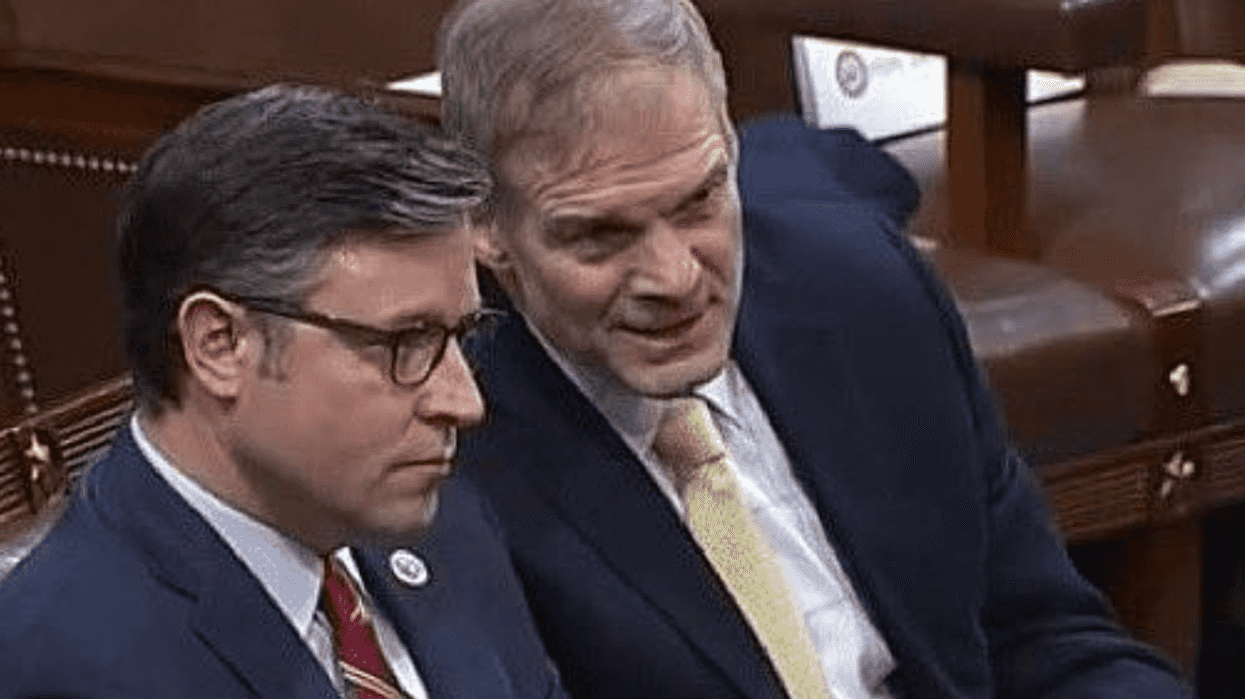
mike johnson and jim jordan

Big Oil Funds Project Teaching Judges 'Healthy Skepticism' of Climate Science

This story was originally published by Pro Publica

For many months, conservative lawmakers and political operatives have been targeting the scientists and lawyers behind the Climate Judiciary Project, a program meant to educate the courts about climate science, alleging that their effort constitutes a conspiracy to influence federal judges and persuade them to rule against the oil industry.

Now, just as congressional investigators are escalating a formal inquiry into the project, a separate program closely aligned with the fossil fuel industry and free-market conservatives is hosting a symposium for 150 judges in Nashville, Tennessee. The program, run by the Antonin Scalia Law School at George Mason University, also aims to educate judges, but in a way that prioritizes American business interests and questions climate science.

The dueling efforts come as a number of significant lawsuits seeking to hold fossil fuel companies accountable for climate damages are making their way through the courts and as oil-industry-aligned attacks on climate policies, and the legal arguments supporting them, have been sharply increasing.

ProPublica reported in April that political operatives connected to the conservative activist Leonard Leo were coordinating an effort across 11 states to pass laws shielding fossil fuel companies from liability for climate harm. In the past three weeks, similar liability waiver bills have been introduced federally in both the House and the Senate. Last week the Florida attorney general’s office launched an investigation into alleged judicial influence by the organization that oversees the Climate Judiciary Project, the Environmental Law Institute, a nonpartisan legal scholarship group funded until recently by the Environmental Protection Agency.

These developments come on the heels of a campaign last winter to get the Federal Judicial Center, the publishing body for the federal court system, to retract a roughly 90-page chapter devoted to climate science from the latest volume of its technical manual for judges. Twenty-two Republican attorneys general wrote to Rep. Jim Jordan of Ohio, the Republican chair of the House Judiciary Committee, demanding that the committee investigate the center’s publication of material about how to weigh scientific evidence about climate and the weather because the chapter’s authors appeared to be biased.

In their letter, they noted the authors work for Columbia University’s Sabin Center for Climate Change Law and alleged the chapter was influenced by Michael Burger, the executive director of the center who works closely with the law firm Sher Edling, which represents several climate plaintiffs. The Republican attorneys general also noted that some staff at the Sabin Center work with the Environmental Law Institute and the Climate Judiciary Project. Although the chapter had been peer reviewed and approved by the Federal Judicial Center, as well as by the National Academies of Sciences, Engineering and Medicine, the center retracted the climate chapter in February.

On April 28, Jordan went a step further, issuing letters accusing Burger, the Environmental Law Institute and Sher Edling of bias, conspiracy and collusion. Jordan demanded that the three parties produce private communications, receipts and records of funding sources, and that the recipients sit for interviews before the committee.

The Sabin Center, Jordan wrote, is “producing materials to be used to bias federal judges about novel climate-related legal theories” and coordinating to bring climate-related litigation to court. The activity raises questions about “the integrity and independence of the judicial process” and “ex parte contact with courts,” Jordan wrote, referring to the improper conduct of contacting a judge without opposing counsel present to argue issues related to a pending case.

Neither Sher Edling, the Sabin Center nor Burger responded to a request for comment. A representative for the Environmental Law Institute stated in an email that the Climate Judiciary Project “does not participate in litigation, coordinate with any parties related to any litigation, or advise judges on how they should rule on any issue or in any case. The goal of CJP is to provide judges with the tools they need to understand climate science and how it arises in the law.”

Jordan’s office replied to a request for comment by reasserting the statements in the letters it sent, and it did not respond to a detailed list of questions.

Amid the allegations of impropriety and conflicts of interest though, the program at George Mason University has scarcely been noticed.

The George Mason conference, called the “Judicial Symposium on Scientific Methodology, Expert Testimony, and the Judicial Role,” opened the day after Jordan sent out his letters and will continue through Saturday, May 2. It is run by the university’s Law and Economics Center, which oversees a project called the Judicial Education Program. The center is funded in part by ExxonMobil, which is a defendant in several of the climate lawsuits. ExxonMobil did not respond to a request for comment.

The conference includes speakers who have filed amicus briefs — filings by people who aren’t part of the case but have a strong interest in its outcome — in favor of the oil industry in several of those cases, as well as at least one lawyer who has represented fossil fuel companies in court. The reading assignments prepared for the judges include a Substack post by a notable climate contrarian accusing the authors of the retracted climate chapter in the federal court’s reference manual of including material by Burger and hiding his authorship. They also include a law journal argument that a key tenet of climate science used to identify the cause of disasters should be inadmissible in their courtrooms. One session, titled “Debates on the trustworthiness of tools to evaluate science in the courtroom,” focuses entirely on the federal courts’ reference manual.

In an emailed response to ProPublica, Donald Kochan, the executive director of George Mason’s Law and Economics Center, which organized the event, presented the symposium as a robust and objective discussion. The program’s advisory board, he wrote, is a politically and jurisprudentially diverse group including “some of the most progressive jurists in the country, including on climate issues.” Kochan, who did not respond to a list of specific questions, added that lectures are by leading academics on science and law and that he invited the authors of the judicial reference manual to speak but they declined, as did several others who he suggested would have represented more centrist viewpoints on the climate issue.

The conference is one of dozens of meetings, retreats and “intimate weeklong gatherings” that are regularly hosted by the Law and Economics Center as part of an initiative to instill free-market values and greater knowledge of the economic consequences of policy in judicial decision-making. In 2016 the law school renamed itself after the former Supreme Court Justice Antonin Scalia and the center expanded with $30 million in gifts, adding faculty and scholarships and launching additional “colloquia.” The center today runs several parallel initiatives under the umbrella of the Judicial Education Program, each aimed at gathering judges together and educating them. The symposium on science and evidence is one of these events.

According to an internal fundraising document from 2020 obtained by ProPublica, the gatherings are often luxurious all-expenses-paid affairs, created to foster lasting relationships and opportunities to network with judges. The document included a solicitation for more than $930,000 sent by the center to the Charles Koch Foundation, a libertarian organization that provides grants to universities and scholars. At the time of the proposal, more than 5,000 judges representing all 50 states had attended at least one of the organization’s programs, the document stated.

The goal of the symposium, according to the document, is to sway judges toward a libertarian economic viewpoint in their rulings — the very sort of “biasing” that Jordan accused the Sabin Center and the Climate Judiciary Project of.

“The goal of this project is to expose judges to the intellectual history of the role of capitalism, economic freedom, and a constitutionally limited government as fundamental features of a liberal society,” the document says. It is also to establish a community of like-minded justices “with synergistic effects on the judiciary as a whole” and to influence the outcome of cases that come before the courts. Judges, the fundraising proposal continues, “urgently need to cultivate an understanding” of economic analysis and its relevance to the legal system if they “are to issue decisions that advance the rule of law and America’s free enterprise system.”

According to the George Mason University website, the Law and Economics Center’s 2025 funders include DonorsTrust, a dark money pass-through organization meant to shield the identity of contributors. DonorsTrust is often used by organizations tied to Leo, who brought George Mason a $20 million gift, in addition to $10 million from the Charles Koch Foundation, that made expansion of the law school’s program possible.

This weekend’s symposium in Nashville is one of the most significant parts of the center’s outreach to justices. According to the 2020 fundraising letter, the goal of such gatherings is to challenge the status quo on science. The conference “will give judges a rounded understanding and healthy skepticism of the invocations of ‘science’ that lurk in the background of lawsuits they are hearing,” the center’s then-director wrote, and it will help judges understand that “so much of what passes as ‘science’ for leverage purposes never has to face tests for rigor, reliability and quality in front of a neutral arbiter.”

One of the symposium’s events prominently features Philip Goldberg, a managing partner at the law firm Shook, Hardy & Bacon and the special counsel to the National Association of Manufacturers’ policy lobbying arm, the Manufacturers’ Accountability Project, which the group describes as “the leading voice of manufacturers in the courts.” MAP, as it is called, has publicly rejected the claims in a landmark case that the city of Honolulu brought against Shell, ExxonMobil and other oil companies alleging they misrepresented the risks of using their fuels and are responsible for the damages they have caused. Goldberg authored a brief for the group that was submitted to the Supreme Court on the case in 2024.

Goldberg, who did not respond to a request for comment, has also authored briefs in climate liability cases brought by the city of Baltimore against BP and other fossil fuel companies — a case won by the defendants in March — as well as a case brought by Boulder County in Colorado against Suncor Energy and ExxonMobil, which alleges the companies misrepresented the risks of using fossil fuels. Lawyers from Shook, Hardy & Bacon are also present at the conference. Other lawyers at the firm wrote a brief in favor of Chevron in a case brought by Plaquemines Parish, Louisiana. (The oil companies dispute the allegations and each of these cases is ongoing.)

For its assigned reading for a session on the judicial manual, the symposium offered an article by the political scientist Roger Pielke Jr., a senior fellow at the conservative American Enterprise Institute. Pielke wrote that he found evidence that the true authorship of a significant part of the climate chapter in the reference manual was obscured. He used the Claude artificial intelligence program to run an analysis comparing the chapter’s text to a paper co-authored by Sabin’s Burger and said he found a correlation.

“Michael Burger did not write any of the text in the climate science chapter nor did he have any control over the content and scope,” one of the chapter’s two authors, Jessica Wentz, who has denied the chapter was biased, wrote to ProPublica. The other author did not respond, and Burger declined to comment.

The conference did not offer readings from the climate chapter of the manual itself, which is still available on the website of the National Academies of Sciences, Engineering and Medicine. Nor did it offer readings from the United Nations climate science authorities or climate-related readings from any other peer-reviewed scientific journal.

In its final session, the symposium features attorney Matthew Wickersham of the firm Alston & Bird, which has served as counsel for Chevron in several lawsuits. Wickersham did not respond to a request for comment. The only reading assigned to justices for that session is a paper Wickersham wrote in the Rutgers Law Record in 2025 about why attribution science — the field of study that makes it possible to link climate disasters to specific amounts of pollution and their sources — should never be admitted in court.

Far-Right Pastor Runs D.C. 'Boarding House' For GOP Legislators -- Including Speaker

Far-Right Pastor Runs D.C. 'Boarding House' For GOP Legislators -- Including Speaker

ProPublica is a nonprofit newsroom that investigates abuses of power. Sign up to receive our biggest stories as soon as they’re published.

For a project explicitly designed to influence Congress, Steve Berger’s operation has left a scant paper trail. The archconservative evangelical pastor, who started a D.C. nonprofit a few years ago to shape national policy, does not file lobbying reports. His group does not show up in campaign finance records.

There is a simple way to glimpse his effort’s expanding reach in Washington, however: Pay attention to who is walking out the front door of his Capitol Hill townhouse. New evidence suggests Berger may be running what amounts to a group house for conservative lawmakers, with multiple members of Congress living with him at his organization’s headquarters.

The six-bedroom, $3.7 million home is owned by a multimillion-dollar Republican donor.

Rep. Andy Ogles, a Tennessee Republican who is among President Donald Trump’s most aggressive allies in Congress, has been at the house on multiple days over the past two weeks, according to people who live in the area. Video reviewed by ProPublica showed Ogles leaving the townhouse with bags on February 27. As he left, he locked up the front door and pocketed the keys to the house.

As ProPublica reported last week, House Speaker Mike Johnson is living in the townhouse. And Dan Bishop, a former congressman from North Carolina now nominated for a powerful post in Trump’s White House, appears to have lived there until recently as well.

Berger has said his goal is to “disciple” members of Congress so what “they learn is then translated into policy.” He has claimed to have personally spurred legislation, saying a senator privately credited him with inspiring a bill.

Berger, Bishop and Ogles did not respond to requests for comment. A spokesperson for Johnson previously said the speaker pays fair-market rent for the part of the townhouse he occupies but didn’t answer questions about the specific rate. He said Johnson has not spoken to the pastor about “any matter of public policy.”

Ogles is in only his third year in Congress, but he’s drawn attention for his bombastic displays of fealty to Trump. He recently introduced a resolution to amend the Constitution so that Trump could serve a third term as president. He’s filed articles of impeachment against multiple judges who’ve ruled against the new administration. (Last week, Elon Musk posted a video of Ogles touting his impeachment efforts, set to the beat from the rap song “Shook Ones, Pt. II.”)

Ogles’ short tenure is also notable for the pace of scandal that’s followed it. He has faced allegations that he inflated his resume, claiming alternatively to have been an economist, a member of law enforcement and an expert on international sex trafficking, NewsChannel 5 in Nashville reported. (Ogles has acknowledged at least one mistake on his resume but said that “my body of work speaks for itself.”)

Last year, the FBI seized his phone during an investigation and obtained a search warrant to review records associated with his personal email address. Federal investigators were seeking evidence related to potential campaign finance violations, according to a court filing. The scope of the FBI investigation remains unclear.

Perhaps no one is more responsible for Ogles’ rise in politics than Lee Beaman, the Tennessee businessman who owns the Capitol Hill townhouse. When Ogles announced a short-lived Senate bid in 2017, Beaman said he planned to raise $4 million to support the run. Beaman, whose wealth derives from a large car dealership chain, then served as campaign treasurer in Ogles’ successful 2022 run for the House.

Beaman and Berger have publicly advocated together for numerous specific policy changes, in areas including foreign affairs, fuel efficiency standards and removing barriers to firing federal employees. After the 2020 election, they both signed a letter declaring that Trump was the rightful winner and calling for Congress to overturn the results. (Beaman did not respond to requests for comment. ProPublica could not determine whether he and the pastor have discussed policy issues with Ogles during his time in Congress.)

In sermons, Berger has devoted long stretches to attacking the separation of church and state, as well as COVID-19 vaccines. The pastor used violent language to describe his disdain for “LGBTQ+ Pride” parades and “drag queen story hour” during an interview for a podcast in 2022, according to unpublished footage obtained by ProPublica.

“If I was left to myself, I’d take a baseball bat and beat the hell out of every single one of them. And not feel bad about it,” Berger said. “I have to go, ‘You know what? That’s probably not the will of God, is it?’ And obviously it’s not.”

Beyond his ownership of the townhouse, Beaman’s role in the pastor’s influence project is unclear. After Beaman purchased the house in 2021, a lawyer sought to change it from a single-family dwelling to a “boarding house/rooming house,” according to Washington, D.C., property records. Around that time, Berger’s nonprofit group, Ambassador Services International, registered the home as its address.

Members of Congress are allowed to live anywhere, as long as they pay fair-market rent, experts said. Discounts on rent are generally seen as improper gifts and prohibited by House ethics rules.

Beaman has said he got to know Ogles when Ogles was the Tennessee director of Americans for Prosperity, part of the Koch brothers’ political network. Beaman and Ogles joined forces to fight a mass transit project in Nashville and reportedly worked together on a successful effort to repeal the estate tax in their home state. After leaving the Koch network, Ogles served four years as the mayor of a Middle Tennessee county with a population of roughly 100,000. He held that role until 2022, when he was elected to Congress.

Ogles’ 2022 campaign was the subject of a blistering House ethics report released this year. The nonpartisan Office of Congressional Ethics concluded that there is “substantial reason to believe” that Ogles’ campaign had accepted illegally large donations and then falsely reported that the funds had come from Ogles himself. Ogles has said he is “confident that any reporting problem was at worst an honest mistake.” (Beaman was not named in the report and has not been accused of wrongdoing.)

The report said that Ogles refused to cooperate with the investigation. It recommended that the House Ethics Committee issue a subpoena to the congressman.

Reprinted with permission from Pro Publica

'A Tax Cut For Tax Cheats': DOGE's IRS Firings Burn Hundreds Of Millions In Revenue

'A Tax Cut For Tax Cheats': DOGE's IRS Firings Burn Hundreds Of Millions In Revenue

Dave Nershi was finalizing a report he’d worked on for months when an ominous email appeared in his inbox.

Nershi had worked as a general engineer for the Internal Revenue Service for about nine months. He was one of hundreds of specialists inside the IRS who used their technical expertise — Nershi’s background is in chemical and nuclear engineering — to audit byzantine tax returns filed by large corporations and wealthy individuals. Until recently, the IRS had a shortage of these experts, and many complex tax returns went unscrutinized. With the help of people like Nershi, the IRS could recoup millions and sometimes more than a billion dollars on a single tax return.

But on February 20, three months shy of finishing his probationary period and becoming a full-time employee, the IRS fired him. As a Navy veteran, Nershi loved working in public service and had hoped he might be spared from any mass firings. The unsigned email said he’d been fired for performance, even though he had received high marks from his manager.

As for the report he was finalizing, it would have probably recouped many times more than the low-six-figure salary he earned. The report would now go unfinished.

Nershi agreed that the federal government could be more lean and efficient, but he was befuddled by the decision to fire scores of highly skilled IRS specialists like him who, even by the logic of Elon Musk’s Department of Government Efficiency initiative, were an asset to the government. “By firing us, you’re going to cut down on how much revenue the country brings in,” Nershi said in an interview. “This was not about saving money.”

Since taking office, President Donald Trump and his billionaire top adviser Musk have launched an all-out blitz to cut costs and shrink the federal government. Trump, Musk and other administration leaders not only say the U.S. government is bloated and inefficient, but they also see it as a bastion of political opposition, calling it the “deep state.”

The strategy used by the Trump administration to reduce the size of government has been indiscriminate and far-reaching, meant to oust civil servants as fast as possible in as many agencies as possible while demoralizing the workers that remain on the job. As Russell Vought, director of the Trump White House’s Office of Management and Budget and an architect of Project 2025, put it in a speech first reported by ProPublica and Documented: “We want the bureaucrats to be traumatically affected. When they wake up in the morning, we want them to not want to go to work because they are increasingly viewed as the villains.”

One tactic used by the administration is to target probationary workers who are easier to fire because they have fewer civil service protections. Probationary, in this context, means only that the employees are new to their roles, not that they’re newbies or underperformers. ProPublica found that the latest IRS firings swept up highly skilled and experienced probationary workers who had recently joined the government or had moved to a new position from a different agency.

In late February, the Trump administration began firing more than 6,000 IRS employees. The agency has been hit especially hard, current and former employees said, because it spent 2023 preparing to hire thousands of new enforcement and customer service personnel and had only started hiring and training those workers at any scale in 2024, meaning many of those new employees were still in their probationary period. Nershi was hired as part of this wave, in the spring of last year. The boost came after Congress had underfunded the agency for much of the past decade, which led to chronic staffing shortages, dismal customer service, and plummeting audit rates, especially for taxpayers who earned $500,000 or more a year.

The administration doesn’t appear to want to stop there. It is drafting plans to cut its entire workforce in half, according to reports.

Unlike with other federal agencies, cutting the IRS means the government collects less money and finds fewer tax abuses. Economic studies have shown that for every dollar spent by the IRS, the agency returns between $5 and $12, depending on how much income the taxpayer declared. A 2024 report by the nonpartisan Government Accountability Office found that the IRS found savings of $13,000 for every additional hour spent auditing the tax returns of very wealthy taxpayers — a return on investment that “would leave Wall Street hedge fund managers drooling,” in the words of the Institute on Taxation and Economic Policy.

John Koskinen, who led the IRS from 2013 to 2017, said in an interview that the widespread cuts to the IRS make no sense if Trump and Musk genuinely care about fiscal responsibility and rooting out waste, fraud and abuse. “What I’ve never understood is if you’re interested in the deficit and curbing it, why would you cut back on the revenue side?” Koskinen said.

Neither the IRS nor the White House responded to requests for comment. Last month, Musk asked his followers on X, the platform he owns, whether they would “like @DOGE to audit the IRS,” referring to the U.S. DOGE Service team of lawyers and engineers led by him. DOGE employees have sought to gain access to IRS taxpayer data in an attempt to “shine a light on the fraud,” according to a White House spokesman.

For this story, ProPublica interviewed more than a dozen current and former IRS employees. Most of those people worked in the agency’s Large Business and International (LB&I) division, which audits companies with more than $10 million in assets and high-income individuals. Within the IRS, the LB&I division has the highest return on investment, and the widespread cuts there put in stark relief the human and financial cost of the Trump administration’s approach to slashing government functions in the name of saving money and combating waste and fraud.

According to current and former LB&I employees, the taxpayers they audited included pharmaceutical companies, oil and gas companies, construction firms and major technology corporations, as well as more obscure private corporations and high-net-worth individuals. None of the IRS employees who spoke to ProPublica would disclose specific taxpayer information, citing privacy laws.

With the recent influx in funding, employees said, the leadership of LB&I had pushed to hire not only more revenue agents and appraisers but also specialized employees such as petroleum engineers, computer scientists and experts in corporate partnerships. These employees, usually known internally as general engineers, consulted on complicated tax returns and helped determine whether taxpayers properly claimed certain credits or other tax breaks.

This work happened in cases where major companies claimed a hefty research tax credit, which is a legitimate avenue for seeking tax relief but can also be improperly used. Highly skilled appraisers have also recouped huge savings in cases involving notorious tax schemes, such as what’s known as a syndicated conservation easement — a break abused so often that both congressional Democrats and Republicans have criticized it, while the IRS has included it on its list of the “Dirty Dozen” tax scams.

“These are cases where revenue agents don't have the technical expertise,” said one IRS engineer who is still employed at the agency and who, like other IRS employees, wasn’t authorized to speak to the media. “That’s what we do. We are working on things where expertise is absolutely necessary.”

Current and former IRS employees told ProPublica that the agency had expended a huge amount of resources to recruit and train new specialists in recent years. Vanessa Rollins, an engineer in the IRS’ Chicago office who was recently fired, said probationary employees in LB&I outnumbered full-time staffers in her office. Much of her team’s work centered on training and mentorship for the waves of new employees — most of whom were recently fired. “The entire office had been oriented around bringing us in and getting us trained,” Rollins said.

These specialists said they earned higher salaries compared with many other IRS employees. But the money these specialists recouped as a result of their work was orders of magnitude greater than what they cost. The current engineer told ProPublica that they estimated their team of less than 10 people had brought in $5 billion in adjusted tax returns over the past four years. (By contrast, a Wall Street Journal analysis published on February 22 found that DOGE had found savings of $2.6 billion over the next year, far less than the $55 billion claimed by DOGE itself.)

A former LB&I revenue agent added that their work didn’t always lead to the IRS recouping money from a taxpayer; sometimes, they audited a return only to find that the taxpayer was owed more money than they had expected.

“The IRS’ mission is to treat taxpayers fairly so they pay the tax they legally owe, including making sure they’re not paying any more than legally required,” the former revenue agent said.

Notwithstanding its return on investment and the sense of duty espoused by its employees, LB&I was hit especially hard by the most recent wave of firings, employees said. According to the current IRS engineer, the Trump administration appears to have eliminated the jobs of about 120 LB&I engineers out of a total of roughly 260. The person said they had heard more terminations were expected soon. The acting IRS chief and a longtime agency leader, Doug O’Donnell, announced his retirement amid the firings.

Several LB&I employees told ProPublica that the mass layoffs had been ordered from a very high level and that several layers of managers had no idea they were coming or what to expect. The cuts, employees said, did not appear to distinguish between employees with certain specialties or performance levels, but instead focused solely on whether they were on probationary status. “It didn't matter the skill set. If they were under a year, they got cut,” another current LB&I employee told ProPublica.

The current and former IRS employees said the firings and the administration’s deferred resignation offer led to situations that have wiped out decades of experience and institutional knowledge that can’t easily be replaced. Jack McCumber was an LB&I senior appraiser in Seattle who got fired about six weeks before the end of his probationary status. He said not only did he lose his job, but the veteran appraiser who was his mentor took early retirement. McCumber and his mentor often worked on syndicated conservative easement cases that could recoup tens and even hundreds of millions of dollars. “They’re pushing out the experienced people, and they’re pushing out people like me,” McCumber said. “It’s a double whammy.”

The result, employees and experts said, will mean corporations and wealthy individuals face far less scrutiny when they file their tax returns, leading to more risk-taking and less money flowing into the U.S. treasury.

“Large businesses and higher-wealth individuals are where you have the most sophisticated taxpayers and the most sophisticated tax preparers and lawyers who are attuned to pushing the envelope as much as they can,” said Koskinen, the former IRS commissioner. “When those audits stop because there isn't anybody to do them, people will say, ‘Hey, I did that last year, I'll do it again this year.’”

“When you hamstring the IRS,” Koskinen added. “it’s just a tax cut for tax cheats.”

ProPublica is a nonprofit newsroom that investigates abuses of power. Sign up to receive our biggest stories as soon as they’re published.

Reprinted with permission from ProPublica

Joni Ernst’s Unethical Romances With Military Lobbyists Provoke Concern

Joni Ernst’s Unethical Romances With Military Lobbyists Provoke Concern

ProPublica is a nonprofit newsroom that investigates abuses of power. Sign up to receive our biggest stories as soon as they’re published.

Earlier this year, the Air Force revealed that the general who oversaw its lobbying before Congress had inappropriate romantic relationships with five women, including three who worked on Capitol Hill.

Maj. Gen. Christopher Finerty’s colleagues told investigators the relationships were “highly inappropriate” as they could give the Air Force undue influence in Congress. “I honestly felt sick to my stomach,” one said, according to a report about the investigation, “because it just felt so sleazy.”

The Air Force inspector general’s report redacted the names of the women who worked on the Hill.

But one of the women whose relationship with Finerty was scrutinized by the inspector general was Sen. Joni Ernst, according to two sources with knowledge of the investigation. The Iowa Republican and combat veteran is one of the most influential voices on the Hill about the military, and she sits on the Senate’s Armed Services Committee, which oversees the Pentagon and plays a crucial role in setting its annual budget.

Three other sources told ProPublica that around 2019 Ernst had a previous romantic relationship with a legislative affairs official for a different branch of the military, the Navy.

Ernst and the officials were not married at the time and Senate rules do not bar lawmakers from entering into romantic relationships with lobbyists or other legislative advocates. But ethics experts say such relationships can create a conflict of interest, and other lawmakers have been criticized for such behavior in the past.

A former legislative affairs official for the military told ProPublica that people in that role aren’t officially “lobbyists but for all intent and purposes that’s their job. ... From an ethics standpoint, it’s severely problematic.” A former Air Force officer who worked for Finerty said the perception in the office was that his relationship with Ernst “absolutely gave the Air Force undue influence.

”Six sources who worked for the Air Force or in Congress told ProPublica that they had heard about a relationship between Ernst and Finerty and there had been concerns about it for years. The sources spoke on condition of anonymity because they did not have permission to speak publicly or feared for their jobs. One source said that they were told about the relationship by one of the two participants. Two sources said they heard from witnesses interviewed by the inspector general that Ernst was a focus of the investigation.

A spokesperson for Ernst would not address whether the senator had any relationships with military legislative liaisons but said the lawmaker maintained her independence: “The fake news media is clearly too busy gossiping to report the real news that Senator Ernst is focused on cutting waste at the Pentagon. Her votes and work in the Senate are guided by the voices of Iowans who elected her and her constitutional duty alone. Any insinuation otherwise by tabloid ‘journalism’ is a slanderous lie — full stop.”

Finerty’s lawyer also declined to say whether the general had a romantic relationship with Ernst while he was advocating for the Air Force in Congress. “The IG report found no evidence suggesting anything remotely approaching either conflict of interest or undue influence involving General Finerty and anyone on Capitol Hill. Further, the IG report found no law, rule, policy or guidance prohibited any of General Finerty’s relationships. Any suggestion to the contrary would be defamatory.” (The inspector general report said Finerty “wrongfully engaged in inappropriate relationships with multiple individuals” in violation of the code of military justice.) In his interview with the inspector general, according to the report, Finerty defended relationships between people in his office and “members on the Hill” — a term used to describe members of Congress.

The 41-page report documenting the inspector general’s investigation of Finerty was completed in September 2023 but was shared with Congress, and then the public, earlier this year in response to records requests. (The investigation summary, posted on the Air Force’s website, was reported first by Politico, without any mention of Ernst’s involvement.)

At the time of the report’s release to Congress in early January, Ernst’s influence over the Pentagon was on full display, as she sat at the center of one of the Trump administration’s most contentious confirmation battles. Ernst had made statements suggesting she had reservations about President Donald Trump’s nominee for defense secretary, Pete Hegseth, and though she had later made encouraging statements, she had refused to formally back him.

At the time of the report’s release to Congress in early January, Ernst’s influence over the Pentagon was on full display, as she sat at the center of one of the Trump administration’s most contentious confirmation battles. Ernst had made statements suggesting she had reservations about President Donald Trump’s nominee for defense secretary, Pete Hegseth, and though she had later made encouraging statements, she had refused to formally back him.

Serving in the Iowa Army National Guard during the Iraq War, Ernst is the Senate’s first female combat veteran and has pushed to reform the military’s handling of sexual assault cases. Hegseth faced scrutiny over past allegations of excessive drinking and sexual assault, which he denied, as well as criticism for comments he made against allowing women in combat. Then in mid-January, Ernst reversed course under pressure from Trump allies and formally endorsed Hegseth. Her backing was considered pivotal in reviving what had appeared to be a flailing nomination.

The report about Finerty is heavily redacted but provided the following details about the inspector general’s findings. Two of the five women worked for the Pentagon. They include a civilian employee who was married to another officer and an Air Force enlisted member significantly lower down the chain of command than Finerty. Finerty interacted with the three other women on Capitol Hill as part of his legislative affairs work, “mixing his professional and personal roles, thus creating the perception of a conflict of interest.” Finerty sexted two of those women in 2021. He sexted and had an “intimate relationship” with the third, though the report does not say exactly when.

The nature of his relationship with the women varied, from suggestive messages to graphic sexting and photos to physical sex, according to the report. Sources told ProPublica that the inspector general asked witnesses about Ernst, but because of the redactions in the report, it’s unclear which sections, if any, refer to the senator.

The report includes a stark example of Finerty’s legislative advocacy overlapping with his romantic relationship with one of the women on Capitol Hill.

In June 2021, Finerty texted the woman “I was distracted by you being distracted.” Then he sent her a list of “top 5 things to protect if possible,” including a particular fighter jet, radar technology and a system to improve interoperability across the military’s branches.

“What distraction?” the woman texted back. “If I was [redacted] would it be distracting?” She followed up with a series of what the inspector general report described as pornographic pictures.

Finerty told investigators that his romantic relationships with the women on Capitol Hill were proper because all participants were unmarried.

“Those weren’t Chris Finerty’s personal interest items. Those were the five things that were in the President’s Budget that we’re charged to go up there and ensure that we get across the finish line,” he said, according to the report. “I wasn’t saying hey, do me a personal favor and protect these five things. It was, these are the five things that the Air Force has in the President’s Budget that we’re trying to do that we need your help with.”

Many of Finerty’s colleagues who were also working in military legislative affairs took a more negative view. In interviews with investigators, they expressed concerns about the relationships leading to undue influence, other military branches perceiving the Air Force as getting preferential treatment, and other congressional offices worrying they were less likely to receive sensitive information.

The inspector general’s investigation found “several exchanges between Maj Gen Finerty and the women regarding legislative matters” but “no evidence of favors or exchanging of sensitive information by either party.”

Regarding one of the Hill relationships, a colleague of Finerty’s told investigators, “Was there a perception in my office that it was unethical? Yes.” The colleague reported it affected morale and people were “talking about it all the time.”

Justin Elliott and Andy Kroll contributed reporting. Alex Mierjeski contributed research.

Reprinted with permission from Pro Publica


Texas Banned Abortion -- Then Deadly Sepsis Among Pregnant Women Soared

Texas Banned Abortion -- Then Deadly Sepsis Among Pregnant Women Soared

Reprinted with permission from ProPublica

By Lizzie Presser, Andrea Suozzo, Sophie Chou and Kavitha Surana

Pregnancy became far more dangerous in Texas after the state banned abortion in 2021, ProPublica found in a first-of-its-kind data analysis.

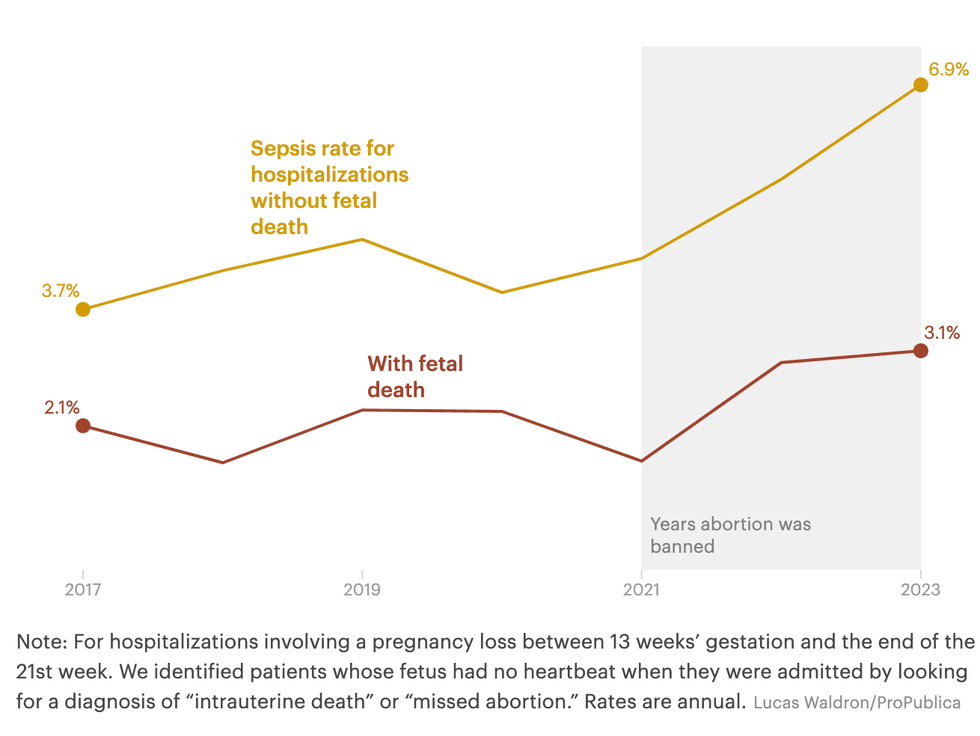
The rate of sepsis shot up more than 50 percent for women hospitalized when they lost their pregnancies in the second trimester, ProPublica found.

The surge in this life-threatening condition, caused by infection, was most pronounced for patients whose fetus may still have had a heartbeat when they arrived at the hospital.

ProPublica previously reported on two such cases in which miscarrying women in Texas died of sepsis after doctors delayed evacuating their uteruses. Doing so would have been considered an abortion.

The new reporting shows that, after the state banned abortion, dozens more pregnant and postpartum women died in Texas hospitals than had in pre-pandemic years, which ProPublica used as a baseline to avoid COVID-19-related distortions. As the maternal mortality rate dropped nationally, ProPublica found, it rose substantially in Texas.

ProPublica’s analysis is the most detailed look yet at a rise in life-threatening complications for women losing a pregnancy after Texas banned abortion. It raises concerns that the same pattern may be occurring in more than a dozen other states with similar bans.

To chart the scope of pregnancy-related infections, ProPublica purchased and analyzed seven years of Texas’ hospital discharge data.

When abortion was legal in Texas, the rate of sepsis for women hospitalized during second-trimester pregnancy loss was relatively steady. Then the state’s first abortion ban went into effect and the rate of sepsis spiked.


Chart via Pro Publica

“This is exactly what we predicted would happen and exactly what we were afraid would happen,” said Dr. Lorie Harper, a maternal-fetal medicine specialist in Austin.

She and a dozen other maternal health experts who reviewed ProPublica’s findings say they add to the evidence that the state’s abortion ban is leading to dangerous delays in care. Texas law threatens up to 99 years in prison for providing an abortion. Though the ban includes an exception for a “medical emergency,” the definition of what constitutes an emergency has been subject to confusion and debate.

Many said the ban is the only explanation they could see for the sudden jump in sepsis cases.

The new analysis comes as Texas legislators consider amending the abortion ban in the wake of ProPublica’s previous reporting, and as doctors, federal lawmakers and the state’s largest newspaper have urged Texas officials to review pregnancy-related deaths from the first full years after the ban was enacted; the state maternal mortality review committee has, thus far, opted not to examine the death data for 2022 and 2023.

The standard of care for miscarrying patients in the second trimester is to offer to empty the uterus, according to leading medical organizations, which can lower the risk of contracting an infection and developing sepsis. If a patient’s water breaks or her cervix opens, that risk rises with every passing hour.

Sepsis can lead to permanent kidney failure, brain damage and dangerous blood clotting. Nationally, it is one of the leading causes of deaths in hospitals.

While some Texas doctors have told ProPublica they regularly offer to empty the uterus in these cases, others say their hospitals don’t allow them to do so until the fetal heartbeat stops or they can document a life-threatening complication.

Last year, ProPublica reported on the repercussions of these kinds of delays.

Forced to wait 40 hours as her dying fetus pressed against her cervix, Josseli Barnica risked a dangerous infection. Doctors didn’t induce labor until her fetus no longer had a heartbeat.

Physicians waited, too, as Nevaeh Crain’s organs failed. Before rushing the pregnant teenager to the operating room, they ran an extra test to confirm her fetus had expired.

Both women had hoped to carry their pregnancies to term, both suffered miscarriages and both died.

In response to their stories, 111 doctors wrote a letter to the Legislature saying the abortion ban kept them from providing lifesaving care and demanding a change.

“It’s black and white in the law, but it’s very vague when you’re in the moment,” said Dr. Tony Ogburn, an OB-GYN in San Antonio. When the fetus has a heartbeat, doctors can’t simply follow the usual evidence-based guidelines, he said. Instead, there is a legal obligation to assess whether a woman’s condition is dire enough to merit an abortion under a prosecutor’s interpretation of the law.

Some prominent Texas Republicans who helped write and pass Texas’ strict abortion bans have recently said that the law should be changed to protect women’s lives — though it’s unclear if proposed amendments will receive a public hearing during the current legislative session.

ProPublica’s findings indicate that the law is getting in the way of providing abortions that can protect against life-threatening infections, said Dr. Sarah Prager, a professor of obstetrics and gynecology at the University of Washington.

“We have the ability to intervene before these patients get sick,” she said. “This is evidence that we aren’t doing that.”

A New View

Health experts, specially equipped to study maternal deaths, sit on federal agencies and state-appointed review panels. But, as ProPublica previously reported, none of these bodies have systematically assessed the consequences of abortion bans.

So ProPublica set out to do so, first by investigating preventable deaths, and now by using data to take a broader view, looking at what happened in Texas hospitals after the state banned abortion, in particular as women faced miscarriages.

“It is kind of mindblowing that even before the bans researchers barely looked into complications of pregnancy loss in hospitals,” said perinatal epidemiologist Alison Gemmill, an expert on miscarriage at Johns Hopkins Bloomberg School of Public Health.

In consultation with Gemmill and more than a dozen other maternal health researchers and obstetricians, ProPublica built a framework for analyzing Texas hospital discharge data from 2017 to 2023, the most recent full year available. This billing data, kept by hospitals and collected by the state, catalogues what happens in every hospitalization. It is anonymized but remarkable in its granularity, including details such as gestational age, complications and procedures.

To study infections during pregnancy loss, ProPublica identified all hospitalizations that included miscarriages, terminations and births from the beginning of the second trimester up to 22 weeks’ gestation, before fetal viability. Since first-trimester miscarriage is often managed in an outpatient setting, ProPublica did not include those cases in this analysis.

When looking at stays for second-trimester pregnancy loss, ProPublica found a relatively steady rate of sepsis before Texas made abortion a crime. In late 2021, the state made it a civil offense to end a pregnancy after a fetus developed cardiac activity, and in the summer of 2022, the state made it a felony to terminate any pregnancy, with few exceptions.

In 2021, 67 patients who lost a pregnancy in the second trimester were diagnosed with sepsis — as in the previous years, they accounted for about three percent of the hospitalizations.

In 2022, that number jumped to 90.

The following year, it climbed to 99.

ProPublica’s analysis was conservative and likely missed some cases. It doesn’t capture what happened to miscarrying patients who were turned away from emergency rooms or those like Barnica who were made to wait, then discharged home before they returned with sepsis.

Our analysis showed that patients who were admitted while their fetus was still believed to have a heartbeat were far more likely to develop sepsis.

“What this says to me is that once a fetal death is diagnosed, doctors can appropriately take care of someone to prevent sepsis, but if the fetus still has a heartbeat, then they aren’t able to act and the risk for maternal sepsis goes way up,” said Dr. Kristina Adams Waldorf, professor of obstetrics and gynecology at UW Medicine and an expert in pregnancy complications. “This is needlessly putting a woman’s life in danger.”

Studies indicate that waiting to evacuate the uterus increases rates of sepsis for patients whose water breaks before the fetus can survive outside the womb, a condition called previable premature rupture of membranes or PPROM. Because of the risk of infection, major medical organizations like the Society for Maternal-Fetal Medicine and the American College of Obstetricians and Gynecologists advise doctors to always offer abortions.

Researchers in Dallas and Houston examined cases of previable pregnancy complications at their local hospitals after the state ban. Both studies found that when women weren’t able to end their pregnancies right away, they were significantly more likely to develop dangerous conditions than before the ban. The study of the University of Texas Health Science Center in Houston, not yet published, found that the rate of sepsis tripled after the ban.

Dr. Emily Fahl, a co-author of that study, recently urged professional societies and state medical boards to “explicitly clarify” that doctors need to recommend evacuating the uterus for patients with a PPROM diagnosis, even with no sign of infection, according to MedPage Today.

UTHealth Houston did not respond to several requests for comment.

ProPublica zoomed out beyond the second trimester to look at deaths of all women hospitalized in Texas while pregnant or up to six weeks postpartum. Deaths peaked amid the COVID-19 pandemic, and most patients who died then were diagnosed with the virus. But looking at the two years before the pandemic, 2018 and 2019, and the two most recent years of data, 2022 and 2023, there is a clear shift:

In the two earlier years, there were 79 maternal hospital deaths.

In the two most recent, there were 120.

Caitlin Myers, an economist at Middlebury College, said it’s crucial to examine these deaths from different angles, as ProPublica has done. Data analyses help illuminate trends but can’t reveal a patient’s history or wishes, as a detailed medical chart might. Diving deep into individual cases can reveal the timeline of treatment and how doctors behave. “When you see them together, it tells a really compelling story that people are dying as a result of the abortion restrictions.”

Texas has no plans to scrutinize those deaths. The chair of the maternal mortality review committee said the group is skipping data from 2022 and 2023 and picking up its analysis with 2024 to get a more “contemporary” view of deaths. She added that the decision had “absolutely no nefarious intent.”

“The fact that Texas is not reviewing those years does a disservice to the 120 individuals you identified who died inpatient and were pregnant,” said Dr. Jonas Swartz, an assistant professor of obstetrics and gynecology at Duke University. “And that is an underestimation of the number of people who died.”

The committee is also prohibited by law from reviewing cases that include an abortion medication or procedure, which can also be used during miscarriages. In response to ProPublica’s reporting, a Democratic state representative filed a bill to overturn that prohibition and order those cases to be examined.

Because not all maternal deaths take place in hospitals and the Texas hospital data did not include cause of death, ProPublica also looked at data compiled from death certificates by the Centers for Disease Control and Prevention.

It shows that the rate of maternal deaths in Texas rose 33% between 2019 and 2023 even as the national rate fell by 7.5%.

A New Imperative

Texas’ abortion law is under review this legislative session. Even the party that championed it and the senator who authored it say they would consider a change.

On a local television program last month, Republican Lt. Gov. Dan Patrick said the law should be amended.

“I do think we need to clarify any language,” Patrick said, “so that doctors are not in fear of being penalized if they think the life of the mother is at risk.”

State Sen. Bryan Hughes, a Republican who once argued that the abortion ban he wrote was “plenty clear,” has since reversed course, saying he is working to propose language to amend the ban. Texas Gov. Greg Abbott told ProPublica, through a spokesperson, that he would “look forward to seeing any clarifying language in any proposed legislation from the Legislature.”

Patrick, Hughes and Attorney General Ken Paxton did not respond to ProPublica’s questions about what changes they would like to see made this session and did not comment on findings ProPublica shared.

In response to ProPublica’s analysis, Abbott’s office said in a statement that Texas law is clear and pointed to Texas health department data that shows 135 abortions have been performed since Roe was overturned without resulting in prosecution. The vast majority of the abortions were categorized as responses to an emergency but the data did not specify what kind. Only five were solely to “preserve [the] health of [the] woman.”

At least seven bills related to repealing or creating new exceptions to the abortion laws have been introduced in Texas.

Doctors told ProPublica they would most like to see the bans overturned so all patients could receive standard care, including the option to terminate pregnancies for health considerations, regardless of whether it’s an emergency. No list of exceptions can encompass every situation and risk a patient might face, obstetricians said.

“A list of exceptions is always going to exclude people,” said Dallas OB-GYN Dr. Allison Gilbert.

It seems unlikely a Republican-controlled Legislature would overturn the ban. Gilbert and others are advocating to at least end criminal and civil penalties for doctors. Though no doctor has been prosecuted for violating the ban, the mere threat of criminal charges continues to obstruct care, she said.

In 2023, an amendment was passed that permitted physicians to intervene when patients are diagnosed with PPROM. But it is written in such a way that still exposes physicians to prosecution; it allows them to offer an “affirmative defense,” like arguing self-defense when charged with murder.

“Anything that can reduce those severe penalties that have really chilled physicians in Texas would be helpful,” Gilbert said. “I think it will mean that we save patients’ lives.”

Rep. Mihaela Plesa, a Democrat from outside Dallas who filed a bill to create new health exceptions, said that ProPublica’s latest findings were “infuriating.”

She is urging Republicans to bring the bills to a hearing for debate and discussion.

Last session, there were no public hearings, even as women have sued the state after being denied treatment for their pregnancy complications. This year, though some Republicans appeared open to change, others have gone a different direction.

One recently filed a bill that would allow the state to charge women who get an abortion with homicide, for which they could face the death penalty.