Tag: pope francis
'The Least Of Us': Catholic Teachings On Life And Trump's Death Penalty Spree

'The Least Of Us': Catholic Teachings On Life And Trump's Death Penalty Spree

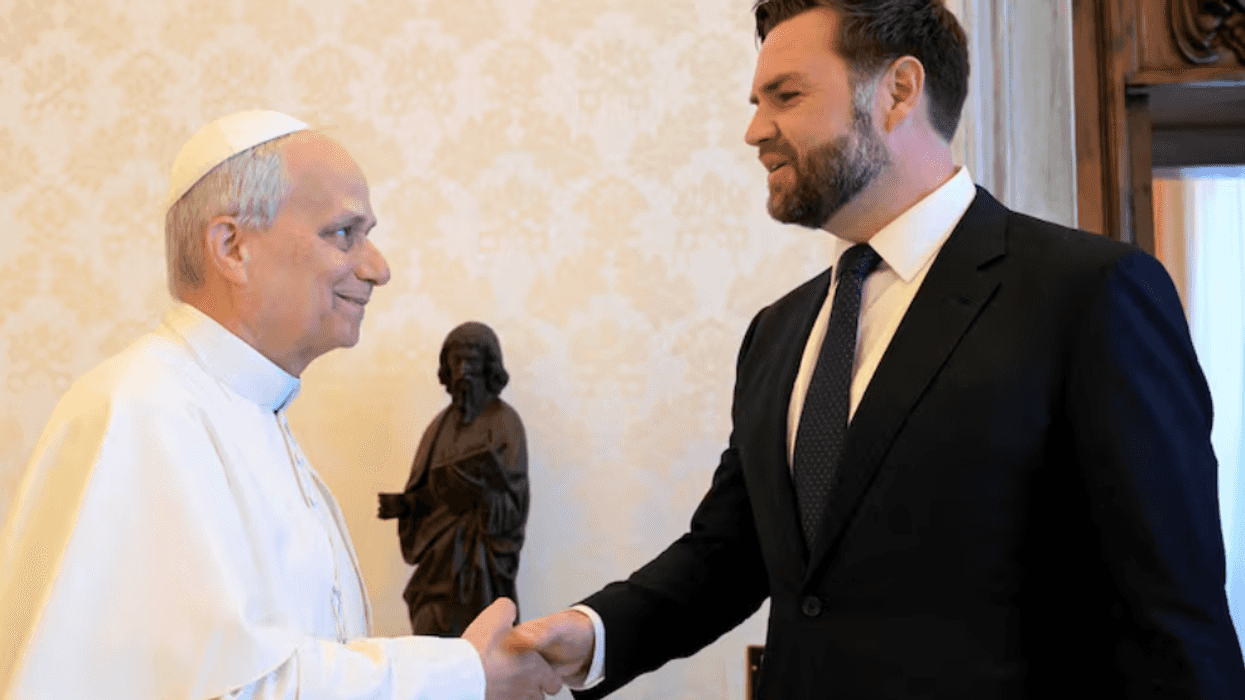
There was certainly a lot on the agenda when Pope Leo XIV recently met with Marco Rubio: the pontiff sharing the message of the gospel; the secretary of State, a Catholic, trying his best, no doubt, to make peace after the American president dragged the pope into a back-and-forth on war and peace.

And, by official accounts, it went well.

They met “to discuss the situation in the Middle East and topics of mutual interest in the Western Hemisphere,” according to the State Department. “The meeting underscored the strong relationship between the United States and the Holy See and their shared commitment to promoting peace and human dignity.”

Human dignity.

I didn’t hear whether the conversation ever turned to the Trump administration’s recent pledge to ramp up executions for those who’ve received the death penalty after being convicted of federal crimes, a move signaled by Donald Trump on his first day back in office.

The Justice Department, in a statement released in April, said that “among the actions taken are readopting the lethal injection protocol utilized during the first Trump Administration, expanding the protocol to include additional manners of execution such as the firing squad, and streamlining internal processes to expedite death penalty cases.”

Other proposals included expanding the kinds of crimes eligible for the ultimate penalty.

To get around state laws that forbid the death penalty or certain methods of carrying it out, the Justice Department proposed finding a state that would allow it to do whatever it wants. Mostly, the current administration seemed eager to reverse the checks put in place by the Biden administration and its Attorney General Merrick B. Garland.

The Catholic Church is pretty clear on this.

Language in the Catechism of the Catholic Church at one time had approved, though hardly enthusiastically, the death penalty in “very rare, if not practically nonexistent” circumstances. But in 2018, under Pope Francis’ leadership, it was revised to read that “a new understanding has emerged of the significance of penal sanctions imposed by the state,” thus “the death penalty is inadmissible,” as reported in the Vatican News.

Pope Leo, the first American pope, strongly affirmed that “the dignity of the person is not lost even after very serious crimes are committed,” in a video message released in April to a gathering at DePaul University marking the 15th anniversary of the abolition of the death penalty in Illinois.

Believing in the sanctity of life from conception to natural death is not so difficult to understand when you’re talking about the innocence of those yet to be born. Even most women and men who believe in choice will admit that from the moment the doctor first announced, “You’re going to have a baby,” it was a baby, with a life of future possibility.

The challenge is when that life does not come with a clean slate, when the person with life hanging in the balance is a prisoner on death row, convicted of a heinous crime, awaiting an ultimate punishment deemed justified by a court and jury of his or her peers.

But following Catholic teachings has always been a challenge, especially when political leaders you support may contradict the message you hear at Sunday Mass.

Bolstered by friendly Supreme Court rulings, the Trump team has never hesitated to blur the line between church and state. And though polls show general public disapproval of this secular and religious mix, I don’t expect the administration’s actions to change, not as long as white evangelicals remain loyal.

Considering this wearing of religion on its collective sleeve, it’s interesting that I haven’t heard a peep from vocal Catholics in the administration on the death penalty pronouncement. Vice President JD Vance, who writes and speaks often about his conversion to the faith, spends more time lecturing the Augustinian Pope Leo on the fine points of Catholic teachings — and the words of St. Augustine.

I wonder why he chose a faith he so often disagrees with.

I’d like to ask if their consciences are clear about the clash between what their faith demands and what their administration requires.

I don’t expect anyone in an administration that is rushing prisoners to execution and shortening the time they and their lawyers have to fight to be moved by inequalities in the criminal justice system.

It’s no coincidence that the poor, minorities, the marginalized, and those described in religious texts as “the least of us” are the ones who most often end up without adequate representation or attention in the courts or on death row.

When I interviewed anti-death penalty activist Sister Helen Prejean, author of Dead Man Walking, on the Slate “What Next” podcast several years ago, she spoke about an upcoming execution spree in the state of Oklahoma. She was just one voice for men with severe mental illness, personal histories of childhood abuse, inadequate legal representation, or claims of innocence.

“The least of us.”

Somehow, I feel her voice is one Pope Leo, Pope Francis and the Catholics I grew up around would recognize.

Whether someone lives or dies should be the most important question of all, I reason, especially for those who profess that all life is sacred.

Mary C. Curtis has worked at The New York Times, The Baltimore Sun, The Charlotte Observer, as national correspondent for Politics Daily, and is a senior facilitator with The OpEd Project. She is host of the CQ Roll Call “Equal Time with Mary C. Curtis” podcast. Follow her on X @mcurtisnc3.

Reprinted with permission from Roll Call

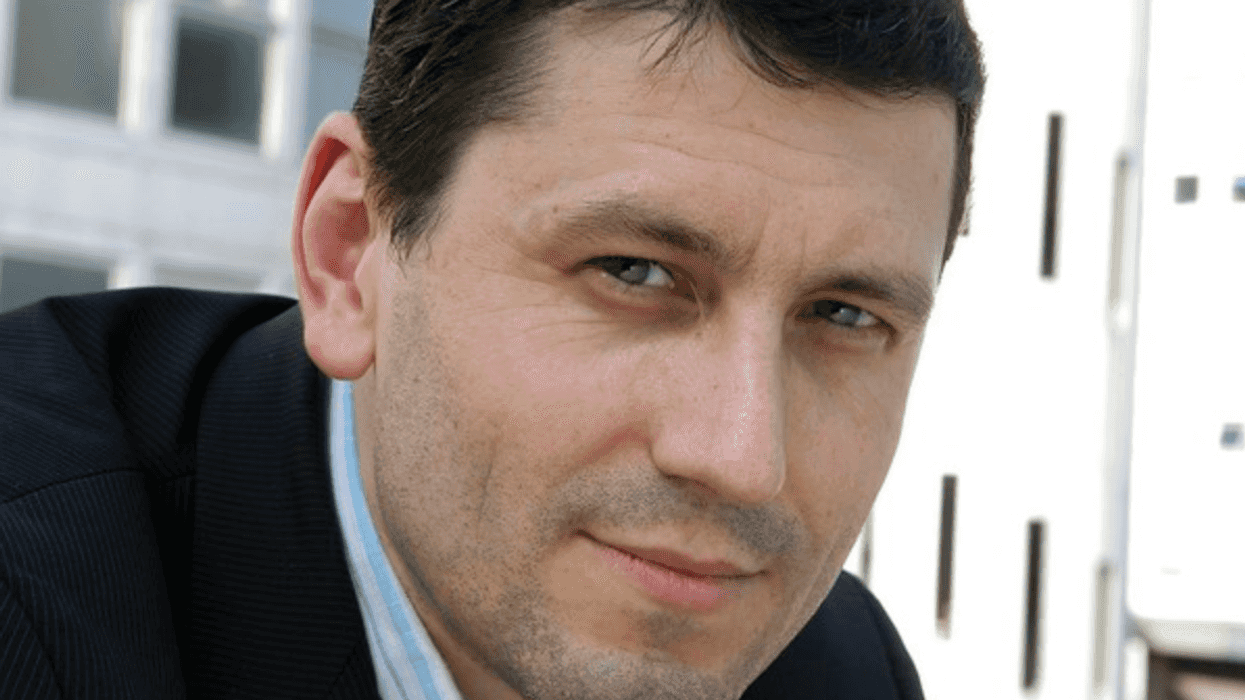
Frédéric Martel

Bannon's Plot To Expose Gays In Church Outlived His Partnership With Epstein

Frédéric Martel, the author of the 2019 international bestseller, In the Closet of the Vatican: Power, Homosexuality, Hypocrisy, told me over the weekend about the time he was invited to lunch by Steve Bannon, who asked him to come to Bannon’s palatial Paris hotel suite shortly after his book was published.

“I didn’t know why he asked me to come,” he said.

The meeting was arranged via one of Martel’s right-wing Catholic sources who was allied with Bannon. Martel, a journalist who covers the far right in Europe and is working on a new book focused on it, certainly had a professional interest in meeting Bannon.

“It was at the Hotel Bristol,” he explained to me by phone from Paris, “in a suite that costs 8,000 euros per night.” Per the exchange rate at that time, that would have been about $8950 per night. Forbes reports suites at the hotel begin at $3200 per night and go up to as high as $46,000 per night.

It was June of 2019. And he was surprised about what Bannon wanted from him.

“He said during the lunch that he wanted to make a movie about my book,” Martel explained, noting that he “wouldn’t have ever given that [permission] to Bannon.” But he offered Bannon a more polite truth. “I don’t have the rights to the book [for a film],” Martel said he told Bannon, as his publisher had already sold those rights.

That was the end of the discussion on the book, and Martel was perplexed because, as he explained, the book is “probably the most pro-Francis” book, and Bannon, a Catholic “traditionalist” connected to all of the most extreme radical right elements of the church, was working with his allies to take down Francis because of his progressive reforms and his criticism of populist right-wing governments, including Donald Trump’s.

In the Closet of the Vatican exposes the hypocrisy of a church hierarchy built up over many decades—including under the virulently homophobic Pope Benedict—which included many powerful closeted gay priests, monsignors, and cardinals who were publicly working against gay rights while privately leading lives counter to their pronouncements and harmful actions.

While exposing all of that might bring down some of the very people on the Catholic right Bannon was courting—many inside the church itself, among the clergy and the hierarchy—he clearly didn’t see the nuance. Bannon is all about chaos and destruction, and was laser-focused on hurting Francis’ leadership and influence. He asked his good friend Jeffrey Epstein for help in his project.

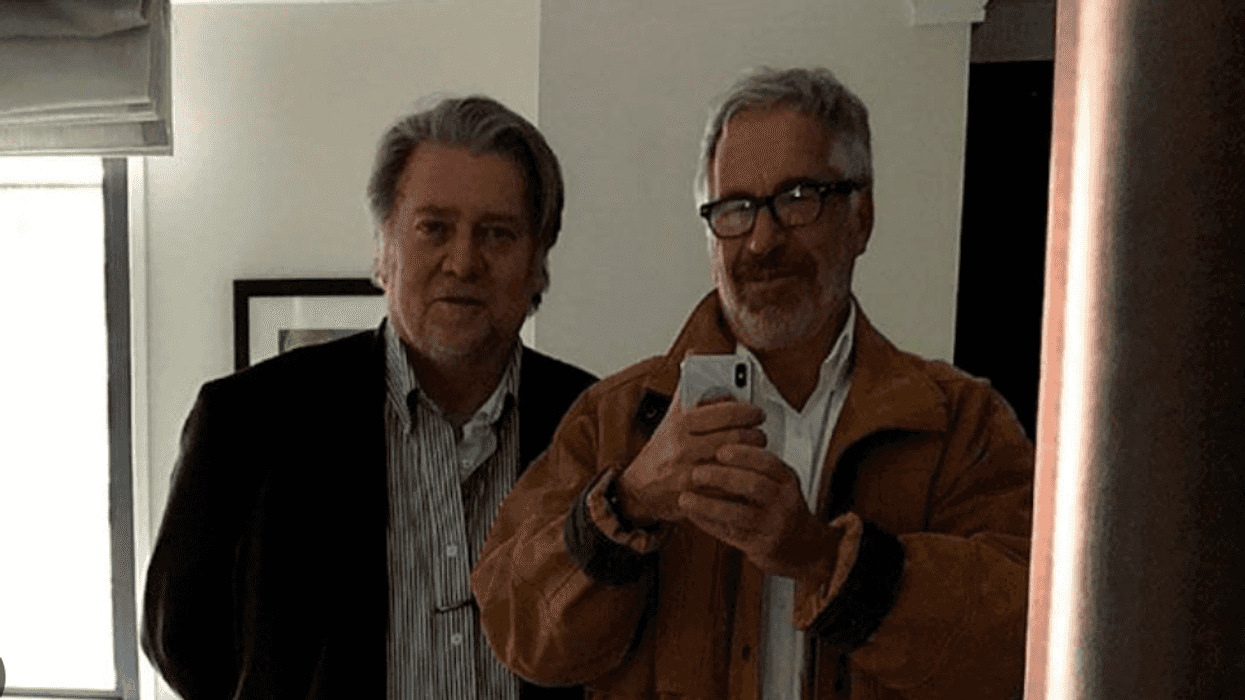
In the Epstein files there are thousands of text message exchanges between Bannon and Epstein, as Bannon sought the help of Epstein—a true globalist within the uber-wealthy elite—to promote his faux populist, supposedly anti-globalist movement across Europe.

As CNN reports:

Bannon had been highly critical of Francis whom he saw as an opponent to his “sovereigntist” vision, a brand of nationalist populism which swept through Europe in 2018 and 2019. The released documents from the DOJ appear to show that Epstein had been helping Bannon to build his movement.

Bannon, after being pushed out in 2017 as Trump’s national security adviser, was living in Rome, traveling to Paris, London, and throughout Europe, and asking Epstein to connect him to powerful people. Epstein offered the use of his jet and homes for Bannon’s travels, while Bannon offered media training and advice for Epstein to grotesquely help clean up the convicted pedophile’s reputation. And Bannon recorded many hours of interviews, 12 hours of which have been released among the files, for a documentary film he was making on Epstein, the aim of which no doubt was to promote a media makeover for Epstein.

Epstein’s jet, per the files, was unavailable when Bannon asked if he could use it to fly from Rome to Paris in one instance, but there is evidence in the files that Bannon stayed at a grand apartment where Epstein was living near the Arc de Triomphe in Paris on that trip. Epstein invited Bannon to stay in a March 29th, 2019 text; Bannon said he was “Enroute,” and then Epstein texted someone else the next morning: “Steve Bannon is here with me.”

Bannon’s spokesperson told The New York Times that Bannon didn’t stay there (and that he never stayed at Epstein’s homes or flew on his plane) and decided to stay at a hotel instead. But the Times noted the spokesperson didn’t provide a receipt. My question would have been, even if that’s so, who paid for the hotel—again, Bannon’s spokesperson didn’t show the Times any receipt—and was it in fact the lavish Hotel Bristol, the same place where he met Martel later in June? After all, per the files, Epstein did offer to pay for a charter flight for Bannon when Epstein said his jet was unavailable. (There’s no indication as to whether he did or didn’t pay for a charter flight.)

Around that same time, Bannon expressed to Epstein his interest in making Martel’s book into a film and having Epstein fund it as executive producer.

“Have you read ‘in the closet of the vatican’ yet,” Bannon wrote, to which Epstein appears to reply ‘yes,’ amid chats about getting Bannon connected to global players.

“You are now exec producer of ‘ITCOTV’ (In the closet of the Vatican),” Bannon continued. “Will take down [Pope] Francis.The Clintons, Xi, Francis, EU – come on brother.”

It’s not clear whether Epstein was taking seriously the idea of the film—which Martel had already told Bannon was not going to happen—but Epstein, on April 1, 2019, did email himself “in the closet of the vatican,” and later, in June of 2019, he sent Bannon an article headlined, “Pope Francis or Steve Bannon? Catholics must choose.”

The two were planning to meet in New York weeks later, on the first weekend of July. But on July 6, 2019, Epstein would be arrested on sex trafficking charges in New York. On August 10 he’d be found dead in his jail cell. And obviously no film was made.

Bannon continued in his war against the pope, but a split developed that very summer of Epstein’s arrest and death between Bannon and some of his far-right allies. Cardinal Raymond Burke, an angry American MAGA foe of Francis’ (whom Francis would eventually kick out of his massive Vatican apartment, in 2023), had collaborated with Bannon in an organization working against Francis, Dignitatis Humanae Institute, a Rome-based think tank that aimed to create a “populist academy” in a monastery in Trisulti, Italy.

But Burke broke with Bannon in June of 2019, after he learned that Bannon wanted to make a film out of Martel’s book. Martel had gone public about his lunch with Bannon, and it didn’t sit well with Burke, who is portrayed in an entire chapter as a scheming and unrepentant nemesis of Pope Francis.

Burke and many of his allies in the church had much to fear about any film outing prominent homophobic closet cases in the church, bringing the book to a much wider audience. Burke put out a statement, resigning from DHI, where he’d collaborated with Bannon:

I have been made aware of a June 24 LifeSiteNews online article…entitled ‘Steve Bannon hints at making film exposing homosexuality in the Vatican’…
I do not, in any way, agree with Mr. Bannon’s assessment of the book in question, Furthermore, I am not at all of the mind that the book should be made into a film.

But other Bannon compatriots would later appear to draw both on the information in Martel’s book and on his research methods. In “In the Closet of the Vatican,” Martel discusses gay dating and sex apps like Grindr, Scruff, and Tinder, and how prevalent users were in and around the Vatican, even carrying out his own experiments with his researchers, using Grindr and other apps.

“According to several priests, Grindr has become a very widespread phenomenon in seminaries and priests’ meetings,” Martel reports in the book.

It may be a coincidence, but two years later, in July of 2021, in a story I covered extensively, a right-wing Catholic site on Substack, The Pillar, used geolocation data from Grindr to force the resignation of Monsignor Jeffrey Burrill, the general secretary of the U.S. Conference of Catholic Bishops.

As I wrote at the time, the right-wing editors of The Pillar:

“obtained” geolocation data of Grindr interactions from his phone — even claiming to have located him in a bathhouse in Las Vegas at one point — over a period of time going back to 2018.
And then they went to the Catholic bishops with the information — dates and times of Burrill allegedly connecting with various men on Grindr, and locations, including the bathhouse. Soon after, the USCCB announced Burrill had resigned because of “impending media reports alleging possible improper behavior.”

There was much speculation about where The Pillar got its funding and also about who purchased the geolocation information for it—information that would cost a lot of money. Grindr had previously sold information to third parties for advertising purposes (and stopped after it was criticized), believing there was no identifying information. But as I explain in my piece of the time in depth, technology experts say there’s a way for that identifying information to be found, and there’s no guarantee that third parties don’t turn around and sell geolocation data to more nefarious entities.

Almost two years after The Pillar’s actions, in March of 2023, The Washington Post indeed revealed that it was wealthy Catholics on the far right, the people in the same circles as Bannon, who paid for the geolocation data that The Pillar had “obtained.” They also sent the information to Catholic bishops:

A group of conservative Colorado Catholics has spent millions of dollars to buy mobile app tracking data that identified priests who used gay dating and hookup apps and then shared it with bishops around the country.
The secretive effort was the work of a Denver nonprofit called Catholic Laity and Clergy for Renewal, whose trustees are philanthropists Mark Bauman, John Martin and Tim Reichert, according to public records, an audio recording of the nonprofit’s president discussing its mission and other documents…
…The Post has seen copies of two different reports presented to bishops. One is from the Renewal group to a diocese and the other is the one that the Pillar presented to the USCCB about Burrill. The information in both is mostly about Grindr, although the reports also say they have used data from other gay dating apps Growlr, Scruff and Jack’d, as well as OkCupid.

Reichert is a former GOP congressional candidate. Jayd Henricks, executive director of the group Reichert and his rich buddies founded and which bought the geolocation information it gave to The Pillar, had, like Bannon, been a fierce critic of Francis.

All of these men are aligned in efforts against church reforms, whether working together directly or not. Hendricks has written for the orthodox World Catholic Report, which has also written glowingly about Bannon and his “populist nationalism” effort in Europe, describing it as “renewed appreciation for the nation-state and national sovereignty—and growing suspicion of the managerial elites in Washington, London, and Brussels.”

It’s not a stretch to believe that the Colorado wealthy right-wing Catholics got their ideas on using Grindr to help bring down church leaders from the attention brought to “In the Closet of the Vatican.” Nor is it a stretch to believe that they even worked directly or indirectly with fellow traveler Bannon, who was very much focused on the book and who had by then lost the convicted pedophile billionaire he was hoping would bankroll weaponizing the ideas within the book in the way The Pillar outrageously did.

Reprinted with permission from Alternet

This article appeared originally in The Signorile Report on Substack. Please consider subscribing.


Bannon Epstein

Epstein's MAGA Enabler: Why Steve Bannon Needs A Mirror

There may be nobody — perhaps not even Donald Trump himself — who embodies the degeneracy of what used to be called conservatism like Stephen K. Bannon. That the "War Room" host still exerts influence over the American and international right as a media personality, political strategist and power broker indicates just how empty of moral character that movement truly is.

Like dear leader Trump, Bannon owes his prominence and prosperity to a pervasive atmosphere of impunity. Every day, in an era of burgeoning scandal on every front, both of them test its limits — and have yet to find any at all.

What the Epstein files have lately revealed about Bannon, however, as disclosed in hundreds of emails between him and the predatory financier, is so depraved as to be almost unbelievable. In the face of these damning documents, the former Trump campaign manager has offered mutterings and excuses that scarcely even amount to a denial.

Not only did Bannon begin to execute a costly "op" (as he called it) with Jeffrey Epstein to rehabilitate the latter's image — which ended only with his arrest by federal authorities in 2019 — but they conspired politically together on various schemes both in the U.S. and Europe. Desperate for Bannon's help, Epstein financed his travel and connected him with potentates and politicians around the world. He paid Bannon hundreds of thousands of dollars to tape a dozen or more hours of "documentary" interviews that were evidently meant as media training, in anticipation of Epstein's prosecution.

All absolutely damning when assessed in the context of Epstein's vile assaults on girls and women, as well as his apparent financial crimes. Yet what seems most appalling so far, and most illustrative of the enveloping corruption, was their joint plotting against Pope Francis, whose liberal gestures toward gays and lesbians, migrants, Muslims and the global poor had enraged the self-styled "traditionalists" of the Catholic Church.

Together Bannon and Epstein aimed to produce a documentary film exposing the culture of hypocrisy and concealment surrounding homosexuality in the church, based on a 2019 French book "In the Closet of the Vatican." Bannon met with the book's author several times in Paris, where he also met Epstein, who had an apartment there.

With Epstein as the executive producer, Bannon predicted that the movie would wreak cataclysmic damage on the papacy and his other political adversaries, from Beijing and Brussels to Chappaqua. "Will take down Francis. The Clintons, Xi, Francis, EU — come on brother," he wrote, encouraging Epstein (who would soon be dead).

Stop to ponder for a moment exactly what Bannon was attempting to engineer. He wanted to produce a movie, with the help of a monstrous pedophile who had victimized hundreds of children, that would destroy the reputation of the Holy Father and perhaps many others equally without blame. And aside from the political benefit to his hard-right allies, Bannon no doubt hoped to bank a substantial profit.

It isn't easy to imagine a more sinister project. By comparison, Bannon's swindling of the suckers who financed his "We Build the Wall" nonprofit and his phony indictment of the humanitarian Clinton Foundation look quaint.

Now a few of Bannon's longtime enemies in the MAGA movement — including Elon Musk and Roger Stone, dismal characters in their own right — have leaped to attack him over these reports. Presumably Musk would like to distract attention from his own cameo role in the Epstein files, including his solicitation of an invite to "the wildest party" on Epstein's Caribbean island. And the scorpion-like Stone is merely stinging a perceived rival, as he always does.

Yet there are many self-proclaimed Catholics and Christians in Trump's orbit, MAGA influencers and conservative pundits who should have something to say about these appalling revelations. Why have we not heard from JD Vance, vice president of the United States, a fairly recent Catholic convert and a MAGA nationalist like Bannon, who spends so much of his time blathering on social media? Why haven't we heard from Peter Thiel, the ultra-right gay billionaire and Epstein buddy who lectures about the "Antichrist" among "woke Democrats"?

Indeed, very few of our moral arbiters on the right have felt moved to speak up about Bannon — just as they remained silent when his coconspirators in the "wall" scam served prison terms, while he skated with a presidential pardon.

The most apt summation of this MAGA mountebank appears in a video recently released among the Epstein files, one of several shot for that aborted documentary.

Bannon asks Epstein, "Do you think you're the devil himself?"

"No," Epstein retorts. "But I do have a good mirror."

Joe Conason is founder and editor-in-chief of The National Memo. He is also editor-at-large of Type Investigations, a nonprofit investigative reporting organization formerly known as The Investigative Fund. His latest book is The Longest Con: How Grifters, Swindlers and Frauds Hijacked American Conservatism (St. Martin's Press, 2024). The paperback version, with a new Afterword, will be published in February 2026.

Reprinted with permission from Creators


Pope Francis

Francis And Trump: A Tale Of Two Leaders

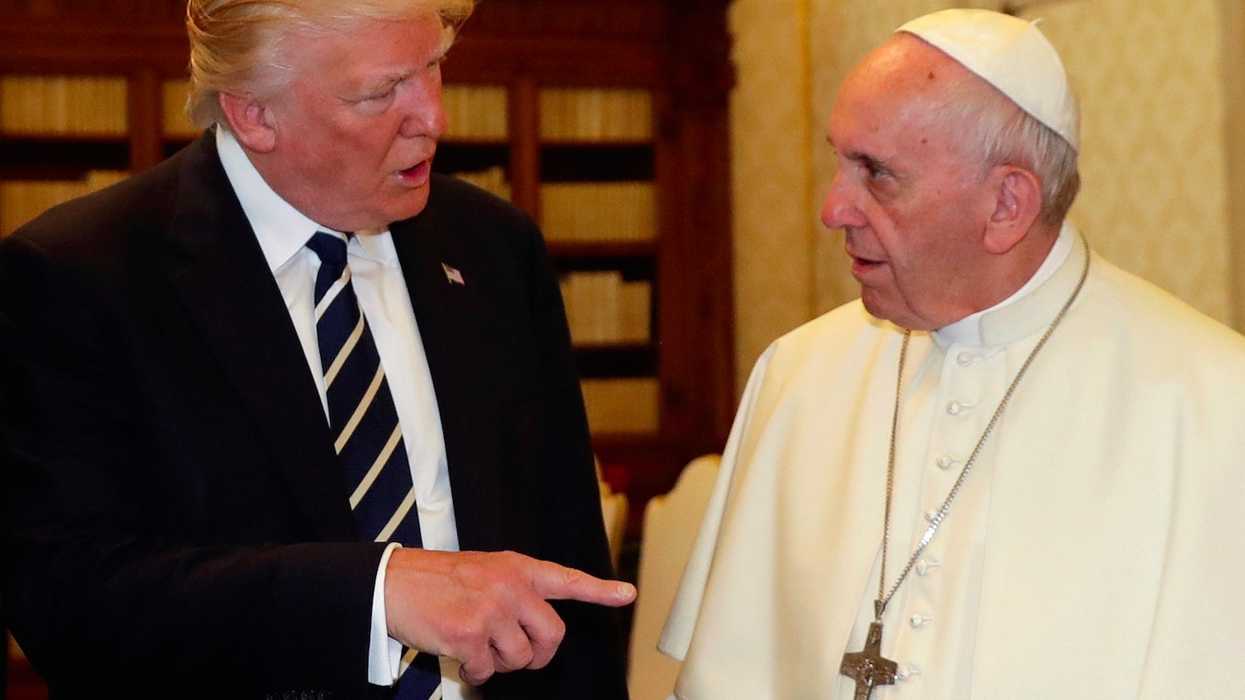
The blue suit and blue tie amid a sea of mostly black-garbed mourners did stand out, not that President Donald Trump ever blends into the background or wants to. But the man being laid to rest in the simple wooden coffin was the leader whose legacy loomed largest. The hundreds of thousands who made their way to the Vatican to pay respects to Pope Francis proved that.

A world with a short attention span and more than a few folks who loved the movie Conclave is already guessing who will next occupy the chair of St. Peter. Before the betting starts, however, it might be useful to reflect on how leaders can exert influence over those who look to them for guidance — for good and for ill.

Character counts.

It’s not as though the doctrine of the Catholic Church changed under Pope Francis. Its rules against abortion remain. The church will not perform marriages for same-sex couples, and if you notice the lack of women among the College of Cardinals, that is no coincidence.

Yet few would deny that this Pope changed perceptions of Catholicism, even to those who, unlike me, were not raised in the faith.

It’s just as true that how people view America has shifted under this president. And, what’s sadder, how we view ourselves and our fellow Americans has changed. It’s a place where you can turn in neighbors you suspect are undocumented or teachers you believe are too “woke,” a term few can accurately define but many don’t hesitate to weaponize.

Social media more than ever is a toxic stew of insults rationalized by the senders because, well, the president does it. Just review his Michigan speech this week, marking his first 100 days in office. Trump mocked the appearance of his predecessor, Joe Biden, rather than show concern for the challenges Americans are facing.

It wasn’t exactly following the advice of Pope Francis, who urged priests to be “shepherds with the ‘smell of the sheep,’” close to their flock.

Pope Francis elevated those society often shuns: the poor, migrants, prisoners, people with disabilities — especially, it seemed, children. He spoke about issues such as climate change and immigration, ones that most affect the dispossessed. He welcomed LBGTQ Catholics and clarified Catholic teachings on the death penalty, making opposition to it an absolute. Those moves reflected the consistency I have admired in a church I also criticize for its failings.

In contrast, the billionaires with a front-row seat to Trump’s inauguration reveal his priorities. Trump himself, in a recent interview in The Atlantic reveled in how he has brought the high-powered to heel. “It’s just a higher level of respect. I don’t know,” Trump said.

President Trump has embraced power and the powerful — and many Americans have followed his lead. It makes perfect sense that Elon Musk, the president’s right-hand man and heedless slayer of government programs, believes, as he said, “The fundamental weakness of Western civilization is empathy.”

A quote in that same Atlantic interview shows how intoxicating that power is to the man who bragged about retribution in preelection campaign speeches: “I run the country and the world.”

We, meaning, apparently, every person on earth, are subject to his will and whims.

What a long list of those left to suffer, from students punished for speech to young U.S. citizens sent out of the country, including one, according to reports, being treated for cancer.

While Pope Francis saw the world as his parish, Trump shrinks America’s global leadership, dooming the sick and hungry with his decapitation of the U.S. Agency for International Development.

A program to counter AIDS, one started by another Republican president, George W. Bush, has saved millions of lives. But it was orphaned by the Trump administration with nary a peep from congressional Republicans whose mission is pleasing this president.

The world’s richest country is being seen as poor in goodwill and generosity — the qualities that made America great in the eyes of longtime allies who are deserting it and many weaker countries now looking to trade their essential goods and minerals with more reliable partners, ones who at least pretend to care.

This “America First” administration has turned on its own, with cuts to AmeriCorps being fought by attorneys general across the country. Snatching back already approved funds from the agency for volunteer service has halted projects in states and cities, including Hurricane Helene recovery efforts in western North Carolina.

The surprise in recent polls that grade Trump’s first 100 days isn’t that his numbers are so low but that the majority of Republicans still cosign such a careless and cruel agenda.

As evidence that the president truly cares about the least of these, his administration and some of his staunchest supporters, white evangelicals, might point to his order “establishing a task force to eradicate anti-Christian bias.”

But not only does that order ignore other faiths and the Constitution, which promises freedom of and from religion, it also leaves out Christians who don’t worship him. Why else would law enforcement surround and arrest a pastor in the Capitol Rotunda as he and others prayed to protest drastic cuts to social safety net programs in a proposed GOP-led budget bill? This White House has not been shy about highlighting the celebrations of his own Christian followers in buildings that belong to all Americans.

Pardoned criminals, even violent ones, got better treatment than the Rev. William Barber on Monday.

Yet, in a statement by Barber and Rev. Jonathan Wilson-Hartgrove after both were released, they did not express anger or promise retribution. In fact, they said they appreciated the Capitol Police and had prayed “with them and for them” as they dealt with the trauma of January 6, 2021.

“We thank them for their service and have reassured them that our objection is not to them doing their job.”

But the statement left no doubt about why they were there or that they would return.

“As Christian preachers, we are also public theologians. When someone dies from poverty and a lack of healthcare, we cannot lie and say, ‘God called them home.’ We have to tell the truth. They died because we live in a society that has chosen not to care for them.”

Both a lesson and rebuke Pope Francis would recognize.

Mary C. Curtis has worked at The New York Times, The Baltimore Sun, The Charlotte Observer, as national correspondent for Politics Daily, and is a senior facilitator with The OpEd Project. She is host of the CQ Roll Call "Equal Time with Mary C. Curtis" podcast. Follow her on X @mcurtisnc3.

Reprinted with permission from Roll Call.

Shop our Store

Headlines

Editor's Blog

Trending

World