Tag: spending
Trump's Weak Economy Grew 1.5 Percent In First Half Of 2025

Trump's Weak Economy Grew 1.5 Percent In First Half Of 2025

Some folks have gotten a bit carried away with the revisions that put the second quarter growth rate at 3.8 percent. That does look impressive in isolation, but it is important to remember the economy shrank at a 0.6 percent rate in the first quarter.

That puts the average at 1.6 percent for the first half of the year. That’s not terrible but it is hardly cause for celebration. Remember, the economy grew 2.4 percent last year and the vast majority of forecasters expected growth at this rate to continue.

And we really do need to look at the two quarters together. Just as unusual factors were responsible for the fall in GDP we saw in the first quarter, they are also responsible for the strong growth reported for the second quarter.

To take the most notable example, the lower trade deficit added 4.83 percentage points (PP) to growth in the second quarter. A pre-tariff surge in the trade deficit subtracted 4.63 PP from growth in the first quarter. Only a devoted Trumper would focus on the second quarter number without mentioning the first quarter jump in the trade deficit.

Moving beyond the irregular numbers, we get that non-residential fixed investment added 0.98 PP to growth in the second quarter after adding 1.24 PP in the first quarter. The first quarter growth was partly due to pre-tariff stockpiling but the second quarter growth on top of this indicates we are looking at something sort of real. This is the AI boom. If that turns into a bust, we will see this growth quickly reversed.

Consumption accounts for the bulk of GDP and here the story is pretty blah. The second quarter’s growth rate was a healthy 2.5 percent, accounting for 1.68 PP of the quarter’s growth. But this followed a growth rate of just 0.6 percent in the first quarter, leaving an average of rate of 1.6 percent for the first half. That’s not horrible, but certainly not great.

We also have seen evidence that the growth in consumption has been concentrated among higher income people who are spending their stock gains. That is consistent with my simple measure of looking at real spending at fast food restaurants. I consider this useful since it’s unlikely that rich people increase their consumption of fast food because their stock portfolio is worth more.

And spending on fast food has to rank as largely a discretionary purchase. It is one thing that is relatively easy to cut back on if a family has to tighten its belts. Real spending at fast food restaurants was just 0.3 percent higher in the second quarter than the average for 2024. That doesn’t look like most people are feeling good about the economy.

Today, we will get new data on consumption for August, along with revisions for prior months’ data. Maybe that will show a different story, but for now, it looks like we have a weak economy that is being sustained by the AI boom. That boom could go on for a while and keep the economy moving forward, but it may not.

Reprinted with permission from Dean Baker.
Signs You Have A Spending Problem And Ways To Stop

Signs You Have A Spending Problem And Ways To Stop

By Cameron Huddleston, GOBankingRates.com (TNS)

One in five Americans spent more than what they earned in the last 12 months, according to a Federal Reserve Board survey released in May.

Regardless of the reason spending might exceed income, “overspending is harmful because it could be a sign you’re out of control with your finances,” said Leslie H. Tayne, an attorney who concentrates in debt resolution solutions and authored Life & Debt.

Here are a few warning signs that indicate you are spending too much, followed by suggestions for getting your spending under control:

You Max Out Your Credit Cards And Pay Only The Minimum

If you’re maxing out your credit cards and can’t pay off your balances every month, it’s a sign that you’re relying on credit to supplement your income, Tayne said. “This is a hard cycle to break, especially if you can only afford to make the minimum payments each month,” she said. Not only can this hurt your credit score, but it can also leave you in debt longer than necessary.

You Pay Bills Late

About one out of 20 people with a credit file are at least 30 days late on a credit card or a non-mortgage account payment, according to an Urban Institute report.

Paying bills late because you don’t have the cash to cover them is a sign that you’re overspending, Tayne said. And it sends a red flag to your credit issuers, which could hike your interest rates or lower your credit limit, according to the National Foundation for Credit Counseling. You’ll also be hit with fees, which can add up quickly, and several late payments will hurt your credit score.

You Raid Your Retirement Account

You might think there’s no harm in borrowing from your retirement account because it’s your money. About 20 percent of 401(k) plan participants have taken a loan from their account, according to the Pencil Research Council Working Paper. You can borrow up to half of your 401(k) balance, up to a maximum of $50,000, but Tayne said rarely is this a good idea. “Borrowing from your future is a risky move,” she said.

If you borrow from your retirement account, you will have to pay yourself back with interest, which can be lower than the rate of return you would’ve gotten if you had left the money in the account. So really, you’re just shortchanging your retirement savings.

If you’ve realized that you have an overspending problem, rest assured. There are different ways you can get your spending under control and create healthy spending habits.

Create A Budget

The first step to getting your spending under control is creating a budget, Tayne said. Take a close look at what you’re spending money on and look for ways to cut back.

Rely On Cash

By living on a cash- or debit-only budget, you can curb the impulse to overspend. Tayne suggested setting a budget for each shopping trip and only bringing that much cash with you to avoid making impulse purchases.

Get Help

If you’re buried in debt and can’t curb your spending, your best option might be to get professional help. The National Foundation for Credit Counseling member agencies provide free and affordable debt counseling and other money management services. You can find an agency in your area through NFCC.org.

Photo: frankieleon via Flickr

Senate Waste Watchers Soldier On

Senate Waste Watchers Soldier On

By Matthew Fleming, CQ-Roll Call (TNS)

WASHINGTON — A dog-bite prevention website. Vermont puppet shows. Researching the bomb-sniffing capabilities of elephants.

Those are just some government spending projects labeled “wasteful” in this Congress by a crop of lawmakers who continue to take on the mantle of pork busters four years after Ohio Republican John A. Boehner banned earmarks after he took the speaker’s gavel in 2011.

Former Sen. Tom Coburn (R-OK) long the standard bearer of the waste-watching movement, told CQ Roll Call that despite the moratorium on traditional earmarks, billions are still spent on duplicative programs — what he considers the largest earmark.

“It’s great to bring it up and raise the issue, but if the issue is raised and nobody eliminates the problem that’s creating the waste, you haven’t done anything,” Coburn said. He’s now working to organize a convention of states to restrict the power of the federal government and is considering continuing his spending reports from outside the Capitol. “We’re talking about symptoms, but we’re not fixing the disease.”

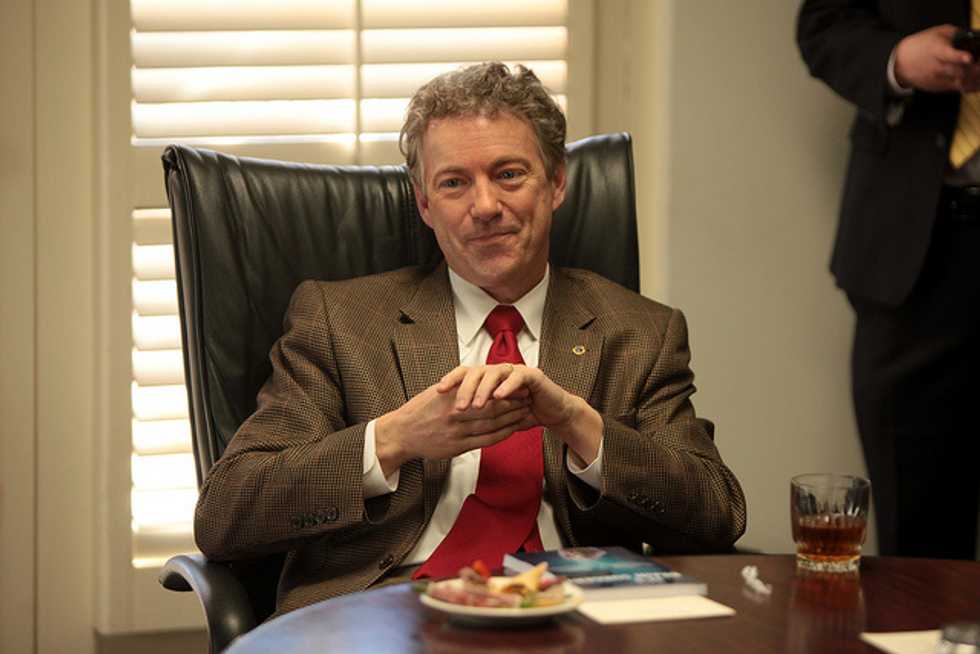
There are four Republican waste watchers in the Senate carrying the torch and making Coburn “proud” these days: Arizona’s Jeff Flake and John McCain, Dan Coats of Indiana and Rand Paul of Kentucky.

Waste-report season is now in full bloom. Coats last week spoke on suspicious spending by defense contractors, while Flake released a dinosaur-themed report featuring legacy earmarks he dubbed “Jurassic Pork.”

For effect, Flake swept through the Senate Press Galleries distributing pork sandwiches to reporters. (He graciously offered chicken to those with an aversion to pork.) In May, McCain, Flake and Sen. Patrick J. Toomey of Pennsylvania appeared with “Pigfoot,” the mascot of Citizens Against Government Waste, to highlight their annual “Pig Book.”

This week, Paul took the role of Senate sommelier by highlighting grants for the Washington state wine industry, asking the question: What wine pairing goes best with waste?

And for the piscivore palate left unsatisfied by a diet of only wine and waste, McCain served the main course last month when he fought in vain to end a catfish-inspection program as an amendment to a trade bill.

(c)2015 CQ-Roll Call, Inc., All Rights Reserved. Distributed by Tribune Content Agency, LLC.

Photo: Gage Skidmore via Flickr

Analysis: Why The GOP Will Likely Attack The Fake White House

Analysis: Why The GOP Will Likely Attack The Fake White House

By David Hawkings, CQ-Roll Call (TNS)

WASHINGTON — If budget resolutions are aspirational, sketching the big picture Congress envisions for government, then spending bills are the polar opposite: blueprints that lawmakers micromanage down to the smallest line item.

As arguments began over budgetary targets measured in multiples of billions, another annual ritual climaxed elsewhere on the Hill last week: Appropriations subcommittees were picking nits measured in the low-end millions (sometimes less) at 30 different hearings. A dozen more are planned before spring recess starts at the end of this week.

The sessions are supposed to be pure fact-finding, but in reality they’re about something else this spring. That’s a predicate for the now all-Republican Congress to go further than at any time in the previous six years to make detailed decisions contradicting the spending President Barack Obama wants.

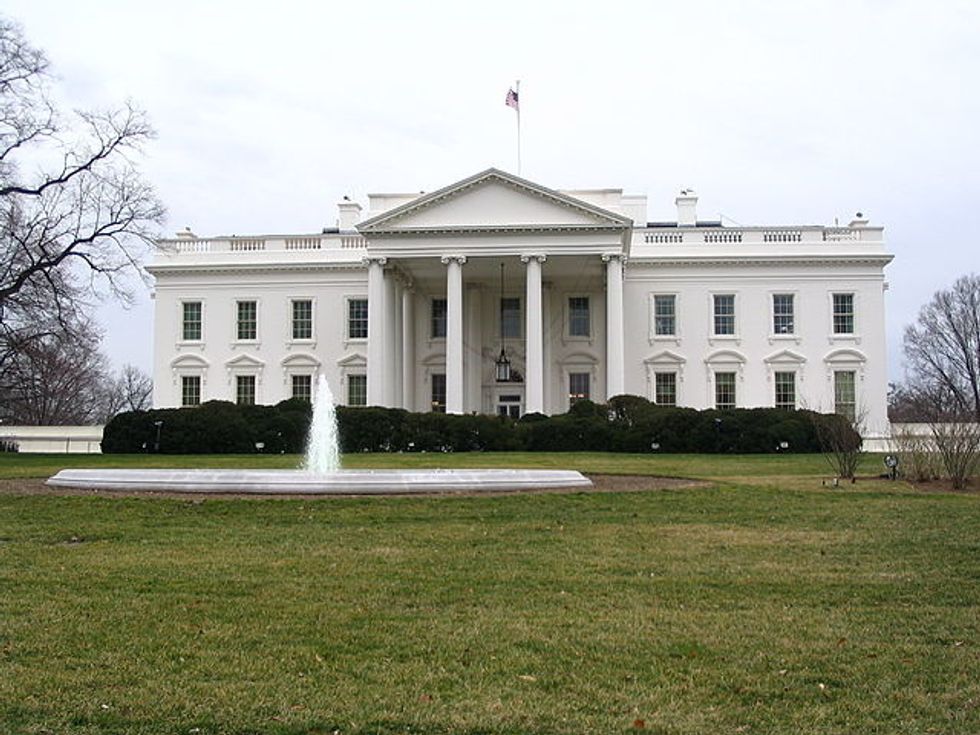
Which brings us to this guidance: Keep your eye on the fate of the fake White House.

The Secret Service wants $8 million to create an ersatz executive mansion, the better to train its agents and officers in presidential protection. If Congress provides the money, it will be a signal of bipartisan belief the agency is getting its act together — and also a sign the GOP is avoiding the temptation of making granular spending cuts based entirely on their headline-grabbing appeal.

In other words, the project doesn’t stand a great chance of surviving. That’s only partly because dissatisfaction with the Secret Service is among the precious few things about which there’s bipartisan agreement these days. Mainly, it’s because Republicans are itching to poke at Obama almost every chance they get — and trying to make a mockery of the White House mockup may prove impossible for them to resist.

Every year, lawmakers hone in on a handful of relatively small-beer items that pack a decent symbolic punch, hoping to convince constituents of their fiscal prudence by excising a couple of million dollars in easy-to-understand spending from a budget that’s a tough-to-comprehend six orders of magnitude bigger. When such a program or project gets targeted, its merits quickly become beside the point.

So this point in the process — well before the House Homeland Security Appropriations Subcommittee releases its draft of legislation to fund that sprawling department in fiscal 2016 — may be the best time to appreciate the arguments in favor of constructing a phony White House complex just 20 miles from the real thing. Since an agency as beleaguered as the Secret Service is pursuing the money with a straight face before a chorus of already raised eyebrows on the Hill, it’s a rebuttable presumption there’s some merit to the idea.

The reasoning is not quite as many cynics describe: Having so clearly revealed recently that it’s not up to protecting the real thing, the Secret Service is hoping to do better with a forgery.

The actual rationale is a more sober take on the same concept. Training, then training some more, is the best way for law enforcement agents to get ready for the incredible tensions and minimally predictable situations they must confront. The more realistic the simulations, the better. And, since it would be pretty unsettling for agents and their dogs to stage exercises at 1600 Pennsylvania Ave. (the public, staff and first family might all get freaked out), a mockup is the next best thing.

“Right now, we train on a parking lot, basically,” Joseph P. Clancy, the new Secret Service director, said in explaining the proposal to House Appropriations last week. “We put up a makeshift fence and walk off the distance between the fence at the White House and the actual house itself. We don’t have the bushes. We don’t have the fountains. We don’t get a realistic look at the White House.”

That would be rectified at the Secret Service training center by erecting a full-scale model of the residence, the East and West Wings and the surrounding 18 acres. It’s not clear just how detailed the grounds would be replicated or whether the interiors would be copied, because the design hasn’t been made public. (Two months ago a drone crashed, undetected, on the south lawn. Six months ago, an intruder got over the wrought-iron fence, ran across the North Lawn and sprinted through the front door and into the East Room before officers tackled him.)

The 500-acre campus, a wooded compound abutting the Baltimore-Washington Parkway just outside the Beltway in Beltsville, Md., already features a Potemkin Village where agents practice protecting the president in many types of places. Aerial photographs show a pretend strip mall, an urban street-scape that might belong at Universal Studios, a tarmac with mockups of Marine One and the front end of Air Force One, a highway overpass and a tunnel to nowhere — all connected by an elaborate six-mile road network for the practice of defensive driving.

Congress has paid for all that fakery in the past, but the end of the Obama years may well be different. The “new” White House may survive subcommittee, where genuine needs generally triumph over political point-making. But that won’t stop efforts to block it in the full committee, on the House floor and then in the Senate.

To be fair, Democrats have pursued the same sorts of petty punishments for past Republican administrations. One of the classics was in 2001 when Jay Inslee, now the governor of Washington state, demanded a House vote on cutting off federal funds to pay the utility bills at the vice president’s official residence. His amendment, which would have saved all of $134,000, received only 141 votes, but it got enormous coverage as a window into the surging partisan antipathy toward Dick Cheney.

It’s also true that Republican lawmakers are eager to deny themselves anything that might sound frivolous. (Last year, they voted as a bloc to pare back the Capitol Visitor Center’s budget by $243,000.) So don’t expect to hear any talk of constructing a Hill replica for Capitol Police training, either.

Photo via Wikimedia Commons

Shop our Store

Headlines

Editor's Blog

Corona Virus

Trending

World