Iran Hawks Must Confront The Catastrophic Failure Of Trump's Leadership
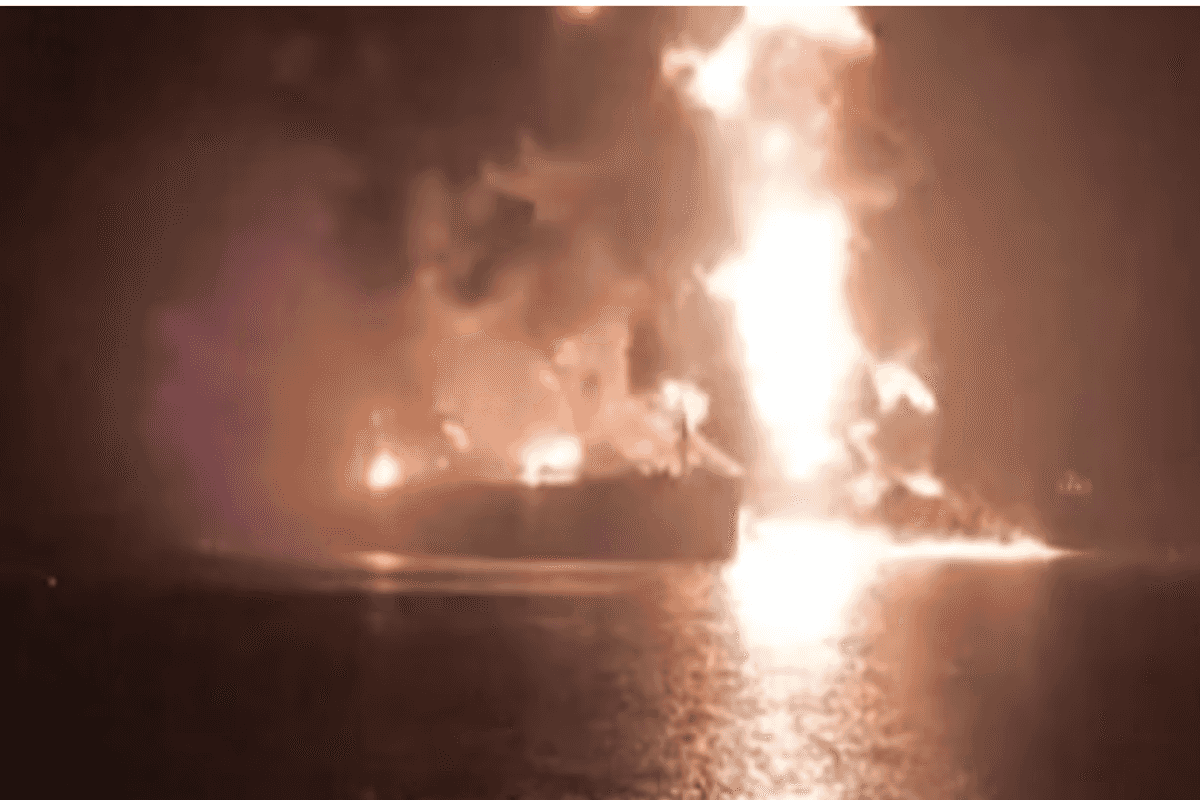
Oil tanker burning in the Strait of Hormuz on March 12, 2026
I am an Iran hardliner. But I'm struggling to understand how other hardliners can be so credulous about President Donald Trump's leadership of this war. It's as if you were stranded by the side of the road and accepted a ride from an obviously drunk driver.
Earlier this month, the Wall Street Journal editorial board scolded those of us who were not cheerleading for this war: "There's remarkable pessimism in the media and political class about the U.S. bombing campaign against the terrorist regime in Iran. Five days into the war, you'd think from the coverage and commentary that the U.S. is losing."
In the weeks since, the Journal, along with other unreconstructed hawks, has worried that Trump may not "finish the job" and have chided doubters by reminding us of the many depredations perpetrated by Teheran.
But here's the problem with the hawks' posture: You cannot separate the war from the people directing it.
Trump fans believe he always has a plan — that if he threatens, cajoles, or pivots, it's a sign of his unique ability to keep others off balance. To me, it looks like he's the one who's off balance. How do they account for Trump's pronouncements early in this now monthlong war that it was "won in the first hour"? Do they recall Trump's proclamation on March 6 that he would accept only "unconditional surrender"? What about the demand, five days into the conflict, that Trump have a say in choosing Iran's next leader? Did all of that suggest the smooth unfurling of a master plan or clear evidence that he expected a quick and decisive toppling of the regime and was surprised by reality?
The Iran hawks stress that the regime is one of the most dangerous and repressive on the planet and note that the region and the world would be so much better off without the mullahs in charge. Yes. But: Where is the evidence that a bombing campaign led by an impulsive narcissist can achieve that goal? Was there a Plan B if the bombing failed to ignite a popular uprising? How confident can we really be that Iran will, in the long term, be less dangerous, less hostile to the United States and Israel, less likely to support terrorism, less brutal to its own people thanks to Trump's "excursion"?
One of Trump's throughlines is the belief that other leaders and specifically his predecessors have failed to achieve goals due to "stupidity" and lack of will. Enraptured by America's military might, he imagines that threatening it and using it are the skeleton keys to pick any lock. There are no complex challenges requiring subtlety and discretion. There is no understanding that not every problem can be solved through the application of force. He disdains expertise, preferring to surround himself with lickspittles who bring only good news.
And when reality intrudes, as it did when his 2017 inauguration crowds were smaller than Obama's, or the COVID pandemic was not less harmful than the flu, or he lost the 2020 election, he chooses to believe lies and to insist that everyone else assent to the lies as well. Lies are his pacifier. When such a toddler is calling the shots in a war, it's acutely dangerous.
What Trump should be learning (though he isn't) is that previous presidents refrained from attacking Iran not out of fecklessness but because they weighed the risks. Yes, Iran is a weaker nation militarily than the United States (or even Israel), but it happens to own the high ground above the Strait of Hormuz.
Days into the war, Trump crowed that Iran had "no navy." But even as Trump spoke, Iran was in the process of disabling the Strait of Hormuz through the use of drones and fastboats and threatening to mine it. Meanwhile, they are charging a hefty toll for the ships they allow to pass, a new revenue stream for the regime.
Because Trump pulled the trigger without securing political or popular support, without allies (save one) and without considering how much damage to the world economy Iran could inflict, he is highly vulnerable to economic pain, and the Iranians know it. That's their asymmetric advantage. As a military matter, it doesn't matter that they have no navy. They don't have to hit a single ship in the strait. Their threats are hitting the insurance companies, and that's enough.
A large share of the world's supply of not just oil and gas but also helium, fertilizer and other chemicals now relies largely on the Iranian regime. We teeter on the edge of a worldwide recession and widespread hunger. Yet we are being led in this war by a fantasist who does not assimilate reality. "Trump is getting a little bored with Iran," an administration official indicated last week. "Not that he regrets it or something — he's just bored and wants to move on."
It's impossible to say which is more alarming, Trump's inattention or his engagement.
Mona Charen is policy editor of The Bulwark and host of the "Beg to Differ" podcast. Her new book, Hard Right: The GOP's Drift Toward Extremism, is available now.
Reprinted with permission from Creators
- With Trump, It's A New War -- And Always Another Lie ›
- Echoes Of Iraq Invasion As Trump Lurches Toward War On Iran ›
- Servile Republicans Who Hated Obama's Iran Pact Now Praise Trump's Ruinous 'Deal' - National Memo ›
- Iran Hawks Confidently Predict Trump Will Resume War After Midterm Elections - National Memo ›
- The World's Most Powerful Man, Still Stuck In America's Most Stupid War - National Memo ›
- Trump criticized GOP hawks. Why did he choose war with Iran anyway? - CSMonitor.com ›
- GOP hawks appear to be winning over Trump on Iran - POLITICO ›
- Iran Hawks Want to Strike Now. They're Wrong. - Bloomberg ›
- Inside the MAGA vs. hawk battle to sway Trump on bombing Iran - POLITICO ›
- The Iran hawks' dangerous hubris | Responsible Statecraft ›