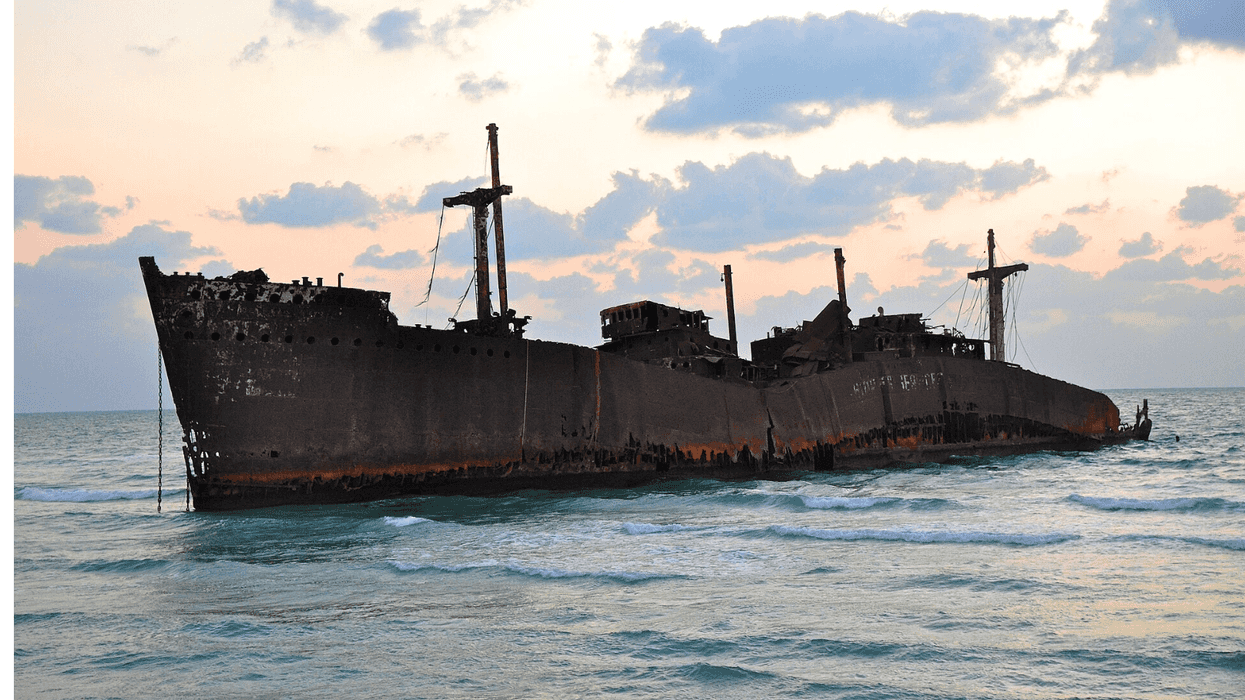
Sinking Greek ship in Persian Gulf
Maybe this time’s a charm.
Given the dearth of reliable spokespersons and Trump’s endless claims that the war is over, it’s hard to know the durability of the current agreement to cease hostilities and negotiate an end to the Iranian conflict. There are many places to read about these developments so I won’t review them here. Trump will surely be claiming victory, regime change, etc. but the deal he’s accepting will be no better than what prevailed prewar, not to mention a key point of this post regarding what Iran has learned from this conflict.
Neither will I repeat my post from a few weeks ago, raising what I still believe is the critically important question of what was this war for.
If what we’re hearing about the negotiations to end the war is correct, then everyone from policymakers to pundits to voters—especially voters—must ask the questions “What was that for? What did thousands of people die for? Why did the global economy have to undergo a massive disruption, elevating prices and interest rates? Why did the US have to further lower its international stature by not only getting dragged into this war, but by not winning it in any recognizable way?”
Instead, let’s briefly discuss—with some good pictures—what we might expect re the recovery of energy and energy-adjacent markets if and when transit through the Strait of Hormuz resumes.
The bottom line is that it will likely be months before prewar traffic resumes. First, there are three timing issues: it takes time to clear the mines from the sea. Next, the insurers need to believe this time is for real. Then, there’s infrastructure rebuilding. Second, physical inventories are very low, such that any hiccups could lead to sharp price spikes. Third, after the human costs, the biggest fallout from the war was that Trump has done something no other president has: he taught the Iranian regime that it could shut down global commerce.
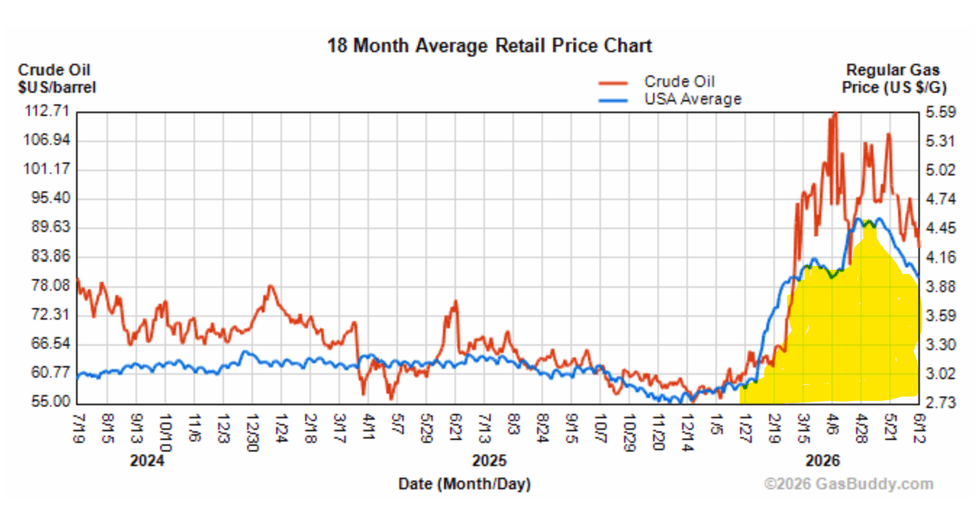
So, yes, I’m happy to see these recent declines re oil and gas prices, but let’s keep it real. These partial gains—I don’t expect we’ll see the pre-war gas price this year—are perfectly akin to how your headache would go away if you stop banging your head against the wall.
The fact that global physical inventories are just about to fall outside their historical range (see figure below) was surely a motivator for Trump relaxing his demands and ending the war, if that’s really where we are. The physics of oil inventory management, according to one expert, is that “Whenever you get to tank bottoms, the whole operation gets bogged down” (that’s because sludge collects at the bottom of storage tanks).
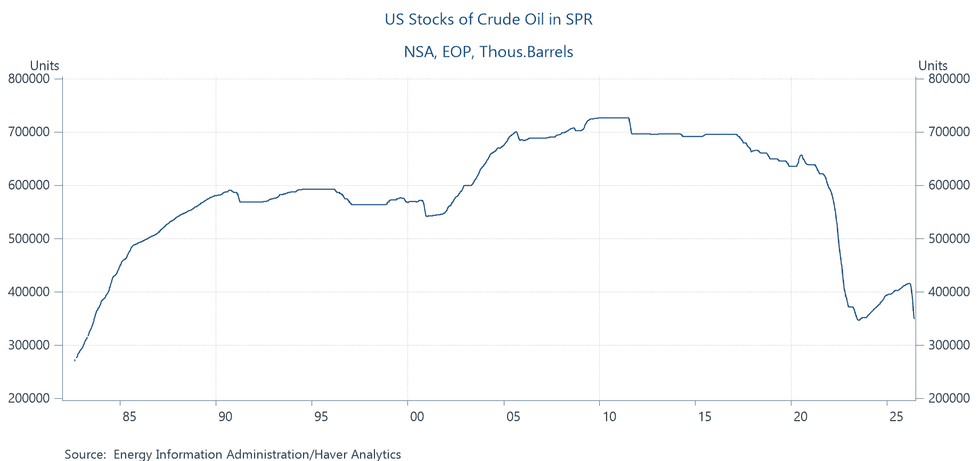
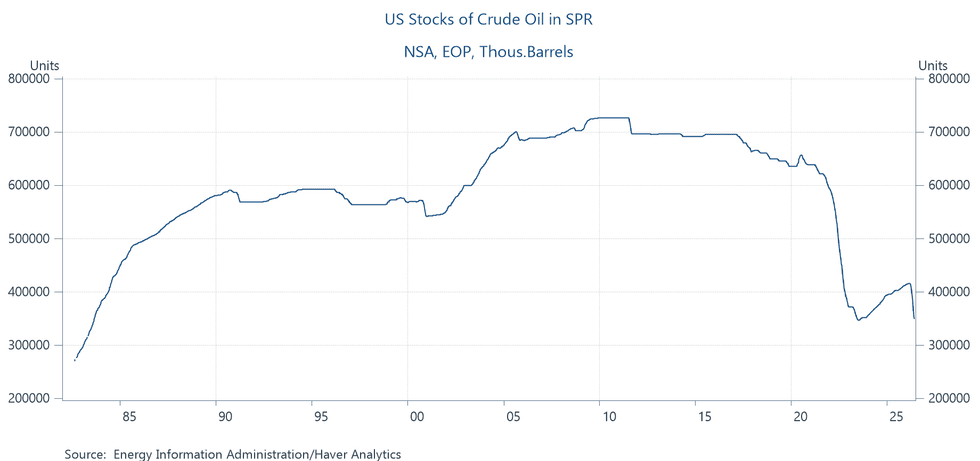
One related problem for the US is that war-related drawdowns have left us at the historical low end of our Strategic Petroleum Reserves. The figure below is through June 5, but the Wall Street Journal reports if the admin follows through on its current release plans, the inventory will fall to 243 million barrels which would be the lowest on record. Already, this reserve is in bad shape for hurricane season.
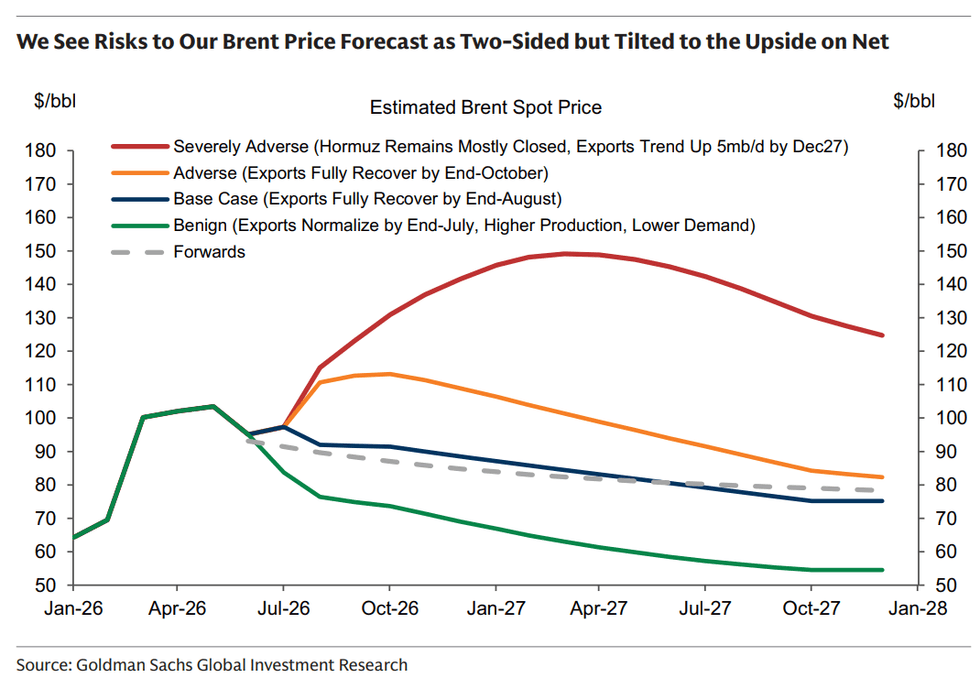
So, what should we expect? Here’s the GS energy-research team’s latest forecast, along with market expectations (“forwards”). The base case drifts down but remains elevated compared to prewar levels. The most benign case factors in a faster recovery than I’ve emphasized above, along with weaker demand.
There is a great deal of Trumpian damage that will persist once he’s gone, but a strong entry on that list is the fact that his actions have bequeathed this violent, authoritarian, theocratic Iranian regime with a global flex-point: he’s shown them that they can, at least for now, shut down a fifth of the world’s energy flow using missiles and cheap drones. It’s far from costless for them to do so, but that’s one of the problems with such regimes. They don’t suffer. Their people do, and they care little about that.
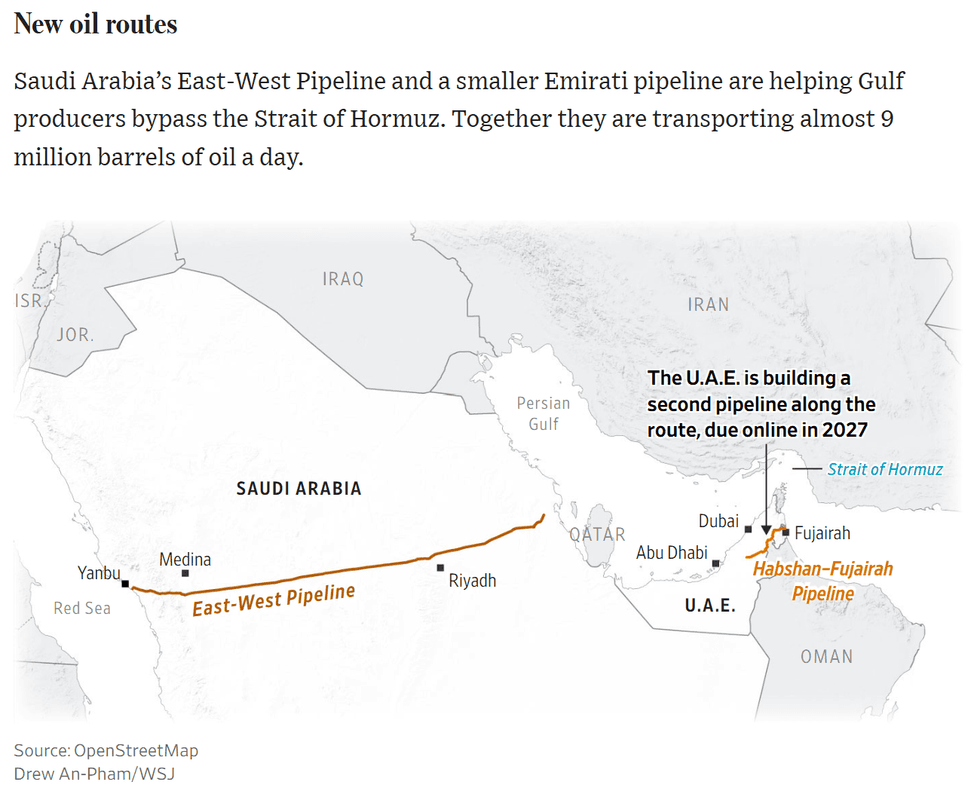
I said “at least for now,” and that’s important. Two useful developments have occurred due to the war. One, gulf suppliers have learned that they’d better develop alternative supply routes (see figure), and two, consumers have been reminded of the opportunity costs of owning gas-powered cars. If EVs were more affordable—see my letter to Trump on one way to make that come true—a lot more drivers could significantly insulate themselves from fossil-fuel geo-madness while improving the environment.
Jared Bernstein is a former chair of the White House Council of Economic Advisers under President Joe Biden. He is a senior fellow at the Council on Budget and Policy Priorities. Please consider subscribing to his Substack, from which this is reprinted with permission.
- MAGA Propaganda: Trump's Fox News 'Cabinet' Urges Him To Escalate Iran War ›
- Amid Faltering Ceasefire, Fox News Personalities Push To Resume Bombing ›
- Ceasefire! What Might This Mean for the Strait, the Markets, and You ›
- Republicans Collins And Whatley Booked Big Profits From Iran War Oil Spike ›
- Fortunes Of War: How Will Trump Deal With Spiking Gasoline Prices? ›
- With Oil Sanctions Suddenly Lifted, Iran Already Banking Billions From Trump's Deal - National Memo ›
- Is The Trump Administration Using Media Leaks To Manipulate Oil Markets? - National Memo ›
- The weirdest aspect of the Iran war that has befuddled oil experts | CNN Business ›
- Oil prices fall and shares jump after US-Iran deal announced ›
- A timeline of how the Iran war shook oil prices — and what comes next ›
- Oil and gas supplies could take months to return to normal after Iran deal to open Strait of Hormuz | AP News ›