Bondi Botch: Attorney General's Reveal Clears Jack Smith And Implicates President
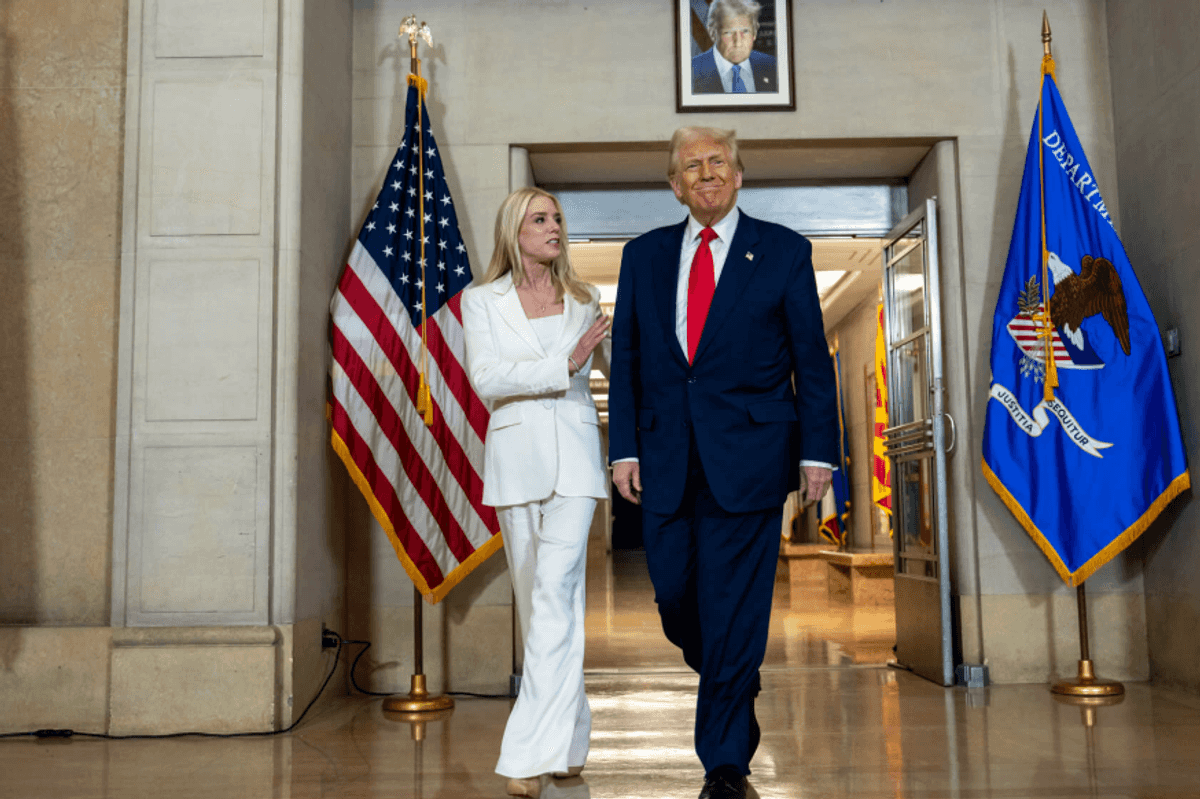
Pam Bondi played the game by her own, illegal rules; and she still managed to completely bungle it.
Last Friday, the Department of Justice (DOJ) shipped to the House Judiciary Committee some documents about the Mar-a-Lago prosecution against Donald Trump led by Special Counsel Jack Smith. Recall that the case was more straightforward than the January 6 prosecution, and by most prosecutors’ assessment, it likely would have resulted in conviction of Trump, but for the 2024 election and the repeated pro-Trump ministrations of Judge Aileen Cannon.
Wait a second. Hasn’t the same Judge Cannon ordered documents from the case to remain sealed and barred from disclosure? And didn’t the DOJ threaten Smith it would prosecute him criminally if he revealed anything about the case in congressional testimony, while refusing to explain what the boundaries of disclosure would be?
Yes. And to be clear, Cannon’s order extends not just to Volume II of the Smith report but also to “any materials that would reveal the substance of Volume II.”
Since the report is an account for the Attorney General of the investigation, a January 13, 2023 memo to the AG laying out the state of the evidence is nothing if not a reveal of part of the substance of that report.
But as part of its campaign to rewrite the history of Trump’s crimes—and in the process discredit Jack Smith, whom Trump continues to smear as “a deranged lunatic” and “political hack”—DOJ made selective disclosures to the House Judiciary Committee of documents, including that January 13 memo. Somebody at 950 Pennsylvania Avenue concluded it would dirty Smith up. That may illustrate the paucity of documents reflecting poorly on the prosecution, which professional prosecutors on both sides of the aisle averred was basically open and shut.
In fact, the memo is replete with demonstrations of Trump’s guilt and Smith’s probity.
Congressman Jamie Raskin, the ranking Democrat on the House Judiciary Committee, seized immediately on the embarrassing revelations. He sent a letter to Bondi on March 24, accusing her of being so consumed by the “frenzied search to find any scrap of evidence” to discredit Smith that she had “quite amazingly, missed the fact that some of the documents you provided include damning evidence about your boss’s conduct and may well violate the gag order your DOJ and Donald Trump demanded from Judge Aileen Cannon.”
Raskin proceeded to call out Bondi’s selective application of the very Cannon order DOJ had argued for. “DOJ appears to view the judicial order as rules for thee—Jack Smith—but not for me,” Raskin wrote. The prosecutors’ own files, he noted, were so damning that even DOJ’s carefully curated production could not fully excise the evidence of what Trump had done.
Here’s what the memo actually revealed about the investigation of Trump for improperly taking sensitive documents from the White House at the end of his presidency and obstructing justice to keep from having to give them back.
- One of the documents Trump purloined was so sensitive only six people in the entire federal government could see it. Having spent years as a federal prosecutor and U.S. Attorney, I’ve handled a lot of classified material, and I have never even seen such a close-hold document. The government does not restrict access to six people unless you are dealing with something that can do grave harm to national security. This is the kind of designation reserved for information that, in the wrong hands, could get people killed or destroy critical intelligence operations. That Trump cavalierly included it in his haul was breathtaking.
- Trump showed a classified map to friends on his plane. In June 2022, on a flight from Palm Beach to Bedminster, prosecutors identified a classified map chief of staff. No security clearance. No remote basis in law—just, look what I have, isn’t it fun? When Republicans accused Hillary Clinton of accidentally mishandling classified material on a private server, they did cartwheels demanding prosecution. Trump knowingly waved a classified map around a private plane full of political operatives. Same people: not a word.Contrast Trump’s big-shot boastfulness with the potential consequences of his illegal conduct. As Raskin tells Bondi, if the map “is related to our military posture in the Middle East, and it was in fact shown to any foreign official, Saudi or otherwise, that would amount to an unforgivable betrayal of our men and women in uniform who are currently valiantly fighting in President Trump’s disastrous war against Iran.”
- The investigation was zeroing in on Trump’s reasons for absconding with national defense information for the most base, and characteristically Trumpian, reason: self-enrichment. The memo makes clear that at this point in the investigation, prosecutors had identified outstanding documents tending to show that Trump selected what he purloined in part because they “would be pertinent to certain business interests.” The prosecution team added, “We must have those documents.”Prosecutors generally don’t have to prove motive, but where they can, it sharpens everything—for the jury, for the public, for history. Watergate became Watergate once we learned that the “third-rate burglary” was undertaken in the service of Nixon’s 1972 reelection campaign.When they wrote the January 2023 memo, prosecutors knew only that the documents Trump retained “would be pertinent to certain business interests”—suggestive, but unnamed.With three years of hindsight, Raskin closes the loop. We now know what “certain business interests” means: LIV Golf, Dar al Arkan, and the $2 billion that flowed from the Saudi sovereign wealth fund into Jared Kushner’s firm within months of Trump leaving office. A month after Trump showed a classified map to passengers on his plane, he was on the golf course with Yasir al-Rumayyan, head of that same Saudi sovereign wealth fund. And Trump had separately brandished to a staffer at Bedminster what he acknowledged was a classified Pentagon plan of attack against Iran—a country whose regional rival was at that very moment positioning itself to pour billions into his family’s business ventures.Raskin’s assessment to Bondi is more than fair; it is urgent: “This glimpse into the trove of evidence behind the cover-up reveals a President of the United States who may have sold out our national security to enrich himself.”
- The memo establishes that the classified documents Trump purloined sat commingled with other documents he created after leaving office—a fundamental violation of the protocols governing the handling of national defense information. A 23-year-old Trump aide, now director of Oval Office operations, scanned the contents of one classified box onto her laptop, uploaded the scan to the cloud, and held it for nearly two years before a Trump lawyer retrieved it and flew commercially with a thumb drive containing the material. DOJ redacted what happened next. Nobody knows whether those documents fell into the wrong hands.
And remember, this is the document DOJ thought would damage Smith!
Raskin closes his letter with eight specific questions he asked Bondi to answer by March 31, such as what the classified map depicted and what document Trump stole that was so sensitive only six people in the federal government could see it. He added a demand that “DOJ must cease cherry-picking investigative material and produce all remaining investigative files.”
The response from DOJ and the White House was sadly unsurprising. DOJ took to social media to accuse Raskin of being “blinded by hatred of President Trump,” pronounced the department “the most transparent in history,” and dismissed the letter as “a cheap political stunt, almost as if taking cues from members of the corrupt Jack Smith prosecution team.” The White House called Raskin a Democrat “with zero credibility” who was “clinging to deranged Jack Smith and his lies.”
Notice what’s missing: any denial of the underlying facts. Not a word disputing that the six-person document exists, that Trump showed a classified map on a plane, that the documents pertained to business interests, or that a 23-year-old aide uploaded classified material to the cloud. Bondi and the administration have made name-calling their standard substitution for responses on the merits; it’s the move they reach for every time the facts close in.
Step back and take in the full picture. The Department of Justice has spent the better part of a year threatening Smith with criminal prosecution if he so much as breathed a word derived from Volume II of his report on the Mar-a-Lago documents case. But now DOJ has served up to the House Judiciary Committee hand-picked selections plainly designed to discredit Smith and the prosecution—except it did exactly the opposite. How damning and inculpatory must the rest of the file be?
It is scandalous that Volume II of Smith’s report continues to be hidden from public view, thanks to a lawless decision by Judge Aileen Cannon and the DOJ’s own Trump-serving actions. The question now is whether Bondi responds to Raskin’s letter by March 31, or whether, as her past conduct would indicate, she tries to squirm and stonewall.
We already know the broad strokes of the crimes, and make no mistake, they were crimes. The president knowingly absconded with some of the most sensitive national security secrets in the government’s possession; he stored them pell-mell in a Mar-a-Lago bathroom and ballroom, showing them to political operatives and quite possibly to foreign interests; and he systematically obstructed every lawful effort to recover, including defying a search warrant.
It’s clear that powerful actors, including Cannon, Bondi, and Trump, will pull whatever levers they can, legal or otherwise, to keep Smith’s report buried. Still, as I’ve said before, I think that it’s likely that one way or another, one day or another, the truth will out. If nothing else, copies of the illuminating report will continue to exist after Trump’s reign of terror ends and a responsible government comes into power understanding the paramount public importance of the report.
Until that happens, it falls to us to keep the drumbeat going. What Bondi, Trump, and their allies are counting on is exhaustion and apathy. The flood of outrages, the relentless pace of scandal, the sheer volume of it—they are banking on the public’s losing the thread. Don’t let them. The record of Smith’s investigation into the most serious crimes by a sitting president in our history belongs to the people. That’s not a political position. It’s the price and privilege of self-governance.
Harry Litman is a former United States Attorney and the executive producer and host of the Talking Feds podcast. He has taught law at UCLA, Berkeley, and Georgetown and served as a deputy assistant attorney general in the Clinton Administration. Please consider subscribing to Talking Feds on Substack.
Reprinted with permission from Talking Feds.
- Trump, Bondi And Gabbard Mount A Vulgar And Vicious Purge ›
- Now That White House Has Finally Booted Noem, Will Bondi Be Next? ›
- Trump Lawsuits: Of All His Grifts, They Are By Far The Most Efficient ›
- 'Damning' Prosecution Memo Suggests Trump Sought Profit From Classified Papers ›
- How Pam Bondi Is Undermining Morale And Principle As Attorney General ›
- DOJ may have disclosed secret grand jury material to Congress, violated judicial gag order in Trump classified documents case | Courthouse News Service ›
- Pam Bondi Fires Staff Linked to Jack Smith’s Trump Investigations - Newsweek ›
- Democrat alleges Trump ‘sold out’ US security in classified documents case | Donald Trump News | Al Jazeera ›
- Bondi Accused by Jamie Raskin of Accidentally Revealing ‘Damning’ Evidence in Donald Trump Jack Smith Case ›
- Pam Bondi vows to block Jack Smith's unreleased report forever 'in the dustbin of history' - Raw Story ›