If Democrats Like Ben Gruber Can Win In Rural Districts, The GOP Is Toast
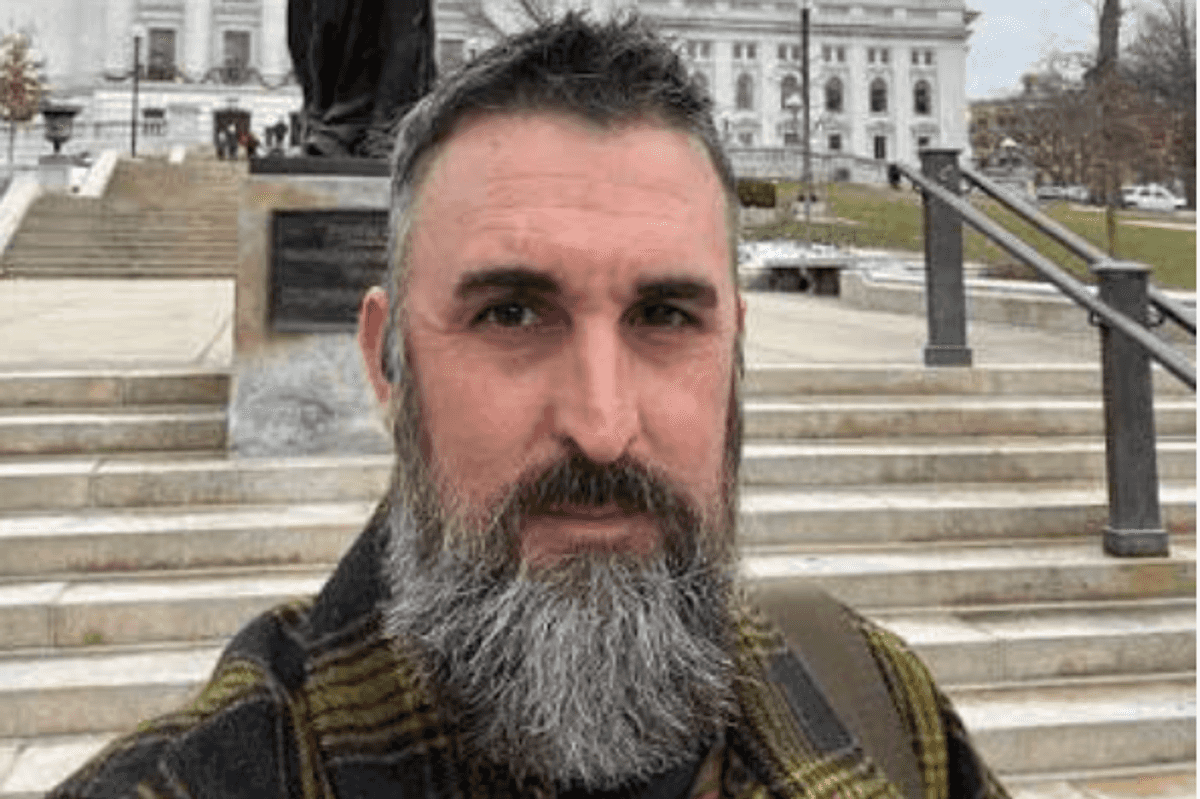
Ben Gruber
Wisconsin’s 51st state Assembly District is a sprawling rural landscape west of Madison, containing towns you likely have never heard of, such as Mount Horeb, the largest in the district, with a population of 7,754.
It is a bit of a political anomaly. In 2024, Democratic presidential nominee Kamala Harris narrowly won the district despite its rural character. However, it has been represented by Republican Todd Novak since 2014. Now it is perhaps the assembly’s biggest battleground as Wisconsin Democrats fight to retake the state legislature for the first time since 2010.
And Ben Gruber, the Democrat trying to flip this seat, might offer some clues about how Democrats can begin winning back rural America.
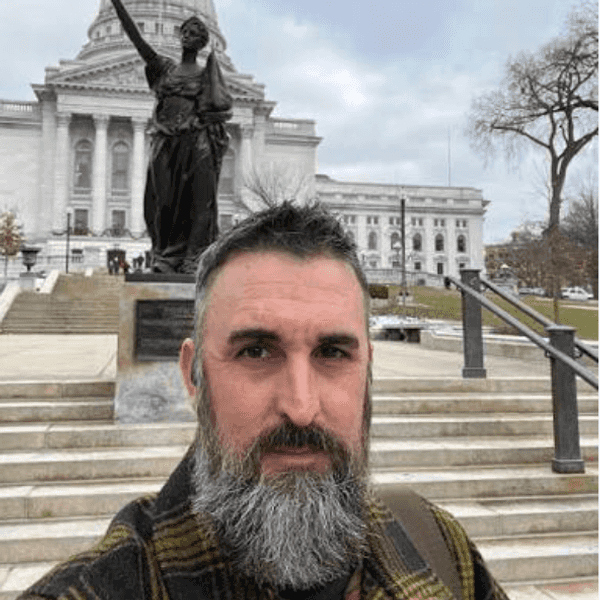
Gruber certainly looks at home in the district he wants to represent. He’s a big, broad-shouldered guy with closely cropped hair and a full salt-and-pepper beard—more wilderness than buttoned-up politician. He grew up around Arena (population 844), worked hayfields and a local cheese factory as a kid, and has spent his adult life as a firefighter, police officer, paramedic, EMT, and now conservation game warden.
“I hate to say it, but Trump is charismatic,” Gruber told me over Google Meet from his kitchen. “I hear it all the time. People say that he gets things done. And he does, even though it’s usually not helpful.”
That initially resonated with rural voters, Gruber explained, because they pride themselves on getting things done—baling hay before the rainstorm comes in, for example. “It doesn’t always have to be pretty,” Gruber said. “It just has to get done.”
It’s not often we find rural Democrats these days, yet an old strain of prairie populism remains stubbornly alive in Gruber’s patch of Wisconsin. That area has deep roots in the progressive tradition that produced Robert La Follette: small farmers suspicious of concentrated corporate power, strong cooperatives and organized labor, and a politics that once made economic populism perfectly compatible with being rural. The New Deal cemented much of that constituency into the Democratic coalition for many years, though rural America more broadly has since moved dramatically toward Republicans.
That history is part of what makes this district fertile ground for a Democratic comeback. In 2023, the new liberal majority on the state Supreme Court struck down Republicans’ appalling legislative gerrymanders, putting control of the legislature within reach.
The race for the 51st Assembly District matters far beyond Wisconsin. If Democrats take control of both chambers of the state legislature and Democratic nominee David Crowley wins the governor’s race, they can pass new congressional maps next year ahead of the 2028 elections. Wisconsin is about as purple as you can get, yet Republicans currently hold six of its eight congressional seats. If we win this race and Democrats retake the state legislature, the state’s House map could be redrawn to flip three—or more—seats in the next election cycle.
But before Democrats can redraw Wisconsin’s congressional districts, Gruber has to persuade rural voters who have spent years moving toward the Republican Party to vote for a Democrat.
In rural communities, there is an undercurrent of discontent over being trampled by outside forces—whether it’s high-voltage power lines running through farms without local consent, the dearth of broadband internet, or their schools and healthcare clinics shutting down.
For Gruber, a former trickle-down Republican himself, the accumulation of those losses opened his eyes. His daughter faced a nearly 100-minute bus ride to kindergarten after a local school shuttered, his website says. While working as a game warden, he once spent 27 minutes doing CPR with a local police officer to keep a woman alive in the field while waiting for an ambulance arriving from the next county over because there were no local volunteers available that night.
In a brutal irony, around the time Gruber and the Arena police officer were presented an award for their heroics, the village’s police department effectively closed. Keeping it open would have required raising property taxes, Gruber said, which he described as “choosing between flushing toilets and public safety.” Meanwhile, a Republican-led law legally prevents communities from raising property taxes without a referendum.
Add in unfettered Republican control of the state for nearly two decades, and for Gruber, it was hard to miss that conservative ideology simply wasn’t working.
But that doesn’t necessarily mean rural conservatives will eagerly vote Democratic this year. Social media is replete with conservatives trashing Trump for failing to deliver on his promises, quickly followed by statements like “But Kamala would’ve been worse” or “That doesn’t mean I’m a commie now!”
And it’s not just anecdotes. A recent report by Navigator Research found that roughly 1 in 5 of Trump’s 2024 voters say they regret their vote, but just eight percent of them would change it if it were possible.
It’s one thing to be disappointed by someone you helped elect. Remember, for one thing, we were similarly disappointed with then-President Barack Obama’s inability to get a public option into his healthcare law. It’s another thing to parlay that disappointment into literally changing parties.
For Gruber, the first step is simply talking to potentially hostile voters.
“Sometimes conservative folks will say, ‘Why should I vote for a Democrat?’” he said. “And I tell them, ‘You shouldn’t vote for a Democrat, just like you shouldn’t vote for a Republican. You should vote for someone you believe shares your values and is going to show up and work for you and your community.’”
Of the thousands of voters he said he’s talked to, Gruber reports that maybe five have sent him packing because they will vote for only Republicans.
I asked about those shared values. And honestly, it’s nothing groundbreaking. Nothing Democrats haven’t been fighting for since forever.
He said he wants to fight for rural education, public lands, and healthcare, instead of the $2 billion that Republicans in Madison helped to earmark to subsidize massive data centers for wealthy companies like Meta and Microsoft. While Gruber’s district isn’t in line to host any data centers, he said that residents are furious at the power lines being built to deliver power to nearby data centers, as well as the resulting increases in their electric bills.
And then there’s Trump’s escalating trade war with Canada, a particularly sensitive issue in dairy country. Canada is one of Wisconsin’s largest agricultural export markets, and its retaliatory tariffs now include 25 percent on U.S. cheese and 50 percent on several other dairy products. For farmers already feeling squeezed, that gives Gruber another economic issue that hits close to home.
In fact, Gruber got visibly emotional when the topic of Canadian tariffs came up.
“As a former firefighter, 9/11 is important to me, and no country came to the aid of the United States faster than Canada,” he said.
Wisconsin and Canada share a lot more than a border, and that’s common across the northern states. There’s a reason Trump’s “Lake America” is landing with a thud for most Americans, including many Republicans.
Being pro-Canada is an American value.
The GOP’s campaign against Gruber certainly isn’t talking about any of those issues, though. Instead, Republicans are leaning into culture-war attacks.
While I spoke with Gruber, I joked about whether Republicans were trying to tie him to transgender issues—and it turns out they are, as absurd as it sounded to me.
“They’re attacking me for knowing someone who knows someone who knows someone that supports prisoner sex-change operations,” he said. “It’s patently absurd, but it’s not as if Republicans can talk about healthcare, the economy, or anything of substance."
So whenever the matter comes up on the campaign trail—and it does—Gruber flat-out deflects it back to economic concerns. If someone is obsessed with that issue, he shrugs it off—they probably won’t vote for him anyway.
Republicans’ attack ads also make vague allusions to his “unhinged” social media posts, a characterization he has gleefully parodied since. Seriously, I went through months of his Facebook posts. “Tame” would be the better adjective.
That gets at the larger question I put to Gruber: When do immediate economic concerns—schools closing, ambulances taking too long to arrive, rising electricity bills, expensive groceries—outweigh fears about some trans kid somewhere else in the country?
There is no magical formula here, though. No logic that can tell us at what point people might stop voting against their economic interests because of irrational fears stoked by the conservative media ecosystem.
In the end, Gruber argues that Democrats must deliver economically for voters while still protecting marginalized communities. It’s not an either/or proposition. But he thinks the party’s main public focus has to be on improving people’s material lives—or, as he put it, offering candidates “who share their values, show up, and work hard to improve daily life.”
Which brings us right back to what Gruber said at the beginning of our conversation: Rural voters respected Trump’s willingness to act.
I’ve written about the same phenomenon. Our politicians have too often blamed norms, traditions, institutions, and procedural obstacles for their inability to change a system that increasingly benefits the wealthy and powerful. It’s excuse after excuse after excuse.
But Trump just does what he wants. Yes, he’s using that power toward ends we vehemently oppose, and many of his actions have been clawed back by the courts. But that has helped reveal the contours of presidential power—what a president can do, what the courts will stop, and what survives those challenges. And it turns out a president has far more power than we were led to believe.
The next Democratic Congress and president need to be just as laser-focused on using the power that voters give them to deliver tangible economic benefits to everyday people, without hiding behind norms and traditions that entrench the status quo.
Do that, and maybe some of those conservative voters in Gruber’s rural district will be impressed enough to reassess their partisan affiliations. Most won’t, to be sure. But we don’t need them all. Chip away at the GOP’s rural monolith, and the state of play changes dramatically.
That’s what makes Gruber’s corner of Southwest Wisconsin so interesting. This isn’t just a race for one seat in the state assembly. It’s a test of whether Democrats can begin rebuilding a rural presence by showing up, focusing relentlessly on people’s material lives, and then actually delivering when given power.
You can support Ben Gruber here. And remember, this isn’t just support for a revitalized Democratic rural presence. It’s support for a Wisconsin legislative majority that can redraw the state’s congressional map and net us at least two new U.S. House seats in 2028.
Let’s do it!
Markos Moulitsas is founder and editor of the blogging website Daily Kos and author of three books.
Reprinted with permission from Daily Kos
- Ignoring Red State Data, Trump Claims SNAP Beneficiaries Are 'Largely Democrats' ›
- Waking Up? Argentina Bailout Bares Trump's Contempt For Rural America ›
- 'White Rural Rage: The Threat To American Democracy' ›
- Democrats spy rare opening in rural America - POLITICO ›
- The decline of rural Democrats - by Steve Inskeep ›
- Democrats must rebuild in rural America. - Boston Review ›
- Could Democrats Regain the Rural Vote? - Dissent Magazine ›
- The three things Democrats must do to regain rural America’s trust | Democrats | The Guardian ›