Tag: 14th amendment
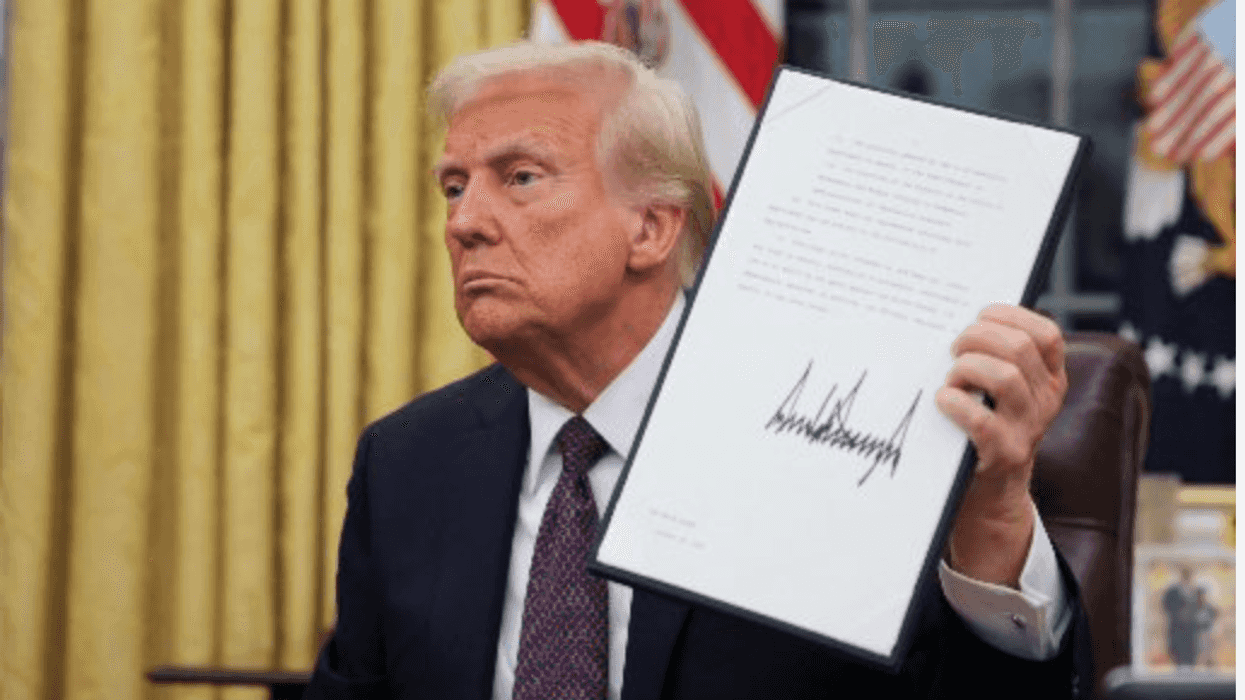
Trump with executive order

Trump's Delusional Orders On Birthright Citizenship Will Crash And Burn

The Supreme Court’s opinion in the birthright citizenship case, Trump v. Barbara, was decided by an unsettlingly close vote, but the actual decision of the Court was clear. The court majority delivered a stinging rebuke to the administration’s argument.

Six weeks later, Trump is running a version of his favorite play: take a loss and call it a win. On August 6, he issued two executive orders on birthright citizenship, and his contention is that neither one conflicts with the Barbara ruling. “There’s absolutely nothing in here that runs afoul of any of the Supreme Court’s opinions on the subject,” staff secretary Will Scharf said as the president put pen to paper. (Scharf’s know-nothing description takes on new significance with this morning’s announcement that he shortly will replace David Warrington as White House Counsel.)

It’s a fever dream. The chief order directly conflicts with Barbara, and it is destined to fail the first time the administration tries to use it. The second is subtler, and its fate will depend on how it’s administered.

Start with the delirium that drives Trump’s policy proposals. Trump’s obsession with the issue led him to attend (and then boorishly leave in the middle) the oral argument in Barbara. For years he has described birth tourism as a practice “where hundreds of thousands of people from all over the planet squat in hotels for their last few weeks of pregnancy to illegitimately and illegally obtain U.S. citizenship for the child.”

The Supreme Court at oral argument had asked the Solicitor General how many people are affected. The government’s chief advocate before the High Court couldn’t supply a number. At the signing of the orders, Trump simply snarled the figure into being: asked how many people actually benefit, when his own Solicitor General couldn’t give the Court a number, Trump answered, “hundreds of thousands, OK? Hundreds of thousands.”

The actual number of births to tourists, per a Penn State study, is under 0.3 percent of all U.S. births.

Trump’s new orders arrived with a constitutional theory. Per legal eminence Stephen Miller (errr maybe not: he doesn’t have a law degree), “As the president mentioned, the Fourteenth Amendment was passed exclusively in the aftermath of the Civil War, so to ensure that the children of slaves would be citizens,” Miller said. “It had no other meaning and purpose outside of that.” Trump repeated those terms: “This was for the babies of slaves.”

This is an astonishingly brazen argument, since the Supreme Court precisely, emphatically rejected it in the Barbara case. In fact, Justice Clarence Thomas, joined by Justice Neil Gorsuch, made the basic argument in dissent. Thomas wrote that the Citizenship Clause merely “constitutionalized the Civil Rights Act’s citizenship provision,” that its “main object” was to settle “the citizenship of freed [slaves],” and that “subject to the jurisdiction thereof” means complete or primary allegiance—allegiance owed solely to the United States—which in his view excludes the children of temporary visitors.

Miller and Trump are channeling Thomas’s dissenting argument as authority, six weeks after the Court rejected it decisively. (I laid out why Thomas’s reasoning was bankrupt in an earlier piece; the short version is that he asked what the drafters intended rather than the meaning of the provision they wrote.)

It’s stunning that the Trump administration would claim with a straight face that nothing in these orders “runs afoul of any of the Supreme Court’s opinions.”

What the Court actually held is close to the opposite view. Writing for the majority, Chief Justice Roberts explained that “subject to the jurisdiction thereof” means what it sounds like: you are subject to the laws of the United States. You can be taxed. You can be jailed. The phrase, Roberts wrote, refers to “the power of the United States to govern those within its territory” —and that power reaches everyone standing on American soil. A child born here and bound by our laws is a citizen at birth, period, full stop.

The exceptions are vanishingly narrow, and they prove the rule. The classic one is the child of a foreign diplomat. Why? Because a diplomat, by a legal fiction of extraterritoriality, is treated as if she never left home soil. She can rip up a parking ticket in front of the officer who wrote it, and there is nothing he can do, because she is not subject to his jurisdiction. That is what the exception is about: actual immunity from our laws, not disfavor.

Now hold the first executive order against that rule. The order decrees that a child born here is not a citizen if either parent falls into one of several new categories: an “alien enemy,” defined to sweep in members of foreign terrorist organizations; a foreign government employee; or someone who entered, or hired a surrogate who entered, in a “commercial transaction” to obtain citizenship for the child.

Ask of each the only question Barbara makes relevant. Is an accused terrorist subject to the laws of the United States? Of course they are—we arrest them, we try them, we can put them away for the rest of their life. Is a foreign national who came here to give birth subject to our laws? Obviously—they can be taxed, sued, deported, prosecuted for fraud, and given a speeding ticket. None of these people carries a diplomat’s immunity. Every one of them is fully within the jurisdiction of the United States, which is precisely why every one of their children born here is a citizen, full stop.

The order is silly and benighted, and it is going to crash and burn the first time the administration tries to enforce it against a real child from one of the new categories.

The second order, “Ending Birth Tourism,” is less clear-cut. It hands the president’s authority over who enters the country to the Secretaries of State and Homeland Security and tells them, in their discretion, to deny visas and turn away people who mean to come here to give birth.

In general, Trump stands on firmer ground here. That’s because the president has broad power over the border, and a regulation already lets a consular officer deny a visa to someone whose purpose is birth tourism. To that extent, the order adds almost nothing to the law, which is why even a Homeland Security official conceded it “simply restates existing law.”

But the order does convey broad discretion to the Cabinet Secretaries of State and DHS—to deny a visa, to revoke one and bar the holder for life, to move against anyone they decide is “facilitating” birth tourism—and they have all been hand-picked to serve Trump’s caprices, even over the Constitution. So the question becomes whether Trump’s loyal servants use their discretion to unmake the citizenship of a child already born here, to the delight of the big boss. At that point, it would run into the same constitutional brick wall as the first order.

We are left with two visions of the country.

In Donald Trump’s crabbed and fearful vision, hundreds of thousands of “birth tourists” huddle near the border, planning to filch something that was never theirs; and a president can strip them and their children of citizenship by decree.

In the vision of the 14th Amendment, as the Supreme Court has made clear, the citizenship clause lays down a promise, and it is one that has reverberated around the world: if you are born here and subject to our laws, you are a citizen and entitled to full participation in our society.

Go ahead, Trump: sign away.

The children born here today and tomorrow are citizens: his fever dream cannot touch them, and the Constitution’s promise outlasts him.

Harry Litman is a former United States Attorney and the executive producer and host of the Talking Feds podcast. He has taught law at UCLA, Berkeley, and Georgetown and served as a deputy assistant attorney general in the Clinton Administration. Please consider subscribing to Talking Feds on Substack.

Reprinted with permission from Talking Feds.
Beyond Birthright Citizenship, Justices Prove Case For Supreme Court Reform

Beyond Birthright Citizenship, Justices Prove Case For Supreme Court Reform

He still hasn't given up. In the wake of the 6-3 decision of the Supreme Court tossing out his Executive Order abolishing birthright citizenship, President Donald Trump was back at it, insisting that Congress should act. He cared enough about the case that he took the unprecedented step of attending the oral argument. But he brushed off the historic loss in the Court.

He posted on Truth Social: "The Supreme Court upheld Birthright Citizenship, which is too bad for our Country, but we can easily make it up in Congress through Legislation, with the support of the President ... No long and unwieldy Constitutional Amendment is necessary! Congress should start TODAY to work on ending expensive and unfair to our Country, Birthright Citizenship. They will have my Complete and Total Support!"

In fact, according to five of the six Justices in the majority, a long and unwieldy process would be required because Trump's Executive Order violated the Fourteenth Amendment. The Constitution specifically provides: "All persons born or naturalized in the United States, and subject to the jurisdiction thereof, are citizens of the United States." All persons born in the United States are citizens. It couldn't be clearer, which hasn't stopped Trump from harping on it for the last decade.Two-thirds of both houses of Congress must pass a proposal to amend the Constitution, then ratified by the legislatures of three-fourths of the states. It is a cumbersome process and rightly so, certainly in this case.

The argument — or maybe the polemic — against birthright citizenship focuses on what are called the "anchor babies" — the children of illegal immigrants who are born here and then used to secure legal residence for their families. It's mostly a myth: the anchor babies have to wait until they are 21 to sponsor their parents for green cards, which then becomes a nightmare because they have to return to their home country and wait years to complete the process — and the fear that, if they leave, they will not be permitted re-entry into the country.

There will be bills introduced in Congress, but they should go nowhere. The constitutional obstacle, which had been assumed, has now been established. It's one of Trump's two big losses — the other being tariffs — before a conservative Court that has mostly done his bidding.

The Supreme Court also ended its term, ending the careers of transgender girls in school sports across the country and allowing political parties to pour even more money directly into candidate campaigns, taking the swamp that is electoral politics and just expanding it.

The issue of transgender girls in sports may be ahead of its time, as the late Barney Frank suggested, but the individual stories of girls being forced to give up their passion to satisfy politicians are compelling.As for the freedom of the political parties to pour more money into the process, is that even possible? The answer to the question is yes, and the reflecting pool turned green because that is the color of money, and since the landmark Supreme Court decision in Citizens United, there is no stopping the corruption of the system.

The landmark 2010 decision struck down restrictions on independent political spending by corporations, labor unions, and other organizations, allowing them to spend unlimited amounts of money on elections. The Super PACs came next, and the expansion goes on. The Republicans went to the Court for this one because their party committees have more money set aside. This committee will spend hundreds of millions alone; no wonder so many people are voting to get the bums out, even the bums they agree with.

And no wonder constitutional law scholar and Congressional leader Jamie Raskin has his eye on restructuring the Supreme Court.

Susan Estrich is a celebrated feminist legal scholar, the first female president of the Harvard Law Review, and the first woman to run a U.S. presidential campaign. She has written eight books.

New Jersey GOP Nominee Opposes Citizenship Policy That Made His Family American

New Jersey GOP Nominee Opposes Citizenship Policy That Made His Family American

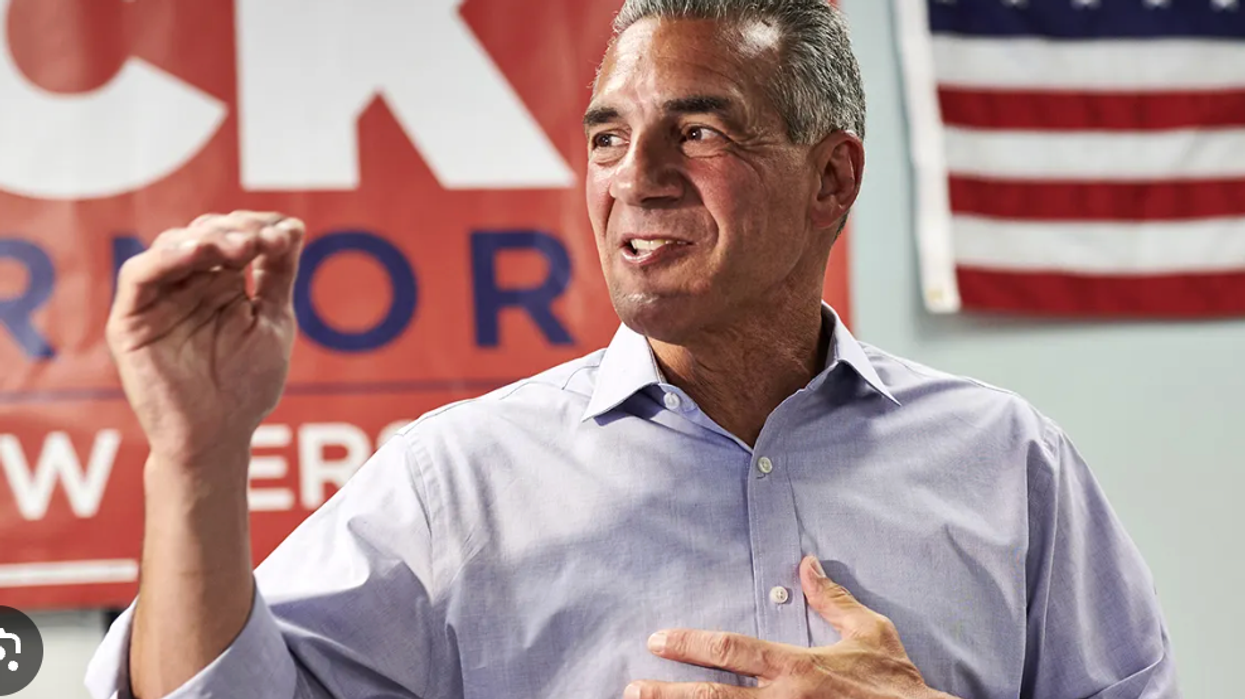
New Jersey gubernatorial candidate Jack Ciattarelli opposes birthright citizenship, even though his own ancestors benefited from it.

The 14th Amendment has long been understood to extend citizenship to all children born on U.S. soil, regardless of their parents’ nationality. President Donald Trump, however, issued an executive order challenging that interpretation, claiming the 1868 law only applied to the children of recently freed slaves.

Trump’s order is now before the Supreme Court. If birthright citizenship is eliminated, it will be a dramatic shift in domestic policy that could leave 11 million people born and raised in the United States vulnerable to deportation.

“Do I believe that someone should be able to just cross the border, give birth and have that baby be an American citizen?” Ciattarelli mused at a campaign event last month. “I don’t. That’s not what the intent was of the 14th Amendment.”

But a review of military and census records shows that Ciattarelli’s grandfather, Antonio, fathered at least two children in the United States before becoming a citizen.

Antonio wrote “no” on a World War I draft registration card from 1917 or 1918, asking whether he was a naturalized citizen or an alien. This was typical for Italian-born immigrants who had not yet begun the citizenship process but intended to.

The same card stated that Antonio had two children.

The 1920 census shows that Antonio had applied for citizenship but not yet been naturalized. It also states that he immigrated to the United States in 1908 and that his two children were born in 1914 and 1915, making them documented citizens.

By the time of the 1930 census, Antonio was a naturalized citizen and Ciattarelli’s father, Anthony, had been born. It’s not clear if Anthony was born before or after Antonio was naturalized.

Ciattarelli’s Democratic opponent, Mikie Sherrill, is a consponsor of the Born in the USA Act, which seeks to block Trump’s executive order ending birthright citizenship.

Reprinted with permission from American Journal News

Trump's Supreme Court States The Obvious: He Owns Them

Trump's Supreme Court States The Obvious: He Owns Them

Yesterday morning the Supreme Court ruled on the Colorado case striking Donald Trump from its election ballot because, as the Colorado Supreme Court held, he is an insurrectionist as defined under paragraph 3 of the 14th Amendment. As expected, they threw the case out, effectively deciding for Trump and against Colorado. The decision was interpreted as a huge win for Trump practically everywhere: “A massive victory for Trump” screamed CNN; “The U.S. Supreme Court handed Donald Trump a major victory,” chorused Reuters.

Donald Trump himself, like the megalomaniac he is, cruised over to his social media lie-factory and yelled from whatever rooftop it’s under, “BIG WIN FOR AMERICA!!!”

The vote on the court was 9-0, meaning that all nine justices voted for Trump’s position that a single state, Colorado, cannot throw a candidate off its ballot under the 14th Amendment. The decision for the court as a whole was unsigned, but there were two concurrences disagreeing with the decision on a somewhat less than subtle ground we’ll get to in a moment.

One of them, written by Justice Amy Comey Barrett of all people, uttered the quiet part out loud. She openly said what the whole court wouldn’t – that the case was so terrifying, they just pushed it off their desks. “In my judgment, this is not the time to amplify disagreement with stridency. The Court has settled a politically charged issue in the volatile season of a Presidential election. Particularly in this circumstance, writings on the Court should turn the national temperature down, not up.”

She may as well have begun with “Oh, my goodness!”

You have to wonder what it would take to shock this Supreme Court into taking action -- maybe a decision by a court in a state like Alabama ruling that in some circumstances it’s okay to murder Black people in cold blood?

I guess what Justice Barrett said was a version of Bush v. Gore, another “politically charged issue in the volatile season of a Presidential election,” when the Supreme Court told the world they didn’t really mean it as they installed George W. Bush as president even though Al Gore was ahead in the vote count. Remember how, having injected themselves into the election, the Supreme Court said that’s not what they were doing by trying to limit the damage when it held that the case was not to set a precedent? That was like saying, “Oh, that body over there with democracy on its forehead? Whatever you do, don’t pay attention to that.” Barrett’s concurrence did something of the same thing. She said she agreed with the result of the decision – her favorite president gets to stay on the ballot – but not with the, uh, methodology of how the majority got there.

What the five justices in the majority did was this: they, and the rest of the court for that matter, utterly ignored the finding by the Colorado Supreme Court that Donald Trump had committed insurrection. How could they do that when the whole purpose of paragraph 3 of the 14th Amendment was to deal with the results of the insurrection which had just taken place, namely the Civil War? Well, the Supreme Court said it’s not our job to enforce the 14th Amendment. That’s up to Congress.

Which is like saying, oh, we’ll just leave that problem up to the snarling pack of rabid dogs over there. They’ll get together and do it for us.

To call this position taken by the court bullshit isn’t sufficient. It’s a gigantic, muciferous, glob of a lie. Besides dealing with the scourge of insurrection, the 14th Amendment was written after the Civil War to confer citizenship rights on former slaves and to ensure that the Southern states, which had treated them like property, afforded former slaves and every other citizen “equal protection under the laws.” Brown v. Board of Ed is just one example of when the Supreme Court enforced the 14th Amendment’s guarantee of equal rights under the law, and many, many other similar cases have addressed the rights guaranteed by the 14th Amendment without the help, if it could be called that, of Congress.

So, why is the court at this juncture pointing over there across First Street on Capitol Hill and saying, in effect, “it’s their problem"? Because they know the Congress can’t get itself together to keep the fucking government open by passing a budget, much less address the issue of the damn insurrection that took place right there in front of them and forced them from their offices and chambers and left five dead.

Donald Trump did that, and the three justices on the court appointed by him, along with the other three Republican justices in his thrall, will not be the ones who uphold the law in the Constitution which so clearly disqualifies him from holding a federal office. They’re scared of offending Trump and his violent followers. Why, if they did that, it might interrupt the vacation they’re planning this summer at one billionaire’s Adirondack camp or another billionaire’s salmon fishing stream.

I have become accustomed to reading these appeals court decisions. Hell, it has become a major part of my job. But I have trouble finding the words to describe what a profile in cowardice this Supreme Court decision is. If they use this decision as precedent and continue washing their hands of enforcing the 14th Amendment, it spells the end of equal enforcement of the laws in this country. To leave enforcement of basic rights up to the Congress is to disavow the responsibility the Supreme Court took upon itself in Marbury v. Madison to be the final arbiter of what the Constitution says and what the law means. Leaving those decisions up to the band of yahoos who are running things in the nation’s legislature is like asking the thieves who just robbed the bank to toss us a few pennies as they divide up their ill-gotten gains.

This decision negating the insurrection clause in the 14th Amendment, raises the question of whether the three post-Civil War amendments -- ending slavery, conferring the right to vote, and ensuring equal protection of the laws without regard to race, creed, or national origin -- will have any force at all in the coming years. The Supreme Court already eviscerated the rights of Black people to vote with Shelby County v. Holder. What is next on the right-wing agenda? Allowing segregated schools? Enforced labor for immigrants seeking citizenship?

Steel yourselves. I’m afraid this is just the beginning.

Lucian K. Truscott IV, a graduate of West Point, has had a 50-year career as a journalist, novelist, and screenwriter. He has covered Watergate, the Stonewall riots, and wars in Lebanon, Iraq, and Afghanistan. He is also the author of five bestselling novels. You can subscribe to his daily columns at luciantruscott.substack.com and follow him on Twitter @LucianKTruscott and on Facebook at Lucian K. Truscott IV.

Please consider subscribing to Lucian Truscott Newsletter, from which this is reprinted with permission.

Shop our Store

Headlines

Editor's Blog

Trending

World