25 Years After 9/11, Questions Persist Over FBI Pursuit Of Saudi Suspects
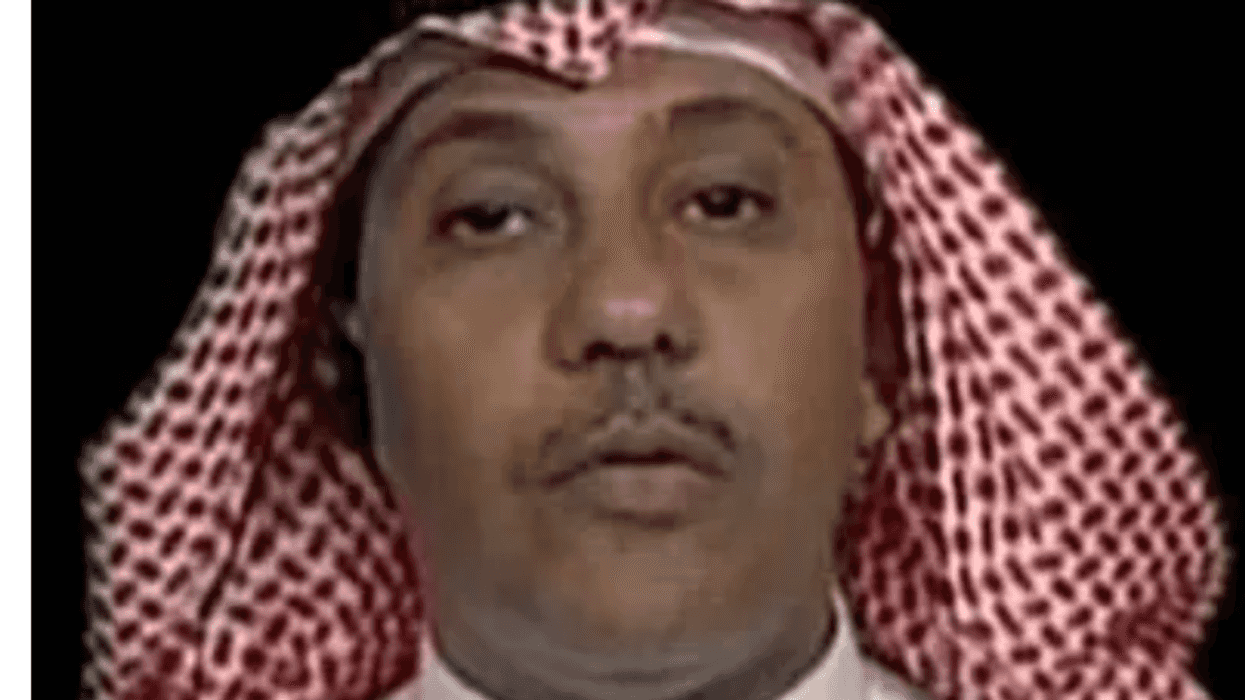
Within a few days of the terror attacks that killed nearly 3,000 people on Sept. 11, 2001, FBI agents identified an important possible suspect: a middle-aged Saudi graduate student who provided crucial help to two of the al-Qaida hijackers as they settled in San Diego early the year before.
The Saudi, Omar al-Bayoumi, had since moved to England, and he was arrested there at the FBI’s request. A police search of his home and office yielded a trove of evidence that quickly deepened investigators’ suspicions about Bayoumi and his dealings with the terrorists. But what happened to much of that evidence after it was delivered to the FBI remains a mystery.
Bayoumi was questioned and released by British police and later returned to Saudi Arabia. For years thereafter, the FBI would insist he wasn’t really a suspect at all — that Bayoumi had met the hijackers by chance, had helped them unwittingly and seemed nothing like a militant Islamist.
As the 25th anniversary of the 9/11 attacks is marked Friday, questions about how the FBI handled Bayoumi’s case have only grown, driven in part by evidence that was seized from him in 2001 but not made public for years or even shared with field agents who sought to investigate his role.
That evidence and other FBI information, now filed in a federal lawsuit against the Saudi government by victims of the attacks, has undercut both Bayoumi’s claims of innocence and the FBI’s profile of him as a genial, pro-American civil servant. While he was living publicly as a student, it shows, Bayoumi worked closely with Saudi religious officials, operated as a Saudi intelligence asset and collaborated with several clerics who would later emerge as militant Islamists tied to al-Qaida.
This week, representatives of the 9/11 families are again demanding an end to what they have called the Justice Department’s silence about what happened to the Bayoumi evidence and why he and other Saudis were not more aggressively pursued. The families have also questioned whether the Trump administration — which has strengthened U.S. diplomatic and business ties to the Saudi royal family — is committed to pursuing the truth about the possible role of Saudi officials.
“We still have not been given the full picture of what happened,” said Kathleen Zapata, whose father, Joseph Coppo, was killed in the World Trade Center. “Why are we having to fight against our own government simply to get answers about the most horrible attack ever on American soil?”
A White House spokesperson said, “President Trump is leading the most transparent administration in history, and his team is working diligently on identifying records that are responsive to these families’ request.” A Justice Department spokesperson declined to comment, noting that many of the officials involved in the early 9/11 investigation no longer work for the government.
While former Presidents Bill Clinton, George W. Bush, Barack Obama and Joe Biden are expected to attend a ceremony at the 9/11 memorial in New York, President Donald Trump has said he will commemorate the anniversary separately at the Pentagon.
The Saudi government has long denied any role in the attacks, often citing FBI and CIA statements that the royal family was an enemy of al-Qaida and its Saudi-born leader, Osama bin Laden. A spokesperson for the Saudi Embassy in Washington did not return messages asking for comment, including a request to speak to Bayoumi.
From San Diego to Dulles International Airport
A ProPublica examination of how the FBI handled the Bayoumi evidence shows that questions surrounding the Saudi connections to the 9/11 plot date to Jan. 15, 2000, when the first two hijackers landed in Los Angeles on a flight from Bangkok.
The CIA had followed the two men, Nawaf al-Hazmi and Khalid al-Mihdhar, as they met with other Qaida operatives in Malaysia days before. But the agency said it lost track of them when they flew to Thailand and then entered the United States using their real names and Saudi passports. (The CIA did not inform the FBI of their presence in the United States until Aug. 24, 2001, according to the report of the 9/11 Commission.)
Unlike several Qaida operatives who led the hijacking teams, Mihdhar and Hazmi spoke no English and knew almost nothing of life in a Western society. The mastermind of the plot, Khalid Sheikh Mohammed, told CIA interrogators he advised them to seek help from Muslim communities in California, according to the 9/11 Commission. But the commission and many U.S. terrorism experts expressed skepticism that he would deploy such ill-equipped operatives without providing them with any contacts in the United States.
Bayoumi claimed his meeting with the hijackers was happenstance. After driving from San Diego on Feb. 1, 2000, he said, he had a meeting at the Saudi Consulate in Los Angeles and then went to a nearby halal cafe. There, he later told the FBI, he overheard Hazmi and Mihdhar speaking Gulf-accented Arabic and introduced himself. Seeking to be hospitable, he said, he told them they might want to try San Diego.
Shortly after the men stepped off a bus there three days later, Bayoumi said, he happened to run into them again at a local mosque. The next day, he arranged for them to rent an apartment in the building where he lived with his family, co-signed their lease and set up a bank account for them, briefly loaning them about $1,500 for the deposit. He went on to introduce them to more than two dozen local men who helped them in various ways.
The FBI had already looked closely at Bayoumi, launching a preliminary investigation in 1998 after neighbors reported what they said were suspicious gatherings of young Arab men at his apartment. That inquiry determined that Bayoumi, who had worked for the Saudi civil aviation ministry, was still receiving a generous government stipend through an aviation company for which he did no work. The investigation found no criminal activity, however, and it was closed after six months, officials said.
Barely a week after the 9/11 attacks, the FBI asked the British authorities to arrest Bayoumi in Birmingham, England, where he had begun graduate business studies at Aston University.
David Campbell, then a young terrorism investigator, was dispatched from London by the Metropolitan Police Service, which is responsible for counterterrorism efforts across Britain. He recalled flying back down the highway in a special police vehicle with his handcuffed prisoner in the back seat, the sirens blaring. “They’d been told they had one of the 9/11 terrorists,” he said in an interview.
The FBI sent three agents from the United States to assist with Bayoumi’s interrogation at the Paddington Green police station in Central London. They were joined by a senior FBI attache, Joseph Hummell, who worked closely with the police service’s Anti-Terrorist Branch, known as SO13.
But despite those close contacts and the FBI’s considerable information about Bayoumi, very little of it was shared with Campbell and the Birmingham detective who joined him in questioning the suspect.
“We were really in the dark,” Campbell recalled. “They never even mentioned that he had been under investigation by the FBI in San Diego in 1998.”
Nor, Campbell said, were the interrogators briefed about the materials that had just been taken from Bayoumi’s Birmingham home and office, which included boxes of papers, correspondence, photographs, computer disks, videotapes and an address book. Yet some of those items had been immediately flagged as important, records show.
Among them was a diagram in Bayoumi’s handwriting that appeared to calculate the trajectory of an airplane to a point on the horizon. Another was a video of Bayoumi touring and describing the U.S. Capitol, a building that had been identified by U.S. investigators as a prospective al-Qaida target.
After questioning Bayoumi for almost a week, Campbell said, he and the Birmingham detective joined two senior SO13 officers on a conference call with Justice Department attorneys in the United States. The two interrogators were given a brief opportunity to express their view that Bayoumi’s account seemed deeply suspicious and full of falsehoods, Campbell said.
It didn’t seem to matter. The U.S. officials, who included lawyers in Washington and federal prosecutors in New York, concluded quickly that they did not have sufficient evidence to seek Bayoumi’s extradition.
“When the call ended, we just looked at each other in complete disbelief,” Campbell recalled.
FBI documents declassified in response to a 2021 executive order by Biden give a partial answer to what happened to the Bayoumi evidence.
One memorandum on Oct. 11, 2001, notes that New Scotland Yard, as the Metropolitan Police Service was often called, had provided the FBI attache’s office with “copies of all recovered exhibits, including mirror images of all computers.” A complete copy of the trove was also sent via Federal Express to the FBI’s New York Field Office, the memo noted.
By then, however, the agency’s new director, Robert Mueller, had taken the unusual step of ordering that the 9/11 case be run out of its Washington headquarters. The Penttbomteam, as it became known in the FBI’s clunky acronym for Pentagon/Twin Towers Bombing, mobilized thousands of FBI agents and analysts around the world.
One group focused on the hijackers of American Airlines Flight 77, the plane that crashed into the Pentagon, tracing the path of Hazmi and Mihdhar from Southern California to Dulles International Airport in Virginia, where they abandoned a used Toyota Corolla registered to one of their former addresses in San Diego.
How the headquarters team translated and analyzed the materials obtained from Bayoumi in Britain is unclear. But the team did not appear to share the evidence widely. In another memo, dated May 15, 2002, the San Diego FBI office noted that it was asked to review only five of the more than 80 VHS tapes seized from Bayoumi in Birmingham. Two of those were duplicates and included footage of a paintball fight and a family trip to Sea World. “Nothing of significant investigative/evidential value has been discovered,” the memo stated.
Although Bayoumi’s friends and associates helped the hijackers with everything from part-time jobs to flying lessons (they flunked out because their English was so poor), FBI leaders dismissed the idea that any of the people who helped them knew they were Qaida operatives sent on a still-evolving terrorist mission.
“As far as we know, they contacted no known terrorist sympathizers in the United States,” Mueller told a joint panel of the Senate and House intelligence committees in September 2002. “To this day, we have found no one in the United States except the actual hijackers who knew of the plot.”
The FBI’s more conclusive account of its Penttbom findings came before the bipartisan 9/11 Commission. The young agent leading the Flight 77 investigation team, Jacqueline Maguire, echoed Mueller’s earlier testimony, saying in 2004 that Bayoumi’s meeting with the California hijackers had been “a random encounter” and that he had helped them without knowing their true aim. Maguire also said the FBI had no indication the hijackers had initially sought out another figure who raised suspicions, Fahad al-Thumairy, the imam of the Saudi-built King Fahd Mosque in Culver City, California.
Michael Jacobson, a former State Department counterterrorism official who was a key commission investigator, said he knew some FBI agents in California were convinced that Bayoumi and Thumairy had helped the hijackers deliberately. But Maguire and her boss, Mary Galligan, who oversaw the Penttbom team, “were both consistently pushing back hard on any narrative of a support network,” Jacobson said in an interview.
Maguire and Galligan declined to comment.
When investigators from the 9/11 Commission interviewed Bayoumi and Thumairy in Saudi Arabia in 2003, Maguire — who had already interviewed the two Saudis for the FBI months earlier — joined them as an official escort. The interviews, which were managed by Saudi intelligence officials, were notable for Bayoumi’s efforts to ingratiate himself and Thumairy’s seemingly brazen lies, former officials said. Thumairy said he had never met the hijackers and did not even know Bayoumi, despite telephone records showing numerous calls between them. The Saudi Embassy did not respond to a request to speak to Thumairy.
In its final report, the commission said it could not confirm that Thumairy helped the two terrorists but found it was “fairly certain that Hazmi and Mihdhar spent time at the King Fahd mosque and made some acquaintances there.”
Echoing the FBI’s assessment, the commission described Bayoumi as “a devout Muslim, obliging and gregarious,” and found no evidence he “believed in violent extremism or knowingly aided extremist groups.” It would take years before those conclusions were forcefully challenged.
Daniel Gonzalez, a San Diego FBI agent who had been looking at Hazmi and Mihdhar’s circle since the day after the attacks, became the case agent for Operation Encore, a “subfile” or follow-on inquiry to the original 9/11 case. But while he and other agents made significant breakthroughs, former officials said, they faced constant skepticism from FBI headquarters and were sometimes blocked outright in their efforts to pursue the case.
In 2007, in an interview with a key source in Jordan, Gonzalez learned of two other important witnesses in Los Angeles, young Muslim immigrants who had also helped the hijackers. The two later confirmed the hijackers had gone to the King Fahd Mosque after arriving in Los Angeles and met repeatedly with Thumairy. One of the men said Thumairy also arranged for the hijackers to be driven to their first meeting with Bayoumi at the halal cafe — undercutting Bayoumi’s claim that he met them by chance.
For years, Encore agents said, they continued to press for more of the materials seized from Bayoumi in Britain. At one point, Gonzalez got a phone call from Washington asking if he wanted some old Penttbom evidence that was about to be destroyed. The materials — copies of some of Bayoumi’s long-sought papers, including the suspicious flight diagram — stunned the Encore team, Gonzalez said.
In June 2012, a small group of Encore investigators and analysts flew to London to try to review the Bayoumi search evidence more thoroughly. According to three former officials familiar with the trip, they viewed dozens of hours of videotapes and took new copies of much of the Metropolitan Police material.
For reasons that remain unclear, however, the team either did not see or did not focus on a few videotapes that would later become evidence in the 9/11 families’ lawsuit, including the tape of Bayoumi at the U.S. Capitol. While some terrorism experts have interpreted the recording as Bayoumi’s effort to “case” the site for a possible attack, lawyers for the Saudi government described it as a tourist video.
The Bayoumi videos also included extensive footage of two Saudi religious officials who not long before had commanded attention from both the FBI and CIA. The two men, Adel al-Sadhan and Mutaeb al-Sudairy, were emissaries of the Saudi Ministry of Islamic Affairs who had traced what intelligence officials saw as a strikingly suspicious path around the United States. The Saudi Embassy did not respond to a request to speak to the men.
In addition to traveling to Washington, D.C., with Bayoumi, the two clerics visited Los Angeles and San Diego a year before the hijackers and stayed at one of the homes where Hazmi and Mihdhar later lived. Sudairy also spent several months living in Columbia, Missouri, with an American al-Qaida member, Ziyad Khaleel, who provided Osama bin Laden with the satellite phone that FBI officials said he used to orchestrate the 1998 bombings of U.S. embassies in Kenya and Tanzania.
Just before and after the hijackers arrived in San Diego, telephone records show, Bayoumi also made a series of calls to Sudairy in Washington, Thumairy in Los Angeles and Anwar al-Aulaqi, a Yemeni American cleric. Aulaqi, who ran a San Diego mosque that Bayoumi had funded through Saudi donations, was described by FBI witnesses as a spiritual adviser to Hazmi and Mihdhar. Aulaqi later emerged as an important al-Qaida leader before he was killed in a U.S. drone strike in 2011.
Unanswered Questions
In 2014 and 2015, a panel of security experts was assembled to review the FBI’s implementation of reforms called for by the 9/11 Commission. The 9/11 Review Commission, as the second panel was called, was also tasked with looking again at questions about the 9/11 plot that remained unanswered.
Maguire, the FBI’s primary liaison to the review panel, again disputed suspicions about Bayoumi. “He came here for school and everything seems accidental with Bayoumi,” the commission was told in a 2014 briefing led by Maguire.
The review panel concluded there was not enough new information to revise the 9/11 Commission’s finding that there was no “witting assistance” to the hijackers. But Tim Roemer — a Democratic former congressman from Indiana who served on the 2002 joint intelligence inquiry, the 9/11 Commission and the Review Commission — made a point of pressing for further investigation into the Saudi question. He was struck that Maguire and other FBI officials were still pushing back.
“There was consistent feedback from some levels of the FBI that simply wanted to close the case and claim that what Bayoumi did was purely coincidence and somehow accidental,” Roemer said.
Roemer insisted that the Review Commission formally recommend that the FBI continue to examine the Saudi issue. But shortly after it did so, officials at FBI headquarters renewed their pressure to shut down Operation Encore. In 2016, the head of the agency’s Joint Terrorism Task Forces finally relented, reassigning the case and disbanding the team that had been investigating it for years.
The next year, a pair of memorandums sent by the FBI’s Washington field office confirmed something that the Encore agents had long suspected: Between the late 1990s and Sept. 11, 2001, Bayoumi was paid a monthly stipend as a co-optee, or part-time agent, of the Saudi intelligence services.
By then, Gonzalez had retired. The Encore investigators who remained were working new jobs. Along with other documents from the FBI investigation, the memos were initially withheld from the 9/11 families by the Justice Department, which classified them as state secrets during Trump’s first term. The Encore agents saw the memos for the first time when they were finally made public in 2022 under Biden’s executive order.
“Somebody needs to explain to the American people why we didn’t see this information before,” Gonzalez said in an interview.
Reprinted with permission from Pro Publica