Tag: aca subsidies
Stressed Out? You've Endured A Year Of Spiraling American Health

Stressed Out? You've Endured A Year Of Spiraling American Health

Two snapshots of a health care system in precipitous decline: First, the latest Kaiser Family Foundation tracking poll shows Americans’ number one pocketbook concern is now the cost of health insurance and out-of-pocket health care expenses. Fully two-thirds of the public are more worried today about health care costs than food, housing, utilities or gasoline.

Second, the Centers for Medicare and Medicaid Services reports that 1.2 million households dropped health insurance coverage during the 2026 sign-up season, a direct result of the Republican Congress ending the enhanced premium subsidies for Obamacare plan purchasers. The missing 1.2 million came from just 30 states that use the federal exchange.

When the other 20 states report (many have extended the sign-up season to the end of this month), that number will likely reach the 2.2 million that the Congressional Budget Office predicted would drop coverage. The KFF poll found 67 percent of voters now oppose ending the expanded subsidies, including 89 percent of Democrats and 72 percent of independents. Democratic Party attempts to restore the subsidies led to a 43-day government shutdown in October and November.

Those two news items prompted me, in this last post before a three-week break, to take a brief look at where the overall health of the nation and health care policy stand a little over one year into the second Trump administration. I begin by resuscitating a question raised by another Republican president nearly 46 years ago: Are we better off today than we were a year ago?

As sports announcers like to say, let’s go to the video tape.

Compared to one year ago, we have:

  • Falling health insurance coverage and a rising uninsured rate.
  • Declining health care affordability.
  • Less vaccine access.
  • Large measles outbreaks.
  • States eliminating water fluoridation.
  • Less money for public health departments.
  • Less money for Medicaid.
  • Less money for NIH research, and ideological controls placed over its content.
  • Less money for substance abuse treatment.
  • Less money for HIV prevention.
  • Less money for global health.

Among the social and economic determinants of health (which have a greater impact on the general population than health care system interventions), we face:

  • Rising unemployment.
  • Rising inflation (especially for health care and groceries).
  • Fewer food stamps.
  • Less affordable housing.
  • Declining consumer confidence.

Less in the pipeline, too

Every arena for improving public health last year suffered major cuts in federal support or detrimental policy reversals or both. Looking ahead, every public and private institution that must deal with the health consequences of a less generous social safety net faces the prospect of years of additional cuts in federal support due to the massive corporate and higher-earner tax breaks passed last year.

They will also have to deal with another “social determinant of health”: A level of social stress and political division that we’ve not seen since the Vietnam War. It is a direct result of the Trump regime’s violent and illegal assaults on America’s immigrant communities, conducted without regard for the citizenship, residency status or civil rights of those assaulted.

The toll so far: Nearly three dozen dead, including Renee Good and Alex Pretti through summary execution. Within immigrant communities, there now exists widespread fear, reduced school attendance, lost jobs and declining economic activity.

Mounting social stress extends well beyond those directly attacked by the poorly trained goons deployed by the Department of Homeland Insecurity. For a majority of Americans, there is growing recognition that we are on the cusp of losing our birthright as U.S. citizens — the right to the constitutional democracy that was founded 250 years ago and has long been a beacon to freedom-seeking peoples everywhere.

Instead, we’ve been forced to watch helplessly (and without effective push back by the minority party) as the executive branch daily flouts the rule of law; an obsequious, dysfunctional Congress that conducts no oversight; a politicized Supreme Court that enables flagrantly unconstitutional executive behavior; and an ongoing attack on free and fair elections by a Department of Justice that acts like the president’s personal law firm. All of this is either overlooked or temporized by a press run by oligarchs, who now control most of the mainstream media that reaches the broad mass of Americans.

The long-term health consequences of these dramatic changes in our daily lives cannot be predicted with certainty. But the one thing health researchers have repeatedly shown is that people under chronic stress are more prone to chronic disease. The Trump regime’s actions are, quite literally, ruining your health.

A Nation Under Extreme Stress

One need look no farther than public opinion polls to know that huge swaths of the U.S. population feels it is under tremendous stress. A Gallup Poll taken in mid-2025 showed over 18 percent of Americans report they have been either diagnosed or treated for depression in the past year, close to the highest level ever. The rate for young people under 30 is 27 percent — the highest ever.

Why wouldn’t young people feel depressed when the oligarch-controlled social media feeds streaming through their smart phones confirm daily that they are living live in a country on the brink of civil war; where an oppressed majority’s beliefs and values are daily being attacked by a regime that makes no attempt to govern on behalf of all the people; where those who express their anger and frustration through constitutionally protected speech and protest are branded as “domestic terrorists,” with their names, license plates and addresses recorded by masked government employees toting pistols and stun guns?

Should we be surprised that the Fall 2025 edition of the long-running Harvard Kennedy School Youth Poll found that nearly two-thirds of young adults (under 29) describe the U.S. today as “a democracy either in trouble (45 percent) or one that has already failed (19 percent).” Just four percent of Democrats and Independents would describe the U.S. as “a healthy democracy.” The number rises to only 12 percent among self-identified Republicans.

I wanted to end this review on a positive note, and the latest report on U.S. life expectancy from the National Center for Health Statistics, an arm of the CDC, provided the opportunity. It showed life expectancy rose seven months to 79.0 years in 2024, finally reaching and slightly surpassing its pre-COVID peak (although we’re still two to three years behind other advanced industrial countries). Analysts attributed the increase to reduced opioid overdose deaths and the waning effect of the pandemic.

A victory for Trump’s crackdown on the global fentanyl trade by blowing boats out of the water off in the Pacific Ocean and Gulf of Mexico? Hardly. The report covers 2024, the year before he resumed residency in the Oval Office. We’ll have to wait until next year to learn how much damage his actions and those of his minions have done to Americans’ health.

Merrill Goozner, the former editor of Modern Healthcare, writes about health care and politics at GoozNews.substack.com, where this column first appeared. Please consider subscribing to support his work.

Reprinted with permission from Gooz News

Defying GOP Leadership, House Passes Bill To Extend Obamacare Subsidies

Defying GOP Leadership, House Passes Bill To Extend Obamacare Subsidies

In a remarkable rebuke of Republican leadership, the House passed legislation Thursday, 230-196, that would extend expired health care subsidies for those who get coverage through the Affordable Care Act as renegade GOP lawmakers joined essentially all Democrats in voting for the measure.

Forcing the issue to a vote came about after a handful of Republicans signed on to a so-called “discharge petition” to unlock debate, bypassing objections from House Speaker Mike Johnson. The bill now goes to the Senate, where pressure is building for a similar bipartisan compromise.

Together, the rare political coalitions are rushing to resolve the standoff over the enhanced tax credits that were put in place during the COVID-19 crisis but expired late last year after no agreement was reached during the government shutdown.

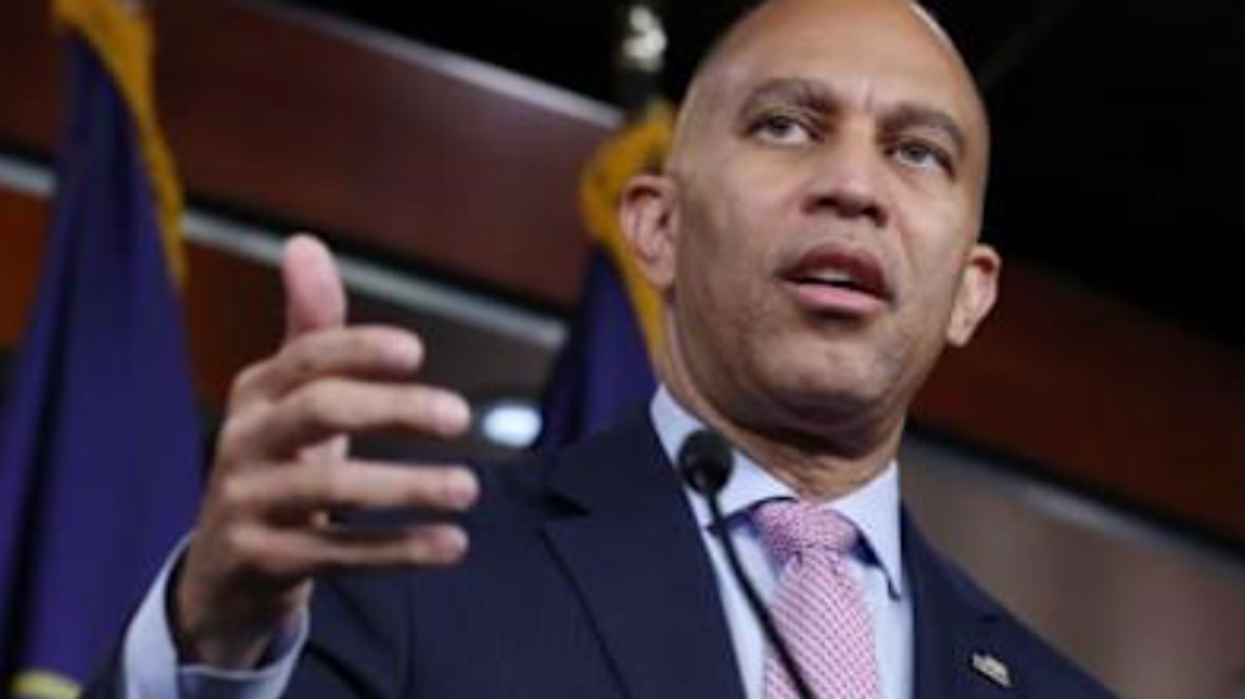
“The affordability crisis is not a ‘hoax,’ it is very real — despite what Donald Trump has had to say,” said House Democratic Leader Hakeem Jeffries, invoking the president's remarks.

“Democrats made clear before the government was shut down that we were in this affordability fight until we win this affordability fight,” he said. “Today we have an opportunity to take a meaningful step forward.”

Ahead of voting, the nonpartisan Congressional Budget Office estimated that the bill, which would provide a three-year extension of the subsidy, would increase the nation's deficit by about $80.6 billion over the decade. At the same time, it would increase the number of people with health insurance by 100,000 this year, 3 million in 2027, 4 million in 2028 and 1.1 million in 2029, the CBO said.

Johnson (R-LA), worked for months to prevent this situation. His office argued Thursday that the federal health care funding from the COVID-19 era is ripe with fraud, pointing to an investigation in Minnesota, and urged a no vote.

On the floor, Republicans argued that the subsidies as structured have contributed to fraud and that the chamber should be focused on lowering health insurance costs for the broader population.

“Only 7% of the population relies on Obamacare marketplace plans. This chamber should be about helping 100% of Americans,” said Rep. Jason Smith, the Republican chairman of the House Ways and Means Committee.

While the momentum from the vote shows the growing support for the tax breaks that have helped some 22 million Americans have access to health insurance, the Senate would be under no requirement to take up the House bill.

Instead, a small group of senators from both parties has been working on an alternative plan that could find support in both chambers and become law. Senate Majority Leader John Thune (R-SD) said that for any plan to find support in his chamber, it will need to have income limits to ensure that the financial aid is focused on those who most need the help. He and other Republicans also want to ensure that beneficiaries would have to at least pay a nominal amount for their coverage.

Finally, Thune said there would need to be some expansion of health savings accounts, which allow people to save money and withdraw it tax-free as long as the money is spent on qualified medical expenses.

Sen. Jeanne Shaheen, D-N.H., who is part of the negotiations on reforms and subsidies for the Affordable Care Act, said there is agreement on addressing fraud in health care.

“We recognize that we have millions of people in this country who are going to lose — are losing, have lost — their health insurance because they can’t afford the premiums,” Shaheen said. “And so we’re trying to see if we can’t get to some agreement that’s going to help, and the sooner we can do that, the better.”

Trump has pushed Republicans to send money directly to Americans for health savings accounts so they can bypass the federal government and handle insurance on their own. Democrats largely reject this idea as insufficient for covering the high costs of health care.

Republicans go around their leaders

The action by Republicans to force a vote has been an affront to Johnson and his leadership team, who essentially lost control of what comes to the House floor as the Republican lawmakers joined Democrats for the workaround.

After last year’s government shutdown failed to resolve the issue, Johnson had discussed allowing more politically vulnerable GOP lawmakers a chance to vote on another health care bill that would temporarily extend the subsidies while also adding changes.

But after days of discussions, Johnson and the GOP leadership sided with the more conservative wing, which has assailed the subsidies as propping up ACA, which they consider a failed government program. He offered a modest proposal of health care reforms that was approved, but has stalled.

It was then that rank-and-file lawmakers took matters into their own hands, as many of their constituents faced soaring health insurance premiums beginning this month.

Republican Reps. Brian Fitzpatrick, Robert Bresnahan and Ryan Mackenzie, all from Pennsylvania, and Mike Lawler of New York, signed the Democrats’ petition, pushing it to the magic number of 218 needed to force a House vote. All four represent key swing districts whose races will help determine which party takes charge of the House next year.

Trump encourages GOP to take on health care issue

What started as a long shot effort by Democrats to offer a discharge petition has become a political vindication of the Democrats’ government shutdown strategy as they fought to preserve the health care funds.

Democrats are making clear that the higher health insurance costs many Americans are facing will be a political centerpiece of their efforts to retake the majority in the House and Senate in the fall elections.

Trump, during a lengthy speech this week to House GOP lawmakers, encouraged his party to take control of the health care debate — an issue that has stymied Republicans since he tried, and failed, to repeal Obamacare during his first term.

Reprinted with permission from Daily Kos


Shop our Store

Headlines

Editor's Blog

Corona Virus

Trending

World