Tag: alex pretti
Bondi's Department Of Obstruction Aims To Protect Killers Of Pretti And Good

Bondi's Department Of Obstruction Aims To Protect Killers Of Pretti And Good

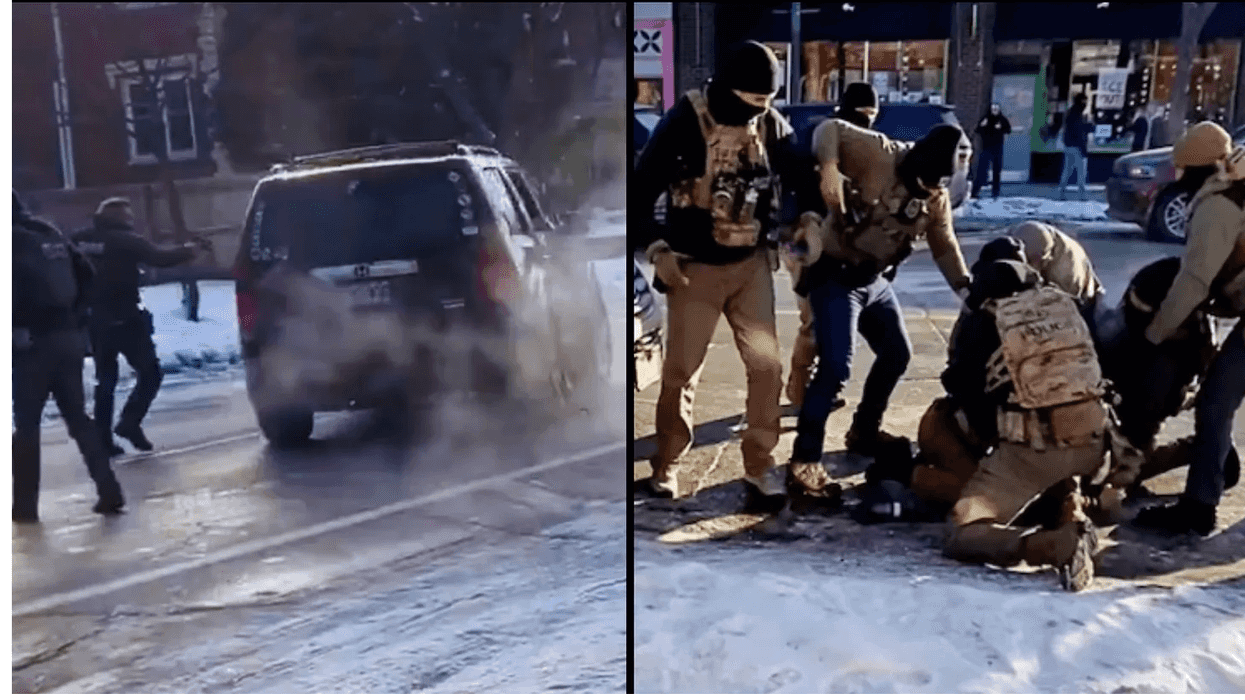
For many weeks, we’ve been waiting for charges to emerge from Minnesota in the killings of Renee Good and Alex Pretti by masked federal agents during Operation Metro Surge. The investigation has gone conspicuously quiet.

Now we know why.

Minnesota prosecutors filed a lawsuit Tuesday in D.C. federal court that lays out what’s been happening behind the scenes. The federal government has forced Minnesota to run the gauntlet just to obtain basic evidence to move forward: Good’s car, still shrink-wrapped and unexamined in an FBI storage facility in Brooklyn Center; shell casings; forensic evidence; and multiple statements in the wake of the shooting by federal officers.

It turns out that the feds not only have failed to cooperate with the state but have gone to great effort to stonewall the state’s requests, and they continue to do so.

Minnesota has jumped through every procedural hoop the federal government has demanded. Even so, the official answer, delivered through a combination of bad-faith denials and contemptuous silence, has been: too bad.

In both the Good and Pretti killings, federal officials on the scene agreed to cooperate, then the call came from D.C. Trump called Minnesota officials “crooked.” Noem declared the state “doesn’t have any jurisdiction.” The Minnesota Bureau of Criminal Apprehension (BCA) was excluded from interviews, turned away from crime scenes, and denied even the names of the masked officers who fired. In the Pretti matter, federal agents physically blocked state investigators holding a valid judicial warrant.

The lawsuit also seeks evidence from a third non-fatal shooting of Julio Cesar Sosa-Celis. Federal authorities quickly charged Sosa-Celis with attacking the agent who shot him. DOJ then voluntarily dismissed the case in February, citing newly discovered evidence ‘materially inconsistent’ with the complaint. The reporting was blunter: the federal agents had lied under oath.

In excessive force cases, the two sovereigns have always worked in tandem: federal civil rights investigators and state homicide prosecutors pursuing parallel tracks, sharing evidence, coordinating on witnesses. Sometimes the feds go first, sometimes they hang back. Sometimes one sovereign concludes there’s no case under its law, and the other proceeds alone. But they cooperate. The evidence flows.

That is the basic operating assumption of American federalism when a law enforcement officer kills someone on a public street under circumstances that suggest they were not in reasonable fear of deadly force from the victim. That was the model here, at least initially, until Bondi, Blanche, and company put the kibosh on.

Longtime veterans of DOJ’s Civil Rights Division have told me that this is the first time they have ever seen DOJ try to block state prosecutors. DOJ has tried to block state prosecutors from proceeding with a civil rights investigation. From my experience in the field, I can second that.

Normally, a fatal shooting like Good’s would trigger an immediate investigation by the division’s Criminal Section. Instead, the administration actively blocked it, leading to the resignations of the four top DOJ officials in the section. The Department did announce, tepidly, an investigation of the Pretti shooting, but there’s no indication it’s being vigorously pursued; moreover, it’s a convenient fact the government can cite to resist sharing evidence of the incident.

Minnesota’s complaint documents over a month in which the state jumped through federal hoops to request evidence in the feds’ possession. They filed so-called “Touhy“ requests, the regulatory mechanism for seeking evidence from federal agencies. The state first directed the request to DHS, which had possession of the evidence. DHS said, “not our department; try DOJ.” Minnesota did, starting in early February. To date, DOJ has said…nothing at all.

I previously have explained that if and when Minnesota files charges in the killing, the federal government and the defendants can assert claims of supremacy clause immunity. Those arguments will turn on whether the agents reasonably believed the victims posed an immediate threat of deadly harm. So there plainly will be an opportunity for the Department to press the point if it believes the officers acted reasonably, though the arguments seem to cut violently against the evidence. But that’s not enough for the Department. It wants to scuttle any effort to bring the case to the justice system.

When the federal government denies a Touhy claim, the recourse is a challenge under the Administrative Procedure Act. Minnesota’s first two claims arise under that statute. The first lays out the long history of cooperation between the two sovereigns, and alleges that the failure to provide access to the evidence is arbitrary and capricious. The second is a similar challenge to the DOJ’s continuing non-response, and the attendant delay that frustrates the public’s interest in the prosecution of notorious shootings and threatens the degradation of evidence.

Notably, Touhy regulations don’t create any right to withhold. They govern procedure, such as where to direct a request and which official decides. The underlying statute is a housekeeping measure, not a privilege. Federal agencies still need an independent legal basis to say no.

Minnesota purposefully chose to bring the case in the district court in Washington, D.C., which provides an important advantage relative to other venues. In most circuits, a Touhy denial gets deferential review to the feds, and even if you win, it’s usually just a remand that lets the agency restate its denial more artfully. But D.C. takes a different, minority approach, which is less deferential to the agency decision.

The case has been assigned to Judge Emmett Sullivan, an exacting and no-nonsense judge with a strong independent streak. Sullivan is not reflexively anti-government, but he will not shy away from putting the Department through its paces to back up its factual assertions and legal claims.

It’s the third claim in the complaint that gets closest to the heart of what this case is really about.

The claim is brought directly under the 10th Amendment to the Constitution, which effectuates the full sovereignty of the states in our federalist system. In essence, Minnesota is arguing, with good reason, that the DOJ is giving it the Rodney Dangerfield treatment, trying to foil the state’s critical sovereign responsibility to investigate and prosecute a serious crime within its borders.

But while the 10th Amendment incorporates the right principle here, it has no real berth in the Supreme Court’s decisions. The Court has made clear that the 10th Amendment precludes federal demands on states to do even small tasks; but the Court hasn’t used the amendment to force the federal government to take action at the behest of the states, such as providing access to evidence. This case may force courts to take up the issue.

Importantly, even if the lawsuit falls short, it doesn’t spell the end of the prosecutions. The Pretti and Good killings are a powerful illustration of how excessive force cases have changed completely in the smartphone era, where nearly everyone on the scene has a good video camera.

I worked on the Rodney King case, where the federal prosecutors had to make do with one grainy video. Here, there not only are dozens of excellent videos, but they can be assembled to cover all angles and moments, such as the fatal shot Jonathan Ross fired at Renee Good through the driver’s window. That evidence, plus eyewitness testimony, can go a long way toward compensating for the absence of, for example, the car. And if the defense tries to make a big deal out of the absence of the evidence the feds have withheld, a court should instruct the jury that it’s the feds’ decision that kept the evidence from them.

Have another look at the harrowing videos — images that appalled a nation — and watch the federal agents gun down Good and Pretti on public streets under circumstances that put the lie to the feds’ reflexive claim that the victims were deadly threats. Then consider that the DOJ is pulling out all stops to prevent justice from being done, in any court. The obvious reaction to this obstruction campaign is disgust.

Harry Litman is a former United States Attorney and the executive producer and host of the Talking Feds podcast. He has taught law at UCLA, Berkeley, and Georgetown and served as a deputy assistant attorney general in the Clinton Administration. Please consider subscribing to Talking Feds on Substack.

Reprinted with permission from Talking Feds.

Tricia McLaughlin

Departing DHS Spokeswoman Tricia McLaughlin Leaves A Stain Of 'Heinous Lies'

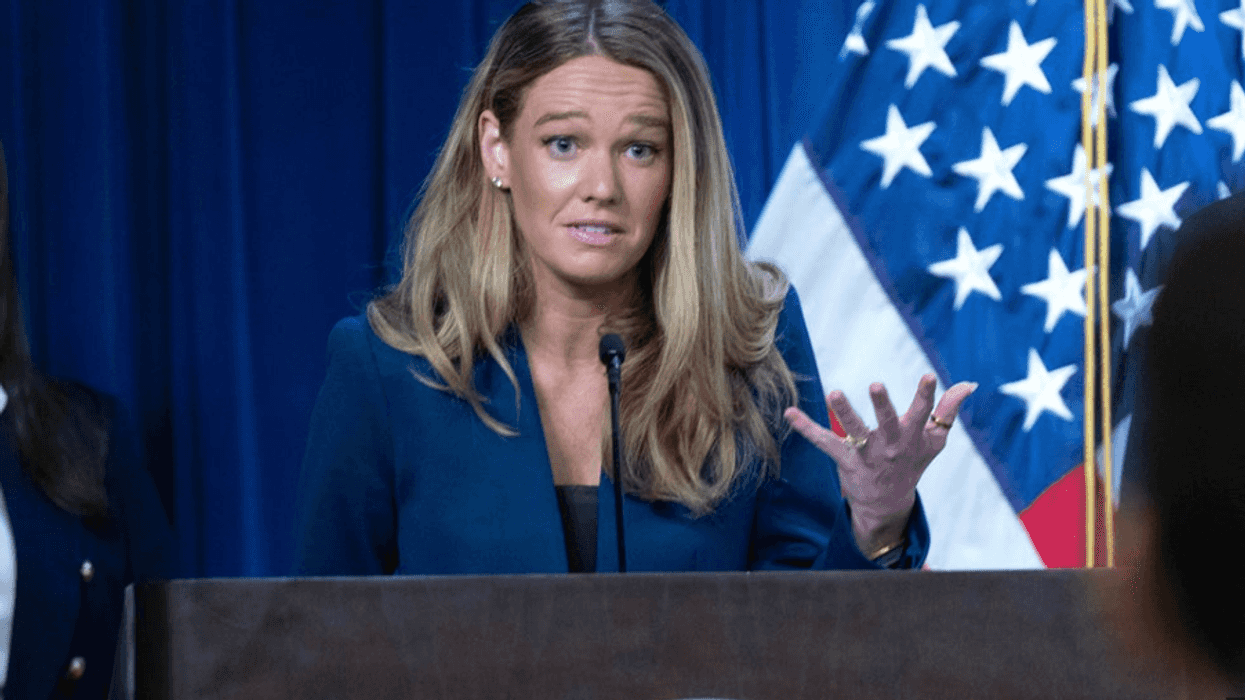
Department of Homeland Security spokesperson Tricia McLaughlin, often named as one of Donald Trump's most loyal defenders, is leaving her office later this month, with an analysis from The Bulwark finding that she leaves behind a pattern of "heinous lies" made in the face of "horrifying tragedies."

McLaughlin is set to leave her position on February 27, with various reports noting that her exit comes as her boss, DHS Secretary Kristi Noem, is facing increasingly bipartisan heat over her own performance. The DHS flack had reportedly been plotting her departure around the end of last year, but delayed it after the killings of Renee Good and Alex Pretti by federal immigration officers.

It was on the subject of those recent deaths that McLaughlin shared the first two major lies highlighted by The Bulwark. During media appearances, she perpetuated the claims from her superiors, including controversial Trump adviser Stephen Miller, the Good had been involved in "domestic terrorism" and that Pretti, who had been lawfully carrying a gun right before his death, intended to "massacre law enforcement." The Bulwark noted that, unlike her bosses, McLaughlin did not back away from these unfounded claims.

"Although McLaughlin helped build this false and slanderous narrative that even hardliners like Miller have abandoned, she herself has refused to renounce her office’s extreme—and baseless—claims about Pretti," The Bulwark's analysis detailed, later adding, "And just as in the case of the Pretti killing, McLaughlin refused to give up her lies. When CNN’s Wolf Blitzer asked her about the administration’s repeated characterization of Renee Good as a domestic terrorist, calling it 'outrageous,' McLaughlin doubled down, saying, 'It was an act of domestic terrorism. In no way is that outrageous.'”

McLaughlin also asserted that ICE agents were not restraining people using zip ties, which she called a "disgusting smear," wvwn though photos later emerged from an FBI-led operation in Idaho showing a teenage American citizen restrained with them. The outlet noted that, on this count, there is the possibility that McLaughlin was correct in a way, as the zip ties could have been administered by FBI agents or local law enforcement officers.

"But even if children were being zip-tied by FBI agents or local law enforcement officers or some other DHS personnel instead of ICE during this particular raid, it’s not as though they are being spared from the cruelty of the administration’s mass deportation efforts," the analysis argued.

The Bulwark further highlighted McLaughlin's claims that Trump's mass deportation agenda was only targeting "the worst of the worst," and that DHS was making sure to use "U.S. taxpayer dollars well." The former claim, often invoked by Trump as well to defend his plans, has been consistently rebuked by reports about the many non-criminal immigrants being taken by ICE. As of October, one estimate found that 73 percent of ICE detainees had no criminal record at all, and only 8 percent had a history of committing violent crime.

The latter claim about spending came during an interview about DHS painting Trump's prized border wall black, to make it hotter to the touch for those trying to climb it.

"That makes a lot of sense—so long as you completely discount the existence of gloves, ladders, and the nighttime," The Bulwark noted, later adding, "If this is what responsible stewardship of taxpayer dollars looks like, what would irresponsible stewardship entail?"

Reprinted with permission from Alternet


Conflict Over Pretti Killing Is Latest Clash Between Trump White House And Gun Lobby

Conflict Over Pretti Killing Is Latest Clash Between Trump White House And Gun Lobby

After U.S. Border Patrol agents fatally shot Minneapolis protester Alex Pretti last Saturday, federal officials described him as a "domestic terrorist" and "would-be assassin" who "wanted to do maximum damage and massacre law enforcement." But the only evidence to support those characterizations was the fact that Pretti was carrying a concealed handgun, which he was legally allowed to do.

Although videos of the incident show Pretti never drew that weapon, let alone threatened the agents with it, several officials portrayed his exercise of the constitutional right to bear arms as inherently suspicious. That position provoked criticism from leading gun rights groups — the latest example of disagreements between Second Amendment advocates and an administration that claims to support their cause.

Pretti "approached US Border Patrol officers with a 9 mm semi-automatic handgun," the Department of Homeland Security said on Saturday, neglecting to mention that the agents did not see the holstered gun until after they tackled Pretti. "The officers attempted to disarm (him) but the armed suspect violently resisted," DHS added, omitting the fact that an agent had removed the gun by the time the shooting started.

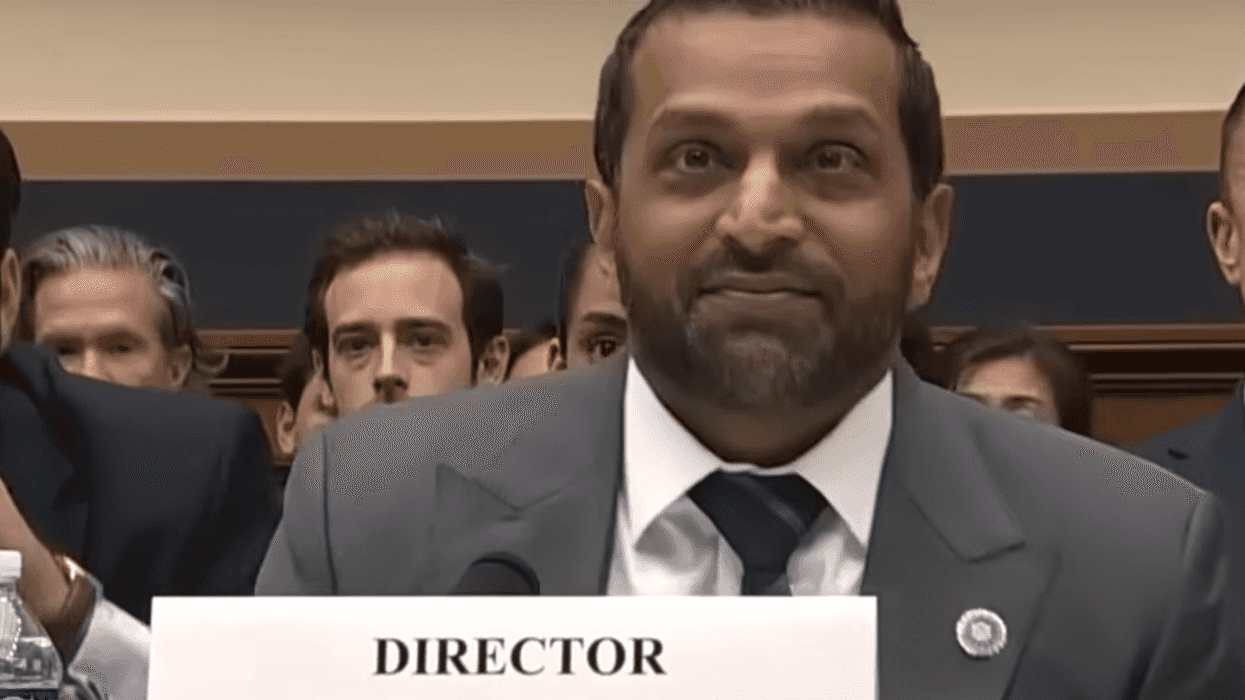
FBI Director Kash Patel erroneously claimed Pretti's possession of a handgun was illegal. "You cannot bring a firearm, loaded, with multiple magazines, to any sort of protest that you want," Patel said. "It's that simple. You don't have a right to break the law."

Bill Essayli, the first assistant U.S. attorney for the Central District of California, went even further. "If you approach law enforcement with a gun, there is a high likelihood they will be legally justified in shooting you," he averred. "Don't do it!"

That was too much for Gun Owners of America, which condemned Essayli's "untoward comments," noting that "the Second Amendment protects Americans' right to bear arms while protesting — a right the federal government must not infringe upon." The National Rifle Association also was perturbed, calling the prosecutor's statement "dangerous and wrong."

President Donald Trump did not explicitly say that Pretti invited his own death by carrying a gun, but he did portray that conduct as troubling. "I don't like any shooting," he told The Wall Street Journal. "But I don't like it when somebody goes into a protest and he's got a very powerful, fully loaded gun with two magazines."

According to Pretti's ex-wife, the Journal notes, he "had carried a gun for several years," exercising a right recognized by the U.S. Supreme Court, the state of Minnesota and local licensing authorities, which had issued him a carry permit. In this context, there was nothing necessarily nefarious about his decision to carry a gun the day he was killed.

As the GOA's comments reflect, conservatives traditionally have prized the more specific right to carry guns at political protests, such as demonstrations against the restrictions imposed during the COVID-19 pandemic. Left-leaning gun control advocates, meanwhile, have condemned that practice and supported bans on it.

Given this history, it is not surprising that gun rights groups usually allied with Trump rebelled at the notion that carrying a firearm is threatening, illegal or an invitation to police violence. Nor is it surprising that they were alarmed when Justice Department officials considered a ban on gun possession by transgender people.

While that half-baked proposal seems to have gone nowhere, the Trump administration is actively defending the federal ban on gun possession by people convicted of nonviolent felonies. The NRA and other Second Amendment groups, by contrast, say that policy is blatantly unconstitutional.

The Trump administration is also defending a federal law that treats cannabis consumers as felons if they own guns, even if they live in states that have legalized marijuana. The NRA has called that policy "unjust."

Trump is avowedly committed to "protecting Second Amendment rights," and his Justice Department recently launched a litigation project for that purpose. But as the government's defense of the Pretti shooting confirms, those promises are less reliable thanthey seem.

Jacob Sullum is a senior editor at Reason magazine and the author of Beyond Control: Drug Prohibition, Gun Regulation, and the Search for Sensible Alternatives (Prometheus Books).Follow him on X: @JacobSullum.

Reprinted with permission from Creators


Latino Republicans Warn That Violent ICE Crackdown Will Lose Midterms

Latino Republicans Warn That Violent ICE Crackdown Will Lose Midterms

We have finally found the thing that gets Republicans to speak up against Donald Trump: fear of losing their own power.

Two Latino Republicans on Tuesday issued a stark warning to their Dear Leader: If immigration agents don't stop brutalizing and killing Americans in the streets as his goons carry out their ham-handed immigrant roundups to meet some arbitrary deportation quota set by ghoulish White House aide Stephen Miller, then the GOP is going to lose the 2026 midterms.

GOP Rep. Carlos Gimenez of Florida told Newsmax on Tuesday that when it comes to immigration enforcement, "there has to be a better way to do this."

"I'm not comfortable with what's happening in Minneapolis at this time," Gimenez said, adding that Trump's immigration goons targeting "grandmothers, somebody taking care of kids that's been here 10 or 15 years" is "hurting our chances at the midterms."

He wasn't the only Latino Republican who spoke out.

Florida state Sen. Ileana Garcia, who founded the Latinas for Trump group, told The New York Times that immigration agents' "abhorrent" killings of two citizens is going to be catastrophic for her party in November.

“It’s gone too far,” she told the Times of the immigration raids, later adding, “I do think that he will lose the midterms because of Stephen Miller."

Of course, Republicans were already likely to lose the midterms thanks to Trump's poor handling of the economy, which voters overwhelmingly disapprove of.

However, Gimenez and Garcia are unquestionably correct that Immigration and Customs Enforcement's violent behavior has only made things worse for the GOP.

Immigration—one of Trump's strongest issues when he took office—is now a liability as Americans turn against the brutality he has unleashed.

A plurality of Americans now support abolishing ICE in the wake of immigration agents killing two U.S. citizens who were merely exercising their First Amendment right to observe and record agents' lawless and chaotic behavior.Majorities now disapprove of Trump's handling of immigration, as well as ICE agents’ actions, which overwhelming majorities say have gone too far.

And polls show Latino voters—who moved heavily toward Republicans in 2024 and whom GOP operatives crowed were in the process of realigning away from Democrats—have now snapped back to their pre-2024 political alignment as Trump has terrorized their communities with his ICE raids.

An Economist/YouGov poll released Tuesday found that Hispanics disapprove of the job Trump is doing by a stunning 41-point margin. That’s a massive slide from February 2025, when Hispanics disapproved of Trump by a 10-point spread in the Economist/YouGov poll.

“Hispanic voters have completely reverted to 2016 trend line. All GOP gains here have been lost,” Mike Madrid, a Hispanic GOP operative, wrote in a post on X. “The ‘Racial Realignment’ theory can officially be declared dead”

Trump seems to understand the political peril he’s in, as he pulled Greg Bovino, the Nazi-looking Border Patrol thug who had been in charge of the disgusting deportation surge in Minneapolis, from his role on Monday.

However, Trump and his administration are not backing down off their targeting of Democratic-controlled states for immigration enforcement. ICE and Customs and Border Patrol are set to remain in Minneapolis and are now surging in Maine, where they recently landed to carry out their reign of terror.

And Trump and his aides have continued to blame the two Americans murdered for exercising their First and Second Amendment rights—Renee Good and Alex Pretti—for their deaths, calling both of them “domestic terrorists.”

In fact, Trump blamed Pretti for being shot to death because Pretti was carrying a firearm—something Pretti was licensed and legally allowed to do, thanks to the Second Amendment Trump once extolled.

"You can't have guns. You can't walk in with guns. You can't do that. You can't walk in with guns, but, it's a very unfortunate thing," Trump said Tuesday of Pretti.

While Trump's violent immigration agenda is mobilizing Democrats and turning independents against him, it's the president’s refusal to acknowledge Pretti's Second Amendment rights that could turn Republicans against him too.

"It's unbelievably stupid that they've chosen to alienate the gun lobby. The NRA and the gun lobby have basically been a bedrock constituency of the Republican Party for 50 years," Florida Republican strategist Jacob Perry told Reuters.

If the base turns against Trump, then the bottom really falls out for the GOP.

We’ll have our popcorn at the ready when that happens.

Reprinted with permission from Daily Kos

Shop our Store

Headlines

Editor's Blog

Corona Virus

Trending

World