Tag: anti-abortion
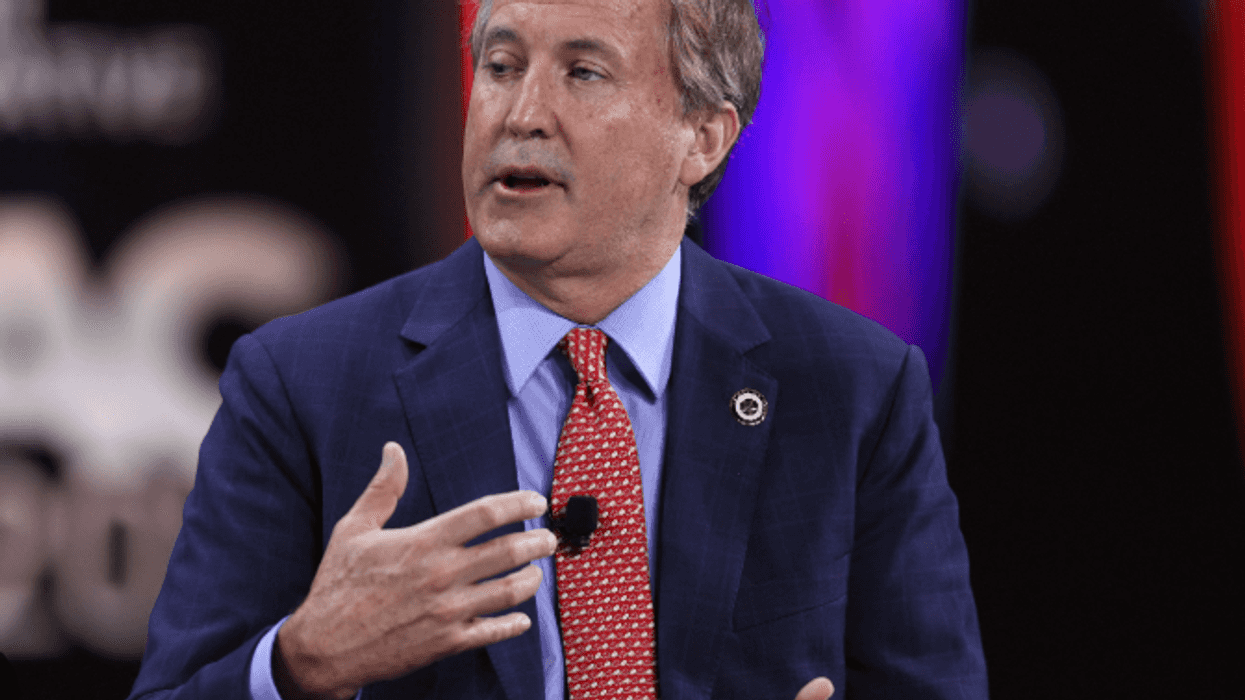
Ken Paxton

How Ken Paxton Expanded His Anti-Abortion Crusade Far Beyond Texas

Early in his tenure as Texas attorney general, Ken Paxton issued a statement commemorating what he believed was a national tragedy.

“It’s impossible to fill the void of more than 50 million missing human beings,” he said in 2016. He was marking the 43rd anniversary of Roe v. Wade, the Supreme Court ruling that protected abortion rights — and had long stood in the way of efforts to ban terminations in early pregnancy, when most abortions occur.

Paxton spent the years that followed testing Roe’s limits and ultimately prevailed where others had failed: In 2021, he defended a near-total abortion ban that Texas legislators had designed to evade conventional legal challenges. The U.S. Supreme Court allowed it to take effect while Roe remained in force.

After the justices overturned Roe the following year, Paxton kept pushing, pursuing new ways to extend the reach of Texas’ restrictions. He prevailed against the Biden administration, picked fights with states that protect abortion access and pioneered strategies that his peers later adopted or expanded.

While Paxton’s tenure as attorney general has drawn criticism from across the political spectrum for his personal scandals and alleged misuse of the office, detractors and allies alike agree that his signal achievement as the state’s top legal official has been advancing restrictions on abortion.

A close look at his record shows a clear pattern in his successes: He relentlessly tests the limits of the law and employs novel legal strategies to advance his goals.

Paxton’s national role as an anti-abortion warrior would change if he wins his U.S. Senate race. As Texas attorney general, he has been able to act largely on his own authority. If he prevails in November, he would become one of 100 senators in a chamber where most legislation needs 60 votes to overcome a filibuster.

But allies who have witnessed his victories see an opening.

“He’ll have the ability to use some of the laws that he’s defended in Texas as influence to draft legislation in the U.S. Senate,” said Mary Elizabeth Castle, director of government relations at Texas Values, a Christian advocacy group that supports a national abortion ban.

Legal experts and advocates on both sides expect he could join colleagues who are pressuring the Food and Drug Administration to revoke its approval of the abortion drug mifepristone.

Anti-abortion activists at the state and federal level are also trying to secure legal rights for fetuses, which could have implications for reproductive care like birth control and in vitro fertilization. Paxton, who has called himself a strong supporter of IVF, recently said he was open to restrictions intended to prevent the loss of fertilized eggs.

His litigation has also raised questions that experts expect the Supreme Court to confront, including whether a federal law, which mandates hospitals provide stabilizing care to patients having an emergency, overrides state abortion bans; whether to treat a fetus as a separate patient that has its own emergency care rights; and how far states can go in pursuing out-of-state doctors who prescribe abortion medication to patients in states where it’s banned.

During the current race, abortion has played a far smaller role than questions about Paxton’s ethics. His Democratic opponent, James Talarico, has said that he supports restoring a federal right to abortion and that his Christian faith calls for an end to “extreme” laws that Paxton has defended and that have forced women to flee the state for emergency abortion care.

Lately, Paxton has said little about abortion — an issue on which he has defended restrictions more stringent than many Texans say they want.

But those who have watched Paxton extend the reach of Texas law beyond its borders are paying close attention to his Senate bid.

Dr. Jennifer Villavicencio, an abortion provider, said she has felt compelled to move her family twice to states with strong laws shielding doctors from out-of-state litigation, partly out of concern that Paxton is creating a blueprint for targeting providers like her.

“It’s very disheartening and scary to think that it’s maybe coming to the U.S. Senate,” she said.

Paxton successfully defended a near-total abortion ban before Roe v. Wade was struck down.

When Paxton became Texas attorney general in 2015, there was no ambiguity about where he stood on abortion.

Raised by an anti-abortion activist, he married his sweetheart from a Christian college, who spoke proudly about the fact that she was adopted, saying her birth mother “chose life.” She campaigned for Paxton, but he had his own bona fides. A law he’d co-sponsored as a state senator banned almost all abortions after 20 weeks.

Similar 20-week bans had taken root across the country as decades of court rulings chipped away at Roe, but no state had managed to enforce a ban as early as six weeks. More than a dozen tried, passing laws that prohibited abortion when cardiac activity could be detected. One after another, they were blocked by judges.

Then, in 2021, a Texas lawyer named Jonathan Mitchell worked with legislators to craft a law that would withstand similar challenges. Instead of having state officials enforce their “heartbeat law,” the new act, referred to as Senate Bill 8, allowed citizens to sue physicians they suspected were providing abortions. The law offered up to $10,000 if they won.

When abortion providers and President Joe Biden’s administration separately challenged the law in federal court, Paxton’s office argued that state officials couldn’t be ordered to stop enforcing it because they had no power to do so in the first place. Only private citizens could.

“Because the executive officials are expressly prohibited from enforcing SB 8,” his office wrote to the Supreme Court, “there is nothing for a federal court to enjoin.”

The Supreme Court agreed that Paxton couldn’t be sued because “the petitioners have not identified any enforcement authority the attorney general possesses in connection with S. B. 8 that a federal court might enjoin him from exercising.”

The law remained in effect, becoming the first enforceable six-week ban under Roe.

Legislators in Idaho and Oklahoma subsequently passed similar laws.

For Dr. Sam Dickman, who worked at a San Antonio Planned Parenthood, the implications were clear: “I was going to need to either entirely change the type of medicine I was providing or leave the state,” he said. He opted for the latter, moving to Montana, where abortion is legal until viability, or roughly 24 weeks.

Days after the Texas ban took effect, Josseli Barnica arrived at a Houston hospital in the midst of a miscarriage. She was 17 weeks pregnant and her fetus’s head was pressed up against her dilated cervix. Because the situation put her at high risk of developing an infection, medical experts said doctors should have offered to speed up delivery or empty her uterus; the fetus was not viable, and losing the pregnancy was inevitable.

But the fetus’s heart was still beating.

Barnica relayed to her husband what she said her medical providers had told her: “They had to wait until there was no heartbeat,” he told ProPublica in Spanish. “It would be a crime to give her an abortion.”

For 40 hours, Barnica waited, her uterus exposed to bacteria.

She died days later of sepsis. Medical experts told ProPublica her doctors did not follow the proper standard of care and that Barnica’s death was preventable.

In a statement, HCA Healthcare, the hospital chain that treated her, said “our responsibility is to be in compliance with applicable state and federal laws and regulations” and said that physicians exercise their independent judgment.

Paxton blocked federal guidance for emergency abortion care, doing harm far beyond Texas

When the Supreme Court overturned the constitutional right to abortion on June 24, 2022, Paxton dismissed his staff at noon to celebrate. He would later designate the date as a paid office holiday, Sanctity of Life Day.

The Texas Legislature had prepared for the occasion, passing a law that went into effect shortly after the overturning of Roe. The ban threatened doctors with up to 99 years in prison if they performed an abortion. But soon came what Paxton framed as a federal attempt to thwart the state law.

The Biden administration issued a memo to doctors in states with abortion bans saying that a federal emergency care law protected their medical judgment, “regardless of the restrictions in the state.”

The federal Health and Human Services secretary at the time said doctors had an obligation to follow the Emergency Medical Treatment and Active Labor Act, better known as EMTALA. The law requires hospitals that accept federal funding to screen and stabilize every patient who arrives.

For those with complications such as severe preeclampsia, a potentially fatal, pregnancy-related blood pressure disorder, stabilizing a patient might require performing an abortion, even if the state forbids it, the guidance said. “The physician must provide that treatment,” it said, bolding the word “must.”

Paxton sued, accusing the administration of an attempt to use federal law “to transform every emergency room in the country into a walk-in abortion clinic.”

He argued EMTALA was created to make sure hospitals didn’t dump uninsured patients back on the street without treatment, not to override state laws. He took the argument a step further, suggesting that under EMTALA, doctors might need to consider “the life of the unborn child.”

The argument was novel, six legal experts told ProPublica.

“He’s basically suing the federal government to protect Texas’ right to force pregnant women to not get abortions, even when their health is threatened,” said Greer Donley, a law professor at the University of Pittsburgh. “I remember thinking, ‘Wow, that’s radical.’”

Medical groups warned patients would die.

But a federal judge sided with Paxton that August, and the 5th U.S. Circuit Court of Appeals affirmed the decision in January 2024.

The ruling did more than keep the administration from enforcing its EMTALA interpretation in Texas.

It barred the federal government from pursuing cases against members of two anti-abortion medical organizations that had joined Paxton’s suit as plaintiffs, the American Association of Pro-Life Obstetricians and Gynecologists and the Christian Medical & Dental Associations. This effectively exempted them from having to follow the federal guidance, regardless of where they worked.

It also served as immediate litigation fodder for another state fighting to enforce its own abortion ban.

Idaho had not had the same success in court as Texas. After the Biden administration sued, arguing the state’s ban conflicted with EMTALA, Idaho lost in lower and appellate courts, leaving its ban effectively frozen in emergency cases, with doctors instructed to follow the federal guidance.

But Paxton’s 5th Circuit win on Jan. 2, 2024, gave Idaho’s ban a lifeline. The ruling conflicted with the 9th Circuit’s decision in Idaho, creating the kind of disagreement between federal appeals courts that the Supreme Court often steps in to resolve.

The following day, attorneys representing Idaho asked the high court to do just that, saying Paxton’s success showed they were “likely to prevail.” In the meantime, they asked the court to unfreeze the ban.

On Jan. 5, the Supreme Court allowed Idaho to fully enforce its ban while the case proceeded.

Emergency doctors began hesitating over when they could legally provide abortions, Dr. Jim Souza, chief physician at St. Luke’s Health System, said on a press call at the time, according to NPR. “Is she septic enough for me to do this abortion and not risk going to jail and losing my license?”

In the three months that followed, St. Luke’s, the state’s largest hospital system, said it had to airlift six patients out of the state for abortions.

In Texas, ProPublica has documented the consequences for women experiencing pregnancy emergencies.

When Tierra Walker sought care later that year in San Antonio, she developed preeclampsia and ultimately died from it, ProPublica previously reported. None of the 90 physicians involved in her care offered her the option of terminating her pregnancy, even after she asked if doing so might keep her safe.

Her family sued Paxton in September, along with state medical officials and several healthcare providers, alleging that Texas’ abortion restrictions and the care Walker received led to her death. Paxton has not responded to the suit and did not respond to a request seeking comment.

ProPublica has identified at least two other pregnant Texas women who died without what experts said was appropriate emergency care. Paxton has not publicly commented on any of their deaths and did not respond to ProPublica’s questions about them. Our analysis also found worsening outcomes across the state for patients experiencing pregnancy complications.

The reach of Paxton’s legal victory may not end there.

The Supreme Court still hasn’t resolved the conflict between the circuit rulings. It declined to do so in the Idaho case, and after President Donald Trump took office, his administration dropped the suit and rescinded the EMTALA guidance.

But legal experts told ProPublica the Supreme Court has yet to resolve core questions that Paxton’s litigation raised: whether EMTALA preempts state abortion laws and whether a fetus also has a right to emergency treatment that could conflict with the mother’s interests in cases where her health is at risk.

To guard against future rulings, a reproductive rights advocacy group called All* Above All is pushing state-level legislation to safeguard emergency care. “We’re seeing the chaos right now and the confusion,” said its president, Nourbese Flint.

Paxton tested expansive new ways to pursue abortion providers. Other states are following his lead.

On December 7, 2023, a state judge in Austin issued a ruling that Paxton immediately moved to stop.

A 31-year-old mother named Kate Cox wanted permission to get an abortion. She was 20 weeks pregnant and carrying a fetus diagnosed with trisomy 18, a genetic condition that kills the vast majority of babies born with it.

Texas doesn’t allow abortions for fatal fetal anomalies, but Cox’s doctor argued that if she was forced to give birth, it could imperil her ability to get pregnant again. It was also medically risky: Cox had already had two children by cesarean section, and the chances of complications increase with each procedure.

The day a Travis County district court judge granted her request, Paxton took a step legal experts told ProPublica they had not seen another state attorney general take:

He sent letters to three hospitals where Cox’s doctor had admitting privileges, threatening legal action if the doctor performed the abortion a judge said she could have. The court order, he wrote, did not insulate hospitals, doctors, or anyone else from civil and criminal liability for violating Texas’ abortion laws.

At the same time, he appealed the case to the Texas Supreme Court, saying that Cox did not face the kind of threat to her life that fell under the law’s exception. If legislators had wanted to write an exception for fatal fetal anomalies, he said, they would have done so.

“The Texas Legislature did not intend for courts to become revolving doors of permission slips to obtain abortions,” he said.

The Texas Supreme Court agreed with Paxton and reversed the lower court’s ruling. By that time, Cox had sought an abortion out of state.

“It was incredibly scary,” Cox told ProPublica. “We saw in my case that Texas will go after doctors.”

Paxton was also the first — and, so far, the only — attorney general to criminally prosecute a provider in his state for violating an abortion ban.

According to court documents, investigators got an anonymous tip alleging that abortions were being performed at a medical clinic that catered to low-income, Spanish-speaking patients, managed by Maria Rojas, a licensed midwife.

Rojas was arrested and charged with practicing medicine without a license and violating the state’s abortion ban. Paxton also moved to temporarily shut down the clinic and others she ran while the case progressed through court. Months after her arrest, Paxton announced he had arrested and indicted eight other clinic staffers for practicing medicine without a license.

Rojas has pleaded not guilty to the charges. Her attorneys have accused Paxton’s office of a shoddy investigation and argued that at least one case prosecutors were treating as an abortion was actually the management of a patient’s miscarriage.

A trial has not yet been scheduled, but an appeals court this summer overturned the order shuttering the clinics, finding the state had not presented sufficient admissible evidence to justify a temporary injunction. Paxton said he is appealing the ruling. The court did not rule on whether Rojas had actually performed illegal abortions.

Paxton has not stopped at the state border in his pursuit of doctors.

In December 2024, he sued Dr. Margaret Carpenter, a New York-based physician, accusing her of violating multiple Texas laws when she treated a patient via telehealth who lived in Plano, a suburb north of Dallas, and prescribed her abortion medication.

Because the patient was based in Texas, he argued, Carpenter was subject to laws there that banned abortion and required a license to practice in the state.

Carpenter didn’t respond to the suit, so Paxton won by default. But Texas was unable to collect on more than $100,000 in civil fines and court fees that resulted; a New York county clerk refused to register the judgment, invoking a “shield law” that protects providers of abortion care that is legal in New York from certain out-of-state investigations, prosecutions and judgments. At least 22 states have passed shield laws since Roe was overturned, and New York’s is among the strongest. Carpenter did not respond to a request seeking comment and has not publicly responded to the case.

A New York judge dismissed Paxton’s case seeking to enforce the judgment, but Paxton didn’t give up, filing two more civil suits this year against practitioners and organizations in Delaware and California that mail abortion medication to Texas.

Three other state attorneys general have now expanded on the strategy. Last month, Louisiana Attorney General Liz Murrill — who brought criminal charges against Carpenter after Paxton sued her (and has faced similar obstacles in New York) — joined the attorneys general of Arkansas and Alabama in filing a sweeping federal civil suit against out-of-state providers of abortion pills. The case names some of the same providers Paxton pursued; they have challenged the suits. The three attorneys general filed a separate action directly with the Supreme Court asking it to strike down shield laws in New York, Massachusetts and California.

Paxton has moved beyond doctors to target other entities that help patients obtain abortions. Mary Ziegler, an abortion historian and professor of law at University of California, Davis, called him “an innovator in terms of broadening the network of people who were seen as culprits or aiders or abettors.”

He sent cease-and-desist letters to organizations that ship abortion medication into Texas; the attorney general of Alabama subsequently used similar tactics. And Paxton sued cities in his state to stop them from disbursing funds to help women travel for abortions — a move the Legislature followed with a law banning such funding.

Following his legal victory against the city of San Antonio early this year, in which it was forced to end the $100,000 program, Paxton made a vow:

“I will always do everything in my power to prevent radicals from manipulating the system to murder innocent babies.”

Reprinted with permission from ProPublica

'Harlots And Sluts': Why This Ex-Cop Walks The Gauntlet To Protect Abortion Rights

'Harlots And Sluts': Why This Ex-Cop Walks The Gauntlet To Protect Abortion Rights

If you want to know how you can fight back against the Trump and Republican war on abortion and all of women’s reproductive healthcare, you can donate to Planned Parenthood or an independent abortion clinic like the one that Jenny escorts at. Jenny along with her husband William (not their real names), gets up every Saturday with the mission of protecting pregnant patients who need abortion care. Here, Jenny shares with me what it’s like to do her courageous work.

“I’ve been a volunteer abortion clinic escort every Saturday at an independent clinic in Milwaukee for six years. So instead of having my Saturdays off, I go and get screamed at by anti-abortion protesters.

I’d wanted to be a clinic escort for a long time, but I was finally freed up on weekends after my son turned 16 and was able to drive himself places, so he wasn’t reliant on me.

My husband joked that I would need to find a “hobby” now that my son was more independent, and I wanted to do something to help other people. I grew up Catholic, but I had always questioned things, including religion.I remember seeing protesters outside abortion clinics on the news and feeling like I wanted to help the patients trying to get inside, because I don’t like bullies.

My husband doesn’t like bullies either, and he also feels strongly about reproductive rights. When I signed up to do clinic escorting work, I asked him if he wanted to do it too, and he said, “Heck, yes!”

So now we go together every Saturday for a four- to five-hour shift. If I were a trust-fund baby, I would do this work full-time.

‘No matter what their journey was to make that choice, I’m proud of our patients’

There is one woman that I think about often and hope that she is safe. I remember seeing her walking down the street with a companion toward our clinic, and I could tell that she was really upset.

I walked toward her and asked, “Do you mind if I put my arm around you?” And I told her, “We’re going right in the door. I’ll get you inside. Try not to cry in front of the group of anti-abortion protesters on the sidewalk, because that’s what they want to see. We’re going to keep our heads high and we’re going to walk in there together.”

Once I got her inside and the door closed, she began to sob hysterically, and I gave her a hug. She told me that she was escaping a domestic violence situation. The man she was with was physically abusive to her.

She was also afraid that she might have an ectopic pregnancy, and she knew that ectopic pregnancies could be deadly.

Thankfully, her pregnancy turned out not to be ectopic, and she was able to get an abortion. After the procedure, I walked her back to her car, and we were followed by one of the anti-abortion protesters, who kept harassing her.

When we finally arrived at her car, she gave me one of the longest hugs I’ve ever had as a clinic escort. It makes me emotional just thinking about it, because I think about how she’s safe now.

If she had not been able to have that abortion, she might have been trapped with that guy, unable to leave because they had a child together.

If I was able to play even a small part in her being safe, that’s a reason for me to do this work.

I’m able to help patients who are in difficult situations—and also for those who may not have faced a tough decision to have an abortion. No matter what their journey was to make that choice, I’m proud of them.

‘Why the name-calling doesn’t bother me’

I feel very strongly that every person who is going to see a medical provider for reproductive healthcare—whether it’s for an abortion, a Pap smear or IVF—should be able to do that without harassment or fear, just like anybody else going to any other kind of healthcare appointment.

My first day at the clinic in Milwaukee was a surprise. I didn’t think in a million years that I would be shoved as much as I was out there.

But I think that even if I had been warned that I would be shoved, elbowed in the back of the head, or pushed onto the road, I still would not have been deterred.

I wasn’t actually freaked out by the situation. My background has helped me prepare for chaos—both my current work in social services and the fact that I used to be a member of the military police force for eight years.

I was a police officer on a military base in Washington state, and as part of my job, I trained other law enforcement officers in de-escalation techniques. Because of that training, it has helped me with both protesters and patients when they are upset.

I’m really good at talking with them and grounding them so I can bring them back down.At our clinic’s old location, there was nowhere for patients to park, so they would have to walk three or four blocks to and from the clinic. There also wasn’t much space between the protesters, the clinic escorts, and the door into the clinic.

Fortunately, we moved over a year ago to a new location with its own parking lot, so the situation is much easier for patients and escorts.

But at the old clinic, we escorts would often have to form a wall with our bodies to prevent aggressive protesters from getting inside the door of the clinic. Or we would form walls around patients, holding hands, so there would be a small group of us surrounding a patient so we could safely get them inside the door.

It was the Wild West out there.

Protesters yell disgusting things at patients, like, “Mommy, mommy, please don’t kill me,” or, as patients leave the clinic, “You’re still a mom, but the mom of a dead baby.”

They’ll shove rosaries in their faces and call them “whores and murderers.”

They call us female escorts “Jezebels, Nazis, harlots and sluts.” But the name-calling doesn’t bother me at all.

When I bring patients into the clinic past the protesters, I’ll ask them how they are doing and try to give them strength and confidence as they enter the building.

‘Patients have told me horrific stories’

I’ve heard so many things from patients that I will never forget. There are patients I walked into the clinic years ago that I still think about and wonder how they’re doing. I hope that they’re living their best lives. What they went through that day with those protesters should never happen to anyone.

There are stories that patients have told me that are horrific. Some had been raped. There are women with a wanted pregnancy, but for a particular reason the pregnancy can’t continue, and they are very emotional.

There are people who are in a good mood because the abortion will be a relief.

We’ve had patients who have come in and their cars are barely running, and there are two kids’ carseats in the back, and you’re thinking that this is probably the best thing for them. It’s an investment in the future of their family.

But no matter what a patient’s circumstances are—even if getting an abortion was an easy decision for them—the fact that they’re getting screamed at as they come into the clinic isn’t easy. I try to better their day in any way possible.

When I would walk patients out to their cars three or four blocks away after their appointments, we would often be followed by a protester. I would ask them about their plans for the rest of the day or crack a joke about the protester following us and say, “Yeah, that guy’s still a virgin.”

I’d be trying to take their mind off the protester screaming at us and make my patients feel as comfortable as possible. After walking patients to their cars, I’d get a lot of hugs and thank-yous. Sometimes they would say, “I couldn’t have done this without you.”

Many of the same protesters have been here for years. It’s like it’s their full-time job. The majority are men, and they tend to be the “angry” ones. The women tend to be friendlier to the patients and say, “Oh mama, can I talk to you?”

They call themselves “sidewalk counselors” and try to convince patients to go to a crisis pregnancy center instead of coming into the clinic.

But I doubt these “sidewalk counselors” have had any formal training.

Crisis pregnancy centers are not actually staffed by licensed medical professionals, they aren’t legally obligated to provide accurate information, and the people there try to convince pregnant women to continue their pregnancies.

‘I was at the Supreme Court when they overturned Roe’

When the Supreme Court decision to overturn Roe v. Wade came out, I happened to be in Washington, DC on a preplanned vacation. It was rumored that the decision would be released that day, so I went to the front of the Supreme Court building, and I was there when the court’s ruling came out.

I was devastated.

On one hand, there was a group of Students for Life supporters in front of the courthouse, and they cheered. But they were outnumbered 3 or 4 to 1 by pro-choice supporters.

I remember hugging a young woman who shared with me that an abortion had saved her life, and she couldn’t imagine that young people weren’t going to have that choice anymore.

There were a lot of tears and many very sad people. Rights had been stripped away, and we knew what this would mean for some states, including Wisconsin.

The moment that decision came down, abortion was deemed illegal in Wisconsin by a preexisting 1849 Criminal Abortion Statute, and the clinic was closed for a year and a half.

We’re lucky here because abortion is legal again (since December 2023), but in many other states there are abortion bans.

We knew that Roe being overturned would kill pregnant people, and it has.

Editor’s Note: A major study reports that pregnancy-related deaths have increased by 21% in abortion ban states.

I was very angry and sad about the Supreme Court’s decision. I wanted to cry. But I also told myself that I had to use my anger, and I went into “we’ve got to fix this” mode.

I wanted to work toward restoring access. I also donated to abortion funds so they could help people travel to states where abortion was still legal to get care.

‘We want to be a comfort to the community as a whole’

Once abortion became legal again in Wisconsin, I was back at the clinic as an escort. I always wear a medical mask, and I go by a pseudonym so that none of the protesters know my true identity.

You have to be brave physically and mentally to do this work. It can be mentally draining because you are in a state of hyper vigilance the entire time you’re there.

We all know about the history of violence at abortion clinics. Eleven abortion doctors and an abortion clinic escort have been murdered.

Editor’s Note: Since 1973, 11 abortion providers and clinic staff have been murdered in the US and Canada, and another 26 have been wounded by gunshots, nail bombs, and arson attacks. Snipers have targeted physicians in their homes and even churches. One doctor and his wife were kidnapped and held hostage for a week in 1982.

I am watching every car that drives by, and if one drives by in any unusual way, I’ll catch the eye of the closest escort—usually my husband—and we ask each other, “Did you see that?”

You’re also absorbing the patients’ emotions—their sadness or anger—and the anger of the protesters. If a patient walks out looking happy, it angers the protesters.

They’ll yell at patients getting into a car to leave, they yell at us, they yell at cars driving by and at people just walking down the street. I will listen to music and dance so I don’t hear the protesters screaming all the time.

I tell people that if you drive by an abortion clinic, you can tell who the escorts are because we’re the ones with friendly body language. We wave at people. We dance to music that we bring.

We’re not the ones yelling at people and telling them that they are “murderers.”

We’re not just out there as a comfort for patients but also for passersby. I’ll say, “Good morning” to people walking by. If they have a dog, I’ll ask if I can pet it. I always try to bring dog treats with me.

We want to be a comfort to the community as a whole because we don’t want people to feel as if having an abortion clinic in their neighborhood is a threat.

The protestors don’t care what happens to babies once they are born

There are four or five protesters out of the dozen or so there most days that I say good morning to and ask, “How are you?” when I arrive. We do talk to the protesters because you are out there with them for hours.

Some of them have never been married and some have never had kids. I’ll ask them, “Why not?” They will say things like, “The time wasn’t right,” and I point out the hypocrisy that they made a choice, yet they are out here yelling at patients who are also making a choice.

One couple that was protesting said they wanted to adopt a baby, but that there aren’t many babies to adopt unless they went overseas.

I asked them, “Why does it have to be a baby? Toddlers still need love. Preteens and teenagers who are in foster care need love.

“Why don’t you love those children as much as you love babies or the ‘preborn’ babies who are not here yet?”

I haven’t gotten a good answer to that question yet, or to another question I’ve asked anti-abortion protesters.

I’ll say, “You support these ‘moms,’ but you vote against social services. You don’t support universal healthcare, affordable daycare, SNAP, or affordable housing. How is that helping moms?”

I’ve had some say, “That’s not my problem,” or “The government shouldn’t pay for that,” or “I took care of my kids. They should take care of theirs.”

They try to get into debates with us, and I let them know, “You’re not going to change my mind, and I’m not going to change yours.”

Often they will tell me, “I wish you would repent.”

I have to reply to that: “I probably won’t. I’m still here. I’m here every week. You’re not going to get rid of me. I’m still going to be here.”

Here’s a link to Planned Parenthood if you want to help protect access to abortion care or to the Abortion Coalition for Telemedicine, which is fighting to protect national access to the abortion pill.

Bonnie Fuller is the former CEO and editor-in-chief of HollywoodLife.com and former editor-in-chief of Glamour, Cosmopolitan, Marie Claire, and USWeekly. Follow her substack, Bonnie Fuller: Your Body Your Choice. from which this is reprinted with permission.


Nevada's GOP Governor Kills IVF Bill, Underlining Trump Deception

Nevada's GOP Governor Kills IVF Bill, Underlining Trump Deception

Nevada Gov. Joe Lombardo killed a bill protecting access to in vitro fertilization (IVF), seemingly to appease radical anti-abortion groups.

Republicans pledged in their 2024 campaign platform to protect IVF following backlash to an Alabama Supreme Court decision that briefly banned the procedure. Lombardo’s move shows the hold anti-abortion activists still have over his party.

“After vetoing IVF protections for Nevadans, Joe Lombardo continues to cater to radical anti-abortion extremists and chip away at reproductive freedoms,” said Kate Sosland, spokesperson for the Nevada Democratic Party. “His anti-choice beliefs are clear.”

Senate Bill 217 would have established a state right to reproductive treatments, including IVF and intrauterine insemination. It also would have required insurers, including Medicaid, to cover such procedures.

The bill passed the Nevada Senate with bipartisan support but received no Republican votes in the state Assembly. Lombardo vetoed it on June 12.

The veto came less than 72 hours after a coalition of anti-abortion groups sent a letter urging Lombardo to oppose the legislation. The letter was signed by representatives of the Family Research Council and Moms for Liberty, both of which the Southern Poverty Law Center recognizes as hate groups.

Another signatory was Jesus Marquez, co-founder of the American Christian Caucus (ACC), a group that claims to promote “conservative Christian values in Nevada.” Lombardo is closely aligned with the ACC and invited the group to events at the governor’s mansion in 2024 and 2025.

When Senate Bill 217 was being debated, Marquez posted a video to Instagram indicating that he had met with Lombardo about opposing certain bills being considered by the legislature.

“After a good couple of days here in Carson City, now we’re heading back to Las Vegas,” Marquez said. “We had some great, great meetings and a couple of good events with the Governor, which was an awesome experience. Remember, the ACC is working to mobilize churches and to run or oppose bad bills, there are plenty of them.”

An earlier Instagram post by the ACC said the group was working to “defend” Lombardo’s veto power.

The ACC has stirred controversy with more incendiary social media posts, including a 2019 post claiming COVID-19 was a “hoax” and a 2023 post that said “democracy is tyranny.”

“Gov. Lombardo had the opportunity to make Nevada the first state in the country to provide Medicaid coverage for comprehensive fertility care, including IVF treatment,” said Denise Lopez of Reproductive Freedom for All of Nevada. “Instead, he chose to cater to his MAGA extremist allies, and Nevadans will pay the price.”

Lombardo is running for reelection in 2026 with the backing of President Donald Trump, who said on the campaign trail last year that he supported requiring insurance companies to cover IVF. Trump has taken no action on the issue since being elected.

Lombardo’s likely Democratic opponent is Nevada Attorney General Aaron Ford. The Cook Political Report, which analyzes upcoming elections, currently ranks the race as a “toss-up.”

Reprinted with permission from American Journal News

State Sen. Justin Eichorn

GOP Legislator (And MAGA Zealot) Busted For Alleged Solicitation Of Minor

A Minnesota Republican state lawmaker was arrested on Monday for allegedly soliciting a minor for prostitution, Minnesota Public Radio reported.

State Sen. Justin Eichorn was arrested after he communicated with police department officers who were posing as a 16-year-old female, MPR reported.

In a scene that sounds straight out of a To Catch a Predator episode, Eichorn set up a time to meet up with who he thought was a 16-year-old girl, but when he showed up, he was instead met by police who placed him under arrest.

“As a 40-year-old man, if you come to the Orange Jumpsuit District looking to have sex with someone’s child, you can expect that we are going to lock you up," Bloomington Police Chief Booker Hodges said in a statement announcing Eichorn's arrest, the Minnesota Star Tribune reported.

In what should come as no surprise, Eichorn has fashioned himself a protector of children during his time in the Minnesota legislature.

In 2021, he came out against a bill that would move away from teaching an abstinence-based sex education curriculum to children in Minnesota schools.

“I don’t know about you, but I don’t want my elementary age kids learning this stuff. Before you know it, they’ll be reading kids 50 Shades of Grey. This discussion is better had at a more mature age. Thankfully, the Senate will work to stop this and other crazy ideas,” Eichorn said in a Facebook post at the time.

Eichorn is also an anti-abortion zealot who wants to ban abortion in Minnesota under the guise of protecting children.

This is not the first time Eichorn has been in the news in recent days.

Just this weekend, he was met with cheers from Make America Great Again influencers when he and three other Minnesota Republican state senators introduced a bill to classify “Trump Derangement Syndrome”—which MAGAs coined to describe people who oppose Trump's actions—as a mental disorder.

The bill defines "Trump Derangement Syndrome" as "the acute onset of paranoia in otherwise normal persons that is in reaction to the policies and presidencies of President Donald J. Trump." The bill states that Trump Derangement Syndrome "produces an inability to distinguish between legitimate policy differences and signs of psychic pathology in President Donald J. Trump's behavior."

The bill further says that TDS sufferers have "verbal expressions of intense hostility toward President Donald J. Trump" and exhibit "overt acts of aggression and violence against anyone supporting President Donald J. Trump or anything that symbolizes President Donald J. Trump."

State Senate Majority Leader Erin Murphy slammed the bill as "wasteful, frivolous and shameful," and said it was "possibly the worst bill in Minnesota history," according to a report from CBS News.

Looks like Eichorn should have been more concerned with his alleged proclivities for underage girls than with people who oppose Trump.

Ultimately, Eichorn is just the latest Trump supporter arrested or accused of sex crimes.

Last week, Robert Morris, a televangelist and former member of Trump’s evangelical advisory board, was indicted and charged with “five counts of lewd or indecent acts with a child stemming from incidents that date back to the 1980s,” according to a news release from Oklahoma Attorney General Gentner Drummond.

“In December 1982, Morris was a traveling evangelist visiting in Hominy with the family of the alleged victim, who was 12 at the time. The indictment alleges Morris’ sexual misconduct began that Christmas and continued over the next four years,” the news release states.

Trump’s Defense Secretary Pete Hegseth was also accused of raping an adult woman, but he was confirmed as the head of the Pentagon in spite of those allegations.

There’s also former Republican Rep. Matt Gaetz of Florida, Trump’s failed attorney general pick whose nomination went up in flames amid uproar over Gaetz’s alleged sexual exploits with underage girls. Trump is reportedly upset that he didn’t fight to get Gaetz confirmed, and reportedly said he believed Republican senators would have looked past Gaetz’s sexual deviancy had his nomination moved forward.

And Trump himself has been accused of sexual assault by dozens of women and was found liable for sexually abusing former advice columnist E. Jean Carroll.

MAGA attracts some real creeps.

Reprinted with permission from Daily Kos.

Shop our Store

Headlines

Editor's Blog

Trending

World