Tag: cassidy hutchinson
Cassidy Hutchinson

Bring Me The Head Of Cassidy Hutchinson! Why Trump's Vendetta Will Fail

There’s an unsurpassed ugliness in watching the full might of the federal government bear down on a young woman whose offense was bravely telling the nation the truth about the president. Even by the standards of this administration’s long campaign of reprisal, the pursuit of Cassidy Hutchinson may be its nastiest and most repulsive move yet.

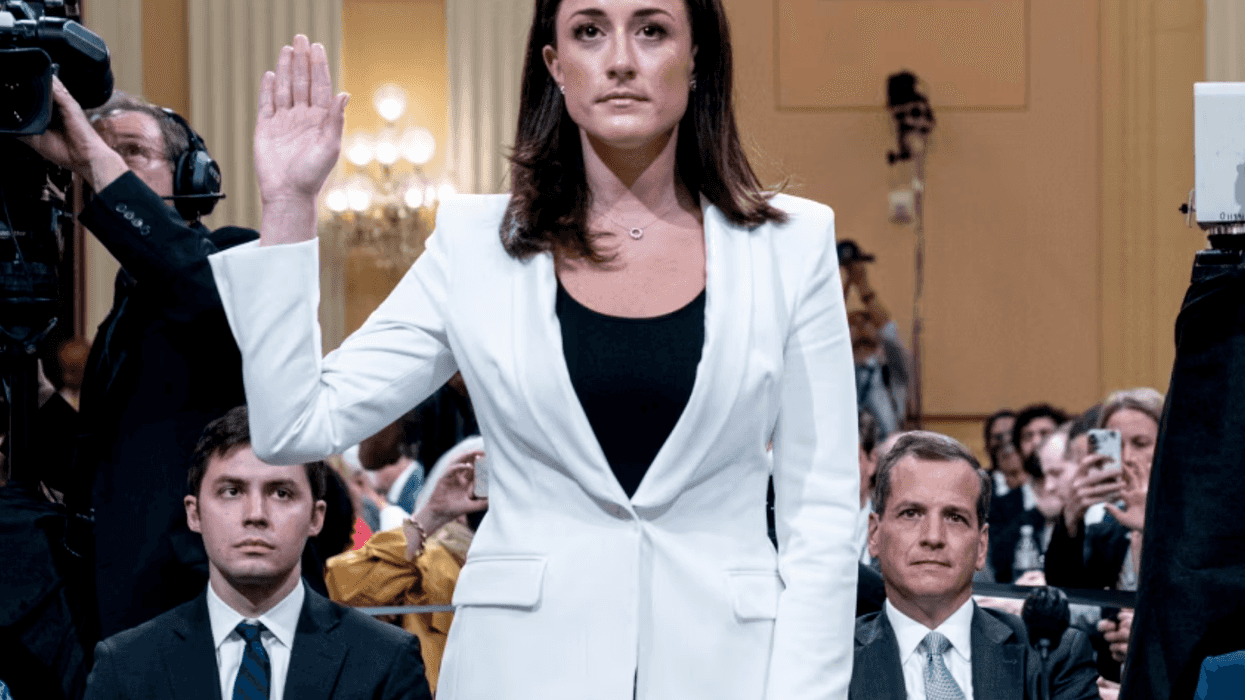
In June 2022, some 20 million Americans watched the 25-year-old aide to White House chief of staff Mark Meadows tell the House January 6 committee what she had seen unfold inside the Trump White House during the Insurrection. She had every reason to stay quiet: a career in Republican politics ahead of her and, by her account, a Trump-world lawyer who steered her toward saying less than she knew while dangling jobs in exchange for loyalty. She broke with him and spoke up anyway, at enormous personal cost. Her testimony was riveting and, to me and I think to the country, completely credible.

Now the villains she stood up to have seized power, and the president wants to see her in the dock. Prosecutors presented evidence against her to a D.C. grand jury. The Department of Justice is reportedly weighing perjury and obstruction charges, with an indictment request expected after the midterms.

Three points stand out: First, the investigation’s assignment to the Civil Rights Division is bizarre and a reflection of its political genesis. Second, it will never produce a conviction, as Hutchinson’s tormentors almost surely recognize. Third, if it ever sees the light of day, it likely will boomerang, with considerable damage to Trump and his administration.

The clearest indication of the political impetus is that the Civil Rights Division is running the case. For a DOJ alum, that detail leaps off the page.

The division, traditionally one of the crown jewels of the Department, is now a hollowed-out hackery run by Harmeet Dhillon, a Trump loyalist through and through. And it has no business near this case: the division oversees, or used to, a discrete set of offenses, and lying to Congress isn’t among them. The assignment smacks of a delivery to a hand-picked loyalist who makes up in devotion what she lacks in prudence and experience.

A perjury or false-statements case would normally run out of the U.S. Attorney’s Office in D.C., headed by Jeanine Pirro. But Pirro has suffered an astonishing run of grand jury defeats, from the “sandwich guy“ to six Democratic lawmakers whose only offense was reminding troops not to follow illegal orders to would-be fall-man for the Reflecting Pool debacle, David Hearn. Had this case landed on her desk, she probably would have been found hiding under it. So the case went to Dhillon, and it seems likely that the order came from Todd Blanche or someone above him.

We know what that someone wants. The Atlantic’s Sarah Fitzpatrick reported last week that Blanche’s and FBI Director Kash Patel’s jobs may ride on delivering indictments of Trump’s enemies, Hutchinson among them. One former official put it plainly: “The president wants indictments. He wants people in handcuffs. He wants the headlines.” Trump already fired one attorney general, Pam Bondi, in part for failing to jail his adversaries. The Hutchinson investigation, prompted by a referral from Trump allies Jim Jordan and Barry Loudermilk, began on Bondi’s watch. Blanche and Dhillon saw what happened to Bondi, and they can see Pirro hanging by a thread. More heads, more scalps. Get me Cassidy Hutchinson.

A president in political free fall weeks before the midterms might have better uses for his energy than pumping his legs in midair like Wile E. Coyote. But the reprisal agenda seems to matter more to Trump than anything, including his party’s fortunes.

Second, the case is a stone-cold loser, and any experienced prosecutor knows it.

Robert Jackson warned that the gravest danger in federal prosecution is the prosecutor who picks the person first and then goes looking for a crime. The corollary is maybe the most sacrosanct rule a federal prosecutor lives by: you don’t indict unless you’ve concluded the person is guilty and that 12 jurors will likely convict. Here, as with Comey, forget about it.

The geniuses in MAGA-land have fixed on Hutchinson’s testimony that deputy chief of staff Tony Ornato told her a story—in the presence of Bobby Engel, the head of Trump’s detail—that captured Trump’s crazed determination to join the marauders at the Capitol. According to that account, Trump said “something to the effect of, ‘I’m the f----ing president, take me up to the Capitol now.” He then reached for the steering wheel and, when Engel stopped him, lunged at Engel.

The supposed contradiction is that the Secret Service driver, in an interview months later, said he never saw Trump grab the wheel. That says nothing about whether Ornato told Hutchinson the story—in front of Engel, who said nothing to contradict it. And when the committee later questioned Ornato, he reportedly said not that the conversation never happened, but that he didn’t recall it. That’s the well-known dodge of a witness caught between a rock and a hard place, à la Emil Bove professing not to recall saying the Department might have to tell the courts “fuck you.”

What about building a case on the differences between what she told the committee early on, under the guidance of the Trump-supplied lawyer, and her later testimony? It won’t work. Federal law permits that theory—that one of two contradictory sworn statements must be false—for court and grand jury testimony, but not for congressional testimony. The DOJ would have to pick a specific lie and prove it. And for political reasons, the statement it picks has to be her truthful public testimony to the committee.

The same goes for prosecutors’ reported interest in who wrote a notecard for Trump during the riot. Hutchinson says she did; former White House counsel Eric Herschmann says he did. I’d bet on Hutchinson’s memory. But in any event, that’s what we’re talking about: a difference in memory, nowhere remotely near a crime.

Finally, we know what the prosecution would look like, and the likely jury reaction to it, because we have seen it before with our own eyes: a young woman under enormous pressure, inviting total ostracism in Trump-land, stepping forward to tell the truth. It’s doubtful a single juror, much less all 12, would vote to convict. And that is assuming the Grand Jury agrees to the prosecutors’ request to indict. That’s typically a layup, but with the office’s record and the weakness of the case, it looks more like a half-court heave.

Third, a prosecution would dredge up some of the most forceful evidence of the nature and gravity of Trump’s crimes, pushing back against his Orwellian project of erasing January 6.

That begins with Hutchinson’s boss. Meadows was by Trump’s side most of January 6, acting as the switchboard for the panicked calls from the Hill—including from senators like Ted Cruz and Josh Hawley who now profess outrage that Jack Smith obtained their toll records (a catalog of numbers dialed and duration of calls, and notably not the content of the calls), a completely routine and necessary move. Nobody knows more about Trump’s conduct that day. And most of what Hutchinson knows, she knows through him.

Meadows defied the committee’s subpoena, and the Garland Justice Department declined to prosecute him for contempt, a responsible call given his non-meritorious but plausible executive privilege defense. He cooperated in part with the Jack Smith investigation, a development that must have unnerved Team Trump. Since then, the administration has dodged that cannonball. A Hutchinson trial would put Meadows and his panoramic knowledge of Trump’s doings on January 6 at the center of the proceeding.

It would also resurrect the rest of her testimony: Trump hurling his lunch at the wall after Bill Barr told the AP there was no widespread fraud, ketchup dripping down the wallpaper; Trump urging the crowd toward the Capitol knowing many were armed.

Hutchinson herself would likely testify, a rarity for federal defendants but a natural move for her. And if the government called Ornato and Engel to contradict her, the cross-examination would be brutal. A jury, and the country, would get a fuller account than ever of what people inside the White House saw and thought that day.

Finally, the hounding of Hutchinson has an outsize moral dimension that lays bare the rot at the heart of the administration. James Comey, John Brennan, and Letitia James were all formidable figures, seasoned combatants with platforms, résumés, and the means to fight back against their reprisal prosecutions. Hutchinson was a brave 25-year-old junior aide who literally spoke truth to power.

It’s a contemporary-life version of timeless stories of dishonest and decrepit powers that be tormenting a young and righteous hero: Les Misérables, Joan of Arc, The Crucible, The Hunchback of Notre Dame. The moral chasm between the hunters and the hunted is oceanic.

They’d have to be blind with bloodlust, or terrified of Trump, to pursue this case. But as we know, that describes them precisely.

Harry Litman is a former United States Attorney and the executive producer and host of the Talking Feds podcast. He has taught law at UCLA, Berkeley, and Georgetown and served as a deputy assistant attorney general in the Clinton Administration. Please consider subscribing to Talking Feds on Substack.
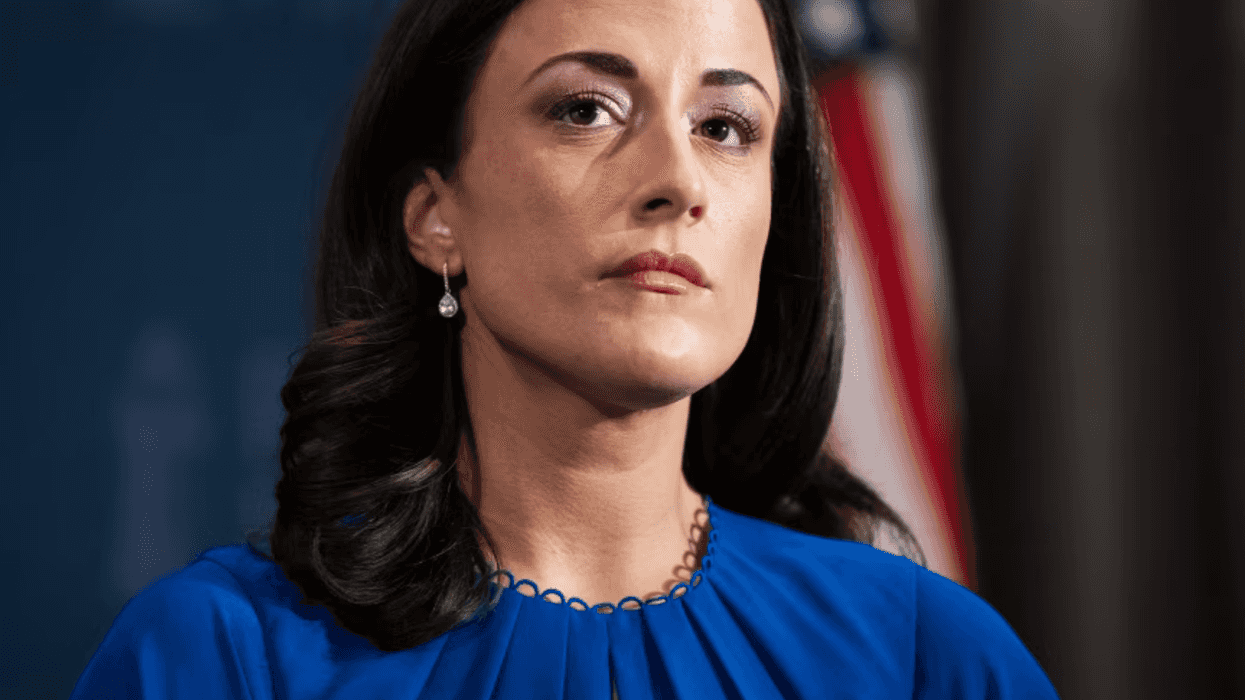
Justice Department Seeks Indictment Of Ex-Trump Aide Cassidy Hutchinson

Justice Department Seeks Indictment Of Ex-Trump Aide Cassidy Hutchinson

Punchbowl News reports that former White House aide Cassidy Hutchinson is next on President Donald Trump's revenge list.

The Justice Department's Civil Rights Division presented evidence to a federal grand jury this week alleging that she "lied to Congress," sources told the outlet.

Hutchinson spent several days testifying to the House Select Committee on January 6 after the attack on the U.S. Capitol. Trump has long maintained that what she said was a lie, so a key piece of the case will be whether the DOJ can prove something she said was false, particularly in the Washington D.C., federal court, which has not been a successful place for District Attorney Jeanine Pirro.

Among her more jarring allegations were that a Secret Service agent told her that the president lunged at him as he drove back to the White House following the speech on the Ellipse. According to Hutchinson, Trump wanted to go to the Capitol to see his supporters as they marched. He'd promised them moments before that he would be with them, but the Secret Service hadn't planned for that.

She also alleged that Trump didn't care about the magnetometer catching his supporters carrying guns, making it clear that he knew they weren't there to hurt him.

So far, Trump has used his Justice Department to target former FBI director James Comey, New York Attorney General Letitia James, prosecutors who investigated him, law firms connected to opponents and news organizations whose coverage he dislikes.

Reuters even documented at least 470 targets of administration retribution by November 2025, including 112 revoked security clearances.

But even failed indictments didn't stop Trump. After Comey posted an image on Instagram showing seashells spelling out "86-47," he was targeted by the FBI and DOJ, claiming he was making a credible threat against the life of the president with the post.

The campaign has also extended beyond criminal investigations and firings of government staff. Trump ordered restrictions on law firms’ security clearances, federal contracts and even access to government buildings, including the federal courts.

Trump swears he's not pursuing any revenge. As recently as Wednesday, Trump alleged that he could have "gone after" Hillary Clinton, and former Presidents Joe Biden and Barack Obama — but hasn't.

Critics argue the pattern turns government power into a tool for personal punishment. He's forcing the targets to spend buckets in legal costs and face professional consequences, even if prosecutions fail or the courts block his executive actions.

For Hutchinson, the question now is whether the Justice Department can prove a crime, or whether the process itself becomes the punishment for testifying against Trump.

Reprinted with permission from AlterNet

Worse Than The Old Boss: Todd Blanche Drives Justice To A New Low

Worse Than The Old Boss: Todd Blanche Drives Justice To A New Low

When Pam Bondi was sacked earlier this month, amid reports that her firing offense was, of all things, insufficient zeal in securing convictions of Trump’s enemies, the logical question was: just what more could she have done? Bondi had seemingly pulled out every possible stop to deliver the scalps to the King, foiled only by the checks that exist outside DOJ’s walls, especially grand juries that refused to indict the innocent targets she had placed before them.

At the time, the question seemed rhetorical. It wasn’t. In Todd Blanche’s three weeks as Acting AG, he has taken screws that seemed fully turned and tightened them another notch. His initial moves suggest that, hard as it is to conceive, he will be even more vicious, more slavish toward Trump, and more willing to jettison the public interest and the rule of law than was his consummately servile predecessor.

Meet the new boss. Worse than the old boss.

In 14 months, the shortest confirmed tenure of any Attorney General in 60 years, Bondi managed to eviscerate the mission and good faith of the DOJ to the point where courts that had always assumed the best of government lawyers had begun to assume the worst. It was the antithesis of justice without fear or favor, the Justice Department’s historic watchword: instead, Bondi’s DOJ delivered favor to Trump’s allies and tortured his enemies.

Yet in barely three weeks on the fifth floor, Blanche has done Bondi one better, which is to say the country one worse. The Department, in April, has moved to whitewash the criminal records of the worst January 6 offenders; fired career prosecutors for working righteous cases now in political disfavor; deployed loyalist assistants to intimidate the Federal Reserve in a manner both nakedly political and downright bizarre; and routed a reprisal perjury prosecution to a division with no conceivable jurisdiction over it.

Start with the most historically consequential. On Tuesday, the Department filed a bare-bones motion in the D.C. Circuit seeking to vacate the seditious conspiracy convictions of the worst January 6 offenders: eight Oath Keepers, including founder Stewart Rhodes, and four Proud Boys, including Joseph Biggs and Ethan Nordean.

These men were the architects of the worst assault on democratic self-governance in our lifetimes. Their prosecutions, for seditious conspiracy, arguably the most serious and demanding charge in the federal arsenal, were the hardest and proudest achievement of the largest criminal investigation in DOJ history.

The seditious conspirators had already received an outrageous windfall when Trump commuted their sentences on his first day back in office. Since then, he has embraced them as “hostages,” “unbelievable patriots,” and “warriors,” and called January 6 itself “a day of love.” The motion to vacate takes this grotesque revisionism to its logical conclusion.

The four-page motion offered no legal argument, no claim of innocence, no suggestion of prosecutorial error. It simply declared that dismissal “is in the interests of justice.”

Whose justice might that be?

On remand, the government will move to dismiss with prejudice, meaning no retrial is ever possible. The legal system will formally reflect that Stewart Rhodes and company committed no January 6-related crimes. At that point, these newly exonerated defendants will be positioned to sue the United States for malicious prosecution, just as Michael Flynn did, walking away with 1.25 million taxpayer dollars. A collection of pardoned January 6 defendants has already brought a class action against the Capitol police officers they overran that day, alleging excessive force. Rhodes and company can now wave their own dismissals with prejudice.

This is not, as Bondi and Trump might suppose, the triumph of one political faction over another. The whitewashing of the worst January 6 crimes is an offense against the entire country, Republicans and Democrats, MAGA and never-Trump alike. The convictions Blanche erases belonged to all of us.

The second item involves firing people for doing their jobs, and smearing them on the way out.

This week, the department fired at least four career prosecutors who had worked FACE Act cases under Merrick Garland, simultaneously releasing a 900-page “weaponization” report accusing those same prosecutors of selective enforcement. They got the knife and the smear at the same time.

The Freedom of Access to Clinic Entrances (FACE) Act was passed in 1994 with bipartisan support, its primary target the physical blockading of abortion clinics, with protections for houses of worship added to bring Republicans along.

The felony cases Garland’s prosecutors brought involved defendants who physically blockaded clinic entrances. Not people standing peacefully with signs. The cases were not close calls. In Washington, D.C., defendants forced their way into a clinic and blockaded the doors while a co-conspirator livestreamed it. In Mount Juliet, Tennessee, a coordinated group physically blocked a patient from receiving care while two ringleaders ran a deliberate deception operation to delay police. That is the conduct Blanche has now declared a firing offense to prosecute.

What makes this doubly perverse is the asymmetry Blanche has enshrined as policy: FACE Act cases involving houses of worship get the Justice Department’s full attention, as with the tenuous prosecution of Don Lemon for covering a protest in a St. Paul church; cases involving abortion clinics are now restricted to “extraordinary circumstances.” Same conduct, same statute, different outcomes depending on the political valence of the victim.

Then there is Tuesday’s drop-in visit to the Federal Reserve by two prosecutors in Jeanne Pirro’s office and an investigator.

Chief Judge James Boasberg had already quashed Pirro’s subpoenas targeting the Fed in March, finding that the government had produced “essentially zero evidence to suspect Chair Powell of a crime” and that the investigation was transparently designed to pressure Powell on interest rates. So Pirro dispatched two prosecutors, Steven Vandervelden and Carlton Davis, to show up unannounced at the Fed’s Washington headquarters and request a tour of the renovation project Trump has cast as the source of Powell’s supposed criminal exposure.

It is hard to overstate how anomalous this is. Prosecutors don’t make unannounced visits to subjects of an investigation and ask for a tour. Beyond that, the Fed is represented by counsel, Robert Hur, the former United States Attorney who investigated Biden’s handling of classified documents and found no basis for charges. Contacting a represented party without counsel present is a blatant ethical violation. Hur responded with a tart letter advising Pirro’s office that if it wished to challenge Boasberg’s ruling, the courts provided an avenue. That avenue is called an appeal. Pirro has yet to file one.

A word about Vandervelden and Davis. They are also the same Pirro soldiers who previously tried to indict six sitting Democratic members of Congress for taping a video urging military personnel they need not comply with illegal orders. Vandervelden has no prior federal prosecutorial experience; Davis previously served as a congressional staffer and has a single brief stint as an AUSA to his name.

The result: not a single vote to indict. It’s the first total shutout in federal grand jury practice that I’ve ever even heard about. The old saw is that a grand jury will indict a ham sandwich. It wouldn’t bite on the very different malodorous sandwich Vandervelden and Davis were serving.

The only plausible explanation for the Fed field trip is raw intimidation, a rattling of sabers, saying we still have you in our sights. Trump confirmed as much the next morning, telling Fox Business the probe would continue and that it was “more than a criminal probe.” The President of the United States, on camera, volunteered that his prosecutors are doing something other than pursuing criminal justice.

Finally, there is Cassidy Hutchinson, the then-25-year-old former White House aide whose June 2022 testimony remains one of the most consequential public accounts of Trump’s conduct on January 6. She was a loyal Republican staffer with no political animus toward Trump. She simply told the truth under oath, at considerable personal cost, against documented pressure from her Trump-supplied attorney not to, an attorney she eventually discharged.

The prospective perjury charge centers on her relaying what she had been told by White House Deputy Chief of Staff Tony Ornato about Trump lunging for the steering wheel of the presidential vehicle. The Secret Service agent in the car disputed the account; Ornato himself later claimed not to remember telling her. Relaying in good faith what a senior White House official told you is not perjury, by any stretch. The willful and material falsehood the charge requires is nowhere in evidence.

Bondi opened the inquiry in her final weeks as a last-ditch bid to please Trump. Blanche greenlighted the next step: assigning the matter to Harmeet Dhillon’s Civil Rights Division. Dhillon is a longtime Trump personal attorney, an ardent promoter of his 2020 election fraud claims, and an official who has described her mission as not merely slowing civil rights enforcement but “turning the train around and driving in the opposite direction.”

But perjury prosecutions are not her job. Every division in the Department has its own bailiwick. I don’t know of a single instance in which the Civil Rights Division has handled a congressional perjury case. There is no institutional authority to do so. The assignment is designed for one purpose: to show Trump that the Hutchinson prosecution is in the hands of a trusted enforcer.

What distinguishes Blanche, and has earned him particular contempt among former DOJ colleagues, is that he knows better. Bondi was over her head from day one, a Fox News personality dropped into the nation’s premier law enforcement institution. Blanche is a former Assistant United States Attorney who spent years in the Southern District of New York. He knows that the career prosecutors he has fired acted with integrity and dedication to justice. He knows the value of the traditions he is feeding through a meat grinder, because he was formed by them.

Blanche served in a Justice Department where it was forbidden for the White House even to communicate with DOJ about a pending case, and he knows precisely why that rule existed and what its abandonment means. Now he takes pride in turning that rule upside down.

At his first press conference as Acting AG, asked about Trump’s explicit public demands that DOJ investigate his political opponents, Blanche said: “It is true that some of them involve men, women, and entities that the president in the past has had issues with and believes should be investigated. That is his right, and indeed it is his duty to do that, meaning to lead this country.”

Whoa. The Acting Attorney General of the United States describes it as the president’s duty, and a function of his leadership, to order prosecutions of his political enemies. It is a breathtaking characterization of Trump’s corrupt agenda, now become the Department of Justice’s mission statement.

In three weeks, Blanche has made clear there is no floor he recognizes. He is all in, past Bondi, past any limiting principle. We thought we had seen the bottom. We hadn’t.

And that gives rise to one question, also unfortunately not rhetorical: how much lower can he drive the Department of Justice?

Harry Litman is a former United States Attorney and the executive producer and host of the Talking Feds podcast. He has taught law at UCLA, Berkeley, and Georgetown and served as a deputy assistant attorney general in the Clinton Administration. Please consider subscribing to Talking Feds on Substack.

Reprinted with permission from Talking Feds.

'Less Than Credible' GOP Witness Hits Hutchinson With $10M Libel Lawsuit

'Less Than Credible' GOP Witness Hits Hutchinson With $10M Libel Lawsuit

Former President Donald Trump's ex-White House aide Cassidy Hutchinson on Monday was sued by House Republican "star witness" Tony Bobulinksi for defamation, according to The Daily Beast.

Bobulinski — who's an ex-business partner of Hunter Biden's turned GOP impeachment witness — sued Hutchinson over allegations she included in her September memoir, Enough, saying that Bobulinski was "involved with some sort of shady business dealing."

The GOP witness' filing, according to the report, "contends he is being treated unfairly '[b]ecause [he] did not pledge blind loyalty to the Democrat Party and to the Biden family."

The Beast notes during "a Feb. 28 deposition by the House Oversight Committee, Hunter Biden said, 'Tony is a bitter, bitter man that did not get in on a deal that he wanted to get in on, because I thought that he was both incompetent and an idiot."

Highlighted in Bobulinski’s defamation claim are details of "a 2020 Trump campaign rally in Rome, Georgia, in which former White House Chief of Staff Mark Meadows handed 'a folded sheet of paper or a small envelope' to Bobulinski while Bobulinksi was wearing what Hutchinson called a 'ski mask.'"

According to her book, the report notes, "Hutchinson observed the two men huddling, with Bobulinski covering his face with a ski mask, 'through a gap in the vehicles,' she wrote. Meadows had asked Hutchinson to locate Bobulinski, then 'work with [the] Secret Service to find a hidden spot.'"

The Beast reports:

According to Bobulinski’s lawsuit, nothing 'nefarious' was going on, and the face-to-face was simply 'an exchange of pleasantries.' It says Bobulinski had become the target of death threats, and that Meadows 'asked to meet with him for the sole purpose of checking on his and his family’s health and safety due to the ongoing threats against them.'

Bobulinski insists in the suit that, under oath last month before the Jan. 6 Committee, he 'unequivocally rejected' the notion he was wearing a ski mask during the meeting with Meadows. He further complains about being mocked on social media about the mask, embedding a photo of himself in his dress whites, 'an actual photo of Plaintiff, a decorated Navy veteran,” to distinguish himself from a meme-ified cartoon showing a masked man smoking a cigarette.

The news outlet also notes, "in describing Hutchinson as a liar, Bobulinski cites a trio of far-right conspiracy theorists, one of whom was banned from Twitterand Facebook for spreading falsehoods about the 2020 election, as 'proof' of his assertions."

Rep. Jamie Raskin (D-MD) sent a February 12 letter to House Oversight Committee Chairman Rep. James Comer (R-KY), saying Bobulinski "is a less-than-credible witness whose 'mysterious ties to the Trump campaign, his refusal to engage with the Committee’s Democratic staff, and his problematic personal finances, raise significant concerns about his truthfulness, credibility, and motivations.'

Reprinted with permission from Alternet


Shop our Store

Headlines

Editor's Blog

Trending

World