Tag: chinese ai
Money Still Not There For Big AI Companies, But Crisis-Style Finance Is Coming

Money Still Not There For Big AI Companies, But Crisis-Style Finance Is Coming

When I saw this note from Torsten Slok, the chief economist for Apollo Capital, I knew I had my topic for the week. The point is that the big money in AI is far removed from the end product. The chipmakers are making money hand over fist, the energy providers are doing okay, the hyperscalers have less to show, and the AI companies are losing bucks big time.

This matters, because at the end of the day, if the AI companies are not making money, the whole thing breaks down. To use a common analogy, suppose that steel companies are making huge bucks producing steel for rails, and construction companies are making money laying the rail, but the companies that run the railroads are all going broke. That doesn’t look like a story of long-term prosperity. In the great minds think alike category, Ed Zitron jumped on the same point in his excellent newsletter.

Anyhow, I take a somewhat different tack than Ed and focus on the Chinese competition. I realize that even if there was no competition from China, it is unlikely that AI would ever have the massive payoffs the hyperscalers are banking on, but the existence of that competition makes the story considerably less likely. And developments in the last couple of weeks seem to make the case for American AI even weaker.

Chinese AI Is Cheap and Getting Cheaper, U.S. AI Less So

As I have frequently noted here in the past, Chinese AI costs far less per input or output token than U.S. AI. For the cutting-edge models, the Chinese AI sells for one-fifth or even one-tenth of the price of U.S. AI. One response I have seen is that, even though the Chinese AI costs less per token, it can still end up being more costly because the systems are less efficient and require more tokens per task.

I am not sure that the measure of cost per task is a sufficiently standardized metric to allow it to be compared in a meaningful way, but insofar as it can be, it looks like the U.S. advantage has gone away. According to the Korean electronics industry publication, The Elec, the leading Chinese AI model is now cheaper on cost per task than the leading U.S. model, and performance gaps continue to narrow.

In the same vein, both Google and DeepSeek released new flash models last week. The DeepSeek model scored better on several benchmarks. And it sells for less than one-tenth the price.

If that makes the picture look bleak for U.S. AI producers, don’t worry, it will likely get worse. Alibaba reports having developed a modular design that will allow it to build data centers in 100 days. Compare to 12-18 months in the United States. This should mean lower costs and greater capacity for Chinese AI producers. That means the flood of low-cost, high-quality Chinese AI is likely to get even larger in the months ahead.

Chinese AI Is Finding New Customers

Given its huge cost advantage, it’s not surprising that Chinese AI models are gaining ground rapidly at the expense of U.S. models. I’ve noted before that Chinese AI seems to be winning out by large margins in most regions of the developing world. However, it also seems to be gaining ground in Europe. There are political considerations that could make European companies reluctant to rely on Chinese AI; however, given the erratic behavior of Donald Trump, it’s not clear that going with U.S. provides greater security.

And it looks like Chinese AI is continuing to gain ground in the U.S. market. It seems that Apple is looking to Chinese AI as a cheaper alternative to the Silicon Valley producers. Apple by itself is potentially a huge market, but perhaps more importantly, it is a company that has been at the cutting-edge of innovative technology for more than a quarter century. Its decision to go with Chinese AI is sending a serious message.

And remember, the question for those expecting really big bucks for the AI makers is not just whether Anthropic, OpenAI, and the rest can hang onto a large share of the market. It’s whether they can do so while selling at prices that give them the huge profits the stock market is banking on.

Can Creative Financing Overcome the Problems?

As mortgage issuers sold ever more dubious mortgages to further inflate the housing bubble, the wizards of Wall Street assured us that their financial magic would make it all work. This attitude was best conveyed by former Treasury Secretary Larry Summers at an academic conference in 2005, where he dubbed a critic of the growing house of cards a “financial Luddite.” Somehow, Summers thought innovative finance would make the millions of underwater mortgages issued to people with weak employment prospects and no reserve assets all work out fine.

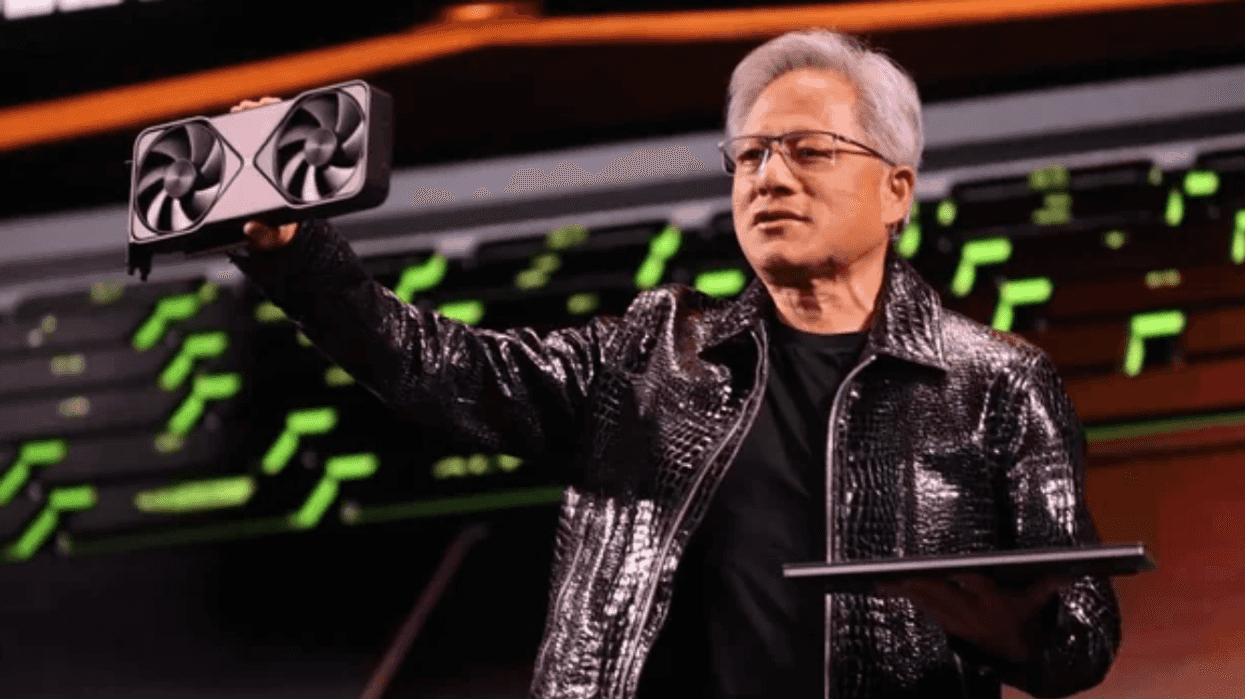
We might be getting the same story with the AI bubble. Getting back to Torsten Slok’s point about the chipmakers making big bucks, while AI producers are making big losses, it seems Nvidia is looking to address the problem. It has just arranged $500 billion in financing from major banks for the hyperscalers that buy its chips. Fans of markets everywhere are asking the obvious question: if there is so much money to be made in building the data centers, why does Nvidia have to arrange the financing?

The details are not clear at this point, like whether Nvidia will in any way be on the hook for the financing, but there is a suggestion that it could involve securitization with tranches carrying different levels of risk, sort of like mortgage-backed securities or collateralized debt obligations. It could be lots of fun!

Dean Baker is a senior economist at the Center for Economic and Policy Research and the author of the 2016 book Rigged: How Globalization and the Rules of the Modern Economy Were Structured to Make the Rich Richer. Please consider subscribing to his Substack.

Do Musk's Record-Breaking Losses Signal The AI Bubble Is About To Burst?

Do Musk's Record-Breaking Losses Signal The AI Bubble Is About To Burst?

SpaceX’s stock fell another 7.2 percent last week. At its 115 Friday close, SpaceX was 15.0 percent below its issue price and down more than 45 percent from its peak the following week. Those who got out early did quite well, while those who bought in the week after the IPO probably aren’t feeling too good just now.

Tesla, Musk’s other big company, did even worse last week, shedding 17.8 percent of its value. That corresponds to a loss of $218 billion in market capitalization. With SpaceX losing $116 billion in value, Musk has likely set a record for losing more money in a single week than any person in history.

But it wasn’t just Musk who had a bad week; the hyperscalers also were not doing very well. Alphabet and Amazon both lost 7.8 percent of their value last week. Amazon lost 6.0 percent, while Microsoft’s stock was down 3.0 percent. Apple managed to almost break even, losing just 0.2 percent of its value.

The big factor in these drops is likely the higher than anticipated capital investment the companies seem to be planning. The increase in spending, coupled with the strong performance of the newest Chinese AI releases, makes it more questionable that the hyperscalers will be able to recover their investments.

The slump of the hyperscalers seems at odds with the strong showing of chipmakers last week. To a large extent, this was just reversing their downturn from the previous week. At the end of the day, if the hyperscalers run into trouble, it’s hard to envision a scenario in which the chip makers aren’t also hard hit. They may still be large, profitable companies, but the massive bonanza their investors now seem to envision will not materialize without a serious AI boom.

It’s always difficult to know the extent to which market movements are based in reality. If you want to see a story of how things are likely to end badly for the hyperscalers and their funders, read Ed Zitron’s Substack. (See also my Mostly Economics interview with him.) He examines at some length how the hyperscalers have created special purpose vehicles (remember Enron?) so as to keep data center- related liabilities off their books.

Ed draws a very bleak picture of a massive bubble of debt that cannot possibly be serviced based on plausible revenue projections from the two major AI companies, Anthropic and OpenAI. I’ll throw in that Ed doesn’t even bring Chinese AI into the picture. That seems to me a very big deal, since Chinese AI companies are already eating up a large and growing share of the market. And even insofar as the U.S. AI companies can hold onto a substantial market share, they will be forced to lower their prices to be competitive.

The layers of finance that Ed describes can be confusing. He compares them to the complex derivative instruments that the financial wizards of the subprime era used to ostensibly minimize risk. For those with the time and energy, it’s worth reading through Ed’s story to get the full picture.

But there is a simple shortcut. If the creation of Special Purpose Vehicles is not a way to hide liabilities, why do it? If Meta, Google, Microsoft, and the rest are confident their bets will pay off, why not just keep them on their own balance sheets like any normal investment? Perhaps there is a benign explanation for going through all these financial hoops, and spending a lot of money to do it, but I am not sufficiently sophisticated to imagine what it could be.

One part of this picture that jumped out at me in reading Ed’s account is that the ability to support this web of debt is likely to be highly sensitive to interest rates. The 10-year Treasury rate was hovering near 4.0 percent when Trump and Netanyahu attacked Iran at the end of February. It is now close to 4.7 percent and more likely headed higher than lower if the war escalates. Trump’s latest round of tariffs is also likely to push interest rates higher.

It would be an interesting irony if Trump’s war and his tariffs proved to be the proximate causes of the crash of the AI bubble.

Dean Baker is a senior economist at the Center for Economic and Policy Research and the author of the 2016 book Rigged: How Globalization and the Rules of the Modern Economy Were Structured to Make the Rich Richer. Please consider subscribing to his Substack.


Worse Coming? Musk Loses Tens Of Billions As Spacex Shares Plunge

Worse Coming? Musk Loses Tens Of Billions As Spacex Shares Plunge

SpaceX’s shares took a big hit last week, ending the week at 124 at the NASDAQ close on Friday. This is more than eight percent below the 135 price at its initial public offering last month, and a drop of almost 15 percent for the week. That corresponds to a loss of more than $200 billion in market capitalization. The Friday close was more than 40 percent below the peak price of 211 hit in the week after the IPO.

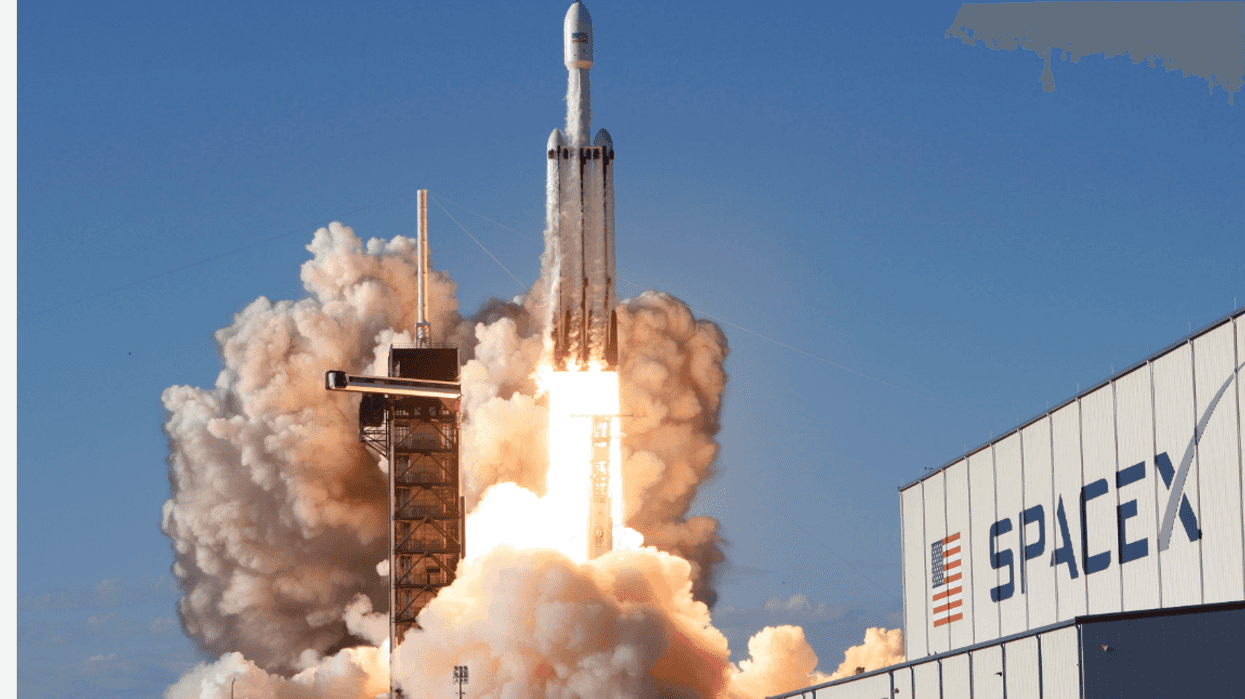
SpaceX was hit with some bad news last week, notably a rocket launch on Thursday that had to be aborted. But the company’s troubles may go beyond one failed rocket launch. The company’s stock had been falling for the last three weeks. It’s possible that investors have less confidence that Musk will be turning around a massive money loser into one of the most profitable companies in the history of the world.

Also, the lock-in period for insiders will likely be ending soon. This means that a lot of shares will be dumped by people looking to cash out big gains.

SpaceX wasn’t the only high-flyer seeing some rocky waters. The price of Tesla, Musk’s other big company, fell by 6.6% last week, reducing its market capitalization by $100 billion from the week before.

And it wasn’t just Musk’s companies that had troubles. The big chipmakers all had bad weeks. Nvidia’s stock price dropped 3.9 percent last week, shedding $200 billion in market value. Broadcom’s valuation fell by $140 billion, 7.3 percent of its market value, and shares of both Micron and AMD fell by more than 10 percent.

It’s always hard to say what information moves markets, but there is a clear candidate this week. The Chinese AI company Moonshot unveiled a new model that scores right alongside the top models from OpenAi and Anthropic. The problem for the U.S. AI companies, and the hyperscalers providing the computing power, as well as the chip manufacturers, is not just that China’s leading AI companies can match the power of the U.S. leaders, but also that they sell their product at a fraction of the price.

As noted before, the story of a huge payoff to AI firms rests on three big assumptions, all of which look increasingly questionable. The first and most important is that there will be a massive payoff from AI in the form of an increased rate of productivity growth. To date, we see no evidence of this. Productivity growth has been very weak in the last three quarters. (I’m including the second quarter of 2026 based on estimates of GDP growth and the data we have on hours worked.)

The second is that competition will not push down prices, allowing the benefits of the AI productivity boost to be widely shared by society rather than being locked in as extraordinary profits for the AI makers. The third assumption is that the U.S. AI companies will be the ones getting the big profits.

The latest developments in Chinese AI make both the second and third assumptions very questionable. The Chinese companies are prepared to compete on price, offering a far lower cost product that will be fine for the needs of almost all users. This means both that the profits of AI companies are likely to be limited even if there prove to be massive productivity gains.

Remember, this is the story of Internet providers. Verizon and Comcast are big profitable companies, but they are not earthshaking giants. If Anthropic and OpenAI end up being the Verizons and Comcasts of the next decade, their shareholders will be looking at huge losses. And given the progress of the Chinese AI companies, they may prove fortunate even to achieve the status of the big Internet providers, as Chinese companies are dominating not just third markets, but increasingly the U.S. market as well.

If this story proves to be right, and there is no pot of gold at the end of the AI rainbow, it’s hard to say how long it will take markets to catch up. The Internet bubble took two and a half years to deflate. The financial problems associated with the collapse of the housing bubble also took a long time to percolate through the system.

Nationwide house prices peaked in the summer of 2006, but the stock market continued to rise at a healthy pace through most of 2007. Even the stocks of the soon-to-be-bankrupt companies fared well until near the end. AIG still had a market capitalization of almost $180 billion at the end of 2007, and even in the summer of 2008, just months before its collapse, its market capitalization was over $70 billion.

While markets may be forward-looking, they don’t always see things with clear eyes. There might be some way that the big bets on the AI companies, the hyperscalers, and the chip makers make sense, but it is difficult to see what it is at this point.

Dean Baker is a senior economist at the Center for Economic and Policy Research and the author of the 2016 book Rigged: How Globalization and the Rules of the Modern Economy Were Structured to Make the Rich Richer. Please consider subscribing to his Substack.

Boom? If AI Sales In The US Go South, Let's Not Bail Out Big Money Bettors

Boom? If AI Sales In The US Go South, Let's Not Bail Out Big Money Bettors

I was struck by a graph showing OpenRouter’s measure of AI usage this year. (It appears in a newsletter published by Deutsche Bank’s chief economist, Jim Reid.)

There are two striking features to the graph. The first is that usage of Chinese AI passed the usage of U.S. AI in the last week in May. This had also happened for the last week in March, but the U.S. went back into the lead in April. However, this time around, the Chinese models extended the lead through June so that for the first week in July, they look to be about 40% higher. That might be great news for Chinese AI, but not so good for U.S. makers.

The other feature to the graph that is even more striking is that usage of U.S. models actually fell in the most recent week. The story of a huge AI boom is usage increasing at an extremely rapid, and maybe even increasing, pace. A decline in usage is not supposed to be in the cards.

To be clear, this is just one week, and perhaps there were unusual factors that depressed AI usage in the first week in July, like the holiday. But even if the one-week fall can be dismissed, total usage was roughly back to where it was four weeks ago, as there was very little growth in the prior two weeks. That is clearly not a story of an AI boom, or at least a boom in U.S. AI. We have to wonder how many weeks of weak sales will it take before some of the big AI investors get worried?

If there is any possibility that the massive investments the AI companies will pay off, usage has to increase hugely from current levels. The fact that it levels off for even a short period should be concerning, as should the rapid growth in the usage of Chinese AI. The U.S. companies have to both be able to sell a huge amount of their AI, and they also have to be able to sell it at a high price. Chinese AI that is comparable in quality for most uses and sells for a fifth or even a tenth the price will pose a serious obstacle.

Can the Big Money Folks Really Be That Clueless?

It may seem hard to imagine that people who manage tens, or even hundreds, of billions of dollars in pension funds or hedge funds can be totally clueless about the market prospects for the companies on which they are placing big bets. But the housing bubble wasn’t that long ago.

Back then, huge funds were prepared to believe that securities that were backed by subprime mortgages, often made with no money down, were a safe bet. And AIG, the largest insurer in the world, was prepared to back up these bets with hundreds of billions of dollars in credit default swaps. When the bubble burst, its bankruptcy was a certainty had it not been for a massive government bailout.

And it was only four years ago that the geniuses who ran Silicon Valley Bank had to be taught that the value of bonds falls when interest rates rise. Of course, they also got a government bailout, so maybe that is the lesson the big money folks learned.

Anyhow, it would be good if we could get the rich to show a little respect for the market. If the AI bubble bursts, there should be some real career consequences for the folks who lost tens of billions for their clients, no “who could have known?” amnesties. And no government bailouts for the swashbuckling AI barons. Let them eat their losses.

Dean Baker is a senior economist at the Center for Economic and Policy Research and the author of the 2016 book Rigged: How Globalization and the Rules of the Modern Economy Were Structured to Make the Rich Richer. Please consider subscribing to his Substack.

Shop our Store

Headlines

Editor's Blog

Trending

World