Boom? If AI Sales In The US Go South, Let's Not Bail Out Big Money Bettors
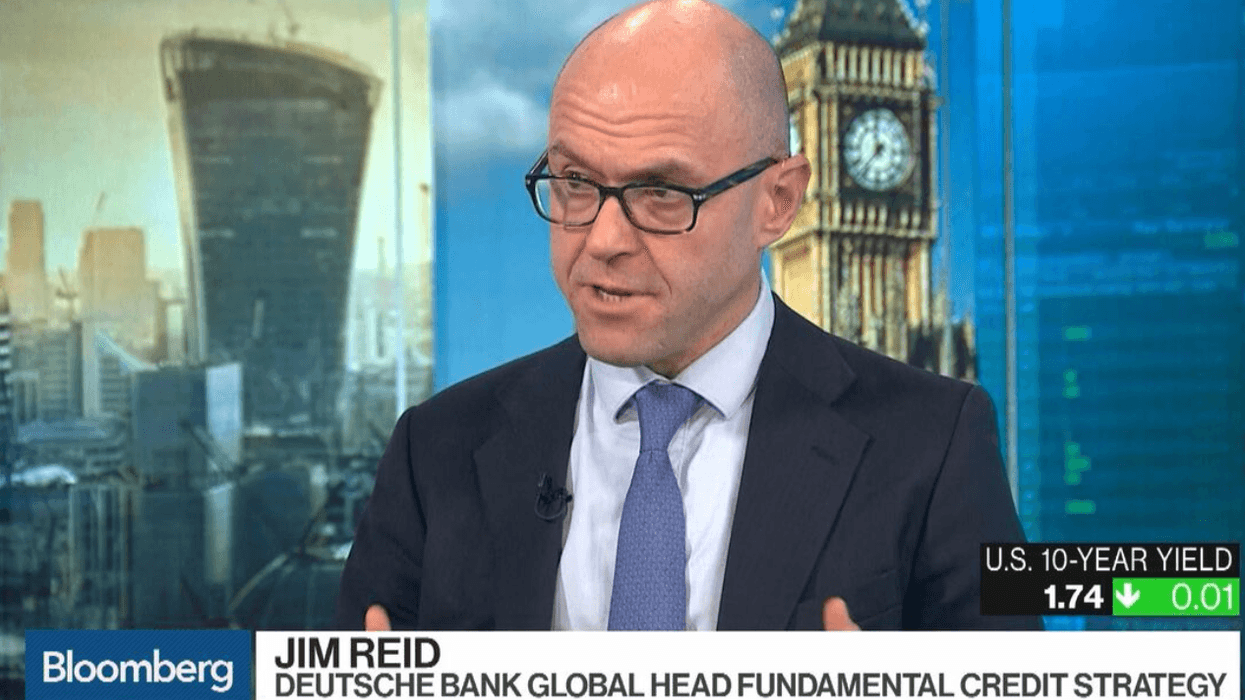
Deutsche Bank economist Jim Reid
I was struck by a graph showing OpenRouter’s measure of AI usage this year. (It appears in a newsletter published by Deutsche Bank’s chief economist, Jim Reid.)
There are two striking features to the graph. The first is that usage of Chinese AI passed the usage of U.S. AI in the last week in May. This had also happened for the last week in March, but the U.S. went back into the lead in April. However, this time around, the Chinese models extended the lead through June so that for the first week in July, they look to be about 40% higher. That might be great news for Chinese AI, but not so good for U.S. makers.
The other feature to the graph that is even more striking is that usage of U.S. models actually fell in the most recent week. The story of a huge AI boom is usage increasing at an extremely rapid, and maybe even increasing, pace. A decline in usage is not supposed to be in the cards.
To be clear, this is just one week, and perhaps there were unusual factors that depressed AI usage in the first week in July, like the holiday. But even if the one-week fall can be dismissed, total usage was roughly back to where it was four weeks ago, as there was very little growth in the prior two weeks. That is clearly not a story of an AI boom, or at least a boom in U.S. AI. We have to wonder how many weeks of weak sales will it take before some of the big AI investors get worried?
If there is any possibility that the massive investments the AI companies will pay off, usage has to increase hugely from current levels. The fact that it levels off for even a short period should be concerning, as should the rapid growth in the usage of Chinese AI. The U.S. companies have to both be able to sell a huge amount of their AI, and they also have to be able to sell it at a high price. Chinese AI that is comparable in quality for most uses and sells for a fifth or even a tenth the price will pose a serious obstacle.
Can the Big Money Folks Really Be That Clueless?
It may seem hard to imagine that people who manage tens, or even hundreds, of billions of dollars in pension funds or hedge funds can be totally clueless about the market prospects for the companies on which they are placing big bets. But the housing bubble wasn’t that long ago.
Back then, huge funds were prepared to believe that securities that were backed by subprime mortgages, often made with no money down, were a safe bet. And AIG, the largest insurer in the world, was prepared to back up these bets with hundreds of billions of dollars in credit default swaps. When the bubble burst, its bankruptcy was a certainty had it not been for a massive government bailout.
And it was only four years ago that the geniuses who ran Silicon Valley Bank had to be taught that the value of bonds falls when interest rates rise. Of course, they also got a government bailout, so maybe that is the lesson the big money folks learned.
Anyhow, it would be good if we could get the rich to show a little respect for the market. If the AI bubble bursts, there should be some real career consequences for the folks who lost tens of billions for their clients, no “who could have known?” amnesties. And no government bailouts for the swashbuckling AI barons. Let them eat their losses.
Dean Baker is a senior economist at the Center for Economic and Policy Research and the author of the 2016 book Rigged: How Globalization and the Rules of the Modern Economy Were Structured to Make the Rich Richer. Please consider subscribing to his Substack.
- AI Bubble Drives Up Prices, Harms The Environment And Deserves To Burst ›
- Fresh Warnings In The Government's First-Quarter Economic Report ›
- Expert Warns That AI Bust Is Now Inevitable -- And Will Sink Trump's Economy ›
- Bursting The AI Bubble Just Might Be Better For (Almost) Everyone ›
- Warning: Here's Why The Fed Can't Rescue Markets From AI Bubble ›
- The $12.5 Trillion-Dollar Question: When Will That AI Bubble Burst? ›
- Do Musk's Record-Breaking Losses Signal The AI Bubble Is About To Burst? - National Memo ›
- The Big Whine: Musk, Altman And Amodei Want Taxpayers To Save Them - National Memo ›
- Is AI 'one big bubble'? Behind the tech sell-off : NPR ›
- The AI bubble has further to run despite the looming crash | Phillip Inman | The Guardian ›
- Treasury Has an Internal Report Warning About the Dangers of an AI Bubble - NOTUS — News of the United States ›
- How to burst the AI bubble: Strike at its roots - Ars Technica ›