Tag: declaration of independence
How Liberals and Progressives Should Celebrate America’s 250th

How Liberals and Progressives Should Celebrate America’s 250th

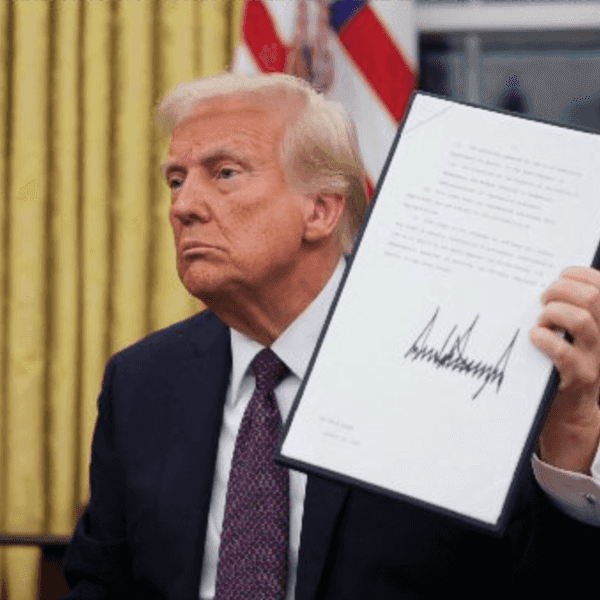
This is the worst year—and a perfect time—to commemorate the American Revolution. The 250th anniversary of the Declaration of Independence is arriving at a political moment wholly inconsistent with the Declaration itself. Our own leader is a would-be king, responsible for “a long train of abuses and usurpations, pursuing invariably the same Object,” namely his own power and glory, which he confuses with the nation’s. “Neo-royalist” is an apt term for his conduct of the presidency and his posture toward the world.

Donald Trump has so thoroughly appropriated and degraded the celebration of the 250th that liberals and progressives may want to have nothing to do with it. But that’s a mistake. Precisely because America has strayed so far from its founding heritage, this is a perfect time to celebrate, reflect on our revolutionary beginning, and recognize what the Revolution achieved and what it didn’t.

The idea that the American Revolution wasn’t all that revolutionary has long had its advocates on both sides of the ideological spectrum. Some conservatives have argued that the Revolution aimed only to restore traditional British liberties, while some on the left have claimed that it only changed the form of government but left slavery undisturbed and even reinforced social inequalities.

Neither of those views gives the Revolution its due. Although it fell short of abolishing slavery, the Revolution did far more to advance freedom and equality than just restoring traditional liberties. It set in motion radical changes in both social life and government. This is the revolutionary heritage we should be celebrating.

The American colonies were societies of inherited rank, where a wide gulf separated the rich and well-born from commoners, and where colonists with connections to the Crown—future Loyalists—enjoyed patronage and privileges. Birth order remained a critical source of inequality: In much of colonial America, as in Britain, the eldest son in a wealthy family inherited the estate under rules of primogeniture and entail. That system of inheritance in Britain had for centuries locked up landed wealth and power in a small aristocracy.

Cherished stories about the Puritans and other early settlers have misled us about the social status of most of those who crossed the Atlantic to the colonies. Data on colonial migrants on British ships show that the great majority came in an unfree condition. Most of the unfree were enslaved Africans, but more than half the whites arriving in the colonies south of New England came as indentured servants or convicts.

Like the enslaved, they were bound to forced labor, subject to harsh control by their masters, and liable to be bought and sold. Unlike the enslaved, they were bound for a fixed period, generally five to seven years for indentured servants. At any one moment, according to the late historian Gordon Wood, about half the colonial population was legally unfree.

Revolutionary America began overturning these bases of social subordination. As Wood writes in The Radicalism of the American Revolution, “By the time the Revolution had run its course in the early nineteenth century, American society had been radically and thoroughly transformed.”

Amid all the contentious arguments about the Revolution’s impact, certain facts are beyond dispute. The reason the United States became divided between free and slave states is that the states in the North began abolishing slavery in the Revolutionary era, and Congress in 1787 prohibited slavery in the western territories north of the Ohio River. The Constitution barred titles of nobility, and the states in the following years did away with primogeniture and indentured servitude.

Instead of a society stratified by inherited rank, the America that emerged from the Revolution outside the South was unusually fluid and open to mobility. Ordinary white men had less reason to feel resigned to a status assigned them at birth. After visiting America in 1831-1832, the French aristocrat Alexis de Tocqueville reported that the equality of condition had unleashed a surge of energy, ambition, and frenetic activity in nearly every sphere, politics and civic associations as well as the economy.

Washington Irving’s 1819 short story “Rip Van Winkle” describes that postrevolutionary transformation. After falling into a deep sleep before the Revolution, Rip awakens 20 years later, enters his old village during an election, and discovers a changed world: “The very character of the people seemed changed. There was a busy, bustling, disputatious tone about it, instead of the accustomed phlegm and drowsy tranquility.”

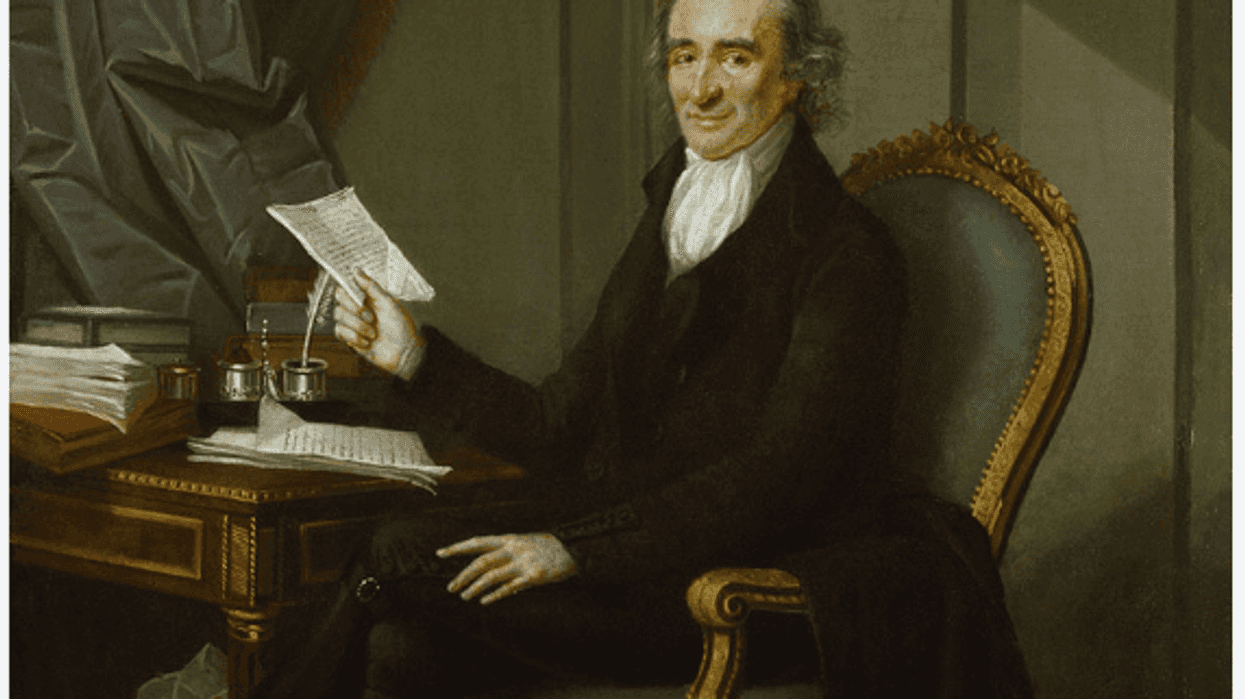
Under modern definitions, the early American republic would not qualify as a democracy because the majority of adults still had no right to vote, but the Revolution immediately created a more popular politics. One sign was a more plainspoken, easily grasped political language. Tom Paine’s Common Sense, the February 1776 pamphlet that set the colonies on the path to independence, also set the new standard for popular persuasion, appealing to what in the 18th century was just beginning to be called “public opinion.”

The new government fostered the expansion of the press and the public through the post office. Britain taxed newspapers to make them more expensive and prevent the rise of a dangerous popular press. Congress, however, starting in 1792, subsidized the distribution of newspapers with cheap postal rates and a right for printers to exchange copies free of postal charges. That was the basis for something extraordinary for its time, indeed any time: a government-subsidized but uncensored national news network. Unlike European countries, the United States also extended post roads and post offices to small towns and villages. Many people adopted a new habit, keeping up with the news.

By changing the system of government, the American Revolution had created a new political society. Strikingly, neither the growth of the press nor the energized public life and popular politics developed at that time in Canada, the part of British North America that hadn’t joined the Revolution and instead welcomed the fleeing Loyalists. When Britain’s Parliament granted Canada independence in 1867, it described the federation’s purpose as “Peace, Order, and good Government.”

The American Declaration of Independence had spelled out a different moral theory of government: “Governments are instituted among Men, deriving their just powers from the consent of the governed” to secure men’s “unalienable Rights,” among them “Life, Liberty and the pursuit of Happiness.”

Those electrifying words, written under the immediate pressure to inspire men to risk their lives in war, did two things in the long run. They established founding principles, a founding promise. And they left America with a founding contradiction because the American republic in practice originally denied those rights to Black and indigenous people, women, and even white men without property.

Still, no matter the intent of the Declaration’s signers, their words defined the American project as many in later generations would come to understand it: fulfilling the promise and overcoming the contradiction. At Gettysburg, Lincoln said America was “dedicated” to a “proposition,” the proposition that “all men are created equal,” and that it was “for us the living … to be dedicated here to the unfinished work,” the work required for a “new birth of freedom.”

That conception of America and the continued meaning of the Declaration is not, however, universally held. Last July, JD Vance declared, “This country is not a contradiction … not some unfinished or contradictory project.” He was criticizing a post the previous day, July 4, by Zohran Mamdani, who had said: “America is beautiful, contradictory, unfinished,” words that, in the vice president’s view, showed Mamdani’s lack of gratitude to earlier generations who had “turned [America’s] wilderness into the most powerful nation in the world.”

Vance was defending a different proposition from the one that Lincoln spoke about at Gettysburg. It’s the proposition that those who count America as their ancestral homeland going back to our early history—“heritage Americans,” some call them—have a singular “claim” to the nation: “I think the people whose ancestors fought in the Civil War have a hell of a lot more claim over America than the people who say they don’t belong.”

Of course, neither Mamdani nor liberals who define the core of American identity by its founding ideals say that people whose ancestors fought in the Civil War “don’t belong.” What they say is that America still has work to do to make good on its founding promise.

Donald Trump’s monarchical presidency has made that work more urgent. Unlike originalists in the law, Trump’s governing philosophy might be described as “pre-originalist”: a return to rule by proclamation and prerogative, the very thing America’s founders abhorred and tried to prevent through constitutional restraints. This year’s anniversary ought to reawaken that foundational opposition to arbitrary, personal rule, slumbering in the hearts of the president’s supporters.

The world will surely “little note, nor long remember” what any of us say at the celebrations this July. But it will again be true that it is for “us the living” to do the unfinished work that freedom perennially requires. All those who take up that challenge can count themselves heritage Americans and celebrate the 250th in a spirit faithful to the Declaration.

Paul Starr is co-founder and co-editor of The American Prospect, professor of sociology and public affairs at Princeton University, and a winner of the Pulitzer Prize for general nonfiction and the Bancroft Prize in American history.

Reprinted with permission from The American Prospect.


Why General Lee Doesn't Deserve A Statue But Jefferson Does

Why General Lee Doesn't Deserve A Statue But Jefferson Does

Reprinted with permission from Creators

In New York City, a statue of Thomas Jefferson has graced the City Council chamber for 100 years. This week, the Public Design Commission voted unanimously to remove it. "Jefferson embodies some of the most shameful parts of our country's history," explained Adrienne Adams, a councilwoman from Queens. Assemblyman Charles Barron went even further. Responding to a question about where the statue should go next, he was contemptuous: "I don't think it should go anywhere. I don't think it should exist."

When iconoclasts topple Jefferson, they seem to validate the argument advanced by defenders of Confederate monuments that there is no escape from the slippery slope. "First, they come for Nathan Bedford Forrest and then for Robert E. Lee. Where does it end? Is Jefferson next? Is George Washington?"

No historical figure is without blemish, they protest. And it's unfair to condemn our ancestors using today's standards. If owning slaves is the discrediting fact about Lee, how then can we excuse George Washington? As if on cue, "TFG" chimed in with a statement chiding the city for "evicting" the "late, great Thomas Jefferson, one of our most important founding fathers." Not so important, apparently, that former President Donald Trump felt the need to learn about him though, because the next phrase was "a principal writer of the Constitution of the United States." Sigh. No, Jefferson was in Paris during the Constitutional Convention. He authored another founding document Trump hasn't read. But never mind.

There is an answer — a reason why it's right to remove Robert E. Lee from his pedestal in Richmond, Virginia, yet wrong to exile Thomas Jefferson from a place of honor in American life. It requires grappling with the full complexity of human beings and the mixed legacy of history. We must, as William Shakespeare said, "Take them for all in all," that is, judge them for their entire lives, not just a part.

People who defend monuments to Lee on the grounds that he played an important role in our history are confusing significance with honor. Lee surely played a huge role in our history, but as the leader of an army whose aim was to destroy the union. That made him a textbook traitor. As Ulysses Grant put it in his memoir, recalling his feelings upon accepting Lee's surrender at Appomattox Court House, Lee had fought "valiantly" but for a cause that was "one of the worst for which a people ever fought, and one for which there was the least excuse."

Is it fair to judge Lee by our modern standards? Perhaps not, but even by the standards of his own day, he is wanting. Much has been made of Lee's supposedly agonizing decision to resign his U.S. Army commission because he could not "raise my hand against my birthplace, my home, my children." But others, including Gen. Winfield Scott, who offered Lee command of the Union army in 1861, also hailed from Virginia, yet remained loyal, as did Virginian Gen. George Henry Thomas, the "Rock of Chickamauga," and an estimated 100,000 white Southerners who fought for the Union.

Lee's image has been sanitized and even beatified by purveyors of the "Lost Cause" narrative about the Confederacy. They've depicted Lee as an upright, chivalrous defender of tradition, a moral man and a Christian. But, as Adam Serwer reminds us, Lee was a cruel slave master. In the words of Wesley Norris, one of his slaves who attempted to escape and was whipped, "Not satisfied with simply lacerating our naked flesh, Gen. Lee then ordered the overseer to thoroughly wash our backs with brine, which was done." As the leader of the Army of Northern Virginia, Lee enslaved all of the Black Union soldiers he captured as well as free Black Pennsylvanians his army encountered.

As the author of the Declaration of Independence, Jefferson enshrined the ideals that made this nation. Jefferson's words formed our national identity as free people and marked a departure in human affairs. A 19th-century Hungarian nationalist, Lajos Kossuth, called the American Declaration of Independence "the noblest, happiest page in mankind's history."

Was Jefferson a hypocrite? Oh, yes. One of history's most flamboyant. He owned slaves and almost certainly fathered children with his dead wife's half sister, Sally Hemings, an enslaved woman. But he never defended the institution (as Lee did), quite the contrary. He wrote, "I tremble for my country when I reflect that God is just."

Do we overlook Jefferson's shameful private behavior? No, but we take him in full. His contribution to human liberty, despite his personal behavior, entitles him to a place of honor. There will always be an asterisk, but to say that statues honoring him "shouldn't exist," as the New York City assemblyman did, is to dismiss the Declaration, the American anthem.

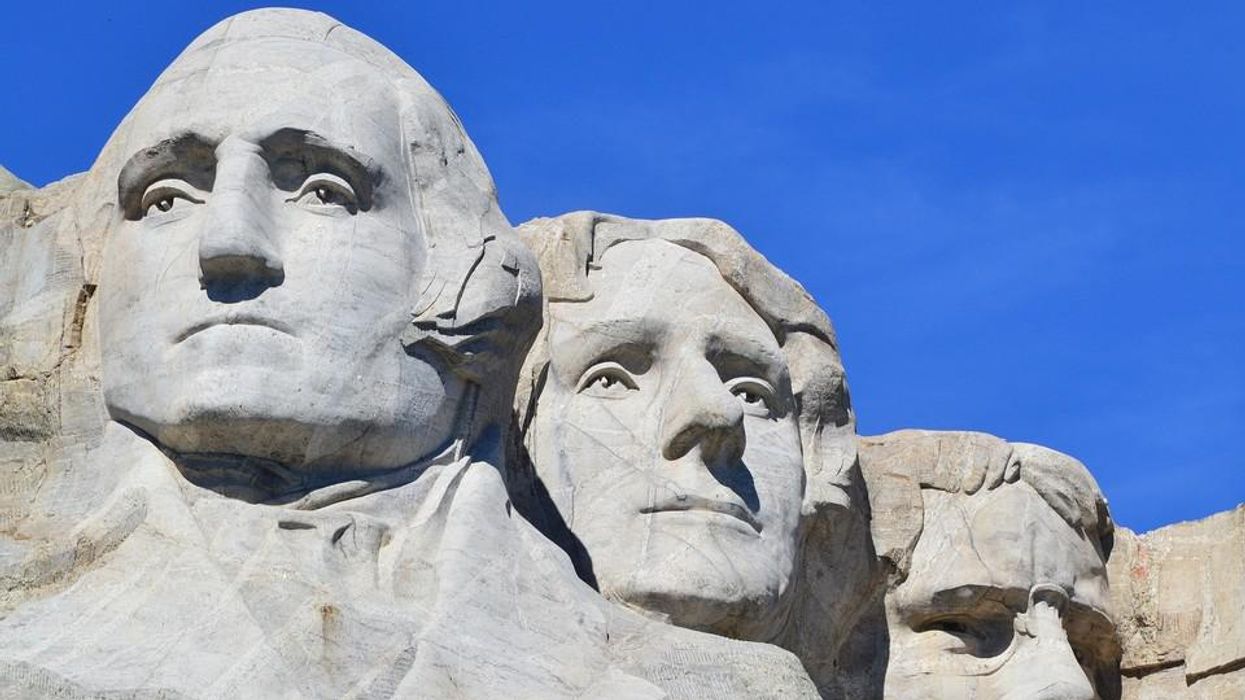
As for George Washington, there would have been no nation to criticize or lionize without him. If Jefferson was the poet laureate of liberty, Washington was the living exemplar of republican virtue. Having led the revolution, he could have proclaimed himself king or dictator. Some urged him to do so. When King George III was told by the American artist Benjamin West that Washington intended to resign and return to private life after winning his country's freedom, the king said, "If he does that, he will be the greatest man in the world."

He was. Many a revolutionary leader came after him. Most became despots in turn. None has achieved his greatness.

Yes, Washington held human beings in bondage, and that was terrible. Owning slaves is a blight on his record, but the rest shines bright. No nation that has judgment — and gratitude — can fail to honor him forever.

Mona Charen is policy editor of The Bulwark and host of the "Beg to Differ" podcast. Her most recent book is Sex Matters: How Modern Feminism Lost Touch with Science, Love, and Common Sense."To read features by other Creators Syndicate writers and cartoonists, visit the Creators Syndicate webpage at www.creators.com.

Photo credit: mercuryatlasnine at Pixabay

What Our Declaration Really Said

Our nation confronts a challenge this Fourth of July that we face but rarely: We are at odds over the meaning of our history and why, to quote our Declaration of Independence, “governments are instituted.”

Only divisions this deep can explain why we are taking risks with our country’s future that we’re usually wise enough to avoid. Arguments over how much government should tax and spend are the very stuff of democracy’s give-and-take. Now, the debate is shadowed by worries that if a willful faction does not get what it wants, it might bring the nation to default.

This is, well, crazy. It makes sense only if politicians believe — or have convinced themselves — that they are fighting over matters of principle so profound that any means to defeat their opponents is defensible.

We are closer to that point than we think, and our friends in the Tea Party have offered a helpful clue by naming their movement in honor of the 1773 revolt against tea taxes on that momentous night in Boston Harbor.

Whether they intend it or not, their name suggests they believe that the current elected government in Washington is as illegitimate as was a distant, unelected monarchy. It implies something fundamentally wrong with taxes themselves or, at the least, that current levels of taxation (the lowest in decades) are dangerously oppressive. And it hints that methods outside the normal political channels are justified in confronting such oppression.

We need to recognize the deep flaws in this vision of our present and our past. A reading of the Declaration of Independence makes clear that our forebears were not revolting against taxes as such — and most certainly not against government as such.

In the long list of “abuses and usurpations” the Declaration documents, taxes don’t come up until the 17th item, and that item is neither a complaint about tax rates nor an objection to the idea of taxation. Our Founders remonstrated against the British crown “for imposing taxes on us without our consent.” They were concerned about “consent,” i.e. popular rule, not taxes.

The very first item on their list condemned the king because he “refused his assent to laws, the most wholesome and necessary for the public good.” Note that the signers wanted to pass laws, not repeal them, and they began by speaking of “the public good,” not about individuals or “the private sector.” They knew that it takes public action — including effective and responsive government — to secure “life, liberty and the pursuit of happiness.”

Their second grievance reinforced the first, accusing the king of having “forbidden his governors to pass laws of immediate and pressing importance.” Again, our forebears wanted to enact laws; they were not anti-government zealots.

Abuses three through nine also referred in some way to how laws were passed or justice was administered. The document doesn’t really get to anything that looks like Big Government oppression (“He has erected a multitude of new offices, and sent hither swarms of officers to harrass our people, and eat out their substance”) until grievance No. 10.

This misunderstanding of our founding document is paralleled by a misunderstanding of our Constitution. “The federal government was created by the states to be an agent for the states, not the other way around,” Gov. Rick Perry of Texas said recently.

No, our Constitution begins with the words “We the People” not “We the States.” The Constitution’s Preamble speaks of promoting “a more perfect Union,” “Justice,” “the common defense,” “the general Welfare” and “the Blessings of Liberty.” These were national goals.

I know states’ rights advocates revere the 10th Amendment. But when the word “states” appears in the Constitution, it typically is part of a compound word, “United States,” or refers to how the states and their people will be represented in the national government. We learned it in elementary school: The Constitution replaced the Articles of Confederation to create a stronger federal government, not a weak confederate government. Perry’s view was rejected in 1787 and again in 1865.

We praise our Founders annually for revolting against royal rule and for creating an exceptionally durable system of self-government. We can wreck that system if we forget our Founders’ purpose of creating a representative form of national authority robust enough to secure the public good. It is still perfectly capable of doing that. But if we pretend we are living in Boston in 1773, we will draw all the wrong conclusions and make some remarkably foolish choices.

E.J. Dionne can be reached at ejdionne(at)washpost.com

(c) 2011, Washington Post Writers Group

Shop our Store

Headlines

Editor's Blog

Corona Virus

Trending

World