Trump Economy: July Inflation Index Shows Wages Fell Further Behind Prices
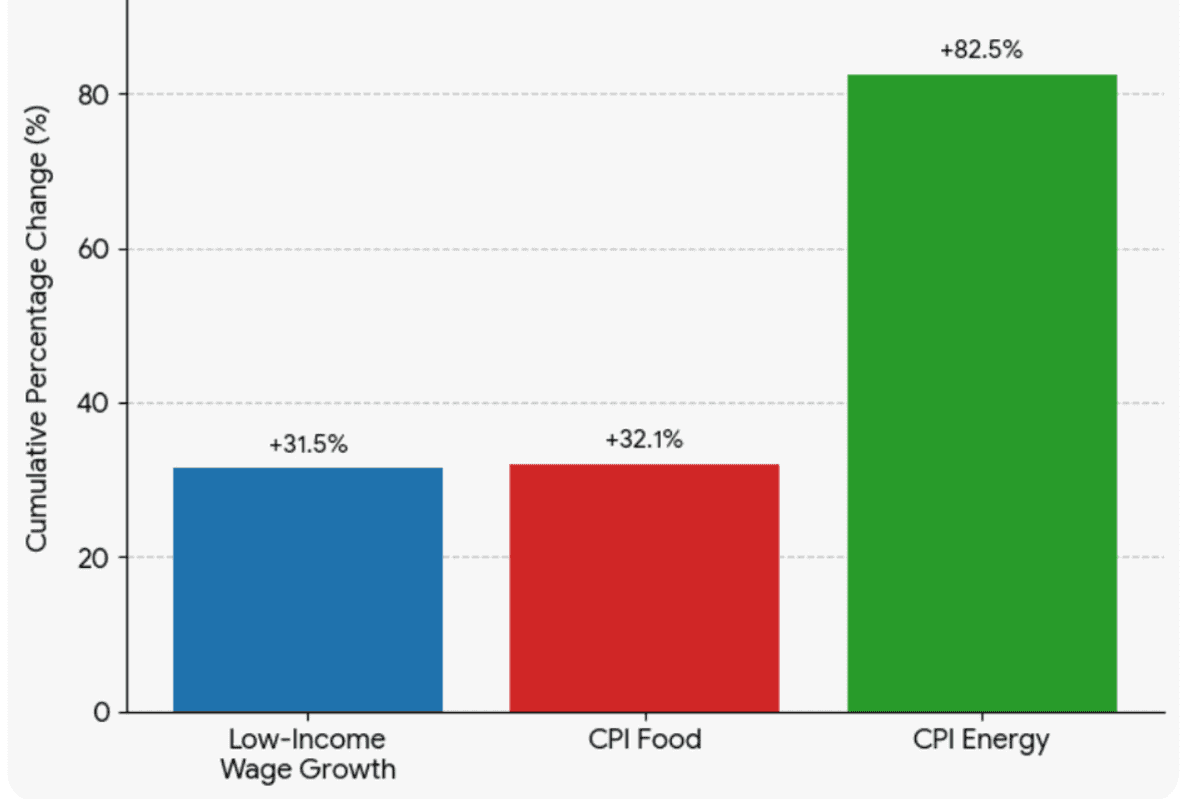
Cumulative changes in wage growth versus inflation from Q2 2020 to Q2 2026
The Consumer Price Index rose 0.1 percent in July, with the core rate rising 0.2 percent. Over the year, the overall CPI is up 3.4 percent, while the core is up 2.5 percent.
As always, there are a few seeming anomalies. Prescription drug prices fell 0.8 percent in July and are down 3.1 percent over the last year. Nonetheless, people are spending about 2.0 percent more on drugs this year than last year. Computer prices jumped 3.5 percent in July. This is the data center story.
Rent and owners’ equivalent rent both rose 0.3 percent in July, somewhat faster than in prior months, but this is mostly due to rounding. Over the year, the indexes are up 2.9 percent and 3.2 percent, respectively. Food prices fell 0.1 percent in the month but are still up 2.7 percent year-over-year. Lettuce prices plunged 16.4 percent. Any ideas how that could have happened?
One real anomaly was a 0.3 percent drop in the car insurance index, leading to a year-over-year decline of 4.5 percent. This sort of drop is unprecedented outside of the pandemic. There were some modest declines in 1998 and 1999, but other than that, the index has always risen and typically far outpaced the rest of the CPI.
I have noted the falling car insurance index before and waited for it to turn around, but it has continued to be on a downward path since the start of the year. I’m betting for the insurance index to turn around and start rising again, but I have been making that same bet for many months. It accounts for 2.6 percent of the index, so it matters. It was a major contributor to inflation in 2022 and 2023 when there were double-digit increases.
But stepping back from the specifics, this is a bad story for the economy. Inflation is not about to soar out of control, assuming Trump doesn’t do anything too crazy, but it is outpacing wages. Over the last year, the average hourly wage increased 3.2 percent. The annualized rate of increase over the last three months compared with the prior three was just 2.5 percent. This means that workers, who had already been feeling pressed, are falling further behind.
This is sort of good news from the standpoint of the Fed. It doesn’t have to worry about a wage-price spiral, but it does mean that we have an economy that will not be powered by workers’ consumption. With job growth having slowed to a crawl and real wages trending downward, workers will not have the means to increase consumption. This means that growth will be driven by AI investment and wealthy people spending based on stock gains and capital income. That does not look like a very solid basis for expansion.
Dean Baker is a senior economist at the Center for Economic and Policy Research and the author of the 2016 book Rigged: How Globalization and the Rules of the Modern Economy Were Structured to Make the Rich Richer. Please consider subscribing to his Substack.
- Vouchers? Cutbacks? GOP Senate Candidates Threaten Medicare And Medicaid ›
- Behind Tomorrow's Federal Reserve Decision, A Delicate Economic Balancing Act ›
- Trump's War Delivers A Spike In The Consumer Price Index ›
- Employment Report: Beneath July's Mixed Numbers, Job Market Shows Fragility ›
- Have paychecks kept pace with inflation? They likely won't this year ›
- Has pay kept up with inflation? - The Hamilton Project ›
- Has pay kept up with inflation? | Brookings ›
- Have Americans’ wages kept up with inflation? That depends | Pew Research Center ›
- Are wages keeping up with inflation? | USAFacts ›