Tag: electric vehicles
Why China's EV Industry Should Honor Trump As 'Salesman Of The Year'

Why China's EV Industry Should Honor Trump As 'Salesman Of The Year'

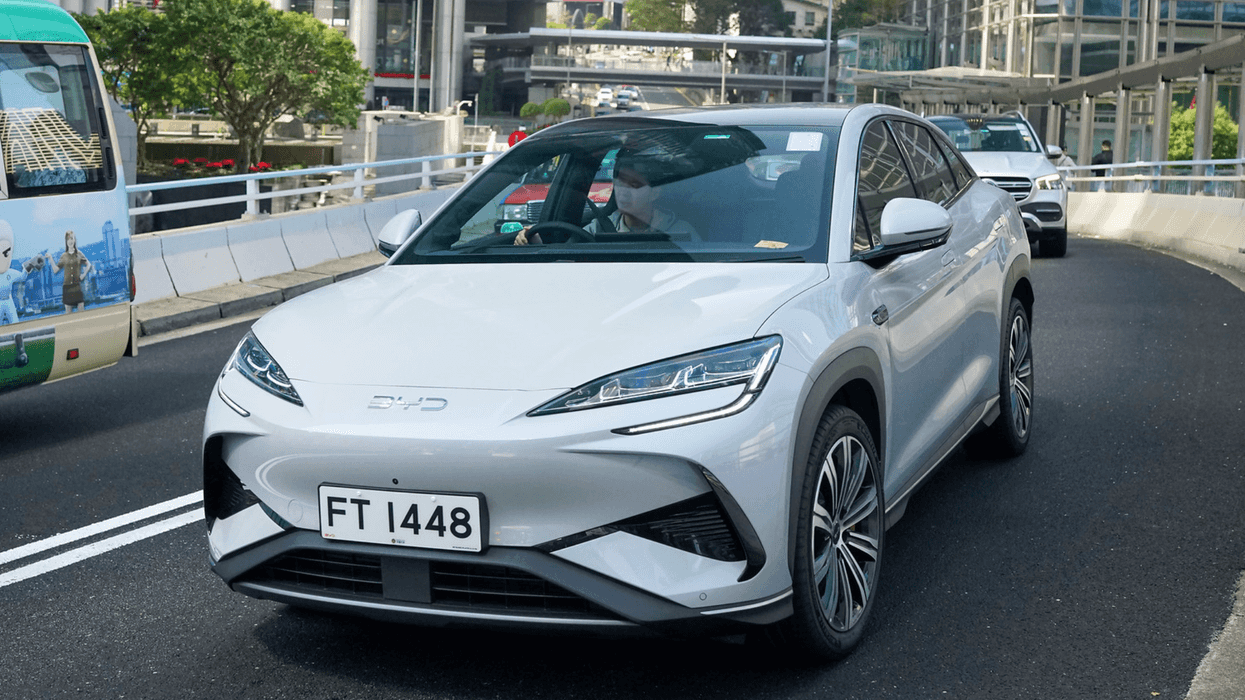
China exported 435,000 electric vehicles (EV) in May, a 100 percent increase from its exports in 2025. Its total exports of cars was 809,000, an increase of 73 percent from last year. By comparison, domestic U.S. vehicle sales in May were 1,470,000. That means China’s exports of cars were equal to 55 percent of U.S. purchases in the month, while its EV exports were almost 30%.

Donald Trump can legitimately take credit for the surge in China’s EV exports. As he might say, “frankly, if it wasn’t for me, their EV exports would not be growing like that.”

Trump has lit a rocket under China’s EV industry. While EV sales by producers worldwide are rising, no one was better situated to benefit from the surge in demand created by Trump’s war on Iran than China’s producers. Chinese producers account for more than 70% of global EV sales. That share is likely to rise, even as the market expands rapidly.

Trump’s war helped to boost sales not only by raising the price of gas, it also created enormous uncertainty about future prices. With one of the world’s major superpowers run by a person who apparently gives no consideration to the impact his actions have on the world economy, driving a gas-powered car looks like a much riskier proposition.

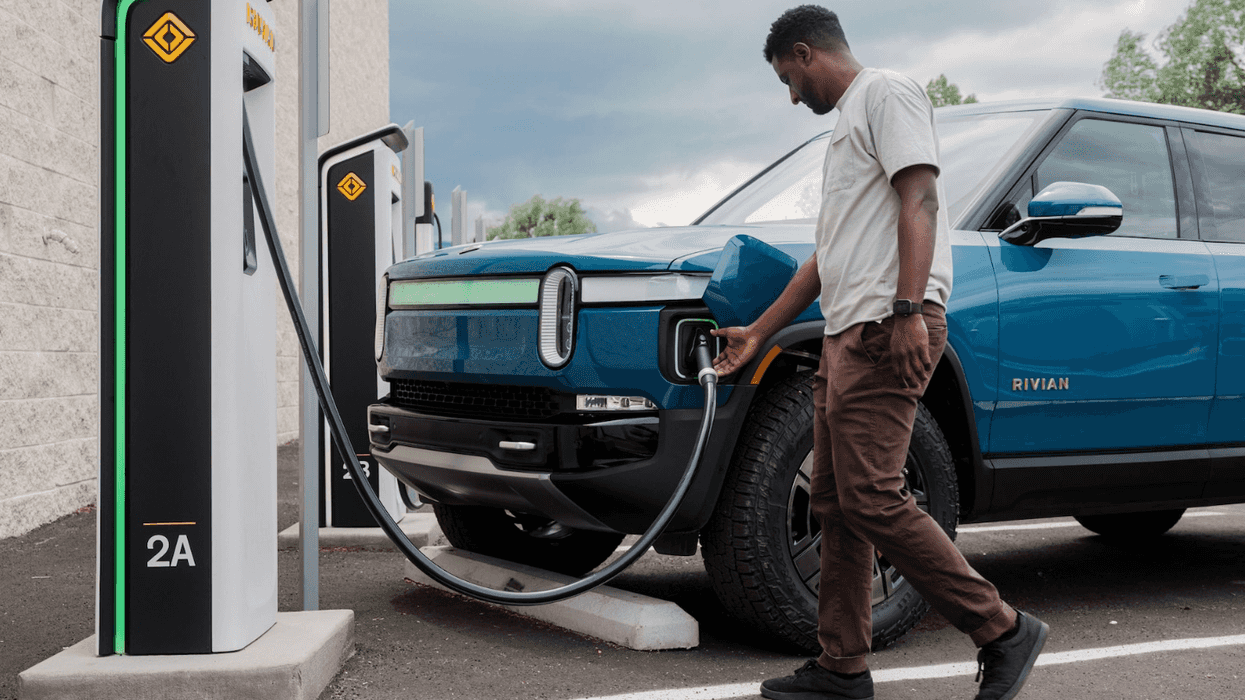
What is neat about this surge in EVs is that it is irreversible. People who buy EVs rarely switch back to gas-powered cars, especially in countries that have the infrastructure and charging stations to support EVs. And more EVs on the road create political and economic pressure to upgrade the infrastructure to facilitate their use.

EVs can be thought of as being like a virus; the more that get sold, the more they spread. When a large segment of car users has EVs, governments and businesses set up charging stations and repair shops. Also, when people see their co-workers, friends, and neighbors driving EVs and saving a fortune on gas and maintenance, they become interested in owning one themselves. Once EVs get a big foot in the door, their spread is pretty much impossible to stop.

That is one reason why some of us have argued for allowing at least some number of high-quality, low-cost Chinese EVs into the U.S. market. People could then see the benefits of EVs. Ideally, we would work out an arrangement where China transferred the technology so that the cars could be produced here, with union labor.

Unfortunately, the Trump administration has zero interest in going this route. It would rather double down on archaic technology.

The story is actually getting worse. There has been legislation introduced in Congress that would prohibit Chinese cars from even entering the United States. This would prevent someone from Canada or Mexico from driving their car over the border for a visit.

Apparently, the bill’s sponsors, Sen. Elissa Slotkin and Rep. Haley Stevens, both Democrats from Michigan, are worried about allowing people in this country from even seeing Chinese cars. This shows that not all whack job stuff in U.S. politics originates with Donald Trump.

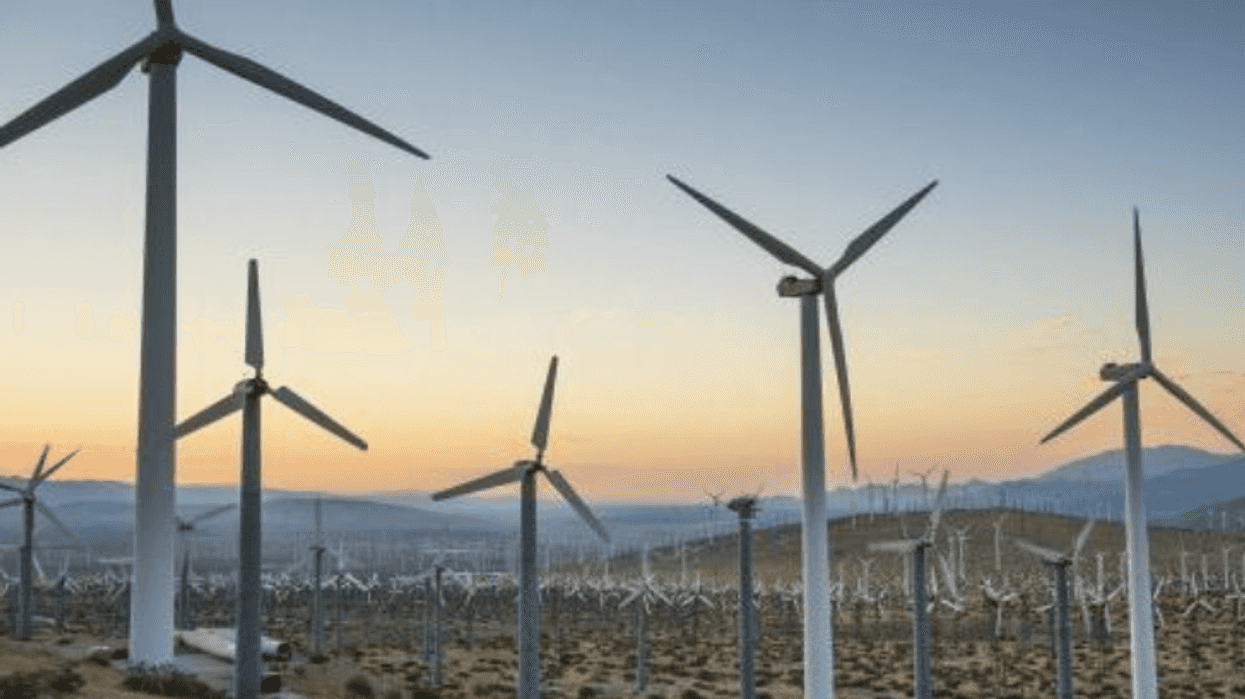
But getting back to Trump and the green transition, it’s not just China’s EV exports that Trump sent skyrocketing. Its exports of solar panels are up 60 percent year over year. China’s exports of wind turbines to the EU rose 66 percent over 2025, and its battery exports worldwide were up 42 percent.

The bottom line is that Donald Trump’s war in Iran has done far more to jumpstart the green transition than almost any conceivable policy that a Biden-Harris administration might have put in place. That is great news. The unfortunate part is that China is at the center of it, and that it had to come about through war.

Dean Baker is a senior economist at the Center for Economic and Policy Research and the author of the 2016 book Rigged: How Globalization and the Rules of the Modern Economy Were Structured to Make the Rich Richer. Please consider subscribing to his Substack.


Orange Man Goes Green? How Trump's Attack On Iran Is Advancing Clean Energy

Orange Man Goes Green? How Trump's Attack On Iran Is Advancing Clean Energy

Donald Trump has an incredibly childish obsession with outdoing his predecessors, who he constantly derides as stupid and corrupt. There is, of course, no evidence for Trump’s charges, like the supposedly terrible economy he inherited from Biden, but Donald Trump is not a man who feels constrained by reality.

While Trump does everything he can to reverse policies to promote clean energy, overturn trade agreements (including his own), and undermine security pacts, there is one area where Trump looks to substantially outpace the work of his predecessors.

This is in promoting the transition to a non-fossil fuel-based economy. As much as Trump loves oil and coal and seems to relish the prospect of destroying the planet for our kids, his reckless attack on Iran will do a hundred times more to promote clean energy worldwide than all the incentives in Biden’s Inflation Reduction Act.

There is both the direct effect of higher oil and gas prices resulting from the closing of the Straits of Hormuz, but also a more important indirect effect. Trump has shown the world that it is dangerous to rely on imported oil and natural gas as energy sources.

This applies not only to imports from the Middle East, which apparently any jerk can shut down on a whim. The risks probably apply even more strongly to reliance on the United States as an exporter, Trump’s preferred outcome.

In his tariff games, Trump showed he can be incredibly arbitrary and capricious. He claimed that countries were “ripping us off” because they sell us stuff. There is nothing resembling logic to Trump’s claim. Do Walmart or Costco rip people off when they buy things from those stores?

But it gets worse. He imposed 50 percent tariffs on Brazil’s exports because it prosecuted Trump’s friend for trying to overthrow the government. India also faces 50 percent tariffs on its exports to the U.S. because its prime minister refused to nominate Trump for a Nobel Peace Prize. And Switzerland got hit with a 39 percent tariff because Trump didn’t like the way its president talked.

The rest of the world would likely much rather take its risks with countries like Iran and Libya than rely on getting oil and gas from Donald Trump’s America. At least there is usually some logic to when these countries threaten to reduce output or raise prices.

The rise in oil and gas prices following the closure of the Straits is making clean energy far more competitive than was already the case. Even with oil at $60 a barrel, and natural gas correspondingly cheap, the vast majority of electricity coming on-line across the globe was renewable. This shift will only accelerate, with oil prices up 70 percent and natural gas having close to doubled. While prices may fall back some if the Straits are reopened soon, they are unlikely to return to their pre-war levels for several years in almost any circumstances.

And the price of wind and solar energy continues to fall, driven primarily by low-cost Chinese manufacturers. Chinese electric vehicles will also become hugely more popular as a result of Donald Trump’s war. These cars are already cheaper to purchase than comparable traditional cars, and Trump has just added roughly $500 a year to the operating cost of a gas-burning vehicle. Already 60 percent of the cars sold in China are electric, with EVs holding a comparable share in Europe. The same is the case in many developing countries. The EV share will likely quickly move towards 100 percent thanks to Trump’s war.

It certainly was not the best way to promote a green transition, but no one can deny that Trump’s war is effective. Who knows how much damage the war will ultimately cause in terms of property destruction, the environment, and lives lost. The latter will include both direct effects from the war and likely much larger indirect effects from higher energy and food prices. But one positive outcome is that we will be moving far more rapidly toward a green economy.

Dean Baker is a senior economist at the Center for Economic and Policy Research and the author of the 2016 book Rigged: How Globalization and the Rules of the Modern Economy Were Structured to Make the Rich Richer. Please consider subscribing to his Substack.

Reprinted with permission from Dean Baker.


The Energy Future We Could Have Had, If Only Trump Hadn't Trashed It

The Energy Future We Could Have Had, If Only Trump Hadn't Trashed It

Oil, oil, oil. The war with Iran has oil prices soaring. And no thanks, President Trump, for your other war, the one against green energy.

As Americans freak over gas prices, they are taking another look at electric vehicles. But guess what? Most domestic automakers dropped ambitious investments toward that end, leaving car lots bereft of these gasoline-replacing vehicles, at least American-made ones.

It didn't have to be that way. Barack Obama and Joe Biden launched serious programs to reduce our dependence on fossil fuels. Trump trashed those ambitious plans to bring Americans into an electrified era that the rest of the civilized world was racing toward. Not only did he freeze what was a massive building of domestic EV factories, but he launched a war against the campaign to install charging stations across the country — facilities that would make EV ownership more attractive.

And so here we are, dancing around $100 for a barrel of Brent crude. And we're stuck.

Let's discard a few misconceptions peddled by the Trumpian fantasy of how this all works. First off, no one was pushing for the immediate end of oil production. Our policy was to meet the growing need for energy by throwing everything at it: the clean sources of wind, solar, hydropower, geothermal and tidal — plus oil and natural gas.

Falsehood No. 2 is that America doesn't produce enough oil to meet the country's demand. The United States exports more oil than it imports. In that respect, we are energy independent, and we've been that way since 2019.

But America's producing more natural gas and petroleum than it consumes does not do much to lower gasoline prices. Oil is priced in a global market.

Sure, Trump could order that all U.S.-produced crude oil must stay in the U.S., but his friends in America's oil industry wouldn't stand for it. They're now making a ton of money off the world price.

Bear in mind that after the 1970s energy shocks, there actually was a restriction on crude oil exports. It was lifted in 2015. And let me indelicately suggest that Trump has hobbled the shift to green energy to extract money from the fossil fuel industry.

Electric vehicles generally cost more upfront but far less to run. And the higher gas prices go, the sweeter the EV deal becomes. Yet Honda has scrapped plans to build three EV models in the United States. Ford, General Motors and Stellantis — the parent of Jeep and Chrysler — have likewise scaled back on domestic EV production.

And just last week, the Trump administration sued California over its high mileage standards for new vehicles. It's also suing the state to reclaim funds set aside for expanding the network of EV charging stations.

So far, I've said not a word about climate change, but there is no chaining me down. The original campaign for green energy reflected fears of a warming planet with the resulting floods, weather chaos and the destruction of the natural world as we know it.

Trump sold his masses on the supreme importance of the price of gas. He told us the price was going down when it was going up. The size of today's spike is such that he can no longer gaslight the public on the real price at the pump. And so now he's saying that it will go down, down, down when this war is over.

The tragedy is that the energy policies we could have had are the energy policies we did have. They ended when Trump turned on the American future. That future, sadly, is here.

Froma Harrop is an award winning journalist who covers politics, economics and culture. She has worked on the Reuters business desk, edited economics reports for The New York Times News Service and served on the Providence Journal editorial board.

Reprinted with permission from Creators.

A Shrinking World Market For That Would-Be Trillionaire's Vehicles

A Shrinking World Market For That Would-Be Trillionaire's Vehicles

The Tesla board has offered to make Elon Musk the planet's first trillionaire if he meets certain milestones in rocketing the automaker to new glory.

Did Musk show true brilliance the first time around? Yes, he did. Tesla's stock price rose 700 percent in 2020, making it more valuable than Toyota, Volkswagen, General Motors and Ford combined.

But there's another question. Who is going to buy his Teslas now?

Musk has burned many a bridge since he built up the company to a world force. Tesla was once the great green energy hope, offering an elegant way to replace planet-warming fossil fuels with cleaner electric power. Recall that the Obama administration extended the company a $465 million federal loan because Teslas had made electric vehicles cool.

But then Musk spent over a quarter-billion dollars getting Donald Trump elected in 2024, angering his environmentalist consumers. As head of the Department of Government Efficiency, Musk gleefully went after environmental funding, including grants to universities and services tied to the National Oceanic and Atmospheric Administration.

Overnight, Teslas became uncool. Some Teslas were torched, showrooms attacked and even charging stations set on fire. Embarrassed Tesla owners put stickers on their vehicles with slogans like, "I bought this before we knew Elon was crazy."

(No excuse for the vandalism. Many Tesla owners had bought the EVs as a badge of environmental activism. In any case, harming private property to make a political point is criminal, whatever the motive.)

Tesla is on track to mark its second consecutive year of falling revenues here and elsewhere. European sales have fallen by 40% and more, reflecting Musk's ties to the much-disliked Trump.

In one of Tesla's biggest foreign markets, Germany, sales in the first seven months of this year crashed by more than 55%. Musk tried to insert himself into that country's election by endorsing the far-far right Alternative for Germany party as "the best hope for Germany." (Chancellor Olaf Scholz condemned his remarks as "disgusting.") Musk also provided an ugly visual by raising his arm in what looked like a Nazi salute. In this country, Teslas were painted with swastikas and the words "Nazi cars."

Meanwhile, Tesla no longer dominates the EV show in this country. Chevrolet's Equinox EV now competes with Tesla's Model Y. Cadillac's Optiq crossover has entered the EV market big time. And Ford is converting a Kentucky assembly plant to build affordable midsize electric pickups.

The Chinese EV maker, BYD Co., has just passed Tesla in European sales. BMW, Mercedes-Benz and Volkswagen are also showcasing their new models.

Tesla is hard at work trying to launch a robotaxi service. But so are other companies.

Because Musk has done so much for MAGA, it's possible that members of that EV-bashing movement might buy Teslas in a show of solidarity. But Musk is no longer one with the Great Leader.

He's had run-ins with Trump, most notably his bashing of the "One Big Beautiful Bill." Two obvious reasons for Musk's discontent: It ended subsidies to buy electric vehicles and slowed the expansion of charging stations. Consumers have until the end of this month to make use of the $7,500 new clean vehicle tax credit.

And so who is going to buy Musk's cars now? Probably not the defenders of all that Trump does and says. Not the environmentalists who despise Musk. Not the 280,000 federal workers his DOGE fired. Or their families. And not many of the EV shoppers who today have more choices.

Musk may have drawn warm applause from investors when he promised to devote "maniacal" attention to Tesla going forward. It's a good guess, however, that the audience of actual buyers was sitting on its hands.

Froma Harrop is an award winning journalist who covers politics, economics and culture. She has worked on the Reuters business desk, edited economics reports for The New York Times News Service and served on the Providence Journal editorial board.

Reprinted with permission from Creators.

Shop our Store

Headlines

Editor's Blog

Corona Virus

Trending

World