His Name Is Kennedy But His Character Is Trump -- And He Sells Us Out Every Day
At the core of Robert F. Kennedy Jr.'s rise as a political celebrity is the enduring American reverence for his family. Decades ago, during his career as an environmental advocate, that lingering aura inspired admiration and even hope.
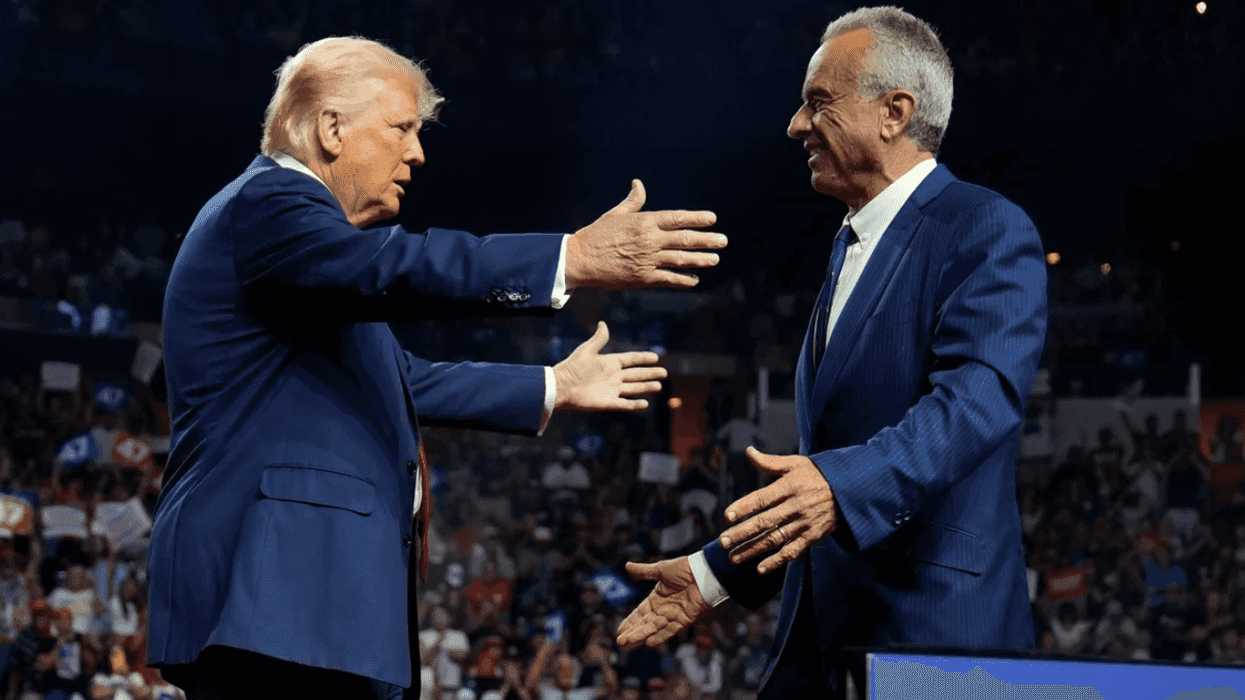
Yet the longer Bobby Jr. remains in the corrupting orbit of this regime and its maximum leader, the more he has come to reflect the degraded values and morals of the Trump family rather than his own.
Flawed as the legendary but human Kennedys were, nobody has ever thought of Jack, Robert and Teddy as low-rent grifters seeking to scam the government or the public for personal gain. Quite the opposite, since they devoted their political careers to protecting the American people from crooks like Roy Cohn -- the late Trump lawyer and moral mentor who was twice indicted when Robert F. Kennedy Sr. was attorney general.
On the current record, it is clear that RFK Jr. has long since abandoned the illustrious example of his forebears and embraced instead the grabbing-with-both-hands ethic of his new political family. During the past year alone, Bobby has abandoned all the environmental and public health principles that supposedly animated his career for the past 40 years, strictly to enrich and promote himself and his dear leader Donald Trump (a man his father and uncles assuredly would have scorned).
Consider just one of the many abuses of power perpetrated by Bobby for his own personal and political gain. As disclosed earlier this summer in The New York Times, he went out of his way to protect the distribution of Kratom, a highly toxic, mind-bending drug, mostly sold in gas stations and convenience marts, that has been linked to thousands of deaths.
Exercising his authority as Health and Human Services secretary in the fall of 2025, he called the governor of Ohio in an effort to stop a state ban on the dangerous substance. Among the Kratom producers who benefited from this action -- the opposite of what any public health official should have done -- was a man formerly known as Jerry Cash, an oilman who had served time in prison for embezzlement and upon release changed his surname to Ross.
As Jerry Ross, the Kratom mogul poured $162,000 into the defunct RFK Jr. 2024 presidential committee after Trump named Bobby as health secretary. And several months later, after Food and Drug Administration granted additional favors to boost kratom, Ross wrote another million-dollar check to Kennedy's MAHA PAC.
Kennedy's brazen favor-mongering on behalf of himself and Trump -- which also extends to his misregulation of the tobacco and vaping industries -- has now drawn the attention of Sen. Ron Wyden (D-OR), ranking member of the Senate Finance Committee. On August 3, Wyden opened an investigation of Kennedy's misconduct and how it has greased him, Trump, and other cabinet members with a stinging letter to the health secretary:
It has come to light in recent weeks that you are paving a yellow brick road to lead kratom and Big Tobacco into more American homes. Both industries will flood gas stations and convenience stores with products that pique the curiosity of kids and teens and launch them into addiction, and both industries obtained the right to do so by paying millions to you and to President Trump. Big Tobacco has been running this playbook for decades, but now they get to do it with the Secretary of Health and Human Services on their side.
Like Trump, Kennedy has profited from blatant conflicts of interest while refusing to divest himself of those deals and arrangements. He still stands to profit from his consulting contract with a Los Angeles personal injury law firm that is suing vaccine makers such as Merck. When he was confirmed, Sen. Elizabeth Warren and others objected, noting that at HHS he could use his power to increase his legal bonanza (which has brought him millions of dollars over the past few years).
And like Trump, Kennedy banks big money from his "patriotic" sloganeering, by personally licensing "Make American Healthy Again" as a brand - while he uses government resources to promote that brand. When Dr. Anthony Fauci came under fire in a Senate hearing in July, Kennedy used the opportunity to promote his scurrilous book attacking the former federal science official -- despite his previous pledge not to run that particular sleazy grift.
How much longer Kennedy will be able to exploit the naivete of the "MAHA Moms" who form his political base remains to be seen. Many of them have grown restive as he repeatedly sells out their ideals to back Trump's pay-for-play arrangements with pesticide producers, tobacco firms and other industries whose depredations he swore to fight. For the MAHA movement, a bitter realization is coming: They followed a leader named and packaged as a Kennedy, but underneath he was just another shoddy Trump.
Joe Conason is founder and editor-in-chief of The National Memo. He is also editor-at-large of Type Investigations, a nonprofit investigative reporting organization formerly known as The Investigative Fund. His latest book is The Longest Con: How Grifters, Swindlers and Frauds Hijacked American Conservatism (St. Martin's Press, 2024). The paperback version, with a new Afterword, is available wherever books are sold.