Tag: federal reserve board
RIP Alan Greenspan: Why New Fed Chair Warsh Shouldn't Imitate His Cryptic Style

RIP Alan Greenspan: Why New Fed Chair Warsh Shouldn't Imitate His Cryptic Style

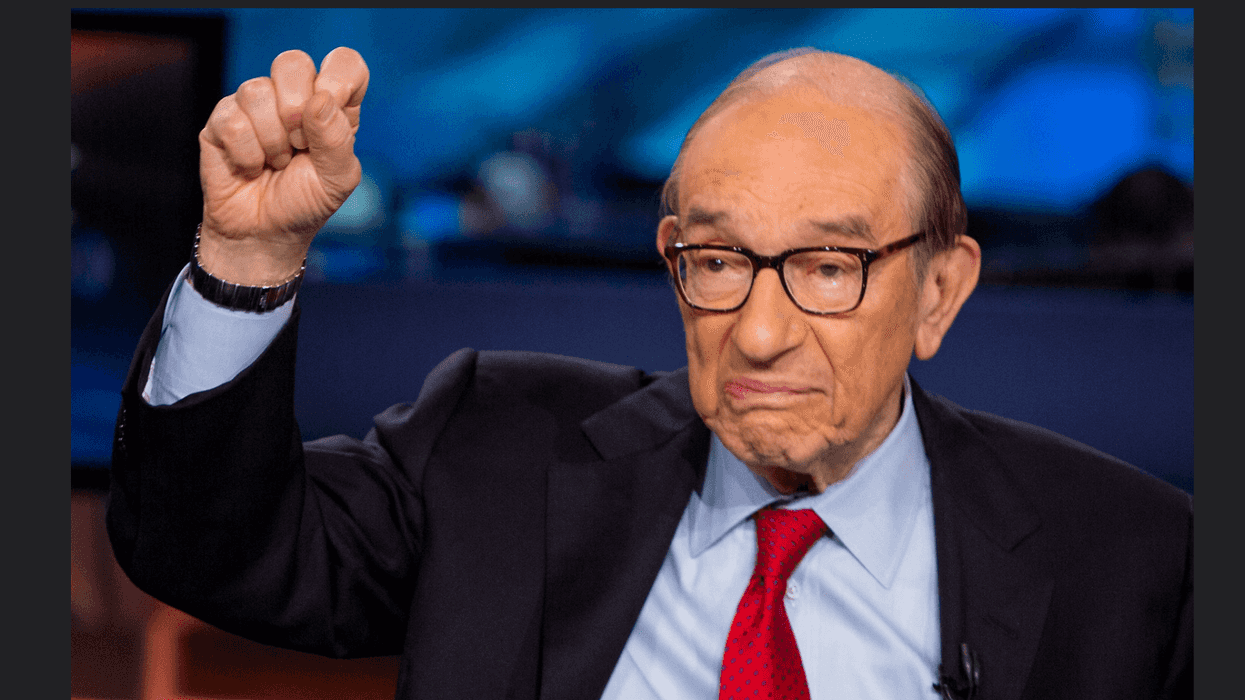
I was not an Alan Greenspan fan, but I will give him some serious credit on his passing. I’ll also give him serious blame for missing two huge bubbles, the collapse of which gave us serious recessions. I’ll also add a comment about the opaque way he ran the Fed, to which I fear our new Fed chair is returning.

Starting with the positive, Greenspan allowed the unemployment rate to fall to 4.0% as a year-round average in 2000. This was huge. The prevailing view in the economics profession had been that the unemployment rate could not fall much below 6.0% without triggering spiraling inflation.

Greenspan was not a mainstream economist and therefore did not accept this view. In 1995, when the unemployment rate was already under 6.0%, he famously argued with two ostensibly more liberal Fed governors, Janet Yellen and Lawrence Meyer, over this point. They both wanted Greenspan to raise rates to head off inflation. Greenspan insisted that he didn’t see evidence of inflation and was not going to raise rates just because the unemployment rate was low.

Greenspan stood pat as the unemployment rate fell to 5.0% and then 4.5%, and finally in 2000 to 4.0% as a year-round average. We actually had several months of 3.9% and 3.8% unemployment. This allowed millions of workers to get jobs who would have otherwise remain unemployed if Yellen and Meyer had gotten their way.

Even more importantly, the low unemployment of the late 1990s gave tens of millions of workers the bargaining power to secure real wage gains. This was the first period of sustained real wage growth for low- and middle-wage earners since the early 1970s. The low unemployment of this period also set a benchmark for the future, where economists recognized that 6.0% unemployment was not a floor. (Yes, we can do better with a federal jobs policy, but that is not Alan Greenspan’s domain.)

Greenspan and the Bubbles

Greenspan decided to ignore the two huge bubbles that grew under his watch. He famously commented about the irrational exuberance in the stock market in 1996, which quickly sent stocks tumbling. Greenspan then mumbled some nonsense about growth possibly justifying market prices, and stocks recovered and continued to rise for another three and a half years.

The bubble began to deflate in March of 2000, and the market eventually lost close to half its value. The NASDAQ, where the major tech stocks were listed, lost almost 80%. The popular wisdom is that the resulting recession in 2001 was short and mild. This was not true from a labor market perspective. We went four full years without creating jobs and the strong real wage growth of the late 1990s quickly stopped and went into reverse.

The next bubble was even worse. There was already some evidence of a housing bubble in the late 1990s, as house sale prices began to outpace inflation. They also outpaced rents, which were still rising roughly in step with overall inflation.

This divergence increased in the 00s, triggered in part by low interest rates, but also incredibly lax lending standards. At their peak in 2006, house sale prices had risen 70% in real terms compared to where they were a decade before. The subsequent collapse gave us a financial crisis and the worst recession since the Great Depression, as the unemployment rate nearly reached 10.0%.

After the collapse all the people in economic policy positions gave themselves a “who could have known?” amnesty. The answer of course was everyone should have known. The dodgy lending practices of mortgage issuers were hardly a secret; they were bragging about it. People were buying houses with no money down and in many cases even borrowing more than the value of their home to cover moving expenses and closing costs. The same was true for the securitization that allowed issuers to offload any mortgages immediately after it was sold, regardless of the quality.

In an interview that Greenspan gave to the Washington Post after the crash, he commented that he had become concerned that the share of subprime mortgages had jumped to 25% in 2005. He said he couldn’t remember if he had passed this information on to his successor, Ben Bernanke, when he stepped down in 2006.

This was infuriating. The idea that the Fed chair was not aware of the explosion in subprime lending (even worse Alt-A, which had risen to 15%) was truly incredible. It’s not clear if it would be worse if Greenspan’s claim was true or not.

Remedies for Bubbles

I have written about this before, but I’ll just make a couple of points here. First, in the case of the stock bubble, I think talk would have gone a long way. Greenspan’s offhand “irrational exuberance” comment had a huge effect. Imagine he had the Fed churning out papers showing how stock prices were completely out of line with pretty much all projections of future GDP and profit growth.

The point is not that investors had to agree with Alan Greenspan, but they would have to answer him. The “who could have known?” defense might save a fund manager when it is just random gadflies yelling about a bubble. It is a very different story when a Fed chair is putting out the warning. A person managing tens of billions at a pension fund or endowment will be looking at the unemployment line if, after the crash, they say they didn’t pay Greenspan any attention.

In the case of the housing bubble, in addition to warnings, the Fed has substantial regulatory authority. The bad practices of banks and other financial institutions were easy to see. The Fed could have cracked down. Instead, they could not even be bothered to issue updated mortgage lending guidelines until after the crash.

Greenspan Thought the Fed Should be Opaque

This one is timely since our new Fed chair, Kevin Warsh, seems to want to turn back to the Greenspan era. Since I just wrote about this last week, I’ll pick up part of what I said.

“Under Alan Greenspan, the Fed was deliberately opaque. I remember walking to work one day in the mid-1990s, the day after Greenspan had given some big speech. Back then, we had newspaper boxes where you could buy the paper. I always glanced at the machines as I walked by. Half of the papers had headlines saying something to the effect of “Greenspan Plans to Raise Rates.” The headlines for the other half were something to the effect “Greenspan to Leave Rates Unchanged.”

“Greenspan, who followed his press closely, was reportedly delighted. He had given a major speech, and no one had any idea what he was talking about.

“Ben Bernanke, his immediate successor, wanted the Fed to be more transparent. He explicitly introduced the concept of “forward guidance” to Fed policy: the idea that the Fed would tell people where it expected interest rates to go in the near-term future. In their tenures as Fed chair, both Janet Yellen and Jerome Powell continued this policy. Their view was that they did not want the public to be surprised by the Fed’s decisions.”

I argued that this makes good sense both from the standpoint of the economy, being clear about Fed plans creates more certainty for investment decisions and is also important for reducing corruption. As I noted:

“Wayne Angell, who served as a Fed governor from 1986 to 1994, began consulting at the rate of $100 a minute (roughly $220 in today’s dollars) after he stepped down from his position in 1994. Angell may have been an insightful observer of the national economy, but he was obviously being paid for his knowledge of his former colleagues’ views on interest rates.

“If the Fed is fully transparent about its intentions, no one is going to get paid $220 a minute for their insights on what the FOMC is thinking. We don’t know how far Warsh will look to go with this move away from Fed transparency, but the further he goes the more room there is for corruption.”

Anyhow, Greenspan’s deliberate opaqueness was not a good policy for the Fed. We should hope that Kevin Warsh does not follow his example as chair.
Warsh and Trump

Despite Troubling Signs, Warsh's Smooth Fed Debut Stays Course On Rates

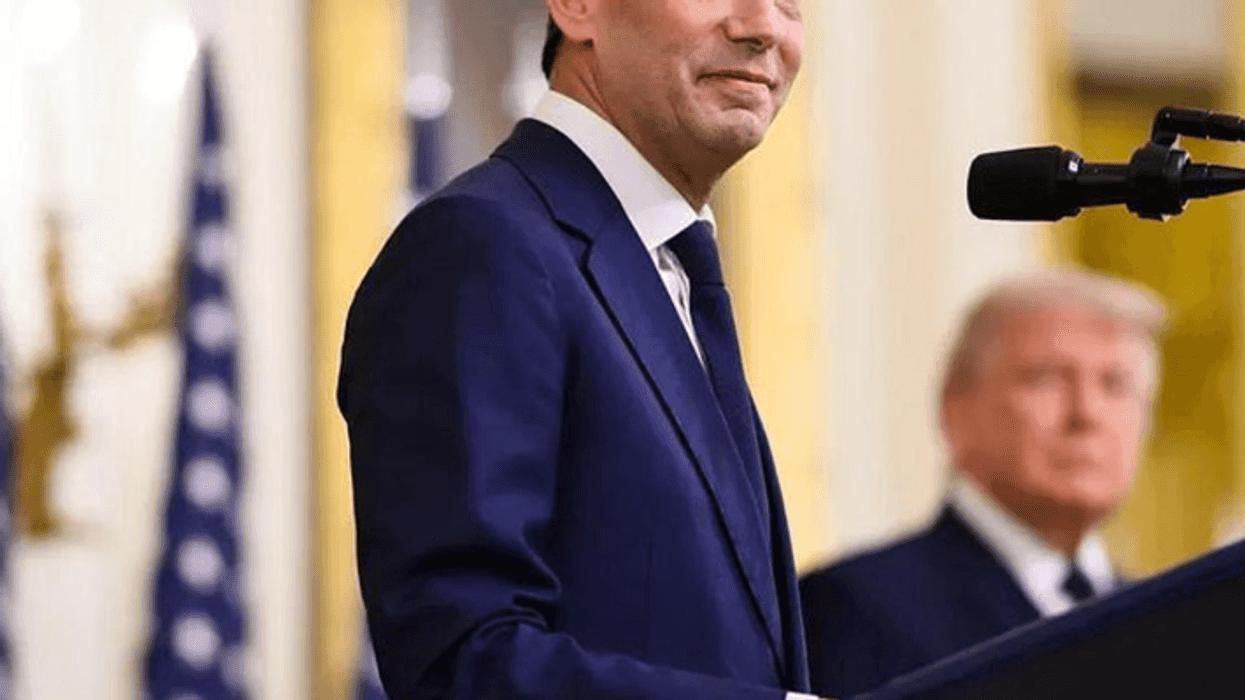
I found the new Fed chair’s debut to be fascinating, comforting, and worrisome. Which is in itself interesting because Chair Kevin “Taskforce” Warsh (“Task” for short) talked a lot but said very little of note. Here are my takeaways.

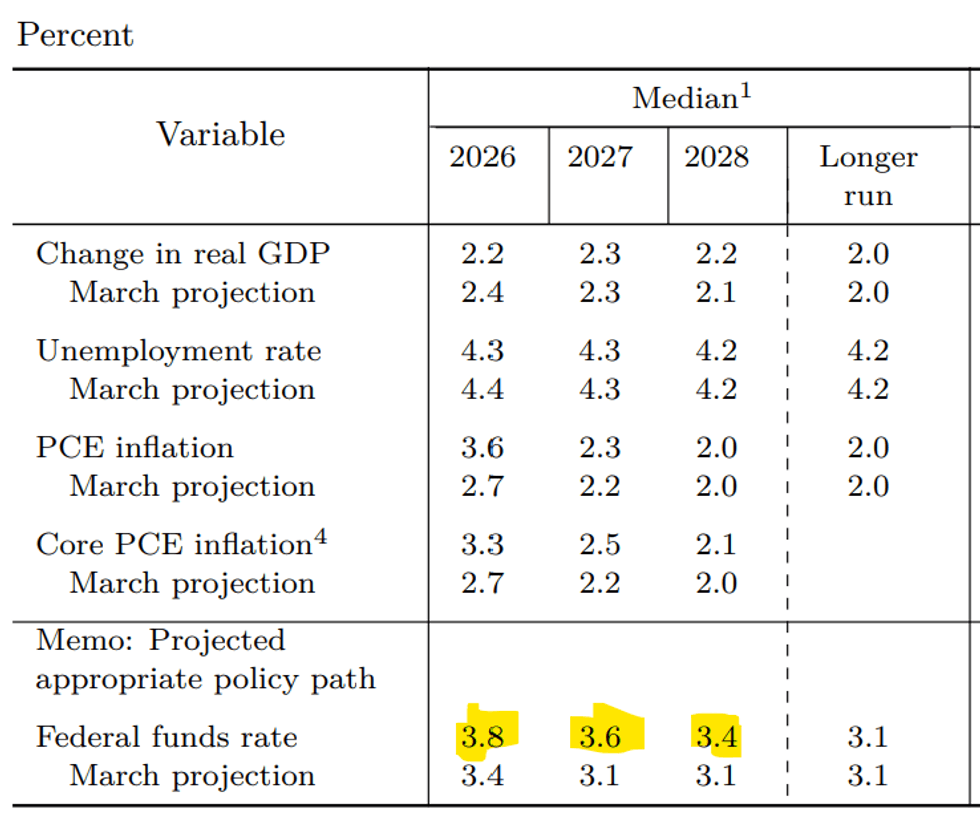
What did the committee do? Not only did they hold rates steady, as expected, but there was a more hawkish tilt to their expectations re future rates. Compared to their last meeting, the committee expects the interest rate they control to be higher both this year and next.

This change can be seen in the “dot plot” wherein the 19 committee members anonymously say where they think rates will need to go. Except there were only 18 dots for ‘26 and ‘27 and 17 for ‘28. Chair Warsh told us he’d abstained and someone else apparently joined him for ‘28.

I’ll have more to say about his abstention in a moment, but this hawkish tilt takes me to my next point.

I said “worrisome” above. Why? The theme of the statement, the dots, and Warsh’s presser were all, quite reasonably in my view (this was part of the comforting part), about how the economy and labor market are doing pretty well, but inflation remains high and sticky. Even with Trump looking over his shoulder, Warsh would have been hard pressed to oppose the committee’s neutral/tightening bias. That’s just where the inflation data are right now.

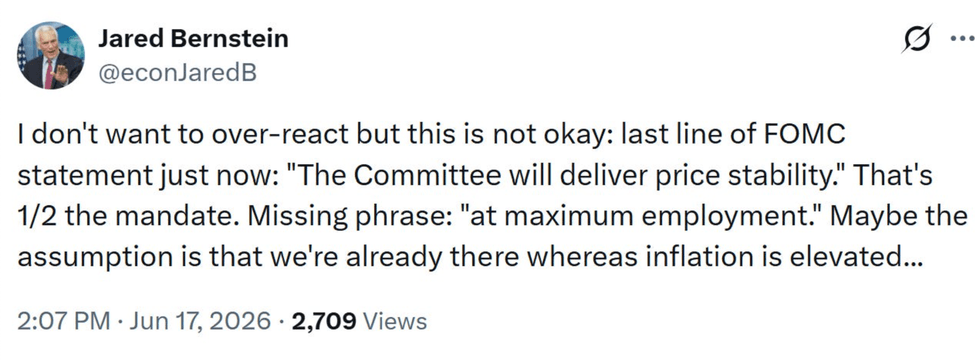
But “Task” isn’t new to this neighborhood, and I’ve long argued he just played a dove to get the job. That’s why I was struck—and maybe kinda over-reacted—to the FOMC statement a few minutes after its release:

The rest says: “...so no need to got there. But knowing Warsh's proclivities in this regard, I don't like it.”

Here’s why we should be nervous that Warsh will consistently down-weight the full-employment side of the mandate relative to the price-stability side:

—He’s long been a hard-money guy who worries more about inflation eroding asset values than unemployment eroding bargaining power and paychecks.

—He barely referenced the employment side of the mandate in his confirmation hearing.

—He hired Paul Winfree to be a temporary adviser as he settles into the new gig. This is the guy who wrote the (generally bonkers) Fed chapter in Project 2025, which calls for getting rid of the full employment part of the mandate.

Like I said, this concern isn’t new, and I tend to overreact when I think someone is threatening full employment conditions—a personality flaw for which I emphatically do not apologize. But this potential bias bears close watching.

What else did I find comforting? That would be the fact that Warsh didn’t come out swinging, going off on his colleagues for their tightening bias, signaling Trump, as Stephen Miran did, that he would push for cuts, regardless of the data. He praised his FOMC colleagues and the staff, and was generally highly diplomatic.

Now, if readers who know my proclivities conclude that my comfort should be Trump’s discomfort, I agree. This was a hawkish meeting, more so than expected, and Warsh went along with it. If Powell did that, Trump’s thumbs would have been spewing fire on social media, but he held his fire yesterday.

I took this as a win for Fed independence, but it’s way too soon to conclude that we’re safe in that regard. Still, you know my mantra: A bad day for Trump is a good day for America.

Anything else from the debut? Yeah, a few things.

—I’ve argued in recent posts that I take Warsh’s point how an excess of Fed communication isn’t helpful and can be harmful, leading markets and Fed watchers to overreact to stray voltage. But after yesterday, I’m worried he will push that too far, providing too little information in ways that could lead to unnecessary volatility and the return of the Fed-guessing-game that “forward guidance” was designed to end.

The statement was too bare bones, I thought, and Warsh wouldn’t answer any questions about where he thought things were headed, providing us no information on his “reaction function,” meaning how he and FOMC are processing the data with regard to rate movements. Whenever he was asked a question about this, he told us that he’d be setting up a taskforce to look into that. It became a comic tag line.

I doubt I was the only one who missed Powell’s plain speaking, his earnest efforts to clearly explain how he and his colleagues were thinking about things. In a word, Warsh was really quite opaque, and if that continues, it will generate problems born of insufficient communication.

—I’ve been to this taskforce rodeo many times, and have even led one or two. The majority of taskforces do little; they’re set up to give the appearance of doing something about a problem for which you don’t have a tractable solution. Some, however, yield important, actionable results. My prior in this case is that most of the many taskforces that Task announced yesterday won’t change much, with the exception of the communications/forward-guidance one.

That’s enough for now, and we’ll have ample time to scrutinize the new chair. I’m glad he didn’t come out swinging and I appreciate the seriousness about getting inflation back to target, especially with Trump lurking in the background. But I’ve got serious concerns that warrant close watching.

Jared Bernstein is a former chair of the White House Council of Economic Advisers under President Joe Biden. He is a senior fellow at the Council on Budget and Policy Priorities. Please subscribe to his Substack, from which this is reprinted with permission.


Lisa Cook

Lying With Impunity: Nepo Billionaire Pulte Framed Lisa Cook

A few weeks back, Bill Pulte, the Federal Housing Finance Agency Director (FHFA) and the billionaire heir to a housing construction firm, claimed to have found evidence that Federal Reserve Board Governor Lisa Cook had committed mortgage fraud. Donald Trump immediately tried to fire Cook from her position at the Fed, with the intention of getting another seat on the Fed’s seven-person board.

This attempted firing raised several serious questions. Most immediately, whether the FHFA Director is supposed to be rifling through the mortgage documents of Trump’s political opponents.

Previously, Pulte had claimed to have found evidence that California Senator Adam Schiff had committed mortgage fraud. Schiff had led the first impeachment case against Trump in 2019, as a member of the House. Pulte also claimed to have found evidence of mortgage fraud by Letitia James, the Attorney General of New York, who had gotten a civil conviction against Trump for, among other things, lying on loan forms.

But it also raised questions about Trump’s power as president. While the Republican Supreme Court claimed to find wording in the Constitution that allowed the president to freely fire members of ostensibly independent agencies like the Federal Trade Commission, which overseas antitrust law, and the National Labor Relations Board, which monitors labor law violations, it also apparently found wording that prevented the president from behaving similarly towards the Fed.

The Republican Supreme Court’s argument for the Fed’s special treatment was a bit more complicated, but it would only be a slight simplification to say that it was because the Fed is important. The Court apparently accepted the argument of the vast majority of economists that it would be bad news to have a Fed under the complete control of the president. For this reason, they appeared to leave in place the pre-existing standard for appointees of independent agencies, that they could only be removed for cause.

This is where Pulte’s accusation appeared useful. Trump could now pronounce Cook, a Black woman (like Letitia James), guilty of mortgage fraud, and therefore someone who could be fired for cause. This was never the open and shut case that Trump and his sycophants claimed.

First, it was not clear that what Cook had allegedly done amounted to fraud. According to Pulte, she had listed two different homes as primary residences on mortgage applications. If true, this might violate the law, but it is a common breach that is rarely prosecuted. It turns out three Trump cabinet members, as well as Mr. Pulte’s parents, seem to have done the same thing. If Cook’s actions had violated the law, it probably ranks as something somewhat more serious than a traffic ticket, but considerably less serious than the spousal abuse that Trump laughed off as a real crime earlier this week.

There was also the second point, that the alleged offense had occurred prior to Cook’s appointment to the Fed. Can “cause” refer to an action someone had done before being appointed to office?

There were allegations of sexual assault against Trump Defense Secretary Pete Hegseth before his appointment. RFK Jr. was an admitted heroin addict in his youth. While both cabinet members are political appointees, who clearly hold their positions at the president’s discretion, would these past offenses in principle be grounds for removal for cause?

And then there is the final point. Cook was never proven to have done anything wrong. All Trump had was Pulte’s accusation of wrongdoing.

It turns out Pulte’s accusation is not worth very much. NBC News, among other news outlets, obtained loan documents showing that Cook had identified her Atlanta house as a “vacation home,” which would seem to be in full compliance with the law. The question is now whether Trump can fire a Fed governor over a seemingly false allegation from one of his political appointees. That seems to be a pretty clear-cut loss for Team Trump, but I can’t speak for the Republican Supreme Court.

Since we’re on the topic of Trump lies, let me digress for a moment to the assassination of Charlie Kirk. First, no one should in any way applaud this act. As my eighth-grade teacher told the 13-year-old idiots celebrating the shooting of George Wallace in 1972, you kill the movement, not the man. Like Wallace, Kirk was a real human being, with friends and family. His death is a tragedy.

But moving to the broader political context, Team Trump moved to weaponize the shooting before the body was even cold, blaming the left for the killing at a point where they knew nothing about the shooter. They looked to purges of the media, schools and universities, and all other institutions.

Now that the suspect, Tyler Robinson, is in custody, it appears that the motivation for the killing was more likely to have come from the right than from the left. It’s still early, and more information will surely come out, but one thing that seems clear from this shooting is that it was done by a troubled young man who had too easy access to guns. The same is true of Thomas Cook, the 20-year-old man who shot Donald Trump in Butler Pennsylvania last summer.

Trump and his supporters are quick to blame these shootings on a mysterious “they,” implying that it is somehow part of a grand plot by the left. But like the charges against Cook, the story of the plot is a lie, invented entirely by Team Trump. Lying is apparently a way of life for those born into families with billions, but the rest of the country should not have to suffer the consequences of the lies from the rich and very rich.

Dean Baker is a senior economist at the Center for Economic and Policy Research and the author of the 2016 book Rigged: How Globalization and the Rules of the Modern Economy Were Structured to Make the Rich Richer. Please consider subscribing to his Substack site.

Reprinted with permission from Dean Baker

We Are All Lisa Cook: Trump's Weaponized Government Endangers Everyone

We Are All Lisa Cook: Trump's Weaponized Government Endangers Everyone

Donald Trump is threatening to fire Lisa Cook, a member of the Federal Reserve’s Board of Governors, over allegations that she made false claims on mortgage applications before she went to the Fed.

I am not going to lead with a discussion of what Cook may or may not have done. That would be playing Trump’s game. Clearly, he’s just looking for a pretext to fire someone who isn’t a loyalist — and who happens, surprise, to be a black woman. If you write about politics and imagine that Trump cares about mortgage fraud — or for that matter believe anything Trump officials say about the affair without independent confirmation — you should find a different profession. Maybe you should go into agricultural field work, to help offset the labor shortages created by Trump’s deportations.

The real story here isn’t about Cook, or mortgages. It’s about the way the Trump administration is weaponizing government against political opponents, critics, or anyone it finds inconvenient.

You should think about the attack on Cook in the same context as mortgage fraud accusations made against California Senator Adam Schiff and New York Attorney General Letitia James. Or you should look at the attacks on Jerome Powell, the Federal Reserve chair, over the cost of renovations at the Fed’s headquarters. Or the still mysterious raid on the house of John Bolton, who at one time was Trump’s national security adviser.

The message here clearly isn’t “Don’t commit fraud,” which would be laughable coming from Donald Trump, of all people. Nor, despite what some commentators have said, is it all about revenge — although Trump is, indeed, a remarkably vindictive person. But mainly it’s about intimidation: “If you get in our way we will ruin your life.”

As with individuals, so with institutions. Universities are being threatened with loss of research grants unless they take orders from the White House. Law firms are being threatened with loss of access unless they do pro-bono work on behalf of the administration. Corporations are being threatened with punitive tariffs unless they support administration policies — and, in the case of Intel, hand over part ownership of the company.

This newsletter usually focuses on economics, and I could go on at length about the ways rule by intimidation will hurt the economy. There’s a whole economics literature devoted to the costs when an economy is dominated by “rent-seeking” — when business success depends on political connections rather than producing things people want. I’ve been writing a series of primers on stagflation. One of the way things could go very badly wrong would be politicization of the Federal Reserve, with monetary policy dictated by Trump’s whims, and it would be even worse if Fed policy is driven by officials’ fear of what will happen if they don’t follow Trump’s orders.

It's also important to realize that the Fed does more than set interest rates. It’s also an important regulator of the financial system, a job that will be deeply compromised if Fed governors can be bullied by personal threats.

But there’s much more at stake here than the economy. What we’re witnessing is the authoritarian playbook in action. Tyrannies don’t always get their way by establishing a secret police force that arrests people at will — although we’re getting that too. Much of their power comes not from overt violence but from their ability to threaten people’s careers and livelihoods, up to and including trumped-up accusations of criminal behavior.

Which brings me, finally, to the accusations against Lisa Cook. According to Bill Pulte, the ultra-MAGA director of the Federal Housing Finance Agency, Cook applied for mortgages on two properties, claiming both as her primary residence. This isn’t allowed, because banks offer more favorable mortgage terms on your primary residence than on investment properties.

Borrowers do sometimes commit deliberate fraud, claiming multiple properties as their primary residence when they always intended to rent them out. For example, Ken Paxton, Texas’s Attorney General, claimed three houses as his primary residence, renting out two of them, and has also rented out at least two properties that he listed as vacation homes. Somehow, however, Pulte hasn’t highlighted his case, let alone threatened him with a 30-year prison sentence.

The truth is that even when clear mortgage fraud has taken place, it almost always leads to an out-of-court settlement, with fees paid to the lender, rather than a criminal case. In 2024, only 38 people in America were sentenced for mortgage fraud. No, I’m not missing some zeroes.

So did Cook say something false on her mortgage applications? Pulte says so, but I’d wait for verification. Also, false statements on mortgage applications are only a crime if they’re made knowingly, which is a high bar. And nothing at all about this story is relevant to Cook’s role at the Federal Reserve. If the administration thinks it has enough evidence to bring charges, it should bring charges, not demand that she quit her job.

The important thing to understand is that we are all Lisa Cook. You may imagine that your legal and financial history is so blameless that there’s no way MAGA can come after you. If you believe that, you’re living in a fantasy world. Criticize them or get in their way, and you will become a target.

Paul Krugman is a Nobel Prize-winning economist and former professor at MIT and Princeton who now teaches at the City University of New York's Graduate Center. From 2000 to 2024, he wrote a column for The New York Times. Please consider subscribing to his Substack.

Reprinted with permission from Substack.

Shop our Store

Headlines

Editor's Blog

Corona Virus

Trending

World