Tag: gop health care plan
'The Ideas Are There': Shutdown End Signals Renewed GOP Assault On Health Care

'The Ideas Are There': Shutdown End Signals Renewed GOP Assault On Health Care

First they came for the federal employees. Then they slashed food stamps. And now that the Democrats have surrendered in their fight to preserve expanded Affordable Care Act subsidies and Medicaid funding, expect to see a full-blown attempt by the GOP to gut the individual market in December.

Fresh off their overwhelming victories in last week’s off-year elections, a handful of Democratic centrists decided the possibility of delayed Thanksgiving travel plans was the bridge too far when it comes to protecting millions of people from losing their health insurance.

I put the odds of the Democrats winning concessions in the promised December negotiations — if they actually take place — at about five percent. Why would the Trump-owned GOP agree to even a one-year extension of expanded subsidies when they are planning to offer their own plans for “lowering premiums” during next year’s mid-term election campaigns?

This morning’s Modern Healthcare reports GOP leaders are planning to reintroduce many of the same policies they floated but failed to pass in their many efforts to repeal Obamacare during Trump’s first term in office. They include rejiggering the original ACA subsidies so that people buying plans on the exchanges pay lower premiums but have higher co-pays and deductibles.

Also under consideration is expanding the amount of money people can put into health savings accounts to defray their out-of-pocket expenses. This is meaningless for most lower-wage workers — the ones hurt most when thrown into high-deductible plans. They can’t afford to take money out of their paychecks to put into a health care rainy day fund. Such policies are a gift to the well-insured upper middle class, not people in the bottom half of the wage distribution.

GOP efforts to pose as defenders of health care will also include a push to eliminate restrictions on short-term plans, which the Biden administration had limited to three-months duration. Such plans, which have none of the guaranteed coverage or cost controls included in ACA plans, were originally conceived as a bridge for people between jobs.

The Trump administration announced in August it wouldn’t enforce the Biden rule. At the time, it said it plans to promulgate new rules giving such plans a one-year duration and allow people to stay on them for three consecutive years. Passing a law would get that job done more quickly.

They also want to bring back association plans, where industry, religious, or other groups can set up cooperative insurance schemes that meet none of the consumer protections in the ACA. Those include guaranteed issue (where you can’t be denied coverage if you have an existing medical condition); caps on out-of-pocket expenses; and requirements that plans offer benefits deemed essential like mental health and substance abuse treatment; pregnancy, maternity and newborn care; and preventive and wellness services.

A suite of changes like that will give young, healthy workers without employer-based coverage numerous low-cost options that enable them to bypass the exchanges when seeking coverage. Brokers will gladly push such plans since they make huge and repeated commissions through their sale. This will drain the insurance pool of healthy workers, leave behind a sicker insurance pool, and thus raise premiums for everyone who needs more comprehensive insurance.

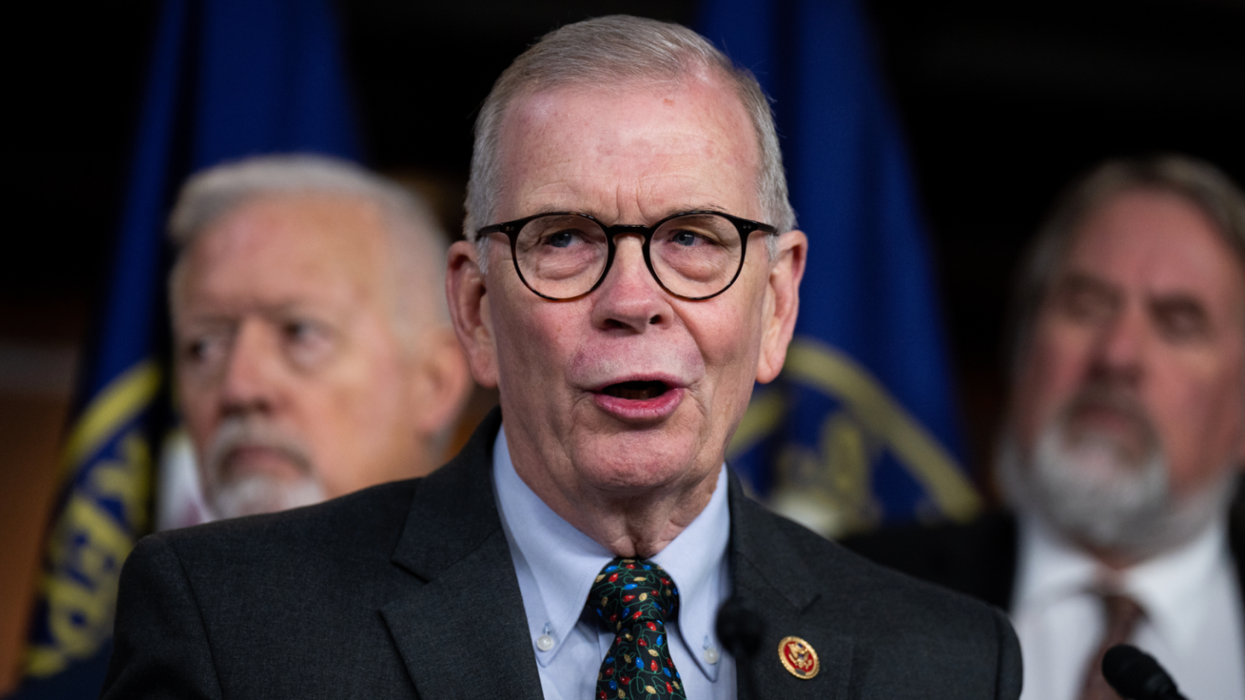
“We have discussions ongoing right now, and I think for any side to say the Republicans don’t have ideas for healthcare reform is to forget what we went through and almost got done,” House Education and Workforce Committee Chair Tim Walberg (R-MI) told Modern Healthcare in an interview. “The ideas are there.” (Editor's note: Another Walberg idea was launching nuclear strikes in Gaza to "get it over quick.")

And they’re moving to enact them. The Senate Homeland Security and Government Affairs Committee held a hearing last week to discuss a new insurance pool that would provide catastrophic health coverage for skimpy individual plans sold outside the exchanges. Numerous states tried this prior to passage of the ACA. In every case the plans were deemed inadequate and often foundered because of their high premiums, exclusions for pre-existing conditions, and annual and lifetime limits. Some states were forced to cap enrollment to limit costs.

Why the capitulation?

Some pundits are reporting that the Democratic capitulation “was all about the filibuster.” Others suggest the cutoff of food stamps was a larger issue. “Trump was purposefully making the shutdown hurt as many people as possible,” wrote Bill Scher of Washington Monthly. Yet “little in this deal is going to prevent him from inflicting further harm.”

The morning headlines in the Kaiser Health News daily feed said it all. “The Trump administration is telling states not to pay full November food stamp benefits, revising its previous guidance after winning a temporary victory at the Supreme Court on Friday,” Politico reported.

Iowa Public Radio reports the federal government ordered states to start enforcing a part of the One Big (Ugly) Bill that cuts off food assistance for refugees and many other types of immigrants with legal status. The Conversation reports the National 211 Hotline has seen calls for food assistance quadruple in recent days, to levels typically seen during natural disasters.

“Shockingly, President Trump and his allies were willing to cut off food assistance to children and fire federal public servants rather than to simply extend an existing tax credit to prevent a premium price spike of hundreds or thousands of dollars for millions of Americans,” Anthony Wright, executive director of Families USA, said in a statement this morning.

“While we are relieved to finally see an end to the longest government shutdown in history — getting federal workers back on the job and ensuring that essential safety net programs like the Supplemental Nutrition Assistance Program (SNAP) can continue — we must continue the fight to contain health costs,” he said. “Americans need a permanent extension of help for health care premiums, and a broader effort to address health care affordability overall.”

There is definitely a health care affordability crisis. It is being made worse by the Trump regime. I spent some time this morning looking at how out-of-pocket health care expenses are affecting different classes of Americans. Here’s what I found:

...
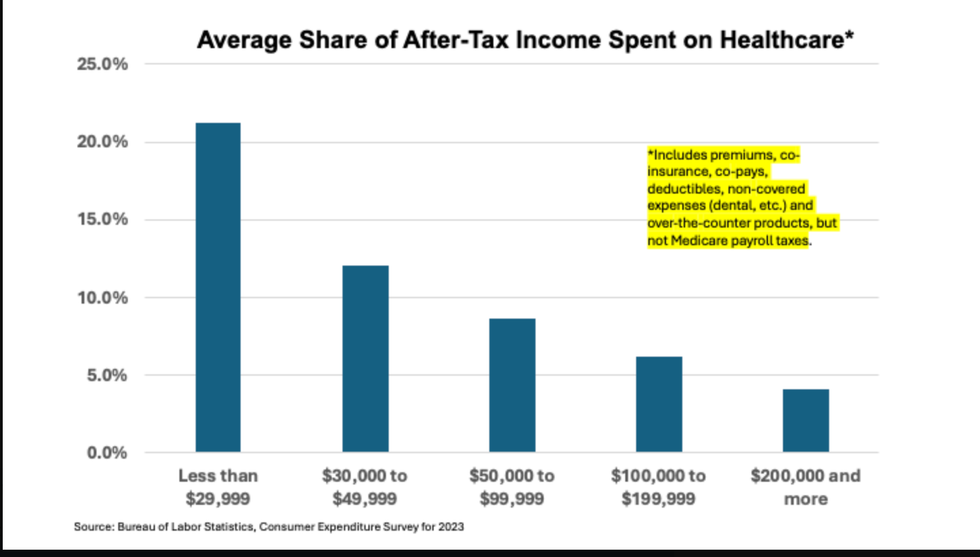
It’s time for the politicians to start coming up with real solutions to the affordability crisis that is hitting not just people on ACA plans or on Medicaid, but on the broader population. The Trump regime is only making things worse.

Merrill Goozner, the former editor of Modern Healthcare, writes about health care and politics at GoozNews.substack.com, where this column first appeared. Please consider subscribing to support his work.

Reprinted with permission from Gooz News
​Johnson Retreads His Unpopular, Previously Rejected 'Ideas' For Health Care Reform

​Johnson Retreads His Unpopular, Previously Rejected 'Ideas' For Health Care Reform

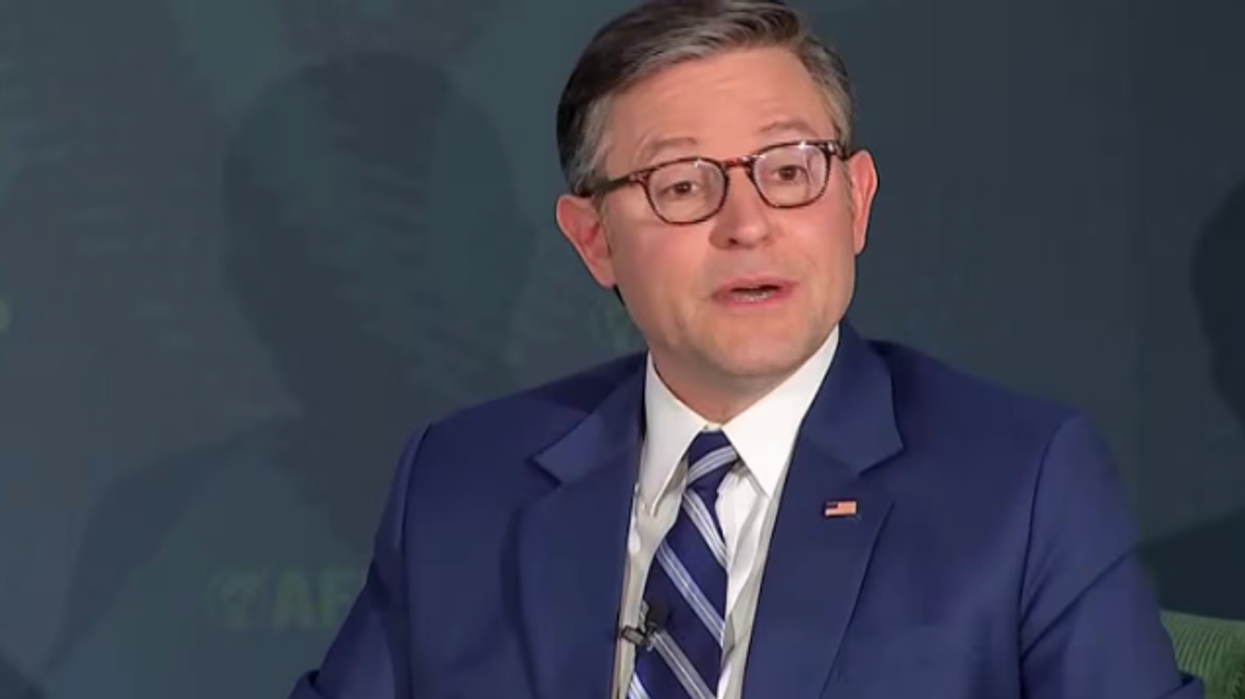
House Speaker Mike Johnson on Monday suggested that the "ideas" Republicans are kicking around for how to make health insurance more affordable is basically just the Obamacare-repeal plan that the GOP tried and failed to pass in 2017, during Donald Trump’s first term.

“When I say that the Republicans have been working on a fix for health care, we’ve been doing this for years,” Johnson said Monday at a news conference on Capitol Hill after he was asked how Republicans were planning on addressing the expiration of enhanced Affordable Care Act subsidies that, if not extended, will soon cause massive premium increases for millions of Americans.Johnson specifically pointed to the health care proposal he released when he was chair of the Republican Study Committee—a caucus of right-wing House Republicans.

"These ideas have been on paper for a long time," Johnson said. “There’s volumes of this stuff. Volumes of it.”

Of course, the reason they have been on paper but never passed is because the ideas in the RSC health care proposal are overwhelmingly unpopular.

The Center on Budget and Policy Priorities, a left-leaning think tank, reviewed a newer version of that RSC health care proposal found in the committee’s proposed budget. That review found the plan would weaken protections for preexisting conditions, cut the tax subsidies millions of Americans receive to make their ACA premiums lower, and "would slash $4.5 trillion in federal investment in Medicaid, Children’s Health Insurance Program (CHIP), and marketplace coverage"—all moves that would likely cause millions to lose their insurance.

“These proposals would create an environment where people with health conditions would pay higher premiums and out-of-pocket costs for less substantial coverage than is currently available,” the CBPP report says. “Given the increase in costs, more people would enroll in subpar plans that leave them exposed to high costs if they get sick.”

That sounds a whole lot like the Obamacare repeal that Republicans attempted to pass in 2017. That bill failed spectacularly amid public outcry because it would have kicked millions off their insurance and weakened protections to cover preexisting conditions.

In fact, the repeal effort was such an unpopular boondoggle that it helped to sink the GOP in the 2018 midterm elections.

If this is the plan Republicans will try to pass again, it’ll likely be an equally unpopular mess for the GOP.

Polling shows that the ACA is popular, with 64 percent of Americans viewing it favorably, according to a KFF tracking poll.

Republican Alternative To Obamacare: Pay More, Get Less, Put The Insurance Companies Back In Charge

Republican Alternative To Obamacare: Pay More, Get Less, Put The Insurance Companies Back In Charge

Now that Republicans have put out an alternative to the Affordable Care Act, Democrats should emphasize what a repeal would really mean for Americans’ health.

Boy, can Democrats have fun with the new Republican alternative to Obamacare. It puts the health insurance companies back in charge and raises costs for almost all Americans. In particular, it substantially raises costs and threatens to cut coverage for the half of all Americans who get health insurance at work. Seniors, the group that Republicans have scared witless about Obamacare, would lose the real benefits they receive under Obamacare. The proposal from three Republican senators is a golden opportunity for Democrats to contrast the specific benefits of the Affordable Care Act (ACA) with what a repeal-and-replace agenda would really mean for Americans’ lives and health.

When it comes to the politics of health care reform, my first adage is “the solution is the problem.” That is because once you get past vague generalities, like lowering costs and making coverage available, to proposing specifics, people will look to see how the proposals impact them personally. This is why health reform is such a political nightmare. Unlike most public policy issues, the impact is very understandable and real.

With the ACA as the law of the land, in analyzing the Republican proposal we must compare its impact to the law it would repeal. The pre-ACA model of health insurance is irrelevant. Here is how the Republican plan would impact people, compared with the ACA:

People who get health insurance at work – bottom line: pay more for worse coverage.

Almost half of all Americans (48 percent), or 148 million people, obtain health insurance at work. The Republican plan would tax 35 percent of the average cost of health insurance benefits at work. This is a big tax increase on working people and is extraordinarily unpopular, as the Obama campaign used to devastating impact on John McCain. And while people would pay more, they would get less coverage, as the GOP plan would allow insurance companies to once again limit the amount of benefits they will pay out in one year and return to the day when employers could offer bare-bones plans.

While taxing health benefits would apply to all employer-provided coverage, the Republicans would give the 30 percent of people who work for businesses who employ fewer than 100 workers a tax credit. That might balance out the increased taxes for some people. However, doing so would create a huge set of economic distortions, as employers might seek to keep firm size under the 100-employee threshold.

Individuals who buy coverage on their own or who are uninsured – bottom line: insurance companies could again deny coverage for pre-existing conditions and offer bare-bones coverage, while the cost of decent coverage would go up for most people.

This is the group that the ACA is most aimed at helping, including the 5 percent of Americans who buy private health insurance and the 15 percent who are uninsured, totaling 64 million people. The ACA offers income-based subsidies to these people when they earn between 100 percent and 400 percent of the federal poverty level (FPL) and enrolls people under 133 percent of FPL in Medicaid, when states agree.

The Republican plan is toughest, in comparison with the ACA, on the lowest-income people and on the higher-income middle class, compared with Obamacare. But many families in between will do worse too.

The Republican plan would wipe out the expansion of Medicaid to people earning less than 133 percent of FPL, a provision the Supreme Court has made optional. It would cut back on Medicaid, ending the federal government’s offer to pay 90 percent of the cost of expanded coverage and replacing that with the federal government paying what it has paid historically, which is between half and three-quarters of the cost of Medicaid, with poorer states getting a bigger share. Crucially, the funding would only be for pregnant women, children and parents with dependent children who earn under the poverty level, as opposed to the ACA’s funding of all adults up to 133 percent of FPL. That means many fewer people covered and states getting less Medicaid money. Republican governors may not complain, but you can bet hospitals will. Adults without dependent children would not be covered by federal Medicaid, which means millions will stay uninsured or lose coverage they now have, unless states pay for coverage without federal support.

For individuals not covered by Medicaid or employees of firms with fewer than 100 workers, the Republican plan would replace the ACA’s sliding-scale subsidies, which now go to 400 percent of FPL, with a subsidy that is the same for everyone of the same age who is under 200 percent of FPL and lowersubsidies for people from 200 percent to 300 percent. In addition, the subsidies would be higher for older people than younger. The Republican plan also would take away the requirements that insurance plans offer decent benefits and free preventive care and charge women the same prices as men for coverage, along with every other consumer protection, with the exception of keeping in place no lifetime caps for covered benefits.

Comparing the value of the Republican plan subsidies vs. the ACA subsidies for the people who would still qualify depends on income, age, and family size. Generally, it appears that the Republican subsidies are much less than the ACA for people under 150 percent of the FPL ($35,000 for a family of four) and much less than the ACA for younger people, but more for older people. However, insurance rates for younger people would go down some at the expense of older people, who insurance companies could charge a lot more than under ACA. And families with incomes above $70,000 for a family of four would lose subsidies entirely.

Seniors and the disabled on Medicare – bottom line: seniors would pay more for prescription drugs and preventive care.

By repealing the ACA, the Republican plan would take away its two concrete benefits for seniors. One is that preventive care services are now free under Medicare (as they are under all insurance). The other is that the ACA is lowering drug prices for seniors by slowly closing the “donut hole,” under which seniors must pay the full cost of prescription drugs even though they are paying premiums for drug coverage. In other words, the Republican plan is simply bad news for seniors, the constituency that they have scared the most about Obamacare… groundlessly.

It is not surprising that Republicans have been reluctant to come up with a replacement for Obamacare. It’s much easier to throw darts – or bombs – at the ACA than to come up with a replacement that meets Republican ideological tenets of less regulation and less government. Any plan that meets the ideological test will be much worse for people in ways they can understand. It is our job to explain it to the public clearly: pay more, get less, put the insurance companies back in charge. This debate is not simply the political game Republicans want to make it. It is about our health and our lives.

Richard Kirsch is a Senior Fellow at the Roosevelt Institute, a Senior Adviser to USAction, and the author of Fighting for Our Health. He was National Campaign Manager of Health Care for America Now during the legislative battle to pass reform.

Cross-posted from the Roosevelt Institute’s Next New Deal blog.

The Roosevelt Institute is a non-profit organization devoted to carrying forward the legacy and values of Franklin and Eleanor Roosevelt.

Photo: Michael Jolley via Flickr

Shop our Store

Headlines

Editor's Blog

Corona Virus

Trending

World