Tag: jd vance
No 'Absolute Immunity' Means Minnesota Can (And Must) Prosecute Federal Agents

No 'Absolute Immunity' Means Minnesota Can (And Must) Prosecute Federal Agents

Even as the federal government makes grudging gestures toward slightly dialing back operations in Minnesota, it is doubling down on its insistence that it has exclusive authority of any investigation or prosecution of federal officers involved in the fatal shootings of Renee Good and Alex Pretti. That stance is likely to reach a climax in an inevitable battle over the issue of supposed federal immunity from prosecution.

At a federal court hearing Monday, Justice Department lawyers argued that the shootings arose out of federal immigration enforcement, were carried out by federal officers performing federal duties, and therefore are exclusively federal matters. In recent days, they also denied Minnesota investigators access to the shooting scene even after presented with a state judicial warrant. The state had to go to federal court, which issued an order to preserve all evidence. That level of recalcitrance by the feds, which I have never seen, portends an upcoming campaign of defiance at every turn.

More stunning still, federal authorities are taking steps that appear designed to impede Minnesota from proceeding at all. The state’s interest here is acute: to all appearances, two of its citizens have been gunned down with no legal justification. I have worked on a number of cases involving overlapping federal and state jurisdiction, including the Rodney King prosecutions. In such cases, the federal government invariably cooperates with the state, often deferring to its initial prosecution.

Here, the template is the precise opposite. As a leading expert on police use of force told The New York Times: “Now we’re seeing not only no cooperation but contamination. That’s new territory.”

The concern is no longer merely that federal authorities are declining to assist a state investigation, but that they will assert their power in every legal way—and possibly then some—to prevent Minnesota from moving ahead at all.

Adding to that picture is the administration’s choice of emissary. Tom Homan, now replacing Greg Bovino in Minnesota, hardly signals a turn toward restraint. Homan’s public posture—and a widely reported episode involving $50,000 in cash carried in a CAVA bag—are no augury of reasonableness. They reinforce the expectation that federal resistance will be aggressive rather than accommodating.

Meet the new boss, same as the old boss.

The standoff is imminent. Hennepin County Attorney Mary Moriarty put it plainly: “Our office has jurisdiction to review the matter for potential criminal conduct by the federal agents involved, and we will do so.” Minnesota Attorney General Keith Ellison told me the same thing in a conversation we had last week.

The state is asserting its lawful authority to investigate and, if warranted, prosecute. The federal government is signaling just as clearly that it will fight that effort at every turn—procedurally, jurisdictionally, and doctrinally.

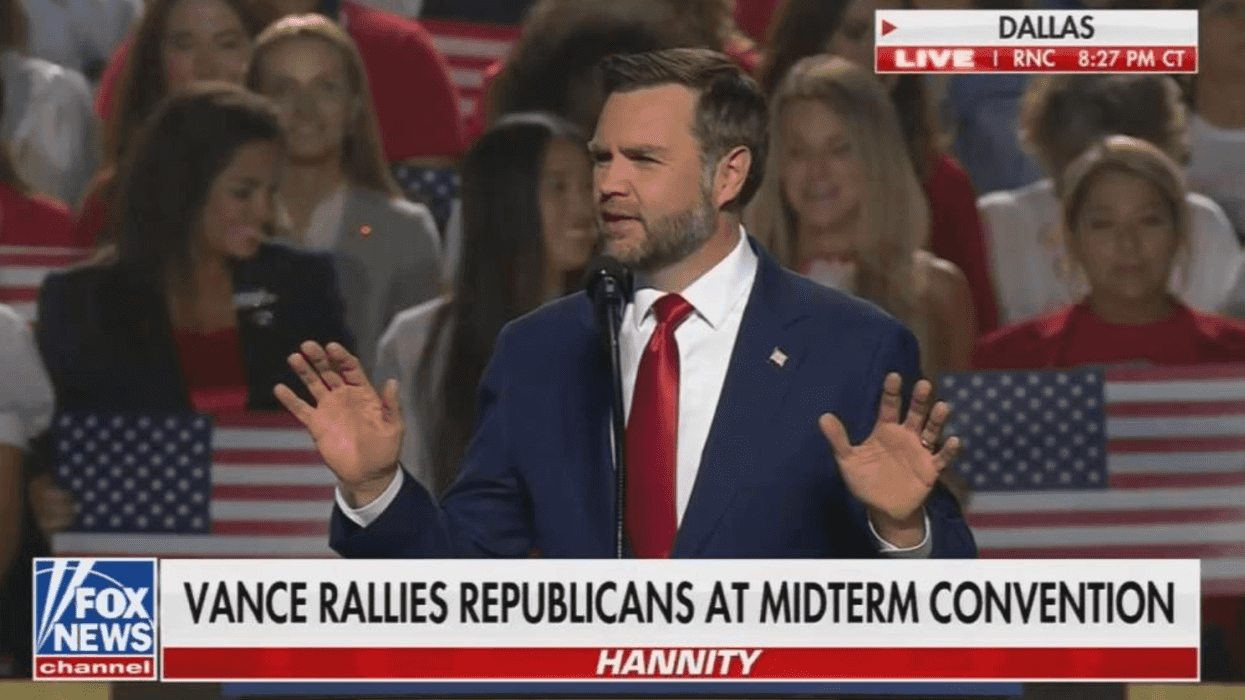
In these circumstances, it is essential to have a clear-eyed view of the legal landscape and Minnesota’s authority to prosecute the killers of its citizens. It is a complicated landscape, but Minnesota is lawfully entitled to press ahead and make its case. Vice President J.D. Vance’s reflexive assertion that the officers enjoy “absolute immunity” is frivolous. (Absolutely immunity does not exist. More on that below).

This essay is the companion piece to my prior Substack examining the affirmative case in the killing of Renee Good—the evidence, as it stands, how it is developing, and why it increasingly points toward criminal liability under Minnesota law. That earlier piece focused on the prosecution’s case in chief. This one takes the next step. It assumes that investigations continue to develop, that Minnesota responds by bringing criminal charges, and that federal authorities resist at every turn, particularly by asserting that the defendant officers are immune from state prosecution. How does that play out?

I noted in my earlier essay that I would set out the range of likely defenses at trial. Those begin with case-specific factual arguments by the federal officers—arguments that, as explained below, are unlikely to be tested in court anytime soon.

In the Good case, the factual defense will revolve around a single proposition: that the officer reasonably believed he faced imminent lethal harm. The car, the defense will argue, was a deadly weapon; the officer was positioned in its path; and deadly force was a split-second response to an unfolding emergency.

That claim is the factual linchpin for everything that follows. Without it, there is no viable claim of self-defense under Minnesota law—and, spoiler alert, no plausible claim of Supremacy Clause immunity either.

The difficulty for the defense is that the evidence developed so far cuts sharply in the opposite direction. Video shows the officer approaching without visible urgency, positioning himself alongside and slightly clear of the vehicle rather than directly in front of it, and preparing his weapon before any clear escalation. Frame-by-frame analysis has called into question the assertion that Good’s car was ever on a trajectory to hit him. And the autopsy leaves little doubt that the fatal shot came after the car had turned away, with the officer firing through the driver’s side window at a time when he was under no possible threat. That leaves only the argument that less than a second had passed from the first shot and that the officer remained in the throes of fear for his life.

The Pretti case presents an even starker picture. On the facts publicly known at this stage, it is difficult to see any viable factual defense. The reflexive claims by government officials that Pretti brandished his gun and rushed officers collapse under the growing weight of the video evidence. Indeed, those official misstatements may become part of the prosecution’s case, or of Minnesota’s legal efforts to force federal authorities to stand down.

Three realities will shape how any trial defense actually plays out.

First, guilt must be found unanimously and beyond a reasonable doubt. That high bar is easy to overlook, but many excessive-force cases end in hung juries or acquittals because one or more jurors harbor reasonable doubt. Juries are often sympathetic to law enforcement and sensitive to claims of uncertainty, chaos, and split-second judgment.

Second, the defense case will vary dramatically depending on whether the defendant testifies. That choice is risky, but in a defense premised on fear of imminent deadly harm, there is no substitute for the officer’s own account. And once an officer takes the stand, the case often turns into a referendum on credibility. In the state Rodney King trial, several officers testified and the jury acquitted. In the federal prosecution, one officer testified (the other most culpable defendant did not), and the prosecution dismantled his account on cross-examination—likely driving the guilty verdict as much as the video evidence itself.

Third, and especially relevant given likely federal resistance, is whether the state can secure any cooperators. In the Pretti shooting, for example, there were seven Customs and Border Patrol officers present, and the video evidence seems to establish that all ten shots came from two officers. If Minnesota can induce one of the others on the scene to cooperate by leveraging potential charges, the case would change entirely. Likewise, in the Good case, the officer who ran up to the car screaming at Good may face exposure sufficient to induce cooperation.

That brings us to the pivotal issue in any Minnesota prosecution of either case: whether federal officers are immune from state criminal liability.

We can quickly dispense with Vance’s claim of “absolute immunity.” No such immunity exists, even for presidents. The Supreme Court recognized immunity for Trump only for official acts.

States have prosecuted federal officers for state crimes, including homicide, since the early Republic. The Constitution does not forbid such prosecutions. What it forbids is state interference with the reasonable execution of lawful federal duties.

The governing doctrine is Supremacy Clause immunity, often called “Neagle immunity.” It protects federal officers who are lawfully doing their jobs. If states could criminally prosecute officers for the reasonable execution of federal duties, federal law would not be supreme.

Under In re Neagle and its modern descendants, Supremacy Clause immunity applies only if two conditions are met: the officer was acting pursuant to federal authority, and the conduct was “necessary and proper” to carry out that authority. Courts generally emphasize that the “necessary and proper” inquiry is chiefly objective: the officer must have had an objectively reasonable and well-founded basis to believe the conduct was necessary. Although some courts have noted modest variation in how the test is framed, subjective good faith alone has never been sufficient.

The operative question for Supremacy Clause immunity in a Minnesota prosecution, then, is whether the shootings were necessary and proper exercises of federal authority.

That standard is admittedly amorphous, and reasonable judges may apply it differently. That uncertainty clouds Minnesota’s prospects. But in these cases, the standard substantially overlaps with both Minnesota self-defense law and federal civil-rights liability.

Under Minnesota law, deadly force is justified only if a person reasonably believes, under the circumstances as they perceived them, that it is necessary to prevent imminent death or great bodily harm to themselves or another.

Under 18 U.S.C. § 242, criminal liability requires proof that an officer knowingly or recklessly used force that was objectively unreasonable under the Fourth Amendment.

Under Supremacy Clause immunity, courts ask whether the officer had an objectively reasonable and well-founded belief that deadly force was necessary to perform lawful federal duties.

Different doctrines, different institutional purposes—but the same factual fulcrum: a reasonable perception of imminent lethal danger.

There is some play in the joints. Supremacy Clause immunity is decided by a judge, often early. Self-defense and civil-rights liability are jury questions. Immunity sounds in federalism rather than culpability. But where, as here, the asserted federal duty is ordinary law enforcement and the act is the use of deadly force, the “necessary and proper” inquiry largely collapses onto the same question. If a reasonable officer could not have believed deadly force was immediately required, all three defenses fail together.

What makes immunity a more imposing hurdle than a substantive trial defense is its procedural posture. An officer asserting Supremacy Clause immunity may remove a state prosecution to federal court under the federal-officer removal statute. There, immunity is litigated as a threshold issue. If established, the case is dismissed.

Removal would most likely follow the filing of state charges, though, given federal resistance even to investigation, immunity could be raised earlier. That timing would not materially alter the ultimate trajectory: immunity must be resolved once, and only once.

The rub is that immunity is, by definition, an entitlement not to stand trial. A district court’s denial is therefore immediately appealable—to the Eighth Circuit and potentially to the Supreme Court. That does not mean the kind of protracted delay seen in the Trump prosecution, where the issue was novel and the Court remanded for proceedings under a newly announced framework. There, the case took roughly seven months from district court to Supreme Court decision. More typically, immunity-based removal motions are resolved within a few months.

Federal supremacy was never meant to operate as federal impunity. The possible crimes at issue here have grown into constitutional moments. The country awaits—and demands—a full response governed by the rule of law. If federal officers can kill civilians, and federal authorities can then refuse state cooperation, defy subpoenas, and invoke federal supremacy to block investigation altogether, the problem is no longer one of immunity doctrine. It is a breakdown in the basic architecture of accountability—essential to any democracy—which cannot survive if the federal government may commit the most visible and serious abuses and then extinguish both state authority and independent scrutiny of its own conduct.


JD Vance

'No Rizz': Young MAGA Voters Are Repelled By JD Vance As Trump Fades

Bulwark Publisher Sarah Longwell and the site's “False Flag” editor Will Sommer have been analyzing the critical youth MAGA vote that helped put President Donald Trump over the finish line a little more than a year ago, and they report their enthusiasm is waning for Trump’s preferred replacement.

Polls suggest Trump is deep in cold water and that his lame-duck chapter may already be underway, even before the 2026 mid-terms — primarily because of the expectation that his Republican Party will be trounced and his GOP Congressional majority evaporated.

Youth helped put Trump in the White House a second time, but Bulwark surveys of young voters who swung from Biden to Trump last time feel less enthusiasm for electable Republicans and more passion for unelectable boors and white nationalist firebrands — if, indeed, they feel anything at all.

“Like, he doesn't give you all the heebie-jeebies at all?” demanded one female respondent, speaking of Vice-President JD Vance, who has already announced his intent to run for president in Trump’s absence at the next national election.

“I shouldn't judge a book by its … cover or whatever. But I just kind of like — it’s one of those, like, feelings like — eeyuck — I don't know,” said another.

“They're just creeped out by Vance or find him boring, weird, and like no rizz, no rizz,” said Longwell.

No rizz is modern slang used to describe someone who lacks charisma, charm, or appeal — particularly in romantic or social contexts. The term suggests that a person is unable to attract others or lacks the magnetism needed to impress or seduce someone.

Trump’s Secretary of State Marco Rubio got middling to slight enthusiasm from young Biden-to-Trump voters, which looks bad for Vance. However, young MAGA men appeared to be throwing their attention to even more controversial candidates like Florida gubernatorial candidate James Fishback, who coddles white nationalism and Holocaust denialism while demanding a “ho-tax” from Only Fans users.

“I don't know if you've heard of Fishback. He's trying to run for governor of Florida. I really like what he's doing. He's young. He's very articulate in terms of what he says. And he's focusing on the people of Florida in particular,” said one survey respondent, who had not been asked about Fishback in the survey.

Other respondents echoed his enthusiasm, to the surprise of survey organizers who had not had Fishback on their radar. This, said Longwell, is unfortunate for the Republican Party because critics consider Fishback the kiss of death for centrist-minded Independent voters.

“Fishback is sending a clear message to white nationalist groups: “I’m your guy,’” Political Research Associates senior research analyst Ben Lorber told the Miami Herald.

Longwell pointed out that Fishback is “polling in the low single digits — in actual Florida, like with actual Floridians — he is not doing that well, but he's clearly getting a lot of attention online.”

“This is a guy who, in terms of actual accomplishments in life, is just about at nothing,” said Sommer, who also described Fishback as “insanely racist”. “And he has this kind of insane, twisted backstory. He was at a hedge fund. He got fired from the hedge fund because he was focusing too much on his anti-woke high school debate startup. And basically, he engaged in all this subterfuge where he had people posing as reporters or angry investors at the hedge fund. And as a result, he's ended up with what I think is going to be ... $2 million plus debt to the hedge fund over legal fees.”

“He's getting his car seized by U.S. Marshals. He's spending on all these luxury goods and he bought a Cartier watch, wore it to a deposition and the hedge fund said, ‘well, wait a minute, you know, we got to seize that.’ So … this guy is at like the very low level of success in life. And I should say also, there are these allegations in court that he had a relationship with a 17-year-old at his high school debate star.”

“It’s definitely a bad sign for where the MAGA movement is headed,” concluded Sommer.

“Yeah, it's a really bad sign,” Longwell agreed.

Watch the Bulwark podcast at this link.

Reprinted with permission from Alternet

'Vampire Billionaire' Peter Thiel Says Pope Leo May Be The Antichrist

'Vampire Billionaire' Peter Thiel Says Pope Leo May Be The Antichrist

Shortly after American-born Robert Prevost was elected Pope, J.D. Vance and his wife stopped in to visit with the new pontiff.

In addition to a Chicago Bears shirt, Vance brought the American Pope two books by St. Augustine. This gift represented a bond between the two men: Vance chose St. Augustine as his patron saint when he converted to Catholicism, and the Pope was previously head of the worldwide Augustinian order.

It's an open question whether Vance ever read either of the books, since Augustine spends a good amount of time lecturing against pride, encouraging humility, and preaching compassion for immigrants. But even assuming Vance still somehow clings to a highly selective edit of the saint ("An unjust law is no law at all," means Vance can do anything he wants, right?), it looks like he's going to have to denounce the guy in the big hat.

Because Vance's vampire boss says the Pope may be the Antichrist.

Billionaire tech investor Peter Thiel is probably best known for three things: Company names stolen from The Lord of the Rings, trying to drain the blood of young people so he can live forever, and foisting J.D. Vance on America. But there's another side to Thiel.

He's not just a technofascist seeking to build an AI-fueled authoritarian surveillance state. He's also an absolutely bonkers pseudo-religious nutcase who views everyone who stands in his way as an agent of ... Satan. And that includes the Pope.Thiel has hosted a series of lectures for a very select audience in which he's warned that the Antichrist—harbinger of the apocalypse—is in the world today, making trouble for all the good little AI billionaires. Tickets for these events generally start at $200, so it's safe to say that most of those attending are already fairly well off. (Or they're looking for someone to fund their Senate campaign.)

In those lectures, Thiel puts his finger on some very suspect people. People like Swedish climate campaigner Greta Thunberg, other environmental activists, AI safety advocate Eliezer Yudkowsky, anyone else who suggests regulating AIs before they destroy humanity, and people who are worried about nuclear war.

Yes, according to Thiel, trying to prevent nuclear armageddon means you are also a potential Antichrist.

Thiel's view of the Antichrist “is that of an evil king or tyrant or anti-messiah who appears in the end times”. It's worth pointing out that, no matter how many times this idea may have appeared in conservative rhetoric or sweaty tent revivals, this is a profoundly unbiblical concept.

Several times in the Greek versions of the gospels, there are mentions of someone being "antikhristos," which is exactly what it sounds like: opposed to Jesus and his teaching. Another term, "pseudokhristos," is used to describe people who spread statements falsely attributed to Jesus. In both cases, these terms are applied, not to a particular individual, but to anyone seen as interfering with the message of Christ.

The idea that the Antichrist is an evil potentate who will usher in the end of the world was created after everyone involved with the Gospels was long dead. It's the vision of a 10th-century French monk, Adso of Montier-en-Der, who compiled centuries of speculation to turn an adjective into a title. In the process, he created an antagonist who has been beloved of poor biblical scholars ever since.While many people quickly adopted the concept, most of Adso's biography of the Antichrist has been conveniently discarded. He was supposed to be Jewish, born in Babylon, and to rule the world from a throne in Jerusalem. But all that stuff gets in the way of lots of fun speculation and flinging an Antichrist label onto anyone you hate.

The Antichrist is also supposed to be empowered to perform all sorts of miracles and be capable of resurrecting the dead. So if a 22-year-old Swedish woman best known for shouting environmental concerns into a microphone is secretly the Antichrist, she's been seriously holding back.

Thiel's Antichrist obsession goes back to at least the 1990s and borrows themes from French-American philosopher René Girard to posit that the left is intrinsically anti-Christian and the natural home for the Antichrist. There's already plenty to object to in how Girard's "mimetic" philosophy has been interpreted and applied. But he has enough hold on conservative Catholics that Thiel, who is not a Catholic (because Pope Francis was also too woke for his taste), has been invited to do his anyone-who-opposes-me-is-Satan dance at multiple conservative Catholic venues, including The Catholic University of America.

Somewhere in his decades of studying a figure that never existed, Thiel's views took a decidedly peculiar twist. He can't seem to distinguish between technology and God. As The Washington Post reported, Thiel's lectures have only grown more "intense" over recent months.

... recordings offer new detail about how the billionaire seems to place those who would critique or regulate tech developers into a religious good-vs.-evil worldview, where the future of all creation depends on giving innovators free rein.

As Wired reported in September, Thiel also has some very odd notions of what's good and what's evil. He doesn't just draw his thinking from Girard. He also frequently quotes Nazi attorney Carl Schmitt.

You know you live in strange times when one of the most influential billionaires in the world—an investor who lit the financial fuses on both Facebook and the AI revolution, who cofounded PayPal and Palantir and launched the career of an American vice president—starts dedicating his public appearances primarily to a set of ideas about Armageddon borrowed heavily from a Nazi jurist. (As in: the guy who rapidly published the most prominent defense of Hitler’s Night of the Long Knives.)

That Nazi is a big part of Thiel’s philosophy. According to Thiel, anyone who raises doubts about the benefits of new technologies is evil. And anyone who tries to generate unity is suspect. That makes a climate campaigner like Thunberg a potential Antichrist and every international climate agreement the work of the devil. Ditto for those cautioning against AI advancement and even those who have worked to oppose nuclear weapons.

But defending Nazi attacks on Jews? For Thiel, that sounds like someone with a lot of good ideas. Right on target for a billionaire who has also declared that democracy and freedom are "not compatible.”

So maybe it's not so strange that the vampire billionaire of the apocalypse has found a new potential Antichrist hiding under a big pointy white hat. Thiel has reportedly warned J.D. Vance about getting too close to "the woke American Pope" and fumed that Leo may actually be ... the A-word.

This warning appears to have come after Pope Leo cautioned AI developers "to ensure that emerging technologies remain rooted in respect for human dignity and the common good." The Pope also warned students against using AI to do their homework.

“AI can process information quickly, but it cannot replace human intelligence,” he said. “And don’t ask it to do your homework for you. It cannot offer real wisdom. It misses a very important human element.”

Them're definitely fighting words for Thiel. And he's taking the fight right to the man he installed as America's second-in-command in a way that hasn't gone unnoticed by Catholics who don't source their opinions from Nazi Germany.

Let that sink in: the main backer of the likely GOP nominee for president is accusing the Bishop of Rome of being an agent of the end times — and telling Vice President Vance to disregard the pope’s moral guidance.

For most of the billionaires hurtling the world toward AI destruction, fame and money are sufficient cause to light humanity's last bonfire of the vanities. For Thiel, this is a religious fight. Will we have the evil that comes with peace and environmental reform, or will we enjoy God's bounty of unregulated pollution and unchecked AI?

Either way, Thiel plans to be here to see how it turns out. If he can keep filling his veins with fresh, young blood.

Reprinted with permission from Daily Kos

How Tucker Carlson Is Dragging J.D. Vance Down Into The Neo-Nazi Fever Swamp

How Tucker Carlson Is Dragging J.D. Vance Down Into The Neo-Nazi Fever Swamp

Before Fox News fired him, Tucker Carlson was among the most influential figure on the right-wing cable news outlet. Carlson had so much power on the right that when Sen. Ted Cruz (R-Texas) said something that offended him, the GOP senator made a beeline for his show to smooth things over.

Although Carlson, post-Fox News, doesn't have as much power as he did in the past, he still has plenty of followers on the far right

According to journalist/author Jamie Kirchick, Carlson is promoting a great deal of infighting among MAGA Republicans. And one MAGA Republican who has the most to lose, Kirchick reports, is Vice President JD Vance.

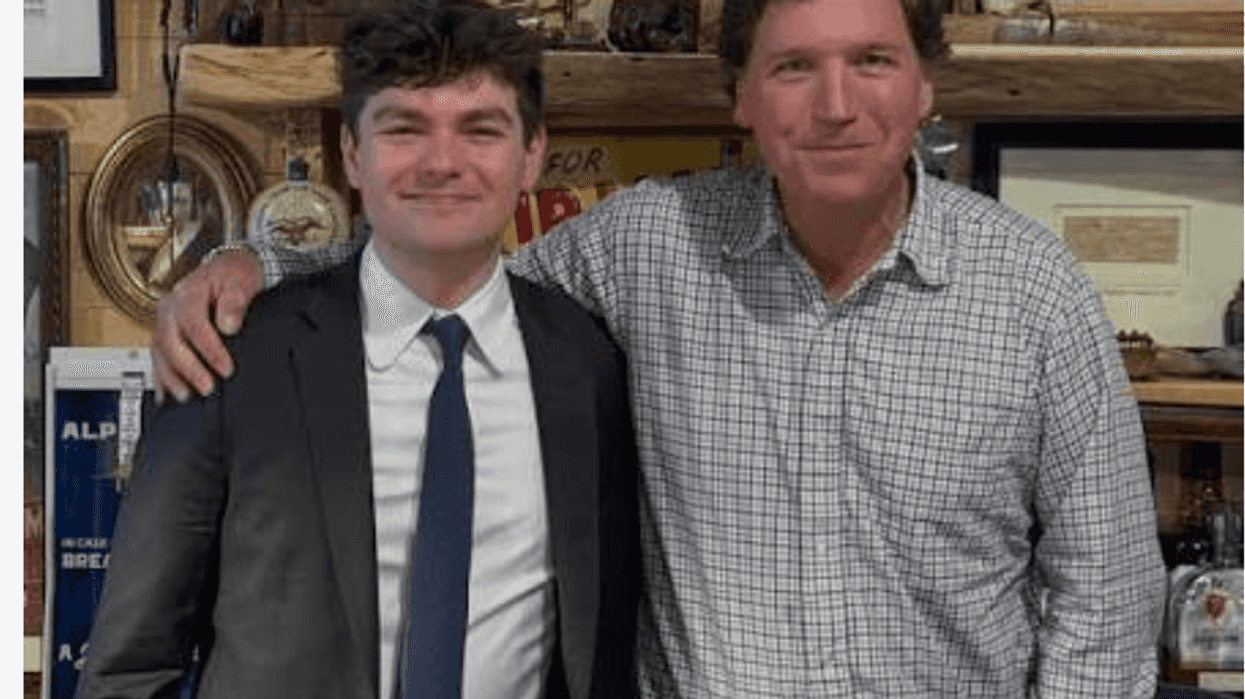
In an article published by the Washington Post, Kirchick highlights Carlson's friendly relationship with Nick Fuentes — a white supremacist and Holocaust denier who, in 2024, attacked Vance for being married to an Indian-American woman, attorney JD Vance.

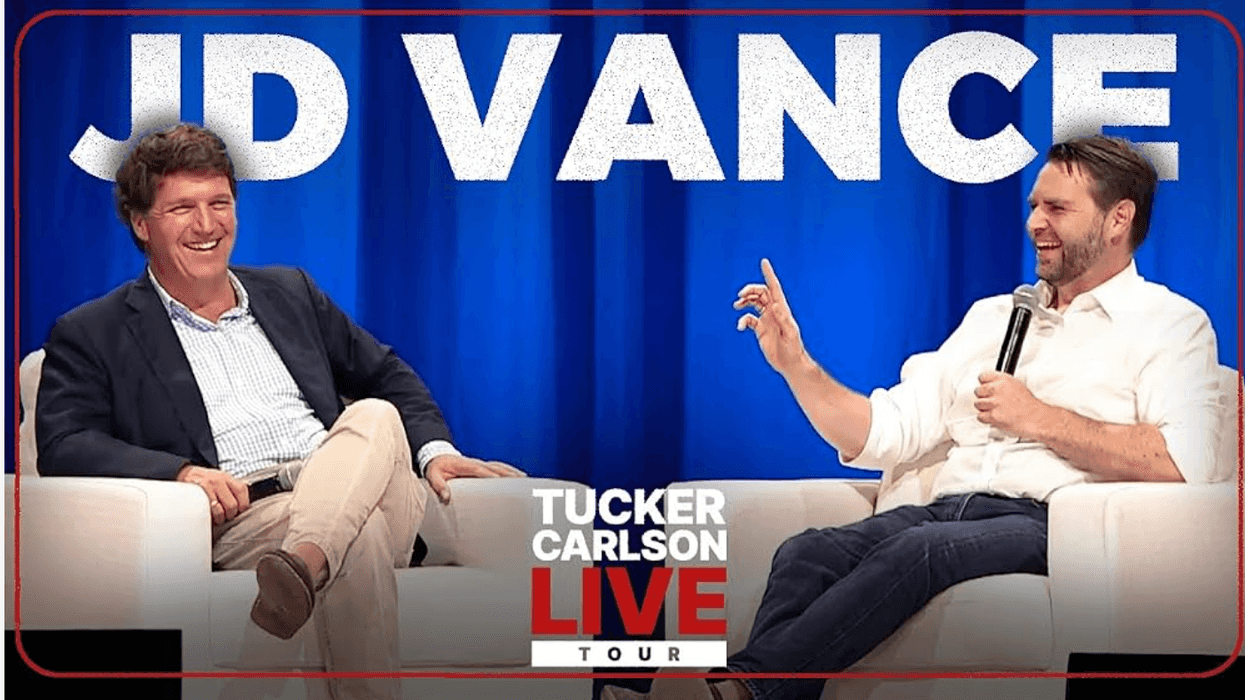
"Ironically, the politician Carlson is harming most with his antics is the person he wants to succeed Trump: Vice President JD Vance," Kirchick explains. "Carlson, who praised Vance in his discussion with Fuentes as one of the very few people on the right who shares his foreign policy views, reportedly played a decisive role in convincing Trump to name Vance as his running mate. Vance, who has since employed Carlson's son as his deputy press secretary, invited Carlson to the White House when he guest-hosted the Charlie Kirk Show following the assassination of its eponymous host. Having benefited from Carlson's scorched-earth campaign against 'the neoconservatives,' Vance now appears stuck with Carlson's antisemitic, conspiratorial, anti-American baggage whether he likes it or not.".

Kirchick continues, "Thus far, Vance has done nothing to distance himself from this kind of politics. When Politico exposed racist and antisemitic text messages sent by members of Young Republican clubs last month, the vice president forgivingly characterized the appalling behavior of these 20- and 30-somethings as “what kids do.” A more disturbing incident occurred last week, when Vance responded to a question from a student at the University of Mississippi. Sounding very much like one of Fuentes' 'groyper' followers, the young man in a MAGA hat asked Vance why the U.S. supports Israel “considering the fact that not only does their religion not agree with ours, but also openly supports the prosecution (sic) of ours.”

According to Kirchick, Carlson is fueling — not discouraging — the civil war among MAGA Republicans.

"The inevitable fracturing of President Donald Trump's MAGA movement is in sight, the instigator of its rupture that most narcissistic and destructive of media personalities: Tucker Carlson," Kirchick reports. "Since his firing from Fox News two years ago, Carlson has turned his podcast into a weekly circus featuring guests such as rancid conspiracy theorist Alex Jones, Russian despot Vladimir Putin and Darryl Cooper, a Holocaust denier who claims Winston Churchill was the villain of World War 2 and whom Carlson praises as 'the most important historian in the United States.' Carlson’s approach with his guests is not that of a skeptical interlocutor, prodding their arguments for weaknesses, but rather, that of a reputation-launderer making reprehensible ideas respectable for mainstream conservative consumption. Even Trump calls Carlson 'kooky.'"

Trump is cracking down on large universities over protests against Israeli operations in Gaza — protests he attacks as antisemitic. Yet a prominent figure in the MAGA movement is Nick Fuentes, a white nationalist and Holocaust denier who often criticizes other MAGA figures for not being far-right enough.

"It was only a matter of time, then, that Carlson would invite Nick Fuentes up to his Maine cabin home studio for a chummy colloquy last week in which the self-professed Hitler and Stalin admirer ranted about 'neocon Jewish types behind the Iraq War,' 'organized Jewry,' 'Zionist Jews.… controlling the media apparatus,' and 'the historic animosity between the Jewish people and the Europeans,'" Kirchick explains. "The furthest Carlson went in rebuking Fuentes was to offer the friendly advice that he refrain from condemning 'the Jews' per se, because 'going on about the Jews helps the neocons.' Otherwise, the two were simpatico, particularly on the subject of Christian Zionists, who, Carlson said, have been 'seized by this brain virus.'"

Kirchick adds, "Carlson's jovial exchange with Fuentes naturally stirred controversy, particularly within the conservative movement, which many pro-Israel Christians call home. So intense was the anger that the Heritage Foundation removed Carlson's name from a donation page on its website. The scrubbing must have been unauthorized, however, because the following day, Heritage President Kevin Roberts released a defiant video reaffirming the organization's relationship with Carlson."

According to Kirchick, arguments over antisemitism are only growing more intense in the MAGA movement.

"Finally, the battle lines are being drawn," Kirchick writes ". Earlier this week, Carlson said the controversy over his parley with Fuentes is really 'a fight over what happens after Donald Trump.' He's right."

Reprinted with permission from Alternet

Shop our Store

Headlines

Editor's Blog

Corona Virus

Trending

World