So Much Time, So Little Truth: Trump's Longest-Ever, Utterly Hollow Speech
Well, that was exhausting — or would have been, if I had watched it. But I am not a masochist. I waited to read the transcript.
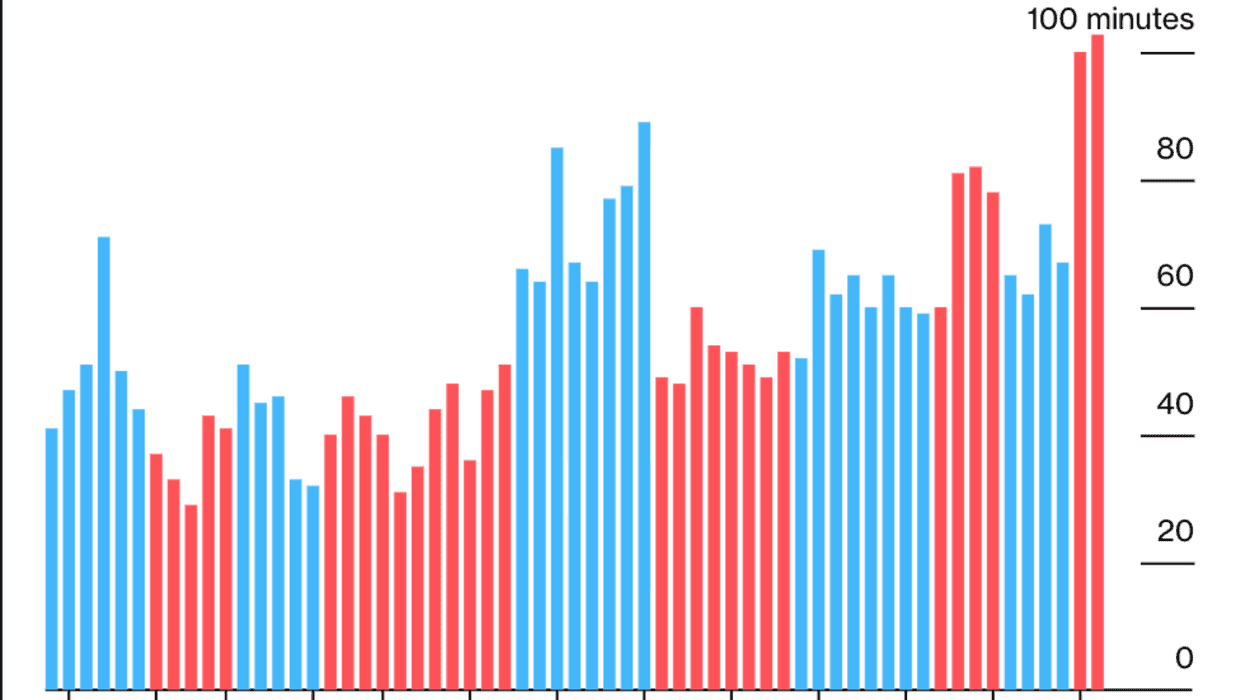
Trump’s State of the Union was historic in at least one respect: It was the longest SOTU ever. Was the plan to turn public opinion around by boring America into submission?
The address may also have been historic in another way, although it would be hard to quantify. Did any previous SOTU contain so many lies?
For the most part they weren’t Big Lies, lies that are persuasive because people can’t believe that anyone “could have the impudence to distort the truth so infamously”. They were, instead, small lies that added up to a false — and completely unpersuasive — portrayal of where we are.
On economics, Trump has catastrophic ratings even though the economy isn’t a catastrophe. Things aren’t great, but by most metrics they are about the same or a little bit worse than they were when he took office:
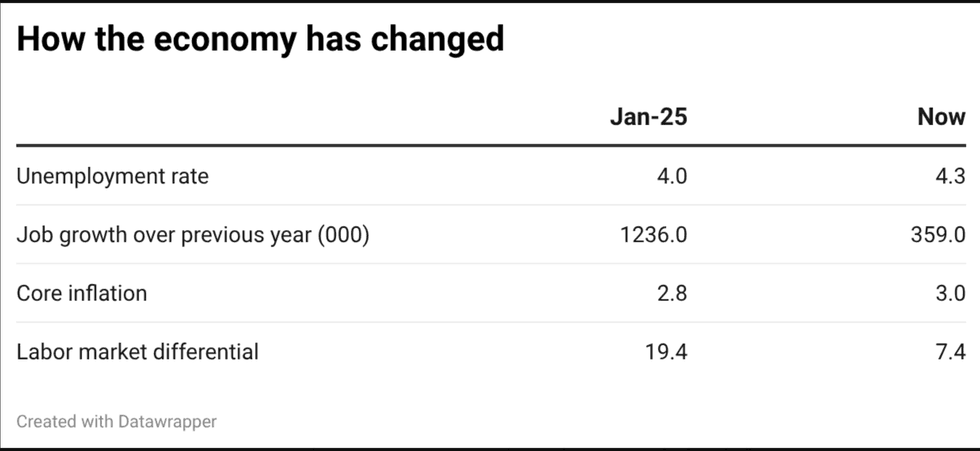
The last measure, the labor market differential, is the spread between people saying that jobs are “plentiful” versus “hard to get,” which has deteriorated substantially.
Why are people so negative when the economy isn’t that bad by conventional measures? Affordability, especially with regard to housing and health care, is a real problem, not fully captured by standard measures. And it’s a problem Trump didn’t address at all — instead, he’s doubling down on his massively unpopular tariffs, which make the problem worse.
Also, there are two big disconnects. First is the gap between what Trump promised — he was going to bring grocery prices down, cut energy prices in half — and what he has actually delivered. Second is the gap between his wild boasts about how great things are and the reality of a K-shaped economy that is leaving many Americans behind.
One other lie that struck me, although it may not matter much to voters, was Trump’s insistence that the world admires what he’s doing: “America is respected again, perhaps like never before.”
Trump’s desire for external validation is, frankly, pathetic. And the truth is that we are despised like never before. You can see this in surveys:
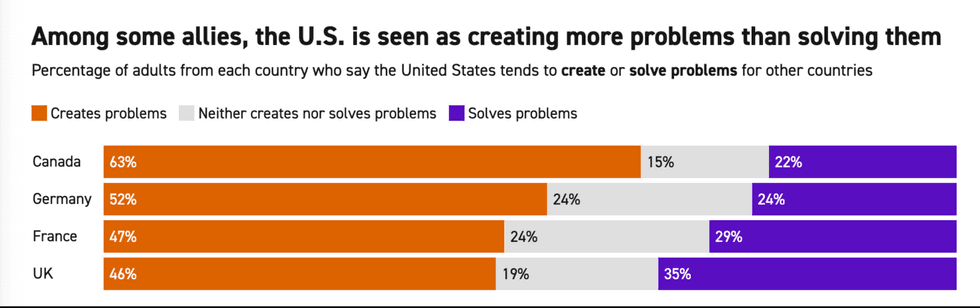 Source: Pew Survey
And foreign leaders have completely lost faith in America: We’ve become a country whose word can’t be trusted, a country that betrays its allies:
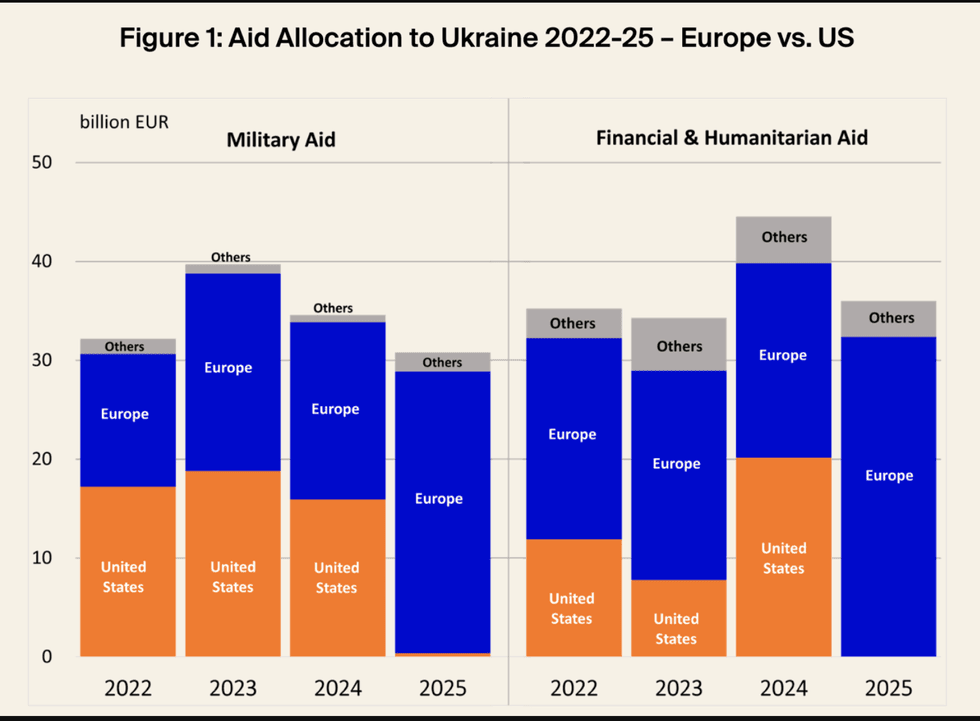 Source: Kiel Institute
It’s true that in some ways the world fears us in a way it didn’t before — in the same way that one steps carefully around a belligerent drunk in a bar. But we haven’t been this weak on the world stage since before World War II.
Anyway, that speech won’t pull Trump out of his downward spiral. Time to attack Iran?
Paul Krugman is a Nobel Prize-winning economist and former professor at MIT and Princeton who now teaches at the City University of New York's Graduate Center. From 2000 to 2024, he wrote a column for The New York Times. Please consider subscribing to his Substack.
Reprinted with permission from Paul Krugman.