By Monday evening, the storyline had already solidified: a mixed bag for Trump at the Supreme Court. A split verdict on executive power. The Wall Street Journal had the Court “expanding presidential authority” in one breath and “rejecting” Trump’s bid to fire a Fed governor in the next. Trump himself, never one to undersell, called it a “tremendous loss” on the mail-in ballot case and a “BIG WIN” on the firings, and even that whiplash got reported straight, as if he were just providing the scoop—a president taking his lumps along with his victories, proof the system is working as designed.
Don’t believe it. The last two days of decisions only advance the actual storyline: a radically conservative court consolidating its constitutional overhaul and leaving open the prospect of further radical changes to come.
Set against the real stakes of the cases the Court decided this week, this was a week to leave conservatives celebrating, topping off a term that was a conservative juggernaut. And the single most important thing that happened, by a wide margin, isn’t the birthright citizenship case that dominated the headlines. It’s the essential consummation of a project this Court has been working on for sixteen years: the dismantling of the structural architecture that has insulated huge swaths of the federal government from raw presidential control.
Start with Trump v. Slaughter. Read the first paragraph of most of the coverage, and you’d think it was a wash—the Court let Trump fire an FTC commissioner, but it stopped him from firing a Fed governor in the companion case. Tossup, right? Wrong. Slaughter isn’t one beat in an even trade. It’s the demolition, and Cook is the small, fragile thing sitting, illogically, in the rubble.
For ninety years, Humphrey’s Executor v. United States—a unanimous, 9-0 decision, the kind of case first-year law students learn as black-letter, foundational, not-up-for-debate—held that Congress could protect FTC commissioners from being fired without cause. That single case has been the load-bearing wall underneath the entire modern administrative state: the NLRB, the SEC, the Federal Reserve itself before this term, dozens of agencies built by Congress specifically to operate at one remove from whoever happens to be sitting in the Oval Office.
Slaughter lays waste to this entire project on a straight 6-3 ideological vote.
Steve Vladeck called Slaughter “the most important separation-of-powers ruling of the twenty-first century,” and I don’t think that’s hyperbole. It embraces the closest thing to an absolutist version of the unitary executive theory that has been a hobbyhorse on the right for two generations.
Let’s now turn to Trump v. Cook, in which the Court declined to lump the Federal Reserve in with all the other agencies whose wings the Court and Trump now have clipped. It’s the other side of the supposed “split verdict” the Court delivered to the President. In fact, that emerging view both overstates the importance and understates the incoherency of the case.
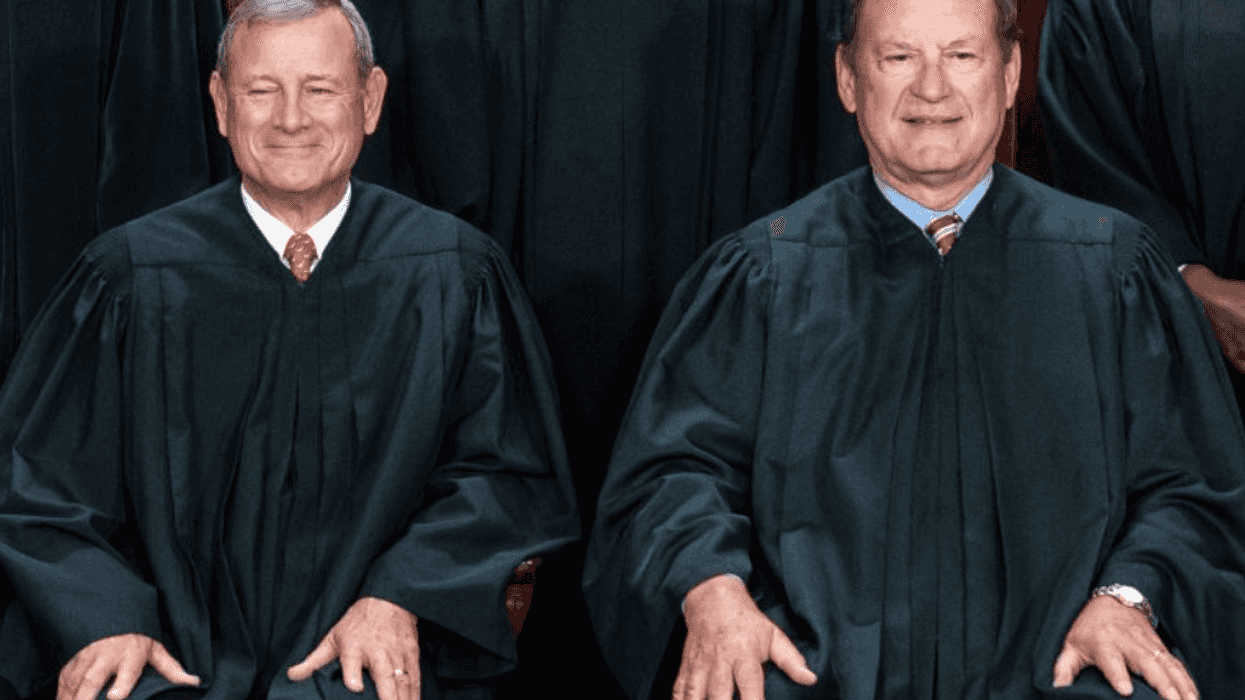
Five justices—with Roberts and Kavanaugh reversing their positions from the Slaughter case—held that the Fed’s unique historical lineage, tracing back to the First and Second Banks of the United States, exempts it from the unitary executive logic that governs everything else.
The Court didn’t carve out a coherent doctrinal exception for the Federal Reserve, and it’s hard to see what principle of executive power would exempt the Fed. The muddle presented Sotomayor with a field day in her dissent, which she read from the bench. Why do the distinctive characteristics of the Fed amount to a constitutional argument, overcoming the force of Article II, that Congress can insist on the president’s having a good reason for firing Fed governors? The majority’s attempted proffer of historical analogues or influence of monetary policy feels like the sort of makeweight distinction for exempting the Fed, when the real reason is that giving the president the same controlling power could wreak havoc on the national and international economies. Whatever else that is, it is not a constitutional argument.
Properly understood, the Cook decision only underscores the weakness of the Court’s entire line of cases aggrandizing the president and eliminating Congress’s ability to provide for agency independence.
The “balance” narrative the press is running with gets this exactly backwards. The Fed carve-out doesn’t prove the Court is being moderate or restrained. If anything, it underscores just how contingent and unpersuasive the other cases are. In Cook, the majority essentially invents a bespoke, ad hoc exception out of whole cloth for reasons that make eminent sense but don’t stand up alongside the Court’s overall project of taking a wrecking ball to the administrative state.
The stakes of the Court’s arch-reactionary project—wiping the books clean of nearly 100 years of canonical constitutional law—are easy to underappreciate. The dozens of agencies that the Court now has gutted have played a huge role in American life since the New Deal, comprising more or less every area of health, safety, and well-being. The modicum of independence that Congress has provided has meant that they go about their work with an emphasis on expertise and political nonpartisanship.
The independence Congress built into the FTC, the NLRB, the Nuclear Regulatory Commission, the Consumer Product Safety Commission, and dozens of other agencies was salutary and beneficial. Each time, Congress concluded that some questions are better answered by people with expertise and some distance from whoever just won an election than by political appointees taking orders from the West Wing. These agencies bring exactly that—expertise, continuity, nonpartisanship—to decisions that are, quite literally, life-and-death: whether a drug is safe, whether a nuclear plant is sound, whether the money supply is being managed honestly.
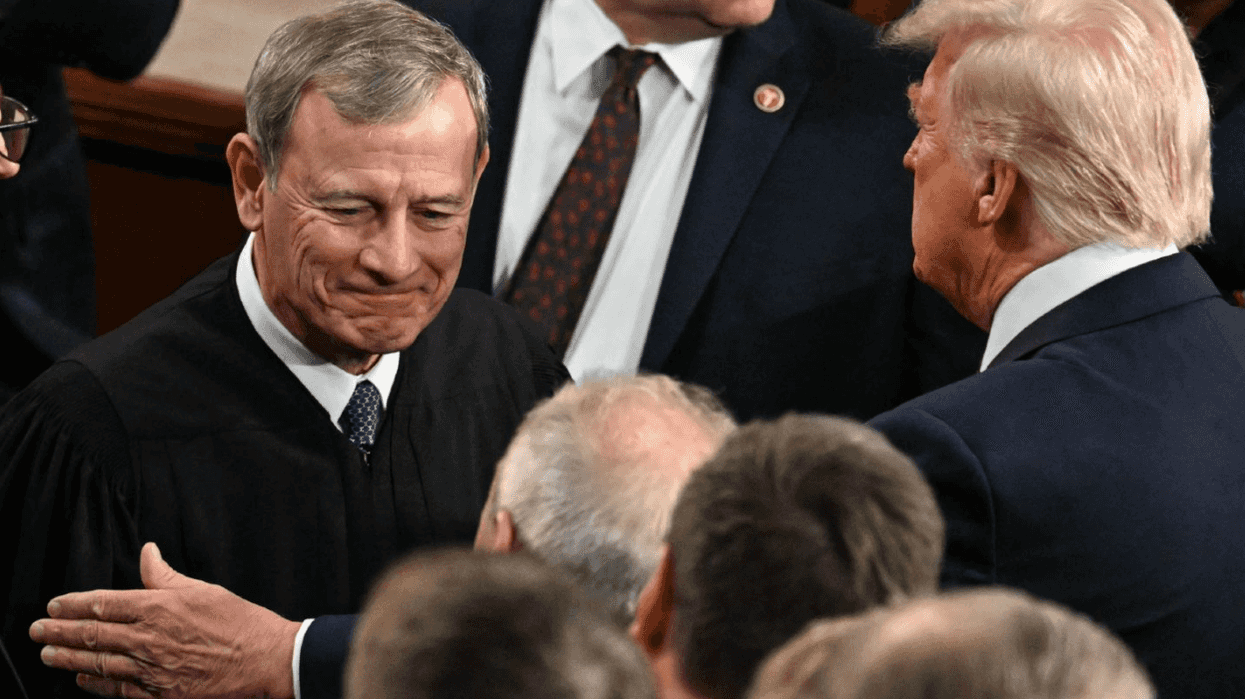
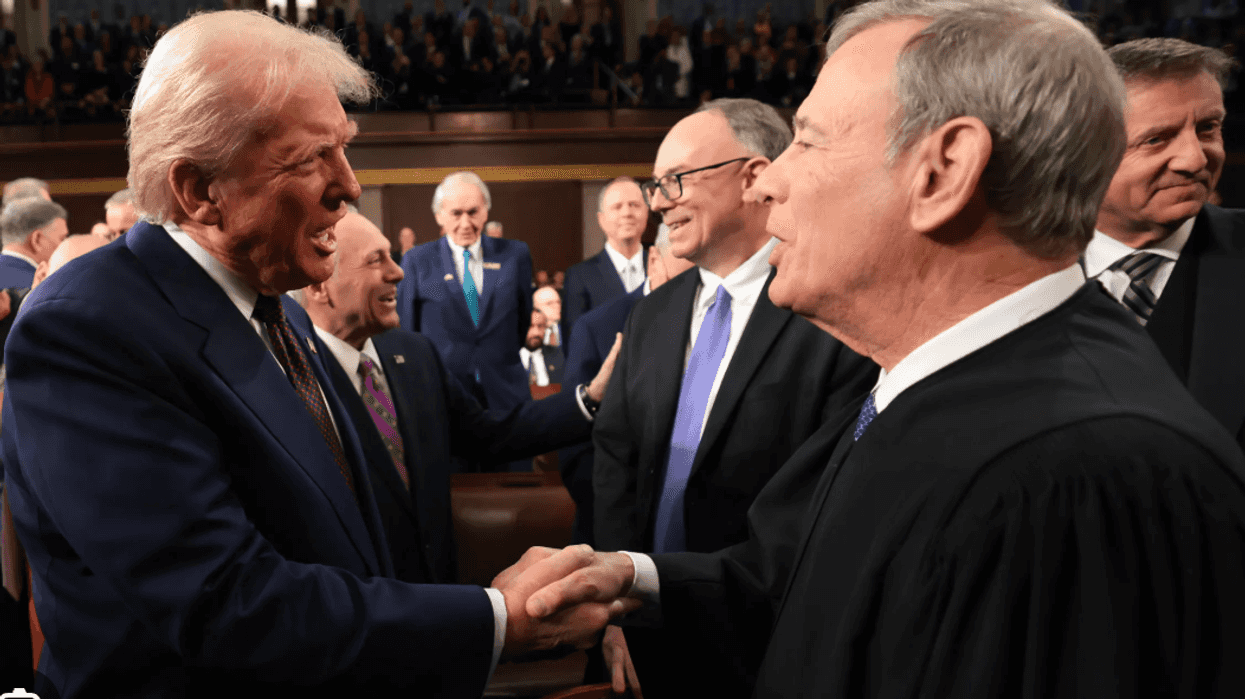
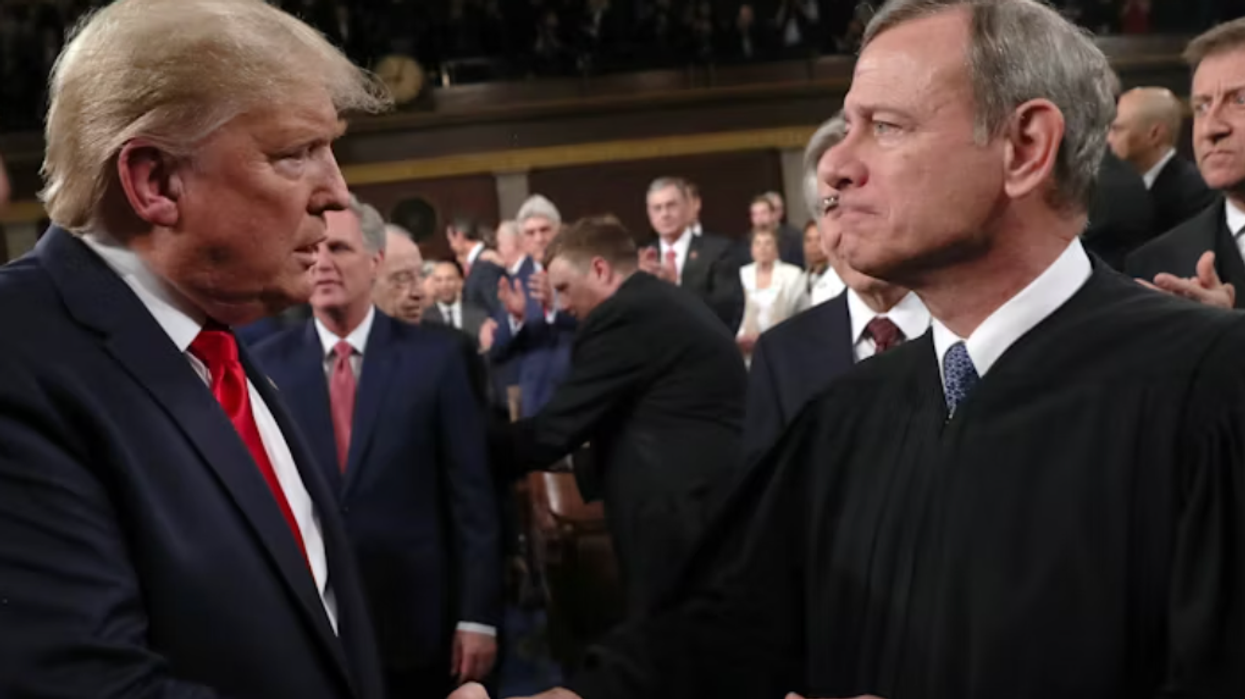
Conservatives have long insisted that independent agencies constitute a “headless” fourth branch of government that cuts against the grain of the tripartite constitutional scheme. Nobody has pressed that argument longer, or more patiently, than John Roberts himself. As a young Reagan White House lawyer in 1983, he wrote that “the time is ripe to reconsider the constitutional anomaly of independent agencies.”Two decades later, newly installed as chief justice, he began laying the groundwork to get there, writing in a 2010 case that without unrestricted removal power, “the President could not be held fully accountable for discharging his own responsibilities; the buck would stop somewhere else.” Seila Law followed a decade after that. On Monday, from the center seat, he finished the job he started forty years earlier, declaring flatly: “If anything more is left of Humphrey’s, we overrule it.”
It’s the same kind of strategic patience that produced his slow-motion dismantling of the Voting Rights Act—wait for a reliable majority, chip away case by case, and fully swing the hammer once the votes are no longer in doubt.
Justice Elena Kagan, almost certainly the Court’s preeminent expert in administrative law, has most carried the project of explaining the fundamental flaws and real-world damage of the Court’s evisceration of agency independence. She wrote the principal dissent in Selia Law in 2020, when the Court carved the CFPB’s single director out of Humphrey’s protection. Kagan argued, presciently, that the majority’s supposed “exceptions” to presidential removal power were, in her words, “made up for the occasion,” gerrymandered to reach the result the Court wanted. She joined Breyer’s dissent in Collins the next year, when the Court extended that same logic to the Federal Housing Finance Agency. And now she’s joined Sotomayor’s dissent in Slaughter, as the Court finally erased the unanimous decision in Humphrey’s Executor.
Six years ago, Seila Law arrived as a sort of exception eating the rule, one bite at a time. Now there’s no rule left to eat, just a poorly reasoned carveout of the Fed.
It’s important as well to assess the breadth of the damage to the administrative state that the Court now has green-lighted. It’s not just a matter of the firings that will actually happen, though there will be plenty of those: nothing excites Trump more than the power of saying “you’re fired.”
But the impact will be broader and more corrosive. An expert at the Nuclear Regulatory Commission deciding whether a reactor is safe, an economist weighing a rate decision, a scientist evaluating a vaccine—all of them now know that the “wrong” finding, the politically inconvenient one, can get them sacked at will, no cause required. You don’t have to fire very many people to make everyone else flinch. That’s the thumb on the scale: toward partisan convenience and away from independent expertise, exactly the trade the people who built these agencies thought they had foreclosed for good.
I want to close with a word on the term-ending decision in the birthright citizenship case, Trump v. Barbara, because it is of a piece with the more accurate narrative of the executive power cases. The case is likely going to get covered today as the big Trump rebuke of the term, and on one level, that’s fair. Roberts wrote for five justices holding that children born here to parents who are undocumented or here temporarily are citizens, full stop, exactly what the text of the Fourteenth Amendment says.But it’s stunning and stomach-turning that four justices were ready to say otherwise.
Thomas, in a cribbed, nasty opinion, argued the Fourteenth Amendment was really only ever about overruling Dred Scott and doesn’t mean what it plainly says. And Kavanaugh, presenting himself as the careful institutionalist, concurred in the judgment but argued the real problem is only statutory—that Congress could amend the citizenship statute tomorrow to carve out children of undocumented parents, fully consistent with the Constitution as he reads it. But there is no such position consistent with the Constitution: the question is always, and only, whether people are born here and are subject to the jurisdiction of the United States. If so, they are citizens by the plain command of the constitutional text
Trump noticed within hours, taking to Truth Social, announcing that “no long and unwieldy Constitutional Amendment is necessary,” that Congress should “start TODAY” on legislation ending birthright citizenship, with his “Complete and Total Support.” That’s not freelancing. That’s Trump reading Kavanaugh’s opinion correctly and picking up exactly the tool the Court left sitting on the table for him.
So yes, we dodged a bullet. But it landed in the vicinity, close enough to feel the whistle of it. A case this easy, this dictated by text, this nearly self-evident—and four members of the Supreme Court were willing to read it the other way. That’s in many ways the bigger story.
It’s in fact the same story, told twice in two days: a court inclined to bend toward the administration’s preferred outcome whenever doctrine gives it the slightest room to do so, and restrained by margins more thin, fragile, and narrow than the headlines suggest.
Harry Litman is a former United States Attorney and the executive producer and host of the Talking Feds podcast. He has taught law at UCLA, Berkeley, and Georgetown and served as a deputy assistant attorney general in the Clinton Administration. Please consider subscribing to Talking Feds on Substack.
Reprinted with permission from Talking Feds.