Tag: market
First Family? The Trumps Are Much More Like A Mafia Family

First Family? The Trumps Are Much More Like A Mafia Family

Donald Trump's defenders have taken great offense to suspicions by Democrats and others that the Trump family and its close circle are doing insider trading to profit from market convulsions. There's no "proof," they say.

It's true that there's been no proof so far, but there's surely enough smoke to warrant an investigation. Problem is, the Trump administration has fired the investigators or replaced them with people who won't investigate. To quote a Wall Street Journal headline, "Trump Administration Retreats from White-Collar Criminal Enforcement."

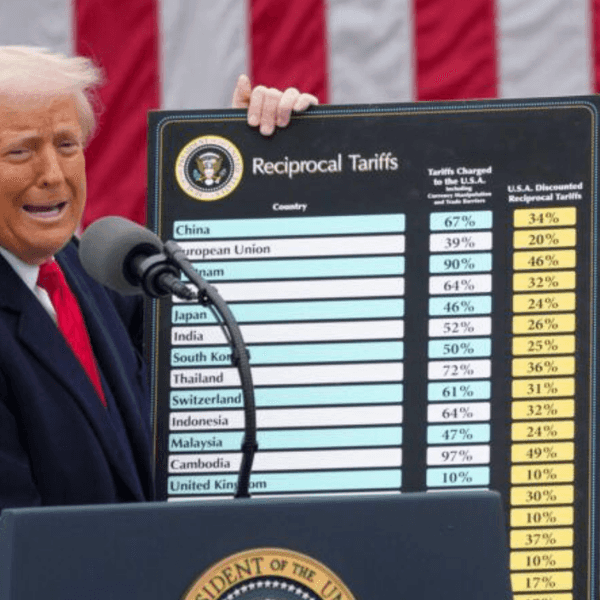
Whence comes the smoke? For starters, it comes from the total lack of consistency in Trump's pronouncements on tariffs. The administration on Friday announced that iPhones, laptops and other tech products would be exempt from the "so-called reciprocal tariffs" against China that run as high as 145%, the Journal noted. "But on Sunday morning Commerce Secretary Howard Lutnick said tariffs on electronic goods would go up again in the future."

See the game? When Trump announces new tariffs, stock prices crater. When he announces a retreat, the indices soar. To keep the game going, there always must be the threat of a reversal that would send the markets in another direction. And how nice it would be to become one of the insiders who get a heads-up right before announcements are made.

But one investment that stopped jumping at every hint of trade sanity: U.S. Treasury securities. Once considered the world's safest place to keep money at times of economic stress, the world's investors are moving out of U.S. government bonds. They now see America as an increasingly unstable country no longer governed by the old rules of capitalism but by crony and family interests. And extortion.

If you don't deliver a bag of gold for my inauguration, I might hurt your business. Or, you could also pay Melania an outlandish $40 million for her documentary, Jeff Bezos, and I'll be nice to Amazon. You could also buy my crypto.

Wall Street Journal, thank you again for yet another headline: "Trump's $1 Billion Law Firm Deals Are the Work of His Personal Lawyer." That would be Boris Epshteyn, indicted in Arizona for trying to overturn Trump's 2020 election loss in that state. And he has pleaded guilty to disorderly conduct in a bar.

Epshteyn doesn't work for the government. He doesn't even have a government email address. But he's been shaking down law firms deemed opposed to the Trump agenda for pro bono, that is, free, work. On Friday alone, five law firms submitted and agreed to hand over about $600 million in legal services, gratis. Several law firms have hired Trump-friendly lobbyists.

Others, however, have resisted the intimidation. Law firms have every right to represent clients opposed to actions by the Trump or any other administration.

"But what about Hunter's laptop?" some will ask. Don't even try that.

Observe Trump's mafia-style locutions, like, "You can do it the easy way, or you can do it the hard way." Or, "These countries are kissing my ass." It's important in the mob mentality that extortion be blatant.

Astounding how the MAGA right accuses anyone they disagree with of being a "socialist" and then throws into the dumpster the guardrails and respect for impersonal decisions that help capitalism function.

Four years ago, Trump called crypto "a scam." He told Fox News that he objected to crypto because it competes with the U.S. dollar. But Trump has a long history of regarding a scam as an opportunity. Trump is now deregulating crypto as his family goes into everything from bitcoin mining to stablecoins.

The people's business has been given over to a family's business. Small wonder that the free world is bailing out of America.

Reprinted with permission from Creators.
Donald Trump

As Stocks Spike Upward, Rumors Surge Over Insider Trading

After one of the best days on Wall Street since World War II, fueled by President Donald Trump and his team's conflicting messages and actions on tariffs, questions are swirling over possible insider trading, market manipulation, and "pump and dump" schemes.

President Trump's announcement that he is pausing most of the increased tariffs that went into effect at midnight was met with glee by investors but with questions by critics who note that the President, just minutes after the markets opened Wednesday morning, had declared it a "great time to buy." Less than four hours later, upon news breaking of his "pause" announcement, stock prices surged.

The Dow closed up almost 3000 points, and the S&P 500 surged 9.5 percent, its biggest increase since 2008.

Some critics say the optics are even worse given that Treasury Secretary Scott Bessent, following the President’s market-shaking “pause” announcement, reportedly told reporters it had been the plan all along.

“Is this market manipulation?" asked Rep. Steven Horsford (D-NV), in a hearing Thursday afternoon, questioning Trump Trade Representative Jamieson Greer.

"No," Greer replied.

"Why not? If it was a plan, if it was always a plan, how is this not market manipulation?" Horsford insisted, appearing to refer to Secretary Bessent's prior remarks.

"It's not market manipulation, sir," Greer added.

"Well, then what is it?" an angered Horsford demanded. "'Cause it sure is not a strategy."

"We're trying to reset the global trade system," Greer continued.

"What has that done?" Horsford interjected. "How have you achieved any of that? But to enact enormous harm on the American people, which was our concern from the very beginning, Tariffs are a tool. It can be used in the appropriate way to protect U.S. jobs and small businesses. But that's not what this does. So, if it's not market manipulation, what is it? Who's benefiting? What billionaire just got richer?"

"But meanwhile, the Speaker is rushing to the floor to pass a budget reconciliation to screw America by passing the biggest tax cut in history — on the backs of the American people? W.T.F.! Who's in charge? Because it's sure doesn't look like it's the trade representative. You just got the rug pulled out from under you."

Journalist Ahmed Eldin writes, "Trump tells followers to buy when market opens, then hours later, he pauses tariffs — stocks surge. Totally normal! Just your average day of legal-ish insider trading and market manipulation. Corruption is trading at an all-time high."

On Wednesday afternoon, Sen. Adam Schiff (D-CA) announced that he will be "writing to the White House to demand who knew in advance that the president was once again going to flip flop on tariffs —and are people cashing in?"

"There is just all too much opportunity for people in the White House and the administration to be insider trading and you can't put it past them for a minute," he said. "I think Congress should do an investigation into this, but we're gonna demand answers from the administration."'

"This will come out," Schiff vowed, "but an administration that has their own meme coins and has already engaged in self interested dealing with Elon is 'DOGEing' agencies that are doing oversight in his own businesses, and that kind of corrupt climate, you have to assume the worst, and we're gonna try to find out."

Attorney Jackie Singh, a cybersecurity, privacy, and cybercrime expert, posted a CNBC screenshot with the headline: "White House insists Trump's tariff reversal was his strategy all along."

"Yes," she writes, "pump & dump schemes were previously an exclusive realm of fraudsters, and considered prosecutable criminal activity–Now neatly employed by the President of the United States (also a fraudster)."

Political strategist Chris D. Jackson writes, "So he caved after he said he wouldn't. Was this all a big market manipulation scheme?"

International security analyst Matthew VanDyke insisted the Trump administration "is going to be investigated for market manipulation."

"Somebody just made BILLIONS off this tariff-based manipulation of the markets," noted attorney Tristan Snell, who prosecuted the Trump University case for the State of New York. "And it wasn’t any of us."

"Historian here," writes Professor of history Manisha Sinha, "while they are tanking the U.S. economy the White House and Trumps cronies are making millions from market manipulation and speculation."

SiriusXM host John Fugelsang wrote: "This isn't The Art of the Deal. It's insider trading with a bad comb-over."

Watch the videos above or at this link.

Reprinted with permission from Alternet.

Factbox: Market Participants React To U.S. Presidential Debate

Factbox: Market Participants React To U.S. Presidential Debate

(Reuters) – Democrat Hillary Clinton and Republican Donald Trump traded barbs and accusations Monday night in the first debate between the two ahead of the Nov. 8 U.S. presidential election.

Financial market participants followed the event closely, and markets were on the move throughout. U.S. equity index futures turned from modestly negative as the event began to a gain of more than 14 points by early Tuesday morning.

In currencies, the Mexican peso was a big mover, gaining more than 1.7 percent against the dollar during the event. It has been dubbed the “Trump thermometer” because of his campaign pledge to build a wall along the border with Mexico to prevent illegal immigration and to renegotiate the North American Free Trade Agreement.

Following is a compilation of reaction to the debate from investors, economists and financial market analysts.

FACTBOX: Swing states that may determine the election: http://reut.rs/1UhE642

MORE COVERAGE: cpurl://apps.cp./cms/?pageId=us-2016

COMMENTS:JACK ABLIN, CHIEF INVESTMENT OFFICER AT BMO PRIVATE BANK IN CHICAGO:

“Investors celebrated that Hillary didn’t lose. Market trading higher and the peso is strengthening.”

“Hillary came through the debate unscathed. Trump spent more time on the defensive.” BRIAN JACOBSEN, CHIEF PORTFOLIO STRATEGIST, WELLS FARGO FUNDS MANAGEMENT, MENOMONEE FALLS, WISCONSIN:

“I’m not sure I learned anything new listening to the debate. Neither candidate imploded, but based on the strengthening of the Mexican Peso during the debate, I think this round goes to Clinton.”

RANDY FREDERICK, MANAGING DIRECTOR, TRADING AND DERIVATIVES, CHARLES SCHWAB, AUSTIN, TEXAS:

“The Positive reaction in the (equities) futures markets probably implies that Hillary Clinton was perceived as the winner. The market is often said to dislike uncertainty, and most experts seem to consider Donald Trump as the more uncertain candidate. Things could certainly change by morning, and a downturn in the futures between now and morning would likely imply an overnight shift in favor of Trump. I would be surprised to see that.”

PETER KENNY, SENIOR MARKET STRATEGIST, GLOBAL MARKETS ADVISORY GROUP, NEW YORK:

“Both futures and the Mexican peso are accurate indicators of how markets interpreted the debates. Both moved only modestly but both also moved in tandem – higher. I believe that investors pricing in the odds of either candidate winning. Modest positive moves suggest that the Clinton campaign both managed expectations and delivered on beating them. The fear for investors was that she would either; have some physical issue, look weak or have an excuse for one or both. She looked sharp, on point and clearly delivered on a message and style that reassured markets. The Mexican peso’s rise in the time frame of the debate underscores that. The Mexican peso has risen but largely fallen in lock step with the perception of (Clinton’s) prospects for obvious reasons given (Trump’s) take on NAFTA.”

“I would suggest that the moves in both instruments were only modest but that we may see equity markets attempt at a reversal from today’s drubbing. If that occurs, it will likely have a short shelf life.”

BRIAN BATTLE, DIRECTOR OF TRADING, PERFORMANCE TRUST CAPITAL PARTNERS, CHICAGO:

“Debate really was not outside expectations. Trump was Trump and Clinton kept calm and seemed bemused.

“It was underwhelming on policy and there were no gaffes, or revelations. It was a personality debate, not a policy discussion.”

AARON JETT, VICE PRESIDENT, GLOBAL EQUITY RESEARCH, BEL AIR INVESTMENT ADVISORS, LOS ANGELES:

“The market wants Hillary to win. The better she does (or the worse Trump does) the better the market will do in the short term. She did well enough to sustain the market for now. She did fine and Trump rambled on at times making her look better. We should gain back some of what we lost on Monday.”

J.J. KINAHAN, CHIEF STRATEGIST, TD AMERITRADE, CHICAGO:

“It is interesting that in a debate that was so full of negatives from both sides, the result in the Stock Index Futures was very positive. I guess it does show that some positives can come from an absolute free for all. I don’t know that we learned much about the candidates but the market definitely liked it. Don’t forget in the middle of this we also had some numbers showing slightly better growth than previously expected and that also helped the last 5 points or so in the futures rally.

“Finally after a weak day some of this may just be people covering their risk overnight. We did see the Mexican peso rally during the debate although it has been much weaker over the last few weeks as the rhetoric did not seem as strong as we have seen earlier.”

MOHAMED EL-ERIAN, CHIEF ECONOMIC ADVISER, ALLIANZ, NEWPORT BEACH, CALIFORNIA:

“While both candidates spoke to the importance of higher economic growth whose benefits are shared more broadly, the debate highlighted their different approaches to tax policies and what ultimately delivers greater prosperity.”

HUGH JOHNSON, CHAIRMAN AND CHIEF INVESTMENT OFFICER, HUGH JOHNSON ADVISORS, ALBANY, NEW YORK:

“Both presented different views on reviving the economy. Secretary Clinton’s tax and spending plans were well articulated and well thought out. Trump’s thoughts that included significant tax cuts and implicit promises of infrastructure spending were emotionally appealing but not nearly as well thought out or economically sensible. Each will appeal to different sets of voters. A good example of Trump’s emotional, yet uninformed, thoughts were his comments (a) that the recovery was the ‘worst’ ever, (b) that Janet Yellen was political, (b) the rise in stock prices has been a bubble that would ‘burst’ if interest rates were increased.

“In my view Ms Clinton presented herself as being far more informed and presidential while Trump presented himself as being quite uninformed but emotionally appealing. I would be inclined to give Secretary Clinton a modest edge although Trump did a good job presenting himself as the candidate of change.

“Her stamina answer was a real good – close to a clincher.”

JEFFREY GUNDLACH, CHIEF EXECUTIVE, DOUBLELINE CAPITAL, LOS ANGELES:

“It’s the establishment versus the anti-establishment. No one ‘wins’ a debate in September. Trump did himself a little bit of good, and set up the later debates to his advantage.”

DAN IVASCYN, GROUP CHIEF INVESTMENT OFFICER, PIMCO, NEWPORT BEACH, CALIFORNIA:

“We continue to believe a Clinton victory will be the most likely outcome. Nothing tonight to change that view.”

MARKET REACTION:

STOCKS: S&P 500 emini futures gained ground over the course of the debate, with the contract price moving from down 5 points as the event began to up 14 points by early Tuesday morning, a few hours after it finished.

BONDS: 2- and 10-year Treasury yields rose modestly

FOREX: The Mexican peso gained 1.7 percent against the dollar. The dollar index, meanwhile, was little changed as were exchange levels against the yen and euro

(Americas Economics and Markets Desk; +1-646 223-6300)

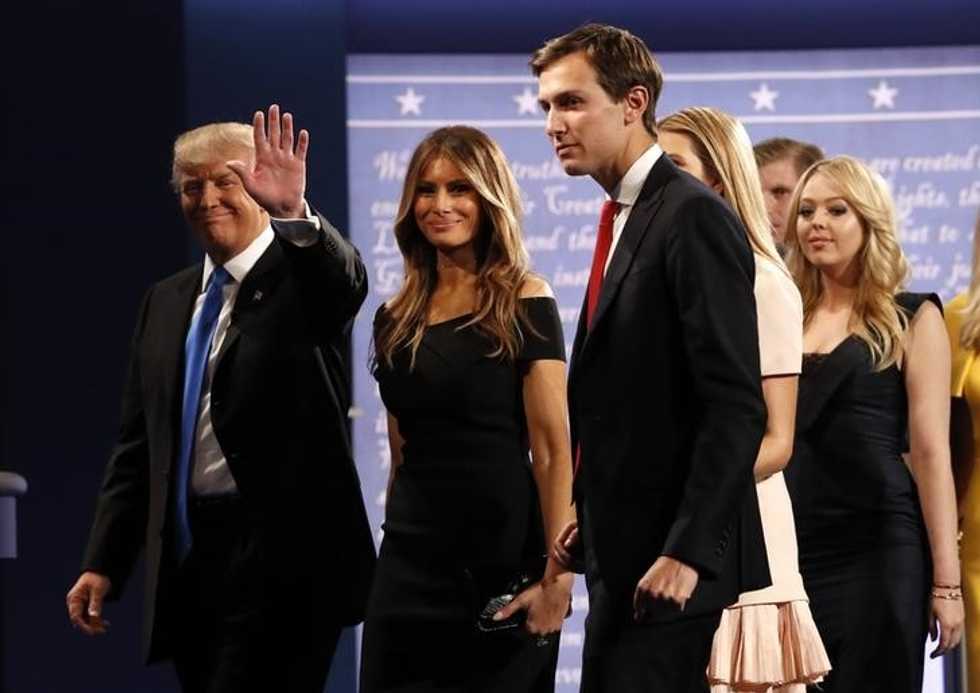
Photo: Republican U.S. presidential nominee Donald Trump is accompanied by his relatives, including his wife Melania (2nd from L) at the conclusion of the first debate with Democratic U.S. presidential nominee Hillary Clinton at Hofstra University in Hempstead, New York, U.S., September 26, 2016. REUTERS/Brian Snyder

A Trump Presidency Would Sink All Boats

A Trump Presidency Would Sink All Boats

Hello, investors. Come join the foreign policy experts in daily panic attacks over what a President Donald Trump would mean for your world. What does one do about a candidate whose tax plan would send America into the fiscal abyss — who flaps lips about not making good on the national debt?

Should we be investing in the makers of Xanax and Klonopin? And on the personal side, are there enough benzodiazepines to go around?

We’re not talking just about the very rich. Anyone with a retirement account or a small portfolio has something to lose. The economic consensus is that a Trump presidency would sink all boats. And that certainly applies to Trump’s own economically struggling followers in the least seaworthy craft.

“Most Rust Belt working-class Americans don’t get it,” Bob Deitrick, CEO of Polaris Financial Partners in Westerville, Ohio, told me. “The working class thinks he’s going to stick it to the elites.”

The facts: The Trump tax plan would deliver an average tax cut of $1.3 million to those with annual incomes exceeding $3.7 million. The lowest-income households would get $128. (No missing zeros here.)

Folks in the middle would see federal taxes reduced by about $2,700, which sounds nice but would come out of their own hide. Medicare and other programs that benefit the middle class would have to be slashed. So would spending on science research, infrastructure and services essential to the U.S. economy.

Or we could skip the very deep spending cuts and see the national debt balloon by nearly 80 percent of gross domestic product, calculation courtesy of the Tax Policy Center.

Some might think that Trump’s tax plan — including the repeal of the federal tax on estates bigger than $5.43 million — would impress the income elite, but they would be wrong. In a recent poll of Fortune 500 executives, 58 percent of the respondents said they would support Hillary Clinton over Trump.

Most in this Republican-leaning group are undoubtedly asking themselves: What good is a fur-lined deck chair if the ship’s going down?

Then there are the others.

“Do middle-class Americans have any idea what could happen to the economy or the stock market if our president ever vaguely suggested defaulting on the national debt?” Deitrick asked. (His clients tend to be upper-middle-class investors.)

He recalls the summer of 2011, when a congressional game of chicken over raising the federal debt ceiling led to the possibility of a default. The Dow lost 2,400 points in a single week. And taxpayers were hit with $1.3 billion in higher borrowing costs that year alone.

Trump said on CNN that he is the “king of debt,” which in practice means he frequently doesn’t honor it. That’s why many major lenders shun him, talking of “Donald risk.”

Speaking of, Trump famously said in a Trump University interview, “I sort of hope (the real estate market crashes), because then people like me would go in and buy.”

But he also predicted that the real estate market would not tank — shortly before it did. Perhaps he never figured out there was a housing bubble. Or it was part of a clever scheme to peddle real estate courses with brochures asking, “How would you like to market-proof your financial future?”

Imagine a whole country taking on “Donald risk.”

The business community runs on stability. It can’t prosper under a showman who says crazy things and denies having said them moments later. A Trump presidency promises more chaos than a Marx Brothers movie — and you can believe it would be a lot less fun.


Follow Froma Harrop on Twitter @FromaHarrop. She can be reached at fharrop@gmail.com. To find out more about Froma Harrop and read features by other Creators writers and cartoonists, visit the Creators Web page at www.creators.com.

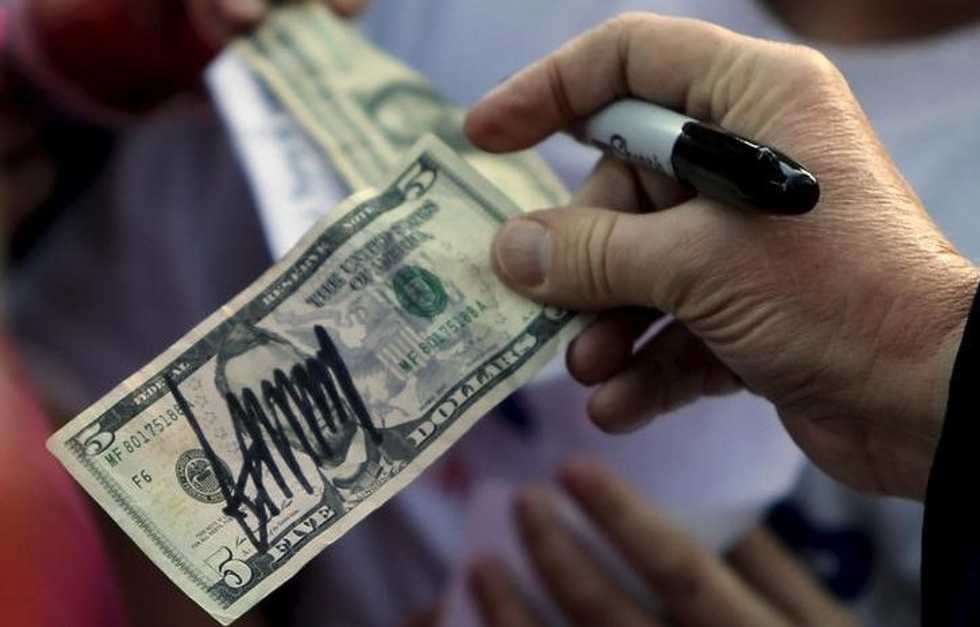
Photo: U.S. Republican presidential candidate Donald Trump hands a five-dollar bill back to a supporter after signing it for her following a rally with sportsmen in Walterboro, South Carolina February 17, 2016. REUTERS/Jonathan Ernst

Shop our Store

Headlines

Editor's Blog

Corona Virus

Trending

World