Tag: minneapolis shooting
Bondi's Department Of Obstruction Aims To Protect Killers Of Pretti And Good

Bondi's Department Of Obstruction Aims To Protect Killers Of Pretti And Good

For many weeks, we’ve been waiting for charges to emerge from Minnesota in the killings of Renee Good and Alex Pretti by masked federal agents during Operation Metro Surge. The investigation has gone conspicuously quiet.

Now we know why.

Minnesota prosecutors filed a lawsuit Tuesday in D.C. federal court that lays out what’s been happening behind the scenes. The federal government has forced Minnesota to run the gauntlet just to obtain basic evidence to move forward: Good’s car, still shrink-wrapped and unexamined in an FBI storage facility in Brooklyn Center; shell casings; forensic evidence; and multiple statements in the wake of the shooting by federal officers.

It turns out that the feds not only have failed to cooperate with the state but have gone to great effort to stonewall the state’s requests, and they continue to do so.

Minnesota has jumped through every procedural hoop the federal government has demanded. Even so, the official answer, delivered through a combination of bad-faith denials and contemptuous silence, has been: too bad.

In both the Good and Pretti killings, federal officials on the scene agreed to cooperate, then the call came from D.C. Trump called Minnesota officials “crooked.” Noem declared the state “doesn’t have any jurisdiction.” The Minnesota Bureau of Criminal Apprehension (BCA) was excluded from interviews, turned away from crime scenes, and denied even the names of the masked officers who fired. In the Pretti matter, federal agents physically blocked state investigators holding a valid judicial warrant.

The lawsuit also seeks evidence from a third non-fatal shooting of Julio Cesar Sosa-Celis. Federal authorities quickly charged Sosa-Celis with attacking the agent who shot him. DOJ then voluntarily dismissed the case in February, citing newly discovered evidence ‘materially inconsistent’ with the complaint. The reporting was blunter: the federal agents had lied under oath.

In excessive force cases, the two sovereigns have always worked in tandem: federal civil rights investigators and state homicide prosecutors pursuing parallel tracks, sharing evidence, coordinating on witnesses. Sometimes the feds go first, sometimes they hang back. Sometimes one sovereign concludes there’s no case under its law, and the other proceeds alone. But they cooperate. The evidence flows.

That is the basic operating assumption of American federalism when a law enforcement officer kills someone on a public street under circumstances that suggest they were not in reasonable fear of deadly force from the victim. That was the model here, at least initially, until Bondi, Blanche, and company put the kibosh on.

Longtime veterans of DOJ’s Civil Rights Division have told me that this is the first time they have ever seen DOJ try to block state prosecutors. DOJ has tried to block state prosecutors from proceeding with a civil rights investigation. From my experience in the field, I can second that.

Normally, a fatal shooting like Good’s would trigger an immediate investigation by the division’s Criminal Section. Instead, the administration actively blocked it, leading to the resignations of the four top DOJ officials in the section. The Department did announce, tepidly, an investigation of the Pretti shooting, but there’s no indication it’s being vigorously pursued; moreover, it’s a convenient fact the government can cite to resist sharing evidence of the incident.

Minnesota’s complaint documents over a month in which the state jumped through federal hoops to request evidence in the feds’ possession. They filed so-called “Touhy“ requests, the regulatory mechanism for seeking evidence from federal agencies. The state first directed the request to DHS, which had possession of the evidence. DHS said, “not our department; try DOJ.” Minnesota did, starting in early February. To date, DOJ has said…nothing at all.

I previously have explained that if and when Minnesota files charges in the killing, the federal government and the defendants can assert claims of supremacy clause immunity. Those arguments will turn on whether the agents reasonably believed the victims posed an immediate threat of deadly harm. So there plainly will be an opportunity for the Department to press the point if it believes the officers acted reasonably, though the arguments seem to cut violently against the evidence. But that’s not enough for the Department. It wants to scuttle any effort to bring the case to the justice system.

When the federal government denies a Touhy claim, the recourse is a challenge under the Administrative Procedure Act. Minnesota’s first two claims arise under that statute. The first lays out the long history of cooperation between the two sovereigns, and alleges that the failure to provide access to the evidence is arbitrary and capricious. The second is a similar challenge to the DOJ’s continuing non-response, and the attendant delay that frustrates the public’s interest in the prosecution of notorious shootings and threatens the degradation of evidence.

Notably, Touhy regulations don’t create any right to withhold. They govern procedure, such as where to direct a request and which official decides. The underlying statute is a housekeeping measure, not a privilege. Federal agencies still need an independent legal basis to say no.

Minnesota purposefully chose to bring the case in the district court in Washington, D.C., which provides an important advantage relative to other venues. In most circuits, a Touhy denial gets deferential review to the feds, and even if you win, it’s usually just a remand that lets the agency restate its denial more artfully. But D.C. takes a different, minority approach, which is less deferential to the agency decision.

The case has been assigned to Judge Emmett Sullivan, an exacting and no-nonsense judge with a strong independent streak. Sullivan is not reflexively anti-government, but he will not shy away from putting the Department through its paces to back up its factual assertions and legal claims.

It’s the third claim in the complaint that gets closest to the heart of what this case is really about.

The claim is brought directly under the 10th Amendment to the Constitution, which effectuates the full sovereignty of the states in our federalist system. In essence, Minnesota is arguing, with good reason, that the DOJ is giving it the Rodney Dangerfield treatment, trying to foil the state’s critical sovereign responsibility to investigate and prosecute a serious crime within its borders.

But while the 10th Amendment incorporates the right principle here, it has no real berth in the Supreme Court’s decisions. The Court has made clear that the 10th Amendment precludes federal demands on states to do even small tasks; but the Court hasn’t used the amendment to force the federal government to take action at the behest of the states, such as providing access to evidence. This case may force courts to take up the issue.

Importantly, even if the lawsuit falls short, it doesn’t spell the end of the prosecutions. The Pretti and Good killings are a powerful illustration of how excessive force cases have changed completely in the smartphone era, where nearly everyone on the scene has a good video camera.

I worked on the Rodney King case, where the federal prosecutors had to make do with one grainy video. Here, there not only are dozens of excellent videos, but they can be assembled to cover all angles and moments, such as the fatal shot Jonathan Ross fired at Renee Good through the driver’s window. That evidence, plus eyewitness testimony, can go a long way toward compensating for the absence of, for example, the car. And if the defense tries to make a big deal out of the absence of the evidence the feds have withheld, a court should instruct the jury that it’s the feds’ decision that kept the evidence from them.

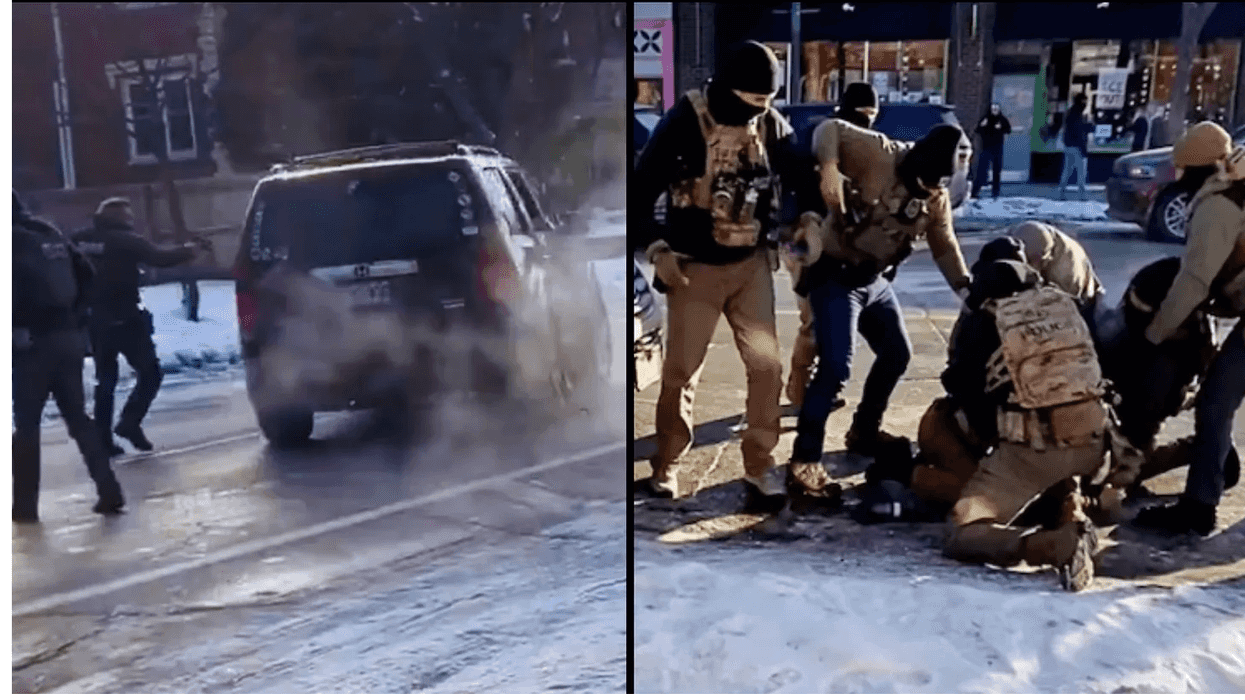
Have another look at the harrowing videos — images that appalled a nation — and watch the federal agents gun down Good and Pretti on public streets under circumstances that put the lie to the feds’ reflexive claim that the victims were deadly threats. Then consider that the DOJ is pulling out all stops to prevent justice from being done, in any court. The obvious reaction to this obstruction campaign is disgust.

Harry Litman is a former United States Attorney and the executive producer and host of the Talking Feds podcast. He has taught law at UCLA, Berkeley, and Georgetown and served as a deputy assistant attorney general in the Clinton Administration. Please consider subscribing to Talking Feds on Substack.

Reprinted with permission from Talking Feds.
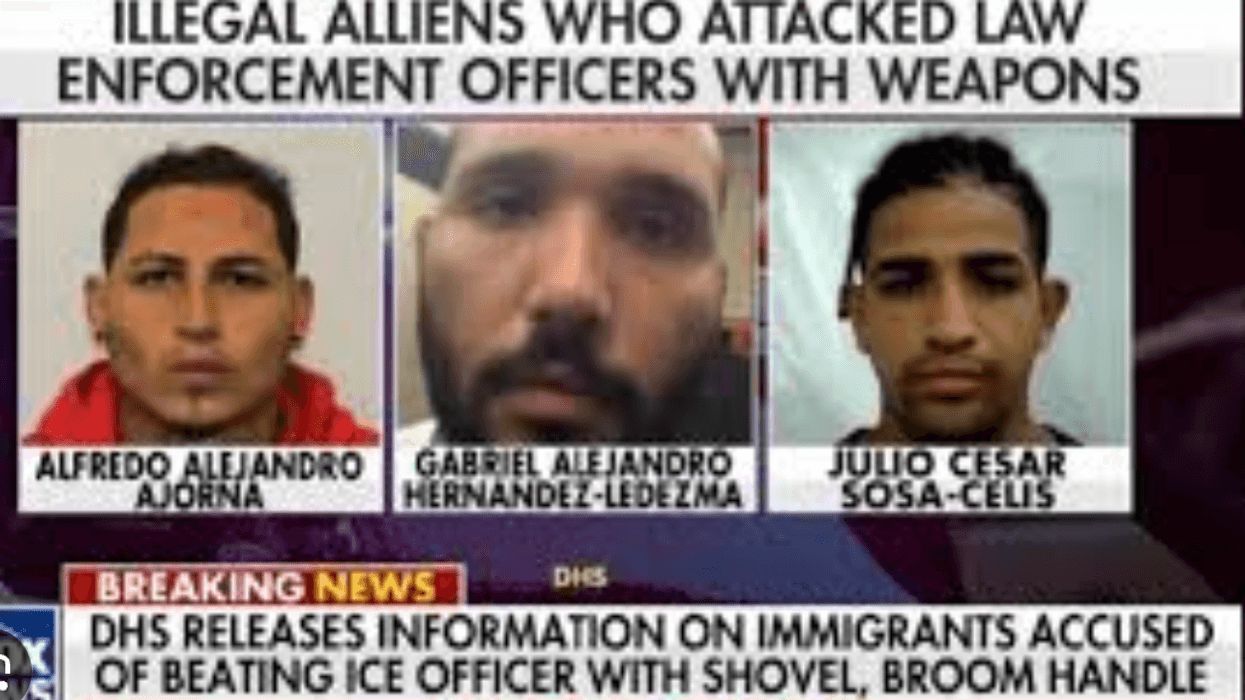
Prosecutors Drop Charges Against Immigrants Accused Of Attack On ICE Officer

Prosecutors Drop Charges Against Immigrants Accused Of Attack On ICE Officer

In mid-January, right-wing media figures seized on a story that could serve as a narrative reset after an

Immigration and Customs Enforcement agent shot and killed Renee Good in Minneapolis. Amid rising backlash to the Trump administration’s mass deportation operation across Minnesota, MAGA pundits hyped claims from the Department of Homeland Security that Venezuelan immigrants had attacked federal agents with a shovel and broomstick. Federal agents shot in response, the story went, wounding one of the men accused in the attack.

Since then, those claims have totally fallen apart, and on February 12 prosecutors asked the presiding judge to dismiss the case with prejudice. The prosecutor wrote that “newly discovered evidence in this matter is materially inconsistent with the allegations” put forward by the government in official filings and testimony.

Right-wing media coverage of the story was unhinged, and it followed a clear, established pattern of hyping dubious initial government claims that would later turn out to be false.

As news of the incident broke on January 14, Fox News correspondent Bill Melugin called in to Sean Hannity’s show to read a DHS statement he’d been given “literally 45 seconds ago” and to lay the foundation for the coverage to come, a role he often plays in the conservative media ecosystem.

“While the subject and law enforcement were in a struggle on the ground, two subjects came out of a nearby apartment and also attacked the law enforcement officer with a snow shovel and broom handle,” Melugin read. “As the officer was being ambushed and attacked by the two individuals, the original subject got loose and began striking the officer with a shovel or broomstick.”

“Fearing for his life and safety as he was being ambushed by three individuals, the officer fired defensive shots to defend his life,” Melugin continued.

The narrative was set, and the next morning Fox News’ Fox & Friends weighed in on the story.

“You come at these guys and these women with a shovel and if you are being apprehended and try to run away or drive over them, you will be featured in retaliation videos,” said host Brian Kilmeade. “That's what this is about."

Kilmeade’s co-host, Steve Doocy, also bought the government’s line. “You cannot hit a cop with a shovel or a broom. You just can't do that. It is against the law,” Doocy said. “It is terrible when anybody gets shot. But, unfortunately, a lot of people don't realize, if you break the law -- when you're breaking the law, there's going to be repercussions.”

Co-host Ainsley Earhart suggested capital punishment should be on the table. “When we were growing up, if you harmed a police officer, if you killed a police officer, in South Carolina you got the electric chair,” Earhart said. “When we were growing up, you didn't go after police with your car. You listened to what they said.”

Guest Trey Gowdy, who hosts another Fox show, said the supposed attack and the broader resistance to ICE’s presence gave President Donald Trump “all the justification” he needed to invoke the Insurrection Act in Minnesota, thereby deploying active military units against civilians.

The tenor of the coverage was similar elsewhere, and sometimes even more irresponsible.

On the podcast of former Trump adviser Steve Bannon, Kevin Posobiec — brother of MAGA influencer Jack Posobiec — said an immigrant was “shot in the leg because he was trying to kill an ICE agent with a shovel.”

At The Daily Wire, host Matt Walsh claimed that after a foot chase, “the illegal alien began attacking the officers and then two individuals, apparently family members of this person, came out of a nearby apartment and began ambushing the officers with a shovel and a broom handle.”

Walsh called it “another clear-cut, totally justified shooting by law enforcement.”

Walsh’s colleague, Michael Knowles, said, “The poor ICE agents now getting ambushed — they take out shovels, they start beating this guy with a shovel, and, so, luckily, happily, the ICE agent was able to get his gun out and shoot the Venezuelan.”

Although the exact details of what happened in the incident remain unclear, the prosecutor’s own words make it plain that the government's account was false. Less than two weeks after the shooting, two Border Patrol agents would shoot and kill Alex Pretti. Right-wing media tried to justify that shooting as well.

Reprinted with permission from Media Matters

Fight The MAGA Bully -- And See How He Keeps Backing Down

Fight The MAGA Bully -- And See How He Keeps Backing Down

Does it sometimes seem as though too many people have never learned the lessons of the schoolyard? If you capitulate to a bully, you will be bullied forever. If you stand up to him, he will back down. What's true on the playground is also true in the office, in politics and in international relations.

Standing up to bullies is not free of risk. You might get bloodied in the process. But afterward, the bully, having learned that there is a price, will hesitate to push you around, whereas if you fail to stand up to him, he will grow ever more menacing.

All of the bowing and scraping before the reelected Donald Trump last year by corporate leaders, university presidents, major law firms, leading journalistic outlets and European allies wasn't just demoralizing — it was foolish. If he had met firm opposition in all directions, his power would have been diminished. Each pushback would have inspired others, creating a flood. Instead, we saw a cascade in the other direction — a cascade of capitulation.

But the other path — etched in tragedy and martyrdom in Minneapolis — has shown repeated success. When you stand up to the bully, he backs down.

We don't yet know from whence a national political leader will arise, but the people of Minneapolis have reminded us that this country is still planted thick with inspiring, selfless, heroic people who will put their very lives on the line rather than submit to MAGA's naked barbarism. Renee Good, Alex Pretti and so many others who have braved bitter cold, pepper spray and tear gas and even being shot are the best of us. All honor to them.

That's the spiritual message of Minneapolis. The political message is this: The bully backed down. In the face of opposition not just from his opponents but from some of his allies who found that their vocal cords were actually operative, Trump announced that the Border Patrol ogre Greg Bovino was being demoted and removed from Minneapolis in favor of the slightly less brutal Tom Homan. Republican Sens. John Curtis (R-UT), Bill Cassidy (R-LA), Susan Collins (R-ME), Lisa Murkowski (R-AL), Thom Tillis (R-NC), Dave McCormick (R-PA) and Jerry Moran (R-KS) called for investigations of Pretti's murder. Sen. Rand Paul (R-KY) has asked the heads of ICE, CBP and USCIS to testify on the Hill.

Before there was Minneapolis, there was Chicago. Recall that in September, Trump posted that "I love the smell of deportations in the morning. ... Chicago about to find out why it's called the Department of WAR."

The governor of Illinois struck back, vowing that his state "won't be intimidated by a wannabe dictator." Other Illinois elected officials joined in. Thousands thronged the streets in protest, and lawsuits were filed challenging the legality of Trump's National Guard deployment. Eventually, the courts ruled against the administration, and Trump backed down.

Trump's climbdown from the asinine "Liberation Day" tariffs was so swift that it inspired the acronym TACO, for Trump Always Chickens Out. The pushback in that case came from the markets, but the principle holds — when there's resistance, Trump can be rocked back on his heels.

Trump's operating assumption on trade has always been that no one can counter U.S. market power and must tamely accept our terms. But in October, China reminded him that it isn't 1970 anymore and they have cards to play as well. They announced new restrictions on the distribution of rare earths. This is a vulnerability for the United States, which acquires 70 percent of these minerals from China. When the two sides met in South Korea in late October, the Trump administration backed off its threats and agreed to reduce its tariffs on China to levels comparable to other Asian nations. As one analyst put it, "Xi was ready for Trump in his second term and has a powerful weapon in rare earths. China is getting the better of the US in these recent truce negotiations."

Finally, the catastrophic Greenland threats, talking menacingly of getting the island "the easy way or the hard way," demonstrated to the Europeans that appeasing this ravenous bundle of appetites was not a successful strategy. Europe got tough and Trump deflated — yet further proof that standing up to him works. Our (former?) allies let it be known that they were finished capitulating. Eight NATO nations deployed troops to Greenland to participate in military exercises. The Danish prime minister declared that "Europe will not be blackmailed," and adding teeth to this position, a number of European diplomats spoke openly of deploying Europe's "trade bazooka" that would limit intellectual property protections for American businesses and deprive U.S. companies of access to public procurement opportunities in Europe, among other things. Trump caved.

This is not to say that Trump is a paper tiger. He is erratic, frequently irrational, flagrantly immoral and endlessly acquisitive. If he could confiscate all the wealth of the world, he would do so and still be unsatisfied. He's dangerous — but the only counter is to resist with everything you've got. It's the right thing to do, and it works.

Mona Charen is policy editor of The Bulwark and host of the "Beg to Differ" podcast. Her new book, Hard Right: The GOP's Drift Toward Extremism, is available now.

Reprinted with permission from Creators


Bill Melugin Fox

After 36 Hours Spent Excusing Alex Pretti Killing, Fox News Suddenly Spins Around

On Sunday evening, Fox News correspondent Bill Melugin published a lengthy report detailing internal dissent among his federal immigration enforcement sources regarding the narrative pushed by Department of Homeland Security leaders after Border Patrol officers gunned down Alex Pretti, an ICU nurse who had been videotaping their activities, in Minneapolis on Saturday morning.

Amid the several hundred words describing an internal schism over how DHS is messaging masked agents of the state opening fire on a man who had already been restrained, Melugin slipped in the following statement: “There is no indication Pretti was there to murder law enforcement, as videos appear to show he never drew his holstered firearm.”

Melugin’s stark acknowledgement was whiplash-inducing for anyone who had been following Fox’s on-air coverage of Pretti’s killing up to that point, and it marked the start of a dramatic shift in the network’s treatment of the case.

Fox spent Saturday and much of Sunday blaming the victim and local Democrats for his death while excusing and even valorizing his executioners. In doing so the network was following in the footsteps of the high-ranking administration officials who baselessly argued that Pretti was a “would-be assassin” engaged in “domestic terrorism.” Melugin himself was the vehicle DHS used to launder its excuse that Pretti “was armed.”

And notably, some Fox contributors repeatedly justified Pretti’s killing by going beyond the official comment to allege that he had drawn the gun he was reportedly legally carrying and that he even pointed it at the Border Patrol officers — the very claim Melugin said Sunday night had been disproved by videos.

The fallacy of the DHS smear of Pretti had long been clear to anyone who had reviewed videos of the shooting, triggering widespread outrage over his killing. But Melugin’s admission — and his reporting on a schism within immigration enforcement over the case — apparently provided his colleagues the permission structure they needed to abandon their narrative.

“Tomi, speak plainly with the audience right now,” Fox host Johnny Joey Jones told his co-host Tomi Lahren on Sunday night. “What we're getting from Bill — and as he cited, many of his sources are pro-what's happening as far as enforcing immigration and mass deportation — but what they're concerned with is every video we've seen so far doesn’t show him brandishing a gun, it doesn’t show him — it doesn’t substantiate the idea that he was there to commit a massacre or that he was a domestic terrorist.”

“Usually, when those words are used you usually have more than the fact that he had a gun on him as evidence, and that is what at least some officials are taking issue with,” he added.

Fox & Friends co-host Brian Kilmeade on Monday morning followed the editorial boards of Rupert Murdoch’s New York Post and Wall Street Journal in urging President Donald Trump to change course.

“I would love to see Tom Homan just be asked to go in there and settle things down,” Kilmeade said, referencing his former Fox colleague turned White House border czar, who has stressed the need for “collateral arrests” of immigrants without criminal backgrounds.

“He understands the president’s objective. He could come in with a fresh set of eyes,” Kilmeade added. “For some reason he’s been sidelined of late, and I think we could use someone to come in there and settle everything down from the Trump perspective.”

And Dana Perino, who served as press secretary to President George W. Bush and now anchors Fox’s morning “straight news” hours, stressed the need for the White House to get its facts in order and find a way to make adjustments.

She said that current White House press secretary Karoline Leavitt needed to be “very clear to the officials that we have a gigantic problem and, yes, we can say that the media is biased, and we can say that the Democrats are crazy and that they're radical and that they're ginning everything up, but we have a problem and I need better answers for you before we go to the briefing room at 1 o’clock.”

Perino added that Trump should take credit for having “arrested a lot of illegal immigrants” in Minneapolis and then send presidential envoy Steve Witkoff to the city “because I believe they need somebody that can be trusted on both sides to say, I hear you, I hear you, and here's where we're going.”

Co-host Griff Jenkins noted in response that Trump, who regularly watches Fox & Friends and often implements ideas he sees on it, had just announced that he was sending Homan to Minneapolis that night.

Perino praised Trump’s “good decision,” adding that the president understood “it’s unsustainable.” Apparently, he wasn’t the only one who came to that conclusion.

Reprinted with permission from Media Matters


Shop our Store

Headlines

Editor's Blog

Corona Virus

Trending

World