Tag: nevada
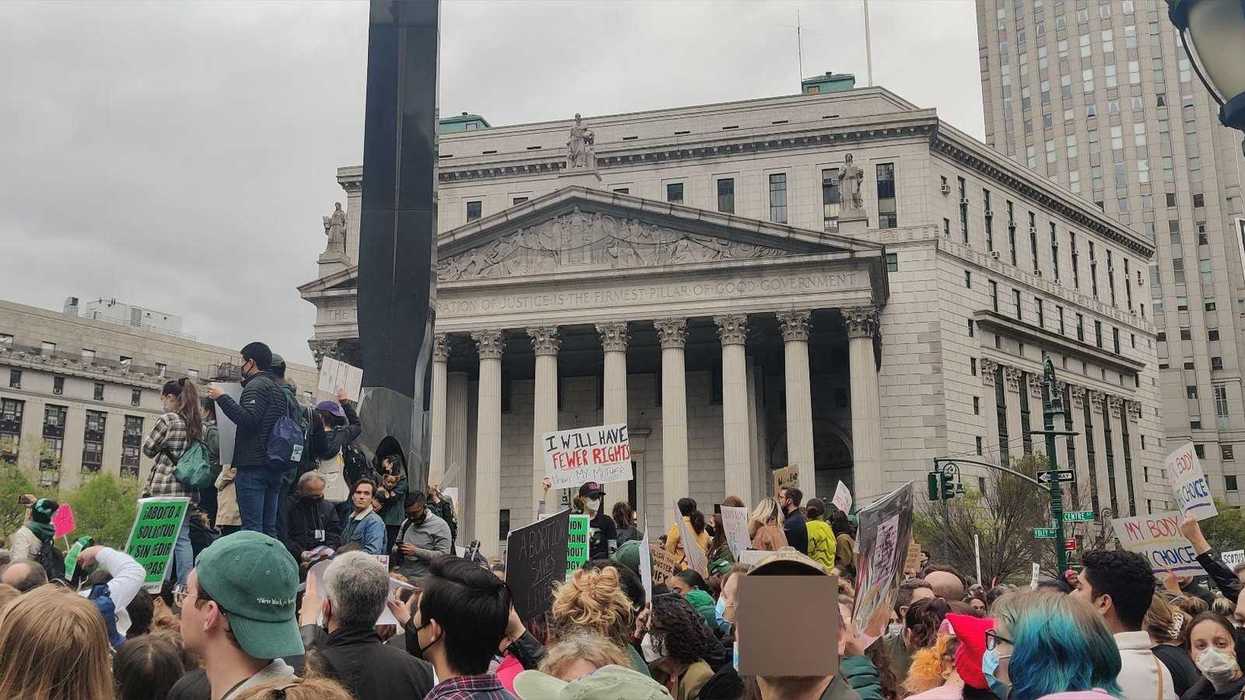
A crowd of abortion rights protesters holding signs in Foley Square in New York City

Abortion On The Ballot Again As Post-Roe Policies Evolve

By Bram Sable-Smith and Jazmin Orozco Rodriguez, KFF Health News

MAPLEWOOD, Mo. — After Missouri voters added abortion protections to the state constitution in 2024, Kelly McCoomb decided to keep her yard sign supporting the measure in the basement of her suburban St. Louis home.

Abortion access is important to McCoomb. She wants her daughter to grow up in a state where the option is available if needed, and the sign was a keepsake from the day Missourians voted to reverse the state’s near-total ban. McCoomb also couldn’t shake the feeling that she’d need to display the sign in her yard again soon.

“I have little faith in our Missouri government,” McCoomb said, sitting on her front porch.

Sure enough, just two years later, the state’s Republican-dominated legislature is asking Missouri voters to overturn the abortion protections they recently supported. The conflicting measures even have the same title: Amendment 3. But while a “yes” vote in 2024 supported adding protections to the state constitution, a “no” vote in 2026 would keep them. McCoomb covered the “YES” on her yard sign with a “NO” made from black duct tape before placing the sign back in her yard.

Voters will weigh in on abortion in Missouri, and three other states, in the November general election. Missouri is also one of two states voting on it for the second time since 2024. Nevada will vote again, too.

The spate of referendums comes after the U.S. Supreme Court overturned federal abortion protections with its 2022 decision in Dobbs v. Jackson Women’s Health Organization, leaving each state to make its own abortion policy. The result has been a patchwork of state rules with varying degrees of bans or limitations, and even a series of “shield laws” in states where abortion remains legal that aim to protect providers from prosecution in states where it's not.

“I just think there's a constitutional crisis that's coming,” said Kristi Hamrick, vice president of media and policy for the anti-abortion organization Students for Life Action.

“Can you have 50 state standards on whether or not a human being is a human being? Can you have 50 state standards on whether human beings have legal protection?” Hamrick said.

Advocacy Groups Work To Clarify Ballot Measures

That patchwork of abortion protections is the reason Nevadans for Reproductive Freedom introduced the 2024 ballot measure to enshrine the state’s law allowing abortions up to 24 weeks after conception into the state constitution, said Denise Lopez, president of the coalition.

The measure received strong support two years ago, with 64% of voters in favor. Nevada law requires two majority votes to enshrine constitutional amendments, so voters will need to support the expanded protection again in November for it to be enacted.

The Nevada ballot measure wouldn’t change the state’s existing law allowing abortions up to 24 weeks after conception. But the proposal would make it more difficult to overturn abortion access, requiring voter approval of any new ban in two elections.

Lopez said Nevadans for Reproductive Freedom has been campaigning to ensure voters are still mobilized.

“Folks care about it,” she said. “They're seeing what's happening at the national level, and they want to make sure that whatever's happening in our neighboring states, like Idaho and Utah, doesn't happen here in Nevada.”

Idaho, where a ballot measure establishing abortion rights recently qualified to go before voters in November, has one of the strictest abortion bans in the country. Voters will decide whether state statute should allow abortion through fetal viability, the point when a fetus can survive after birth, which is generally considered to be around 24 weeks.

In Utah, abortion is allowed up to 18 weeks while legal challenges to the state’s ban continue.

In Virginia, where abortion is already allowed through two trimesters of pregnancy, until 28 weeks, voters will decide whether to amend their state constitution to codify those rights.

Missouri is the only state voting this year on removing abortion protections already on the books. The measure would repeal the 2024 amendment that guaranteed abortion access through fetal viability in the state and replace it with a ban on abortions with exceptions for medical emergencies, fetal anomalies, and pregnancies resulting from rape or incest. Abortions for rape and incest would have to occur before 12 weeks of pregnancy.

Missouri was the first state to ban abortion after the Dobbs decision in 2022. At that time, abortions had already mostly ceased in the state after three decades of state regulations targeting the practice, including a 72-hour waiting period, minimum dimensions for procedure rooms and hallways in clinics that provide abortions, and a mandate that the clinicians have admitting privileges at nearby hospitals, among others. Only 150 abortions were performed in Missouri in 2021, down from 5,772 in 2011, state records show.

Even though Missouri voters backed the abortion amendment in 2024, it took nearly two years for medication abortions to resume in the state.

A Second Vote Causes Confusion

Margot Riphagen-Dunn, CEO of St. Louis-based Planned Parenthood Great Rivers, said the whiplash of a second statewide vote on abortion mirrors the confusion that patients have experienced about whether abortion is available in the state.

“Chaos is kind of the point here,” Riphagen-Dunn said, “and it is absolutely a tactic that gets in the way of being able to provide.”

The confusion has presented problems for abortion opponents in the state as well.

“I think it’s unfortunate,” said Reagan Barklage, who is a vice president of Students for Life of America and the treasurer of the Missouri Students for Life Ballot Committee. “People need to be very clear on what they’re voting for.”

Barklage said she has had to correct anti-abortion voters while out canvassing to remind them that they are voting “yes” on Amendment 3 this year even though they voted “no” on Amendment 3 last time.

“It is crazy that it ended up being even the same number. I do not think that was intentional, but we’ve got to deal with what we’ve got,” Barklage said, adding, “I hope the pro-choicers kept their yard signs from last time.”

In Maplewood, Missouri, McCoomb said she was happy that her repurposed sign supporting abortion access had been noticed.

“I hope lots of people see and remember to revote,” McCoomb said.

KFF Health News is a national newsroom that produces in-depth journalism about health issues and is one of the core operating programs at KFF—an independent source of health policy research, polling, and journalism. Learn more about KFF.

This article first appeared on KFF Health News and is republished here under a Creative Commons Attribution-NonCommercial-NoDerivatives 4.0 International License.
Cuts In Federal Funding Shut Down Vaccine Clinics Amid Measles Surge

Cuts In Federal Funding Shut Down Vaccine Clinics Amid Measles Surge

By Bram Sable-Smith and Arielle Zionts and Jackie Fortiér, KFF Health News

More than a dozen vaccination clinics were canceled in Pima County, Arizona.

So was a media blitz to bring low-income children in Washoe County, Nevada, up to date on their shots.

Planned clinics were also scuttled in Texas, Minnesota, and Washington, among other places.

Immunization efforts across the country were upended after the federal Centers for Disease Control and Prevention abruptly canceled $11.4 billion in covid-related funds for state and local health departments in late March.

A federal judge temporarily blocked the cuts last week, but many of the organizations that receive the funds said they must proceed as though they’re gone, raising concerns amid a resurgence of measles, a rise in vaccine hesitancy, and growing distrust of public health agencies.

“I’m particularly concerned about the accessibility of vaccines for vulnerable populations,” former U.S. surgeon general Jerome Adams told KFF Health News. Adams served in President Donald Trump’s first administration. “Without high vaccination rates, we are setting those populations and communities up for preventable harm.”

The Department of Health and Human Services, which houses the CDC, does not comment on ongoing litigation, spokesperson Vianca Rodriguez Feliciano said. But she sent a statement on the original action, saying that HHS made the cuts because the covid-19 pandemic is over: “HHS will no longer waste billions of taxpayer dollars responding to a non-existent pandemic that Americans moved on from years ago.”

Still, clinics have also used the money to address other preventable diseases such as flu, mpox, and measles. More than 500 cases of measles so far in a Texas outbreak have led to 57 hospitalizations and the deaths of two school-age children.

In Pima County, Arizona, officials learned that one of its vaccination programs would have to end early because the federal government took away its remaining $1 million in grant money. The county had to cancel about 20 vaccine events offering covid and flu shots that it had already scheduled, said Theresa Cullen, director of the county health department. And it isn’t able to plan any more, she said.

The county is home to Tucson, the second-largest city in Arizona. But it also has sprawling rural areas, including part of the Tohono O’odham Nation, that are far from many health clinics and pharmacies, she said.

The county used the federal grant to offer free vaccines in mostly rural areas, usually on the weekends or after usual work hours on weekdays, Cullen said. The programs are held at community organizations, during fairs and other events, or inside buses turned into mobile health clinics.

Canceling vaccine-related grants has an impact beyond immunization rates, Cullen said. Vaccination events are also a chance to offer health education, connect people with other resources they may need, and build trust between communities and public health systems, she said.

County leaders knew the funding would run out at the end of June, but Cullen said the health department had been in talks with local communities to find a way to continue the events. Now “we’ve said, ‘Sorry, we had a commitment to you and we’re not able to honor it,’” she said.

Cullen said the health department won’t restart the events even though a judge temporarily blocked the funding cuts.

“The vaccine equity grant is a grant that goes from the CDC to the state to us,” she said. “The state is who gave us a stop work order.”

The full effect of the CDC cuts is not yet clear in many places. California Department of Public Health officials estimated that grant terminations would result in at least $840 million in federal funding losses for its state, including $330 million used for virus monitoring, testing, childhood vaccines, and addressing health disparities.

“We are working to evaluate the impact of these actions,” said California Department of Public Health Director Erica Pan.

In Washoe County, Nevada, the surprise cuts in federal funding mean the loss of two contract staffers who set up and advertise vaccination events, including state-mandated back-to-school immunizations for illnesses such as measles.

“Our core team can’t be in two places at once,” said Lisa Lottritz, division director for community and clinical health services at Northern Nevada Public Health.

She expected to retain the contractors through June, when the grants were scheduled to sunset. The health district scrambled to find money to keep the two workers for a few more weeks. They found enough to pay them only through May.

Lottritz immediately canceled a publicity blitz focused on getting children on government insurance up to date on their shots. Vaccine events at the public health clinic will go on, but are “very scaled back” with fewer staff members, she said. Nurses offering shots out and about at churches, senior centers, and food banks will stop in May, when the money to pay the workers runs out.

“The staff have other responsibilities. They do compliance visits, they’re running our clinic, so I won’t have the resources to put on events like that,” Lottritz said.

The effect of the cancellations will reverberate for a long time, said Chad Kingsley, district health officer for Northern Nevada Public Health, and it might take years for the full scope of decreasing vaccinations to be felt.

“Our society doesn’t have a collective knowledge of those diseases and what they did,” he said.

Measles is top of mind in Missouri, where a conference on strengthening immunization efforts statewide was abruptly canceled due to the cuts.

The Missouri Immunization Coalition, which organized the event for April 24-25, also had to lay off half its staff, according to board president Lynelle Phillips. The coalition, which coordinates immunization advocacy and education across the state, must now find alternative funding to stay open.

“It’s just cruel and unthinkably wrong to do this in the midst of a measles resurgence in the country,” Phillips said.

Dana Eby, of the health department in New Madrid County, Missouri, had planned to share tips about building trust for vaccines in rural communities at the conference, including using school nurses and the Vaccines for Children program, funded by the CDC.

New Madrid has one of the highest childhood vaccination rates in the state, despite being part of the largely rural “Bootheel” region that is often noted for its poor health outcomes. Over 98 percent of kindergartners in the county received the vaccine for measles, mumps, and rubella in 2023-24 compared with the state average of about 91 percent, and rates in some other counties as low as 61 percent.

“I will say I think measles will be a problem before I retire,” Eby, 42, said.

Also slated to speak at the Missouri event was former surgeon general Adams, who said he had planned to emphasize the need for community collaboration and the importance of vaccinations in protecting public health and reducing preventable diseases. He said the timing was especially pertinent given the explosion in measles cases in Texas and the rise in whooping cough cases and deaths in Louisiana.

“We can’t make America healthy again by going backwards on our historically high U.S. vaccination rates,” Adams said. “You can’t die from chronic diseases when you’re 50 if you’ve already died from measles or polio or whooping cough when you’re 5.”

Reprinted with permission from Daily Kos.

Elon Musk

Trump Canvassers Spoof GPS To Pretend They're Contacting Voters

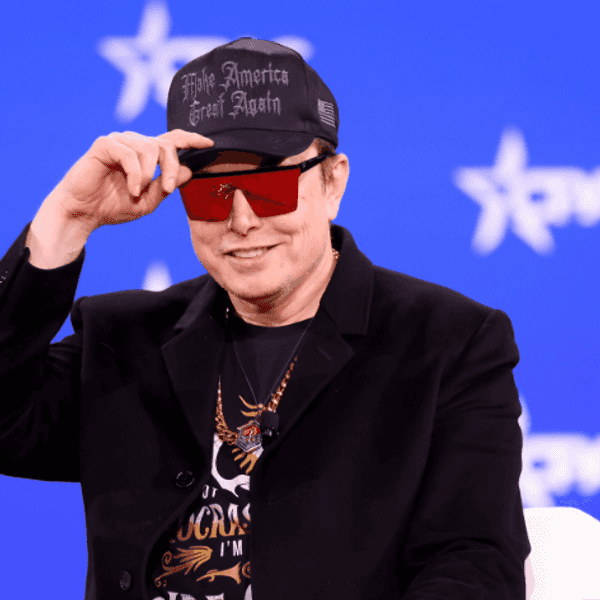
Canvassers working for billionaire Elon Musk's pro-Donald Trump America PAC in the battleground states of Arizona and Nevada are "using GPS spoofing to pretend they have knocked on doors when they haven’t," The Guardian exclusively reported Tuesday.

Per the report, "A bootleg how-to-spoof video, made by an America Pac canvasser in Nevada and obtained by the Guardian, shows the apparent ease with which locations can be changed to fake door-knocks, calling into question how many Trump voters have actually been reached by the field operation."

The Guardian's Hugo Lowell notes that "the ramifications for Trump may be far reaching, given America Pac has taken on the bulk of the Trump campaign’s ground game in the battleground states, and the election increasingly appears set to be decided by turnout."

Lowell reports:

In the how-to-spoof video, the canvasser opens up a door-knocking route for America Pac in Nevada – apparently for the benefit of his colleagues – and explains the method he uses to change his location so that it appears as though he is visiting every house he is supposed to.

The canvasser first pulls up the location changer app and zooms in so that the map there mirrors the map on the Campaign Sidekick app that shows the houses supposed to be knocked with orange dots.

He then memorizes the position of the target Trump voter’s house on the Campaign Sidekick app, navigates back to the location changer app, and taps the same house to spoof his location as supposedly being in the driveway.

The politics reporter also notes that the scope of the GPS-spoofing practice is unclear because it is difficult to catch cheaters without cross-referencing data with another tracker. It is also not a problem limited to America Pac; GPS spoofing has been a problem for years and it has become increasingly resource-intensive to catch cheaters.

Reprinted with permission from Alternet.

Sarah Huckabee Sanders

Who Paid For Gov. Sanders' $200K Superbowl Junket? She Won't Tell

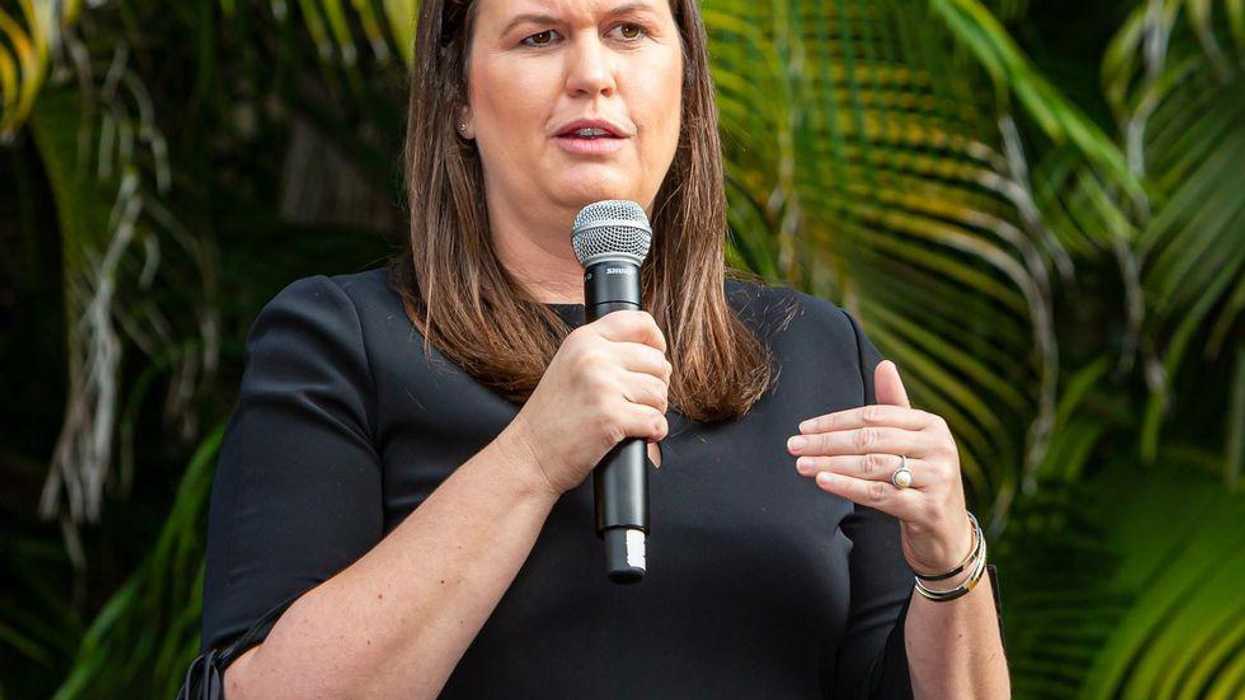
Arkansas Republican Gov. Sarah Huckabee Sanders took her whole family to Super Bowl LVIII in Las Vegas, Nevada earlier this month — one of the most expensive sporting events of all time. And now the GOP darling is being cagey about how she managed to snag luxury VIP box seats and get exclusive access to some of the biggest stars at the game.

Talking Points Memo (TPM) did a deep dive to estimate how much Sanders' Super Bowl trip would have cost, when accounting for suite passes for herself, her husband, and her three children combined with other perks, like field-level access to Usher's halftime show and access to Chiefs star tight end (and Taylor Swift's boyfriend) Travis Kelce. Ken Solky — a highly regarded ticket broker in Las Vegas — estimated that the face value of tickets for a high-level box like the kind in which Sanders was seen partying on Instagram was in the neighborhood of $37,500 per person.

"It definitely looks like a suite," Solky told TPM when viewing the images Sanders posted. "[N]ot just a suite but a pretty damn good suite."

Each additional pass the Sanders family had to access special events came with a price tag of anywhere between $3,000 and $10,000 per person. TPM estimated that on the low end, Sanders' excursion cost more than $202,000. It's unlikely that she paid for the trip out of her own pocket, as that amount is far above her gubernatorial salary of $160,000, and more than her $165,000 annual salary as former President Donald Trump's White House press secretary. But whether she was gifted the passes or used taxpayer resources is still shrouded in mystery.

The Arkansas governor's 2023 ethics disclosure form — in which Arkansas public officials have to disclose any gift of more than $100 — didn't disclose that she received any six-figure gifts. And expenses relating to her travel and security are exempted from the state's Freedom of Information Act (FOIA) guidelines, after Sanders convened a special legislative session last year specifically to change FOIA laws. That special session was notably convened in the wake of public reporting surrounding her office's purchase of a $19,000 lectern.

One big clue TPM found was a photo of Sanders in a VIP box with Tavia Hunt — a prominent GOP donor who is also the wife of Kansas City Chiefs co-owner Clark Hunt — which would been among the most expensive seats at Allegiant Stadium. Such gifts would necessitate reporting as it could be constituted as an out-of-state special interest attempting to curry favor with Arkansas' governor.

"If you’re in a luxury suite, it would be the highest face price ticket to the event," Graham Sloan, the director of the Arkansas Ethics Commission, told TPM.

Reprinted with permission from Alternet.

Shop our Store

Headlines

Editor's Blog

Trending

World