Tag: nrsc
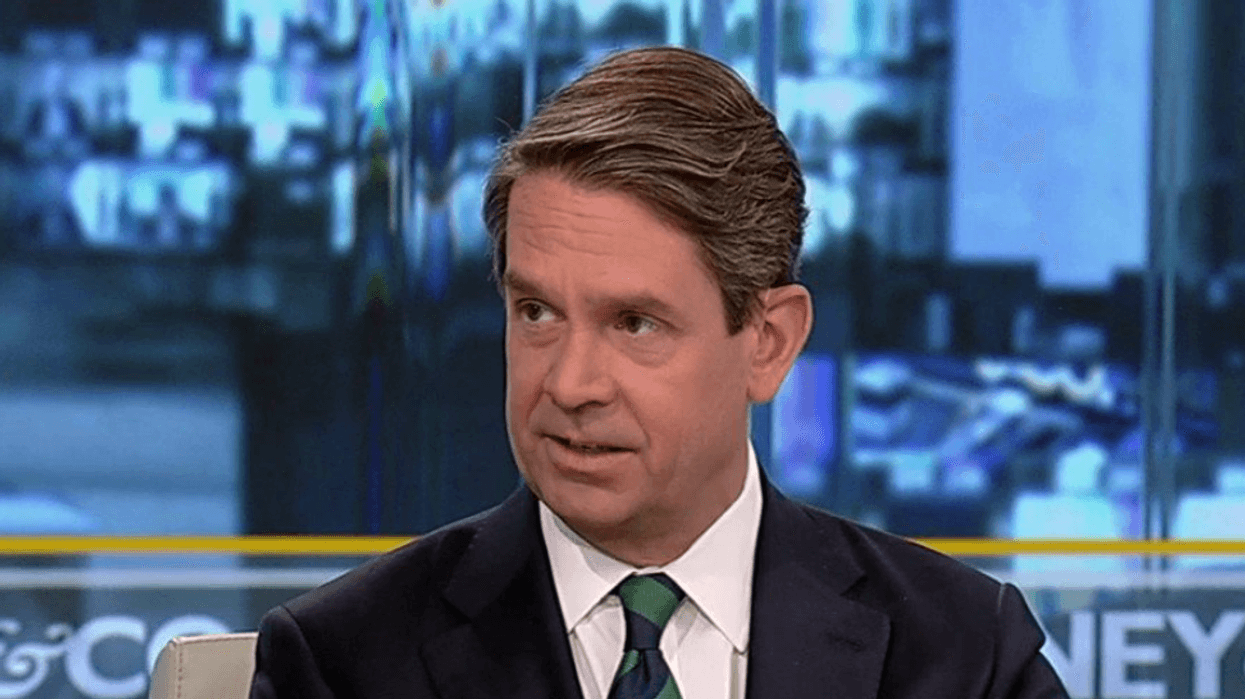
Griff Jenkins

Echoing Senate GOP Memo, Fox  Targets 'Far Left' Data Center Opposition

Republican leaders who fear that the furious, bipartisan backlash against AI data centers could cost their party in the midterm election are getting help from their loyal propagandists at Fox News. On its flagship morning show, the network’s hosts and contributors are attempting to convince viewers to support data centers by telling them that the “far left” is behind the opposition.

The National Republican Senatorial Committee warned in a private memo to top AI companies that “toxic views of U.S. data centers are killing the party's chances of holding a vital seat in Ohio,” Axios reported Wednesday morning. The memo, which Axios published, urges the AI companies to fix their “toxic brand” and suggests that if the GOP’s Senate candidate loses, “and data centers get the blame, politicians across the country will take notice — and they will not go near the next one.” The NRSC further suggests that Republicans benefit when voters are told that Democratic opposition to data centers “will cause America to lose the AI race to China.”

Fox apparently got the message. Just hours after the Axios story was published, Fox & Friends ran a segment seeking to negatively polarize viewers against data center opposition by portraying it as a “culture war” position favored by the “far left.”

Guest co-host Griff Jenkins teased the discussion at the top of the 8 a.m. ET hour, saying: “Data centers are the backbone of the AI boom, and now a political target — why Democrats are turning them into the next culture war fight.”

Jenkins began the subsequent segment by airing remarks Pennsylvania’s Democratic governor offered Tuesday in issuing an executive order tightening the regulation of data centers, before commenting: “Gov. Josh Shapiro isn’t the only Democrat pushing back against the data center boom. Far-left members of their party make their battle against them a central part of the populist platform.”

As Jenkins spoke, Fox aired a graphic warning of “Dems Data Center Frenzy.”

Fox then aired comments criticizing data centers from three politicians the network regularly attacks: Sen. Bernie Sanders (I-VT), Rep. Alexandria Ocasio-Cortez (D-NY), and Michigan Democratic Senate nominee Abdul El-Sayed. As they spoke, on-screen text read: “Far-left makes data centers latest populist target.”

Jenkins then asked, “Could turning AI data centers into the left's boogeyman put the race for AI dominance at risk?” He turned to Fox Business contributor Lou Basenese, who highlighted the “national security” implications and echoed the NRSC memo’s invocation of China.

After the pair agreed that “we’re in a race with China,” Jenkins asked if “the rising opposition to data centers in this country is one of the biggest threats to our development and achieving dominance.”

“China is building out capacity while the far left is building out opposition,” Basenese replied, before praising President Donald Trump’s support for data centers.

Such efforts to paint broad data center opposition as the work of the “far left” and warnings that China will be its beneficiary have become habitual in Fox Business’ coverage of the story. And with the issue’s rising salience in the midterm elections, as indicated by the NRSC memo, those arguments are now moving to the bigger GOP megaphone of Fox News.

But there’s a split on data centers among the right-wing commentariat, with prominent figures like Tucker Carlson and Candace Owens criticizing them and even calling for local opposition to their construction.

And that means the Fox propaganda effort to portray opposition to data centers as a “far-left” position has some real limitations.

Reprinted with permission from Media Matters
Senate GOP Ads Broadcast Lies On Immigrants, Medicaid And Trump Budget

Senate GOP Ads Broadcast Lies On Immigrants, Medicaid And Trump Budget

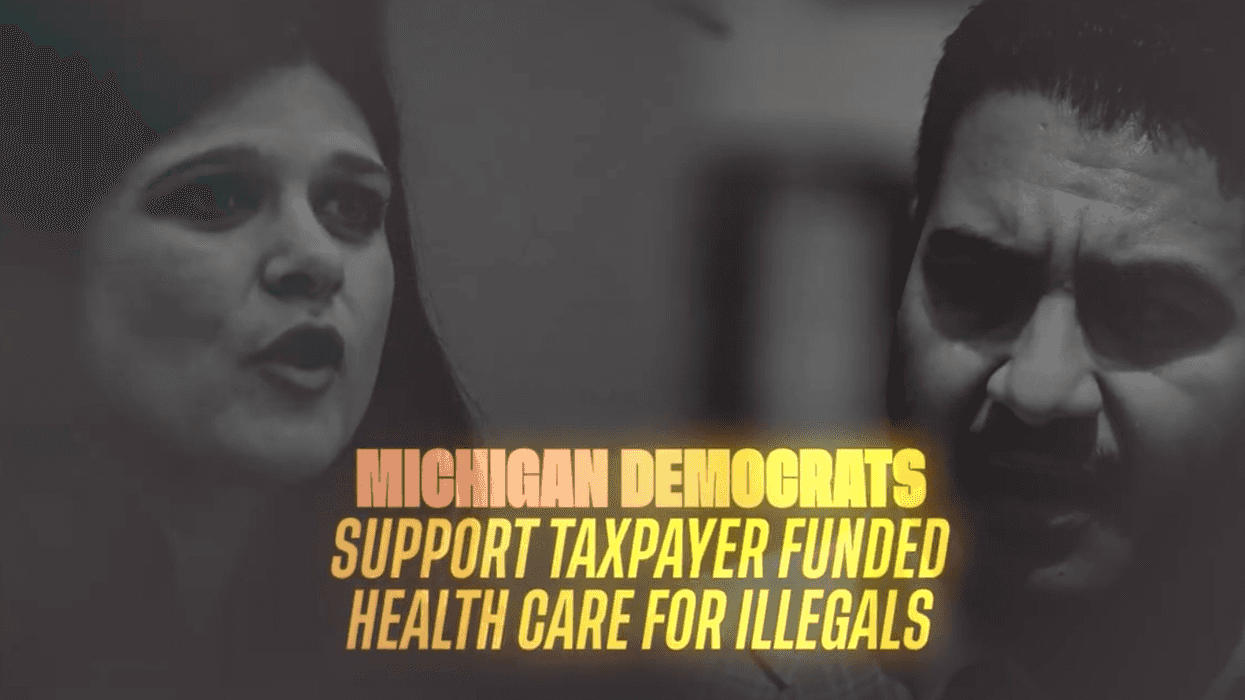
The National Republican Senatorial Committee (NRSC) is running ads in multiple states that spread disinformation about Medicaid and undocumented immigrants.

The ads target Democratic Senate candidates in Ohio, Alaska, Iowa, Georgia, New Hampshire, North Carolina, and Michigan for not supporting the One Big Beautiful Bill Act (OBBB), which the NRSC claims stopped undocumented immigrants from receiving Medicaid benefits.

This claim is false. Federal law already barred undocumented people from accessing Medicaid, Medicare, CHIP, and Affordable Care Act (Obamacare) coverage. Instances of undocumented people being erroneously enrolled in these programs are extremely rare.

Republicans have made this claim about OBBB repeatedly since the legislation was introduced. Health policy experts, including the Kaiser Family Foundation and Georgetown University’s McCourt School of Public Policy, have repeatedly debunked it.

The law does, however, make profound changes to Medicaid. OBBB will cut about $1 trillion from the health insurance program over the next decade, resulting in up to 12 million Americans losing their coverage. The bulk of those cuts will fund tax breaks that disproportionately benefit the wealthy.

Sens. Jon Husted (OH) and Dan Sullivan (AK) both voted for OBBB, as did Reps. Ashley Hinson (IA) and Mike Collins (GA), who are both running for Senate this year. Former New Hampshire Sen. John Sununu and former Michigan Rep. Mike Rogers, who are also running for Senate, have both publicly praised the law.

Michael Whatley, the Republican Senate candidate in North Carolina, said he would have voted for OBBB “in a heartbeat.”

A tracking poll by the Kaiser Family Foundation found that OBBB is deeply unpopular with voters. Sixty-four percent of respondents have an unfavorable view of the law. Among independents, 71 percent oppose it.

President Donald Trump has proposed additional tax cuts and further cuts to government programs if Republicans retain control of the House and Senate after the 2026 elections.

Reprinted with permission from American Journal News

Thom Tillis

'Wipeout': Republicans Terrified 2026 Blue Wave Will Flip Senate And House

Republicans are increasingly anxious about the 2026 midterm elections, fearing a potential “wipeout” that could cost them their House majority and several Senate seats.

The Hill reported Monday that off-year elections in Virginia, New Jersey, and municipal races around the country indicate they might be in trouble.

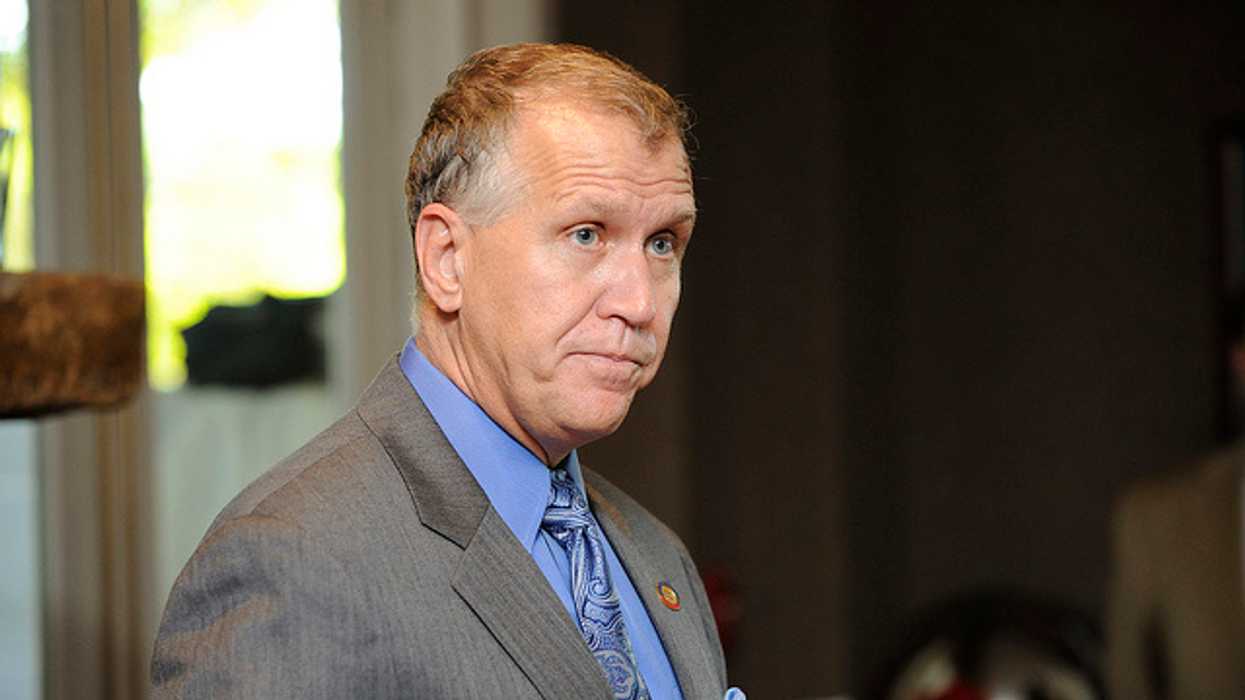
Sen. Thom Tillis (R-NC), who is not running for reelection, told the outlet, “If we are where we are today in the beginning of the second quarter [of 2026], then I think we’re in for a really rough time in November.”

“We have plenty of time to address it. There are a lot of positive things that we’re doing here, that the administration is doing. But if you mess with health care … if we don’t get health care policy right, if we don’t get some of the cost policies right, we’re going to have major headwinds next year,” he added.

The Hill reported that the biggest concern is the coattails of President Donald Trump, which have never been especially strong. Republicans lost power in their first midterm election after Trump’s 2016 win, when Democrats flipped the House in 2018. It was already a concern in January 2016, when former Rep. Justin Amash (R-MI) told Reuters he did not think Trump could help carry down-ballot candidates later that year.

Trump’s approval rating currently stands at 41.9 percent in a recent polling average compiled by Decision Desk HQ. On the generic congressional ballot — that is, whether voters say they would support a Democratic or Republican candidate — Democrats lead with 46.8 percent to 41.4 percent, according to DDHQ’s average.

One Republican on a conference call with the National Republican Senatorial Committee (NRSC) said election fears have spread among many senators up for reelection in 2026.

“The numbers are terrible,” said the unnamed lawmaker. “Not necessarily for any individual incumbent senator, although some of them aren’t very good. But you saw what happened a couple of weeks ago. Republicans didn’t win anything anywhere.”Democrats won the governor’s races in both Virginia and New Jersey. In Virginia, Trump did not participate, but in New Jersey, the president offered a full endorsement and support to the GOP nominee.

“There are a lot of warning signs blinking,” the lawmaker noted. “We’re increasingly on defense on the Senate side. … I think there’s a lot of concern.”

“Look at the 2018 midterm, we lost 41 seats in the House. The Speaker can only lose three this time,” a different GOP senator said.“I would expect to lose the House; I’m just trying to be objective,” the senator confessed.

Trump appeared to see the writing on the wall several months ago when he pressed Texas to pursue mid-decade redistricting to gerrymander congressional lines and eliminate solidly Democratic seats, a move that drew national criticism. California lawmakers, facing their own political pressures, moved ahead with a mid-decade redraw that targeted several Republican-held districts. A court has now thrown out the new Texas maps, ordering lawmakers back to the drawing board.

Other states, like Indiana, are resisting Trump’s demands to eliminate their remaining Democratic-held seats, even as they face pressure over redistricting. After years of litigation, a court ruled that Utah must draw a Democratic-leaning district centered on the Salt Lake City area, ensuring that Democrats have at least one realistic opportunity to win a seat there.

“The conventional wisdom was Democrats were screwed, and we were going to be in a hole of anywhere from 10 to 17 seats because of redistricting. That was back in the middle of July. Looking where we are now, that’s absolutely not the case,” said a Democratic strategist, according to The Hill.

Reprinted with permission from Alternet

GOP Megadonors Lack Confidence In Trump’s Senate Candidates

GOP Megadonors Lack Confidence In Trump’s Senate Candidates

Sen. Rick Scott of Florida, who chairs the National Republican Senatorial Committee (NRSC), was deeply offended when Senate Minority Leader Mitch McConnell — during an event in Kentucky in August — told a crowd that he considers control of the U.S. Senate a toss-up in the 2024 midterms and cited “candidate quality” as a factor. McConnell expressed confidence that Republicans will “flip” the U.S. House of Representatives, but wasn’t nearly as bullish on the Senate. And his “candidate quality” comment was taken as a criticism of the MAGA candidates Trump has pushed.

McConnell, however, isn’t the only Republican who is concerned about the quality of U.S. Senate candidates who former President Donald Trump has been pushing. In an article published by CNBC’s website on September 30, reporter Brian Schwartz takes a look at Republican donors who are reluctant to get out their wallets for Trump-backed Senate hopefuls who have been underperforming in polls.

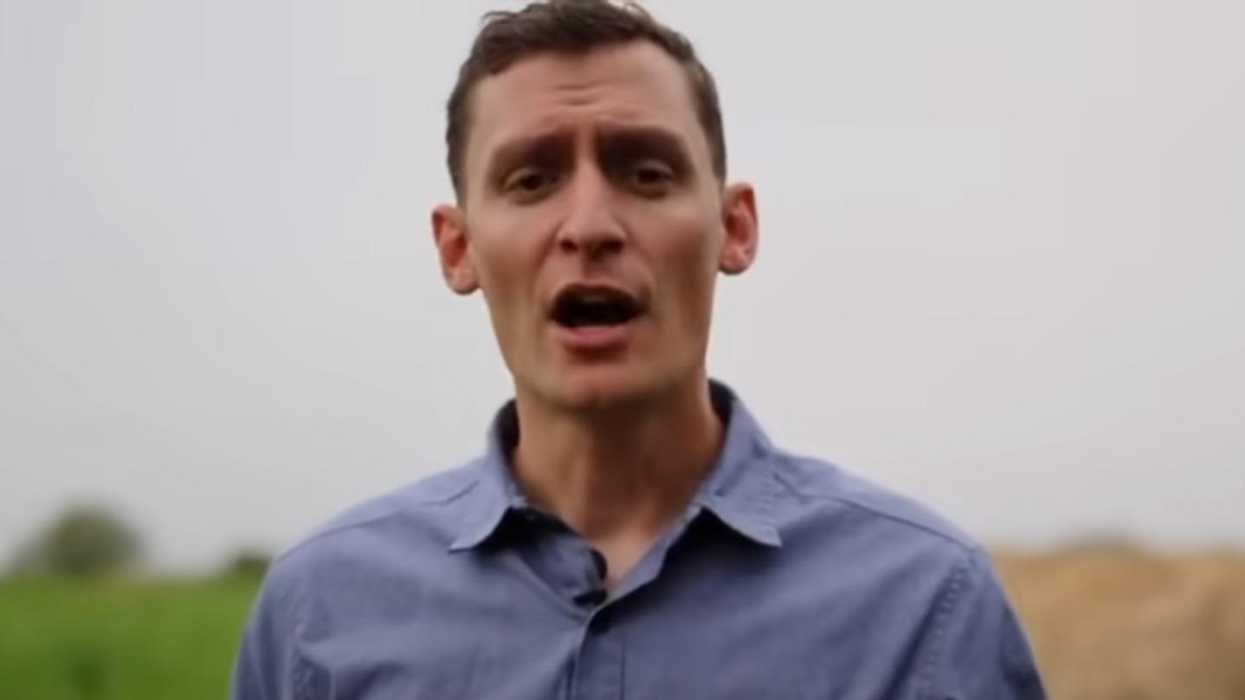
“Republican megadonors want the GOP to take back the Senate, but they don’t have confidence that some of former President Donald Trump’s top picks can catapult their party to a victory in November,” Schwartz explains. “Billionaire financiers Paul Singer, Dan Loeb and Larry Ellison have so far avoided donating directly to some or all of Trump’s staunchest allies running for Senate in the midterms: J.D. Vance in Ohio, Blake Masters in Arizona, Herschel Walker in Georgia, Adam Laxalt in Nevada and Dr. Mehmet Oz in Pennsylvania, according to Federal Election Commission records and people familiar with the billionaires’ donations.”

The CNBC reporter adds, “All of those candidates have been endorsed by Trump. And many of them have previously sided with the former president on the false claims that the 2020 presidential election had widespread voter fraud — an accusation that’s been debunked by Trump’s former attorney general, Bill Barr, federal courts and several other top Republicans who served in Trump’s administration.”

A Republican strategist, quoted anonymously, told CNBC that those megadonors would “would be lighting their money on fire if they got totally swayed by these candidates.” And that strategist is advising donors to give their money to the Senate Leadership Fund, a political action committee run by McConnell’s former chief of staff Steven Law. That strategist said of the Senate Leadership Fund, “They have the best polls, and they won’t sink money into races they know they can’t win.”

Schwartz notes, “The campaign poll tracking website FiveThirtyEight shows Masters trailing (incumbent Sen. Mark) Kelly by more than seven percentage points…. FiveThirtyEight shows Oz trailing his Democratic rival John Fetterman by more than six percentage points and Walker trailing his competitor, (Sen. Raphael) Warnock, by more than two percentage points. Vance and Laxalt are both in statistical dead heats with their Democratic rivals; both GOP candidates are down by an average of less than a percentage point.”

Schwartz points out that megadonor and real estate mogul Stephen Ross “hasn’t given a penny yet to Vance, Walker, Masters, Laxalt or Oz, according to FEC filings.”

“Ross was criticized for hosting a fundraiser for Trump and the Republican National Committee at his Hamptons home in 2019, but has distanced himself from some of Trump’s favorite candidates this election cycle,” Schwartz observes. “He’s donated over $685,000 to a mix of Republicans, Democrats and their affiliated outside groups this cycle. His biggest checks so far have gone to GOP organizations tied to Republican leadership, such as House GOP campaign arm, the National Republican Congressional Committee and a joint fundraising committee called Take Back the House 2022, federal election records show.”

Did Sen. Minority Leader McConnell correctly believe that many of the 2022 US Republican Senate candidates had a “candidate quality” issue?

Yes, Sen. McConnell had the correct intuition to worry about the 2022 slate of Republican Senate candidates. In comparison to Arizona’s 2022 gubernatorial race, when Republican nominee Kari Lake lost by less than one percent to Democrat Katie Hobbs, Republican Senate candidate Blake Masters was decisively beaten, losing by 4.88% to Sen. Mark Kelly. In Nevada, even though Republican Steve Sisolak won the state’s gubernatorial race, Republican Adam Laxalt lost Nevada’s Senate race to Catherine Cortez-Masto. In Georgia, Republican Herschel Walker lost his state’s Senate race to Raphael Warnock by 2.8%, a decisive win compared to Trump’s loss to Biden by .23% in Georgia during the 2020 presidential election. In Pennsylvania, although Biden only won the state by 1.17% during the 2020 presidential election, Republican Senate candidate Mehmet Oz lost by 4.91% in the 2022 Senate race to Sen. John Fetterman.

 What toxic policy issue linked these 2022 Republican Senate candidates together?

After the fall of Roe v. Wade in the summer of 2022, causing Americans to lose their constitutional right to abortion, these Senate candidates chose not to moderate their positions on abortion, prompting backlash. For instance, during the 2022 midterm race, Laxalt “…called the 1973 Roe v. Wade decision “a joke” and the Supreme Court decision overturning it “historic””. Masters had to rewrite his website due to backlash against his positions on abortion. In addition, after Walker stated during the campaign that he wanted to ban abortion across the country, he was later accused of hypocritically pressuring past lovers to obtain abortions.

 Did Trump pick the wrong Senate candidates?

Yes, as former president Trump picked unelectable candidates who were fraught with controversy. Pennsylvania Senate candidate Oz was constantly accused of carpetbagging and was often mocked by Sen. Fetterman for his elitist personality, e.g., calling a veggie tray “crudité”. Meanwhile, Walker was accused of domestic violence and stalking.

Reprinted with permission from Alternet.

Shop our Store

Headlines

Editor's Blog

Trending

World