Tag: planned parenthood
'Harlots And Sluts': Why This Ex-Cop Walks The Gauntlet To Protect Abortion Rights

'Harlots And Sluts': Why This Ex-Cop Walks The Gauntlet To Protect Abortion Rights

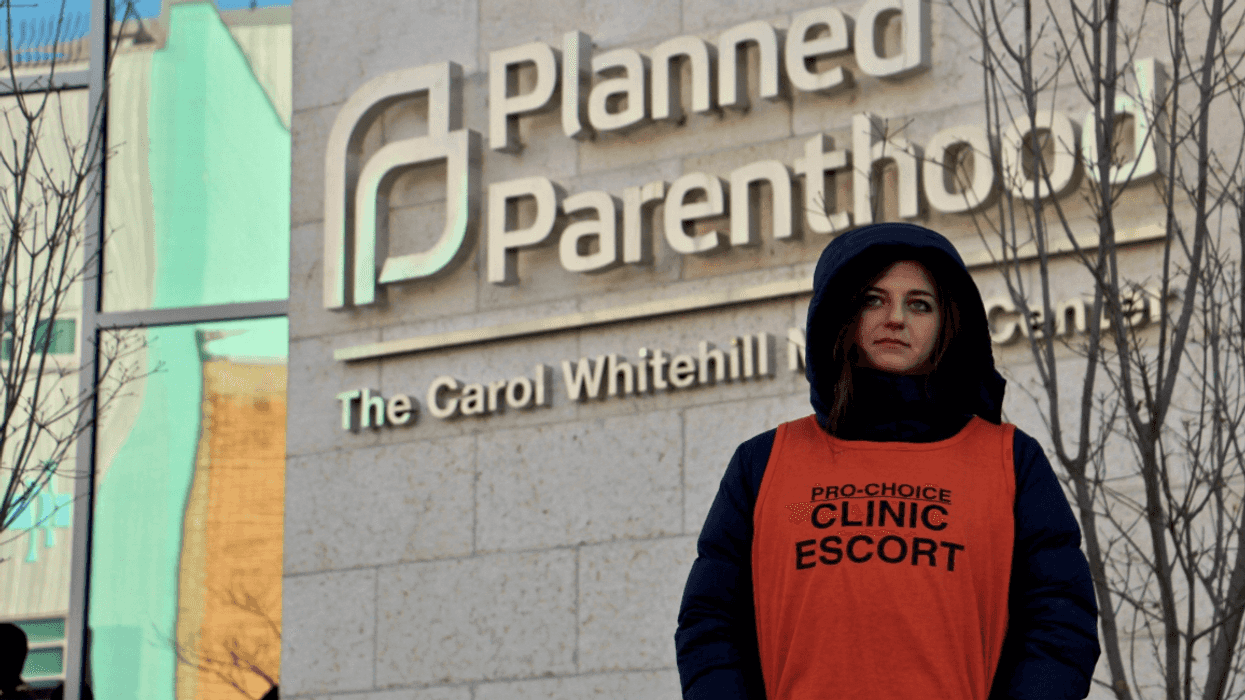
If you want to know how you can fight back against the Trump and Republican war on abortion and all of women’s reproductive healthcare, you can donate to Planned Parenthood or an independent abortion clinic like the one that Jenny escorts at. Jenny along with her husband William (not their real names), gets up every Saturday with the mission of protecting pregnant patients who need abortion care. Here, Jenny shares with me what it’s like to do her courageous work.

“I’ve been a volunteer abortion clinic escort every Saturday at an independent clinic in Milwaukee for six years. So instead of having my Saturdays off, I go and get screamed at by anti-abortion protesters.

I’d wanted to be a clinic escort for a long time, but I was finally freed up on weekends after my son turned 16 and was able to drive himself places, so he wasn’t reliant on me.

My husband joked that I would need to find a “hobby” now that my son was more independent, and I wanted to do something to help other people. I grew up Catholic, but I had always questioned things, including religion.I remember seeing protesters outside abortion clinics on the news and feeling like I wanted to help the patients trying to get inside, because I don’t like bullies.

My husband doesn’t like bullies either, and he also feels strongly about reproductive rights. When I signed up to do clinic escorting work, I asked him if he wanted to do it too, and he said, “Heck, yes!”

So now we go together every Saturday for a four- to five-hour shift. If I were a trust-fund baby, I would do this work full-time.

‘No matter what their journey was to make that choice, I’m proud of our patients’

There is one woman that I think about often and hope that she is safe. I remember seeing her walking down the street with a companion toward our clinic, and I could tell that she was really upset.

I walked toward her and asked, “Do you mind if I put my arm around you?” And I told her, “We’re going right in the door. I’ll get you inside. Try not to cry in front of the group of anti-abortion protesters on the sidewalk, because that’s what they want to see. We’re going to keep our heads high and we’re going to walk in there together.”

Once I got her inside and the door closed, she began to sob hysterically, and I gave her a hug. She told me that she was escaping a domestic violence situation. The man she was with was physically abusive to her.

She was also afraid that she might have an ectopic pregnancy, and she knew that ectopic pregnancies could be deadly.

Thankfully, her pregnancy turned out not to be ectopic, and she was able to get an abortion. After the procedure, I walked her back to her car, and we were followed by one of the anti-abortion protesters, who kept harassing her.

When we finally arrived at her car, she gave me one of the longest hugs I’ve ever had as a clinic escort. It makes me emotional just thinking about it, because I think about how she’s safe now.

If she had not been able to have that abortion, she might have been trapped with that guy, unable to leave because they had a child together.

If I was able to play even a small part in her being safe, that’s a reason for me to do this work.

I’m able to help patients who are in difficult situations—and also for those who may not have faced a tough decision to have an abortion. No matter what their journey was to make that choice, I’m proud of them.

‘Why the name-calling doesn’t bother me’

I feel very strongly that every person who is going to see a medical provider for reproductive healthcare—whether it’s for an abortion, a Pap smear or IVF—should be able to do that without harassment or fear, just like anybody else going to any other kind of healthcare appointment.

My first day at the clinic in Milwaukee was a surprise. I didn’t think in a million years that I would be shoved as much as I was out there.

But I think that even if I had been warned that I would be shoved, elbowed in the back of the head, or pushed onto the road, I still would not have been deterred.

I wasn’t actually freaked out by the situation. My background has helped me prepare for chaos—both my current work in social services and the fact that I used to be a member of the military police force for eight years.

I was a police officer on a military base in Washington state, and as part of my job, I trained other law enforcement officers in de-escalation techniques. Because of that training, it has helped me with both protesters and patients when they are upset.

I’m really good at talking with them and grounding them so I can bring them back down.At our clinic’s old location, there was nowhere for patients to park, so they would have to walk three or four blocks to and from the clinic. There also wasn’t much space between the protesters, the clinic escorts, and the door into the clinic.

Fortunately, we moved over a year ago to a new location with its own parking lot, so the situation is much easier for patients and escorts.

But at the old clinic, we escorts would often have to form a wall with our bodies to prevent aggressive protesters from getting inside the door of the clinic. Or we would form walls around patients, holding hands, so there would be a small group of us surrounding a patient so we could safely get them inside the door.

It was the Wild West out there.

Protesters yell disgusting things at patients, like, “Mommy, mommy, please don’t kill me,” or, as patients leave the clinic, “You’re still a mom, but the mom of a dead baby.”

They’ll shove rosaries in their faces and call them “whores and murderers.”

They call us female escorts “Jezebels, Nazis, harlots and sluts.” But the name-calling doesn’t bother me at all.

When I bring patients into the clinic past the protesters, I’ll ask them how they are doing and try to give them strength and confidence as they enter the building.

‘Patients have told me horrific stories’

I’ve heard so many things from patients that I will never forget. There are patients I walked into the clinic years ago that I still think about and wonder how they’re doing. I hope that they’re living their best lives. What they went through that day with those protesters should never happen to anyone.

There are stories that patients have told me that are horrific. Some had been raped. There are women with a wanted pregnancy, but for a particular reason the pregnancy can’t continue, and they are very emotional.

There are people who are in a good mood because the abortion will be a relief.

We’ve had patients who have come in and their cars are barely running, and there are two kids’ carseats in the back, and you’re thinking that this is probably the best thing for them. It’s an investment in the future of their family.

But no matter what a patient’s circumstances are—even if getting an abortion was an easy decision for them—the fact that they’re getting screamed at as they come into the clinic isn’t easy. I try to better their day in any way possible.

When I would walk patients out to their cars three or four blocks away after their appointments, we would often be followed by a protester. I would ask them about their plans for the rest of the day or crack a joke about the protester following us and say, “Yeah, that guy’s still a virgin.”

I’d be trying to take their mind off the protester screaming at us and make my patients feel as comfortable as possible. After walking patients to their cars, I’d get a lot of hugs and thank-yous. Sometimes they would say, “I couldn’t have done this without you.”

Many of the same protesters have been here for years. It’s like it’s their full-time job. The majority are men, and they tend to be the “angry” ones. The women tend to be friendlier to the patients and say, “Oh mama, can I talk to you?”

They call themselves “sidewalk counselors” and try to convince patients to go to a crisis pregnancy center instead of coming into the clinic.

But I doubt these “sidewalk counselors” have had any formal training.

Crisis pregnancy centers are not actually staffed by licensed medical professionals, they aren’t legally obligated to provide accurate information, and the people there try to convince pregnant women to continue their pregnancies.

‘I was at the Supreme Court when they overturned Roe

When the Supreme Court decision to overturn Roe v. Wade came out, I happened to be in Washington, DC on a preplanned vacation. It was rumored that the decision would be released that day, so I went to the front of the Supreme Court building, and I was there when the court’s ruling came out.

I was devastated.

On one hand, there was a group of Students for Life supporters in front of the courthouse, and they cheered. But they were outnumbered 3 or 4 to 1 by pro-choice supporters.

I remember hugging a young woman who shared with me that an abortion had saved her life, and she couldn’t imagine that young people weren’t going to have that choice anymore.

There were a lot of tears and many very sad people. Rights had been stripped away, and we knew what this would mean for some states, including Wisconsin.

The moment that decision came down, abortion was deemed illegal in Wisconsin by a preexisting 1849 Criminal Abortion Statute, and the clinic was closed for a year and a half.

We’re lucky here because abortion is legal again (since December 2023), but in many other states there are abortion bans.

We knew that Roe being overturned would kill pregnant people, and it has.

Editor’s Note: A major study reports that pregnancy-related deaths have increased by 21% in abortion ban states.

I was very angry and sad about the Supreme Court’s decision. I wanted to cry. But I also told myself that I had to use my anger, and I went into “we’ve got to fix this” mode.

I wanted to work toward restoring access. I also donated to abortion funds so they could help people travel to states where abortion was still legal to get care.

‘We want to be a comfort to the community as a whole’

Once abortion became legal again in Wisconsin, I was back at the clinic as an escort. I always wear a medical mask, and I go by a pseudonym so that none of the protesters know my true identity.

You have to be brave physically and mentally to do this work. It can be mentally draining because you are in a state of hyper vigilance the entire time you’re there.

We all know about the history of violence at abortion clinics. Eleven abortion doctors and an abortion clinic escort have been murdered.

Editor’s Note: Since 1973, 11 abortion providers and clinic staff have been murdered in the US and Canada, and another 26 have been wounded by gunshots, nail bombs, and arson attacks. Snipers have targeted physicians in their homes and even churches. One doctor and his wife were kidnapped and held hostage for a week in 1982.

I am watching every car that drives by, and if one drives by in any unusual way, I’ll catch the eye of the closest escort—usually my husband—and we ask each other, “Did you see that?”

You’re also absorbing the patients’ emotions—their sadness or anger—and the anger of the protesters. If a patient walks out looking happy, it angers the protesters.

They’ll yell at patients getting into a car to leave, they yell at us, they yell at cars driving by and at people just walking down the street. I will listen to music and dance so I don’t hear the protesters screaming all the time.

I tell people that if you drive by an abortion clinic, you can tell who the escorts are because we’re the ones with friendly body language. We wave at people. We dance to music that we bring.

We’re not the ones yelling at people and telling them that they are “murderers.”

We’re not just out there as a comfort for patients but also for passersby. I’ll say, “Good morning” to people walking by. If they have a dog, I’ll ask if I can pet it. I always try to bring dog treats with me.

We want to be a comfort to the community as a whole because we don’t want people to feel as if having an abortion clinic in their neighborhood is a threat.

The protestors don’t care what happens to babies once they are born

There are four or five protesters out of the dozen or so there most days that I say good morning to and ask, “How are you?” when I arrive. We do talk to the protesters because you are out there with them for hours.

Some of them have never been married and some have never had kids. I’ll ask them, “Why not?” They will say things like, “The time wasn’t right,” and I point out the hypocrisy that they made a choice, yet they are out here yelling at patients who are also making a choice.

One couple that was protesting said they wanted to adopt a baby, but that there aren’t many babies to adopt unless they went overseas.

I asked them, “Why does it have to be a baby? Toddlers still need love. Preteens and teenagers who are in foster care need love.

“Why don’t you love those children as much as you love babies or the ‘preborn’ babies who are not here yet?”

I haven’t gotten a good answer to that question yet, or to another question I’ve asked anti-abortion protesters.

I’ll say, “You support these ‘moms,’ but you vote against social services. You don’t support universal healthcare, affordable daycare, SNAP, or affordable housing. How is that helping moms?”

I’ve had some say, “That’s not my problem,” or “The government shouldn’t pay for that,” or “I took care of my kids. They should take care of theirs.”

They try to get into debates with us, and I let them know, “You’re not going to change my mind, and I’m not going to change yours.”

Often they will tell me, “I wish you would repent.”

I have to reply to that: “I probably won’t. I’m still here. I’m here every week. You’re not going to get rid of me. I’m still going to be here.”

Here’s a link to Planned Parenthood if you want to help protect access to abortion care or to the Abortion Coalition for Telemedicine, which is fighting to protect national access to the abortion pill.

Bonnie Fuller is the former CEO and editor-in-chief of HollywoodLife.com and former editor-in-chief of Glamour, Cosmopolitan, Marie Claire, and USWeekly. Follow her substack, Bonnie Fuller: Your Body Your Choice. from which this is reprinted with permission.
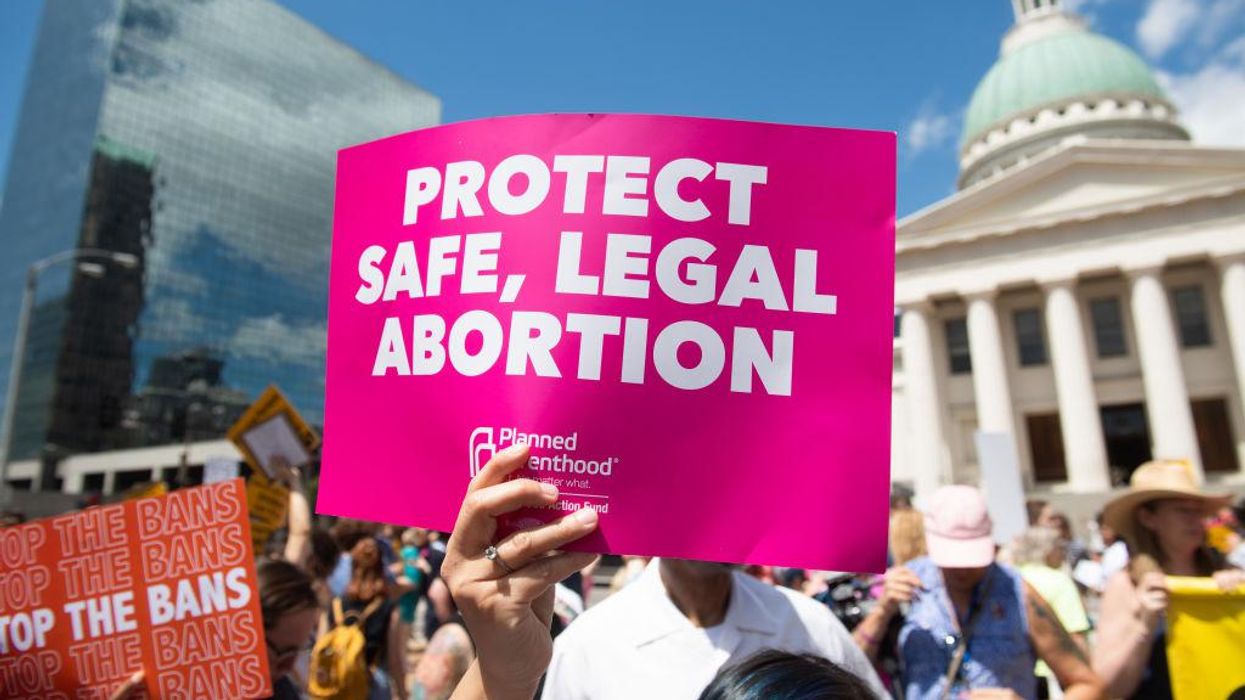
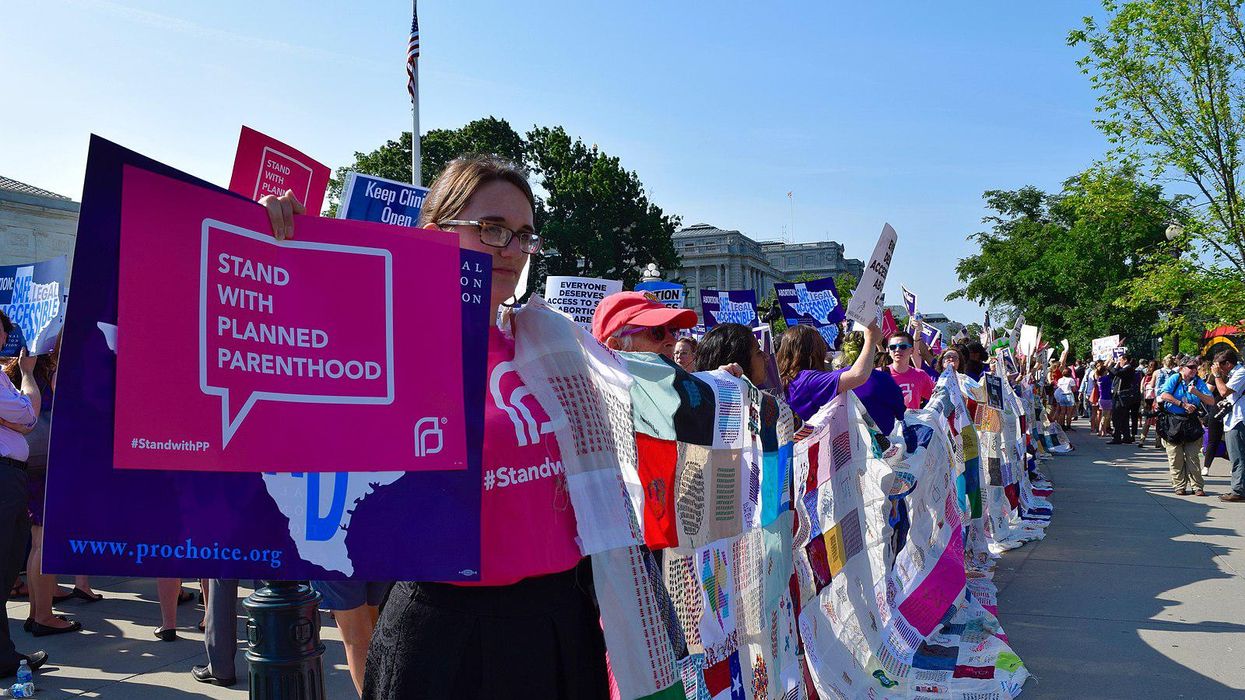
'Trad Wife' Influencers Spreading Far Right Disinformation Against Birth Control

'Trad Wife' Influencers Spreading Far Right Disinformation Against Birth Control

Cancer. Infertility. Unintended abortion.

These are just a few of the fears young patients bring to Dr. Bayo Curry-Winchell, a family physician in Reno, Nevada. For some of her patients, she said, taking birth control pills is like wearing a scarlet letter.

“Taking the pill has almost become a bad thing, where you won’t fit in if you’re taking it.”

Curry-Winchell, medical director for the Saint Mary’s Urgent Care Group, said the trend away from hormonal birth control has become pervasive in recent years among her patients between about 14 and 32 years old. According to a recent KFF poll, that’s the same age group most likely to say they get their health information from social media.

When she talks with young patients, Curry-Winchell hears concerns about sinister long-term impacts of hormonal birth control—and the language often echoes conservative influencers who have no medical training.

Doctors say what is at stake is not whether every patient chooses the pill or an IUD, but whether they can make evidence-based decisions about preventing pregnancy in a country with some of the highest maternal mortality rates among wealthy nations.

Misinformation is reshaping exam-room conversations

Curry-Winchell and other doctors interviewed for this story say they have no problem with patients who are not interested in hormonal birth control. What they’re worried about is a growing group of influencers who are robbing young women of the ability to make informed choices.

Dr. Mariko Rajamand, a Reno OB-GYN and founder of FEM Women’s Wellness, said she now meets about three to five patients a day, typically in their early 20s, who are completely resistant to hormonal birth control. On one recent day she saw six patients under 25; two had IUDs and four refused to consider any hormonal contraceptive method at all.

Rajamand said she now spends around 15 minutes in many new-patient appointments just dispelling misinformation. “I tell them that my goal is not to hurt you, it’s to help you,” she said. “I am going to partner with you. I will never push you to do something that you’re not comfortable with.”

Usually, after two or three visits, she said, patients who absolutely do not want to get pregnant but initially opposed hormones decide they are less afraid of hormonal birth control than they thought.

Curry-Winchell, a mother of two young daughters, said countering disinformation about hormonal birth control starts with building “a level of trust and comfort” and letting young women know she is not going to judge them. “I tell them that I want to be their co-pilot,” she said.

“I’ll just be curious and ask, ‘What do you know? Because I don’t know what you know,’” she said. “We just make it a conversation, and I can hit that misinformation in a more targeted way once I know where a patient is coming from in terms of her hesitancy and concerns.”

The problem is bigger than any one clinic. On social media, disinformation about the safety and side effects of the pill and other forms of hormonal birth control has become so pervasive that the American College of Obstetricians and Gynecologists issued a nationwide fact sheet on contraception misinformation in October. A National Library of Medicine study published in 2025 found it has become “increasingly difficult to distinguish accurate content from misleading information” about contraceptives on TikTok and urged providers to be ready to counter online myths in the exam room.

Influencers push fringe claims to massive audiences

Social media posts about health issues often lack context, and algorithms reward content that is sensational and emotionally charged. Influencers rely on such algorithms for views and, in turn, their paychecks.

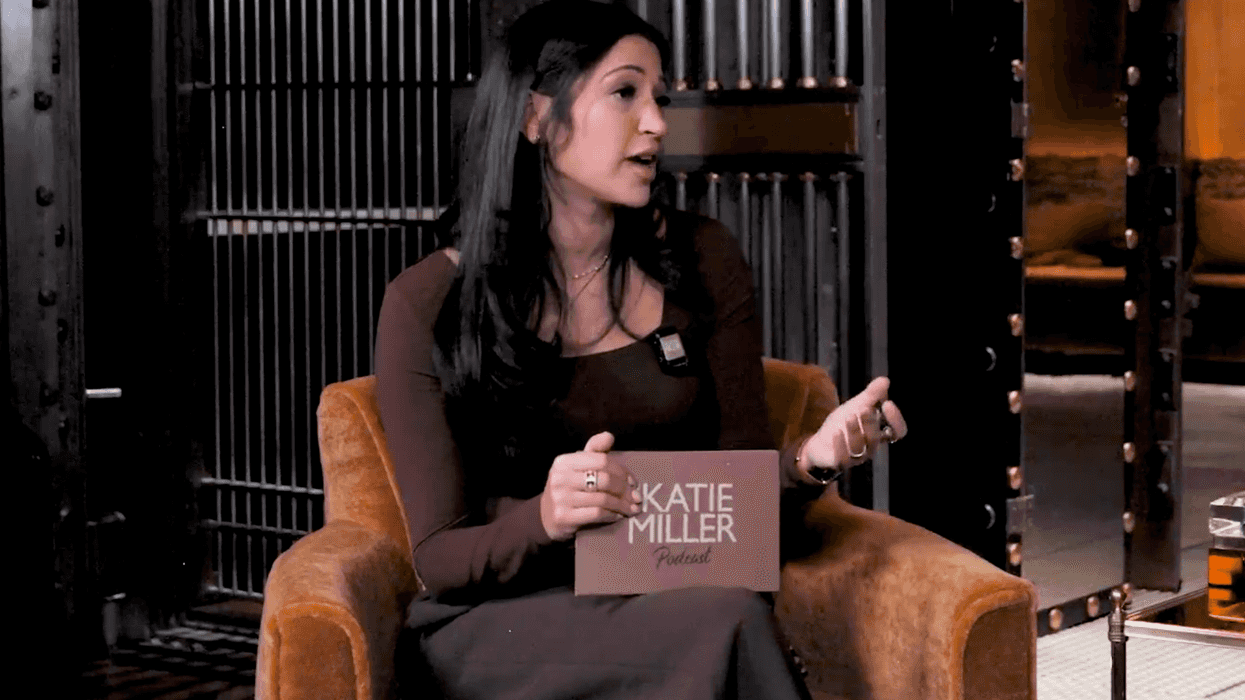
One such influencer is podcaster Candace Owens, who has millions of followers on YouTube, Instagram and TikTok and proudly describes herself as a “full-time wife and mother” who does not believe in birth control. Katie Miller, the wife of White House Deputy Chief of Staff Stephen Miller, told her hundreds of followers on X that the pill is “poison for your body and mind.

Alex Clark, a conservative “health and wellness” podcaster, testified in the Senate and later told her hundreds of thousands of followers that women were “tricked” by pediatricians into going on the pill as teenagers to clear up acne or ease cramps. Clark has also claimed that women who stop taking the pill find they are no longer attracted to their husbands.

Then there is Elon Musk, who has fathered 14 children and has repeatedly insisted that declining birth rates are the “biggest danger to civilization.” In an interview with Tucker Carlson, he claimed hormonal birth control changes women’s personalities and preferences in partners. Carlson has more than 5 million subscribers on YouTube. A clip of that conversation now has hundreds of thousands of likes and more than 100,000 shares on TikTok.

Why women are primed to distrust

Dr. Sharon Thompson, an OB-GYN in Phoenix, said one reason influencers have made such headway sowing distrust is the way medicine has treated women for generations.

She said historically women have been brushed off and dismissed. “Medicine has a bad habit of attributing many things that women complain of to hormones,” Thompson said. “Always in history people just told women what to do—and now this is the pushback.”

“The sad truth for a woman is that she can take her symptoms to her primary doctor and she can not be listened to or she gets brushed off,” she said. “It drives me bananas… when women feel like they are getting the runaround or they aren’t getting equal treatment.”

Michigan-based OB-GYN physician assistant Nikki Vinckier has seen the fallout firsthand. She said she was having “multiple of the same conversations every single day” with young patients asking to come off hormones and try “natural family planning,” a method they had seen promoted on social media.

Vinckier said the challenge is to listen “without gaslighting their experiences and saying, ‘Oh no, none of these side effects exist.’” While studies show hormonal birth control is safe for most patients, she said, there are women who “don’t fit the mold,” and it is condescending to tell a patient her experience is not valid.

“It’s important not to negate the experience of any patient,” Vinckier said. “I want to educate them and empower them to make their own choice.”

“Natural” methods sound safer than they are

Because of fears being pushed on social media, doctors say many patients now come in asking for a “natural” form of birth control instead of the pill, an IUD, or another hormonal method of contraception.

Natural fertility awareness methods require women to take their temperature every morning at the exact same time, check their cervical mucus discharge daily, chart their cycles and abstain from sex for at least 11 days a month when they calculate they might be fertile.

In reality, natural family planning or fertility awareness fails 22to 25 percent of the time to prevent pregnancy in a given year, according to the National Library of Medicine.

“Young women patients often feel that ‘I should be doing it all natural’ or ‘You’re doing birth control the wrong way,’ or ‘You’re not in tune with your body if you do a medication,’” Curry-Winchell said. “They think that if it’s natural, it’s the safest and most in tune with their bodies.”

She said the “beautiful packaging” of natural fertility awareness kits makes the method look like a simple process, but in reality “takes a lot of consistency.” “Plus, our hormones, the way we work, the way we operate, we’re all different. We’re not one-size-fits-all.”

Rajamand said she has “a whole conversation about natural family planning—what it is and what it isn’t.”

“It really only works for the woman who is ovulating perfectly and I have yet to meet that woman,” she said. “If they are going to go that route, then I’ll have a serious discussion about the rate of pregnancy.”

“I’ll ask, ‘If you get pregnant, is that OK?’” she said. “If their answer is yes, then it’s a nonissue, but if they say, ‘That’s a problem,’ then I say, ‘Let’s come up with a Plan B.’”

Wisconsin OB-GYN and complex family planning specialist Dr. Carley Zeal said she is especially concerned about enthusiasm for “natural” methods in states with strict abortion bans. When patients tell her they want to avoid hormones, she works with them “to find whatever contraceptive method is going to work best for them.”

“It’s not my job to tell them they are wrong or that symptoms they may be experiencing are not real, because their experience is their experience and everybody’s side effects or experience with different medications is important to respect,” Zeal said. “But it’s my job to tell them the data.”

What the data actually say

There is cause for careful consideration before choosing a method of contraception, and doctors acknowledge that hormonal birth control can have side effects. Studies have linked hormonal methods to symptoms like altered stress responses and reduced libido, and one large study found a very small increase in depression among girls ages 15 to 19 using certain hormonal IUDs.

ACOG warns its members that while hormonal birth control can have minor side effects, “those minor side effects can be exaggerated to instill fear and uncertainty in people considering using contraception.”

One of the greatest concerns doctors hear now is a belief that hormonal birth control is “pumping” women full of extra hormones. Thompson said that is simply not true.

“The idea that hormones are harmful is false. Most people, including influencers, don’t realize this,” she said. “When you are using a hormonal method of birth control, if you were to average your hormones out over the month, they are actually less than your ovaries make naturally.”

“That’s why we can use hormonal birth control to treat some conditions,” she added. “Like migraines—they can get better if you have them cyclically—or endometriosis pain. We’re actually dialing your system down.”

Curry-Winchell said the hormones involved—estrogen and progesterone—are ones “you naturally have.” “Women all have a level of these hormones naturally,” she said. “If anything, the pill is just replicating what your body would do naturally to prevent a pregnancy. They’re not ‘pouring’ extra hormones into you.”

She also noted that estrogen and progesterone “aren’t just important to your reproductive health but to your brain health, your gut and your bones…. These are hormones that are vital to you being able to function.”

A political project to stigmatize the pill

Beyond individual influencers who build careers capitalizing on women’s fears, major conservative institutions have begun amplifying the same talking points about hormonal birth control.

The Heritage Foundation, an influential right-wing think tank that produced Project 2025—a blueprint Donald Trump’s administration has now implemented—has published several essays recycling influencer myths about contraception. A newer Heritage “family” blueprint goes further, calling for limiting contraception, IVF and other fertility treatments as part of a decades-long plan to “save the family” by undoing feminist gains.

In an October 2025 essay, Heritage analyst Jennifer Galardi, who is neither a doctor nor a scientist, urged Health and Human Services Secretary Robert F. Kennedy Jr. to “grill the pill” and questioned its safety. Another Heritage piece by policy analyst Emma Waters repeats similar claims without providing scientific evidence, while criticizing the FDA for approving an over-the-counter hormonal birth control pill.

This is not just about “concerns” over side effects. It’s part of a broader project sometimes branded as “pronatalist” or “trad wife” politics. Heritage and allied thinkers explicitly argue that women’s ability to control their fertility is a root cause of declining marriage and birth rates, and promote policies that would push women to marry young, have more children, and rely financially on husbands rather than on degrees or careers. Weakening access to contraception is one way to make that traditional, male‑headed family model harder to opt out of.

Vice President JD Vance has said he wants “more babies” in the US and derided women without children as “childless cat ladies” who are “miserable,” reinforcing a political narrative that casts delaying or preventing pregnancy as a social problem, not a personal decision.

Doctors say they now find themselves countering not only TikTok rumors but also the implied message from powerful politicians and think tanks that women who use birth control—or opt not to have children—are doing something wrong.

Pregnancy is more dangerous than contraception

For Dr. Alhambra Frarey, chief medical officer of Planned Parenthood Southeastern Pennsylvania and a complex family planning specialist, the core medical reality is simple: “Being pregnant is far more dangerous to a woman’s health than any contraceptive.”

“Pregnancy is much more common if you are not on birth control and the health risks of pregnancy are much more significant than from any form of contraception,” she said.

The United States has the highest maternal mortality rate of any high-income country in the world: 22 US women out of every 100,000 die during pregnancy, childbirth or in the months after giving birth. In Canada the rate is 8.4, and in Great Britain it’s 5.5.

“Let’s be real,” Thompson said. “This isn’t about women’s safety. Not having a baby is safer than carrying a pregnancy to term, especially in America where our maternal mortality rates are still way higher than other countries.”

Hormonal methods, by contrast, are extremely effective at preventing pregnancy when used correctly. The IUD is more than 99 percent effective and can last up to 10 years. The pill is about 99 percent effective with perfect use and 93 percent effective with typical use; implants like Nexplanon are also around 99 percent effective, and the Depo-Provera injection is about 95 percent effective.

Clinicians answer with facts—and trust

Thompson said her starting point with patients is not a specific method, but their lives. “My role isn’t to convince you to be on birth control pills,” she said. “What I want to do is talk to you about your life goals.”

“What will make your life enjoyable and fulfilling? And if one of your goals is to finish graduate school, to advance your career, or even to build your relationship with the person that you are with, then it may be in your interest to put off childbearing,” she said. “Birth control pills can help you do that, if that’s the right method for you. They’re not the only method. But if putting off childbearing is right for you, let’s talk about the tools I have to help you do that.”

Thompson and Curry-Winchell both said they are frustrated that, as physicians bound by medical ethics, they stick to evidence-based information while wellness influencers face no such constraint.

“Wellness content creators have no oversight,” Curry-Winchell said. “Versus, as a physician I’m beholden. I could be held liable if something happens to you.”

“I cannot lie to women. I must give them information that is evidence-based,” Thompson said. “We have to have scientific validity behind what we tell people, which social media influencers do not.”

“They made me go to school for a long time so I can give you quality information—pros and cons—and I put it in front of you like a great meal at a restaurant and you don’t have to like it,” she said. “You can pick and choose. But on social media they have no such obligation. They can tell you whatever. They can give you their opinion that they made up yesterday in their living room.”

To help patients find providers who will listen and offer that kind of counseling, Curry-Winchell has created the national directory Clinicians Who Care. The site lists physicians and medical providers who, she said, “take the time to listen to and believe in their patients.”

For Rajamand, the stakes could not be clearer. “The greatest liberating thing for women in our history of human culture has been birth control,” she said. “Thankfully society today says that we’re worth more than just as baby producers. That we have more value.”

Bonnie Fuller is the former CEO and editor-in-chief of HollywoodLife.com and former editor-in-chief of Glamour, Cosmopolitan, Marie Claire, and USWeekly. Follow her substack, Bonnie Fuller: Your Body Your Choice.

Reprinted with permission from The Nevadan.

Missouri Republican Urges Death Penalty For Abortion Providers

Missouri Republican Urges Death Penalty For Abortion Providers

States across the country are introducing and passing legislation to limit abortion access. The moves in Republican majority states follow the passing of a Mississippi law, which is currently making its way to the Supreme Court. The law has the ability to limit abortion rights across the country by overturning Roe v. Wade. The most recent state to join those seeking to backtrack women’s rights is Missouri.

Missouri lawmakers are taking restricting abortion to the next level: They are not only stopping residents from obtaining abortions in state, but suggesting that those who travel in order to obtain them also be subject to lawsuits.

State Rep. Mary Elizabeth Coleman proposed a measure that would make performing an abortion on a Missouri resident—or even helping a Missouri resident get one—illegal. A similar law was passed in Texas, in which citizens were granted the ability to enforce the law through lawsuits.

“If your neighboring state doesn’t have pro-life protections, it minimizes the ability to protect the unborn in your state,” Coleman told The Washington Post on Tuesday.

According to the Post, Coleman’s measure would “target anyone even tangentially involved in an abortion performed on a Missouri resident, including the hotline staffers who make the appointments, the marketing representatives who advertise out-of-state clinics, and the Illinois- and Kansas-based doctors who handle the procedure. Her amendment also would make it illegal to manufacture, transport, possess, or distribute abortion pills in Missouri.”

Because the state has ended most surgical abortions, many women are traveling to Kansas or Illinois to seek care. Additionally, while the state has a ban on abortion after eight weeks, the state cannot enforce the ban while a legal challenge to the restriction makes its way through federal court. Coleman hopes abortion ends not just in Missouri but throughout the entire country. In 2021, Missouri only had one clinic in the entire state.

But Coleman isn’t the only GOP lawmaker in the state who has drastic penalties planned for those who have or help others with abortions.

During the debate for his bill that would make it a felony offense to transport or make available “abortion-inducing devices or drugs” in the Missouri, state Rep. Brian Seitz not only advocated for prison time for those in favor of abortion, but mentioned the death penalty. Seitz noted that he felt his proposal was not “strict enough” and would leave the conversation open in regard to implementing the death penalty for people facilitating abortions.

Although this may be shocking to hear, it’s not the first time a GOP lawmaker has expressed similar thoughts. In Texas, a lawmaker filed a bill that would not only abolish and criminalize abortions but leave those who perform the procedure to face criminal charges that could carry the death penalty.

Of course, like with other laws restricting abortions, there is a lack of exceptions. In this case, a greater penalty is placed on individuals who help people with ectopic pregnancies get abortion-inducing medication. According to the Mayo Clinic, “an ectopic pregnancy can cause your fallopian tube to burst open. Without treatment, the ruptured tube can lead to life-threatening bleeding.”

While these measures have the chance of being defeated, the impact remains. Many attorneys believe that the threat of the proposal alone may cause doctors in nearby states to stop performing abortions on Missouri residents.

But that is not the only issue to arise in Missouri. According to The Missouri Independent, lawmakers also introduced an amendment to a bill that creates a sexual assault survivors bill of rights in which “obscene” material would be criminalized in schools. The amendment is expected to derail the sexual assault survivors bill.

Reprinted with permission from Daily Kos

Pro-choice protest

Texas Judge Blocks Vigilante Lawsuit Against Planned Parenthood

Reprinted with permission from Daily Kos

In a small but significant victory against Texas' new draconian law limiting abortion access, a judge has temporarily blocked one of the state's largest forced-birth groups and its vigilante pals from suing the nation's largest provider of reproductive healthcare. The decision, which is by no means a permanent solution, comes as corporations headquartered or operating within the Lone Star State are also speaking out against the law.

Reuters:

Travis County District Judge Maya Guerra Gamble granted Planned Parenthood a temporary restraining order against the anti-abortion group, Texas Right to Life, blocking the group and its allies from using an unusual mechanism of the Texas law that enables private citizens to sue anyone who provides or "aids or abets" an abortion after six weeks.
[...]
Guerra Gamble said in her three-page written order that allowing the so-called private enforcement mechanism to go forward while Planned Parenthood took further legal action would cause "probable, irreparable and imminent injury" that could not be cured later.
[...]
The Travis County restraining order does not bar others from using the law against Planned Parenthood or other abortion providers in Texas. A hearing on a possible further injunction was set for Sept. 13.

As noted by Planned Parenthood Federation of America's vice president for public policy litigation and law Helene Krasnoff, while Guerra Gamble's decision is one worth celebrating, it is not enough to protect Texans' access to reproductive healthcare. "[M]ake no mistake: this is not enough relief for Texas," she said in a statement.

Meanwhile, the corporate wing of the nation is beginning to speak out. Two top dating apps based in Texas were quick to take a stance against the obscene new law.. Austin-based Bumble announced its plans on Twitter hours after the Supreme Court declined to block the law from taking effect at midnight on Wednesday.

As CNBC reported Thursday, the Match dating empire wasn't far behind.

Match Group CEO Shar Dubey also announced in a memo to employees that she would personally create a fund to support Texas-based workers and dependents who needed to seek care outside of the state, a company spokesperson confirmed to CNBC.
Match, based in Dallas, owns a bevy of dating companies, including its namesake app Match along with Hinge, Tinder and OKCupid.
"As I have said before, the company generally does not take political stands unless it is relevant to our business. But in this instance, I personally, as a woman in Texas, could not keep silent," Dubey said in the memo. "Surely everyone should see the danger of this highly punitive and unfair law that doesn't even make an exception for victims of rape or incest. I would hate for our state to take this big step back in women's rights," she added.

Dating apps aren't the only businesses speaking out.

Lyft and Uber Technologies Inc. said they will cover all legal fees for the ride-hail companies' drivers sued under a law that puts in place a near-total ban on abortion.
Lyft will also donate $1 million to women's health provider Planned Parenthood, chief executive Logan Green said on Twitter.
[...]
Uber CEO Dara Khosrowshahi tweeted in response to Green's announcement that his company would cover drivers' legal fees in the same way, thanking Green for taking the initiative.

Yet, as The New York Times notes, other companies' silence on the issue is deafening.

When Texas lawmakers advanced a restrictive voting rights bill this year, American Airlines and Dell Technologies, two of the state's biggest employers, were early and vocal critics of the effort.
But this week, as a law that prohibits most abortions after about six weeks took effect in Texas, both companies declined to comment on the measure.
[...]
Two dozen major companies contacted by The New York Times on Friday either did not reply or declined to comment. Among those that would not say something were McDonald's, a sponsor of International Women's Day; PwC, a major supporter of diversity and inclusion efforts; and Coca-Cola and Delta Air Lines, which led a corporate backlash last year against a restrictive voting bill in Georgia, where they have their headquarters.
Many of the biggest employers in Texas, including AT&T, Oracle, McKesson and Phillips 66, declined to comment. Even companies that are quick to speak up on social issues, including Patagonia and Levi's, did not say anything about the new law. And Catalyst, a nonprofit organization that teams up with big companies to "build workplaces that work for women," declined to comment.

After Texas Gov. Greg Abbott crowed about companies' support of the anti-choice law, namedropping Tesla's Elon Musk, the electric car pioneer offered a lukewarm response.

As Fortune noted on Friday, the seeming indifference of corporations to the Texas law is startling … and a bit of a change.

In 2019, almost 200 corporate leaders stood up for abortion rights. Amid a rash of antiabortion legislation throughout the U.S. South, they said: no more. Abortion restrictions are bad for business.
[...]
And yet this time around, the business backlash is missing.
"Their silence is shameful," says Shelley Alpern, director of shareholder advocacy for Rhia Ventures who has worked to galvanize companies around reproductive rights. "Their very integrity is at stake."

Fortune reached out to "about a dozen" companies about the new law, but most did not respond. What will it take to get the nation's industry to flex their significant capital and muscle when it comes to reproductive rights? It's unclear. But as Fortune notes, recent research indicates that as much as two-thirds of the college-educated workforce would refuse a new job in Texas due to the new law.

Shop our Store

Headlines

Editor's Blog

Trending

World