Why Trump And His Minions Cannot Articulate A Believable Reason For This War
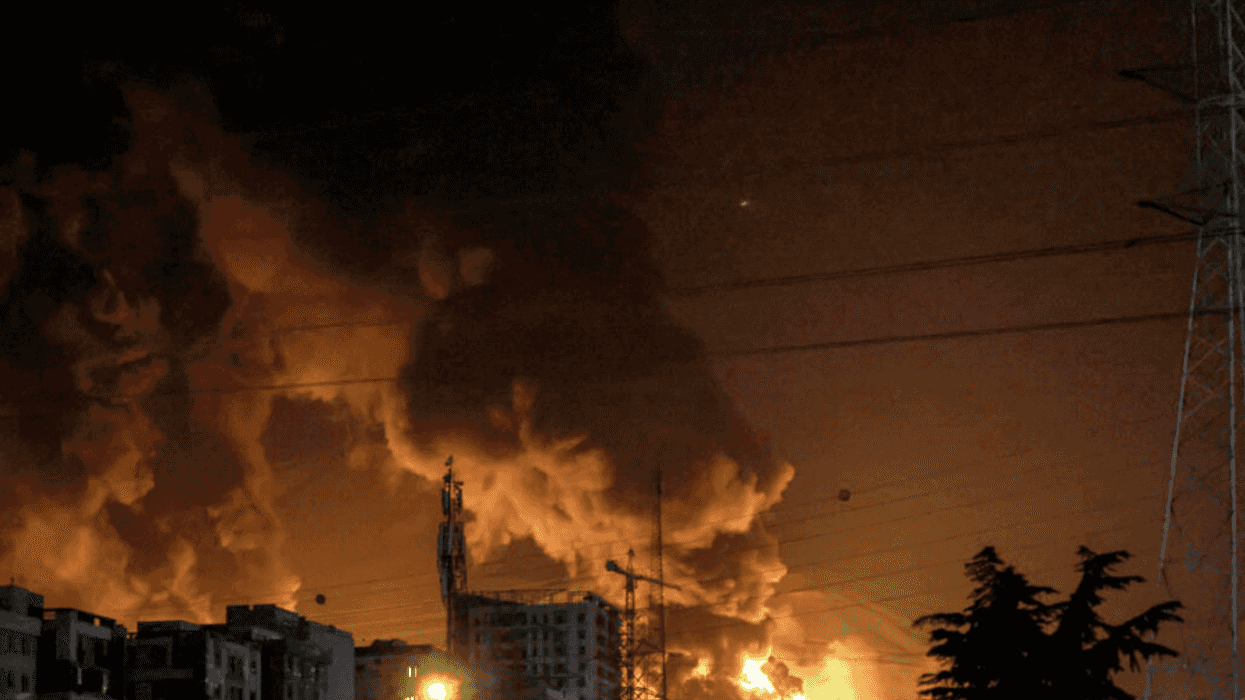
Fire raging in oil depot northwest of Teheran, Iran
A striking aspect of Donald Trump’s warmaking is the contrast between the orderly deployment of American military power and the chaotic disorder of its civilian leadership. From the Joint Chiefs of Staff all the way down, US forces are executing the presidential directive to attack Iran, while defending our bases and allies, with their usual surefire efficacy.
And from the Oval Office all the way down, the Trump administration is pursuing a chaotic, contradictory, and potentially disastrous approach to this conflict, with no clear objective and no forward plan.
Discerning any strategic purpose to Trump’s actions, behind the barrage of lies, bluster, and propaganda emanating from the White House, is impossible. Indeed, the absence of any stated strategy or end point to this war -- as it blazes across the region with unpredictable consequences – raises the suspicion that the administration’s intentions are purely political, selfish, and corrupt. Its greatest success so far in this war is to drive the Epstein files off the front pages, airwaves, and internet.
But the questions provoked by this sudden conflict are proliferating, even as the president, Secretary of State Marco Rubio and Defense Secretary Pete Hegseth refuse to offer any comprehensible answers.
If the Iranian nuclear program was obliterated during the 12-day war last summer, then why did the US and Israel need to destroy it again now? If the aim of this war is regime change, then why would Trump have chosen members of the regime to take over after he ordered the assassination of Ayatollah Ali Khamenei? If the aim is not regime change, then why would Trump and members of his war cabinet urge Iranian civilians to seize power in the wake of US bombing? If the regime does not fall, then how will it be possible for American officials to reach a ceasefire or peace settlement after killing Iran’s leaders during the last round of negotiations?
Rubio is now telling us that the United States initiated this war because Israel was about to attack Iran, regardless of American policy, and therefore we had to mount a pre-emptive strike, anticipating an Iranian response. This reckless narrative underlines the worst antisemitic conspiracy theories about our partnership with Jerusalem – and puts the lie to claims by Trump and Hegseth that our own country was in imminent danger of attack by Iran (which possessed no weapons that could reach our shores).
As a harsh critic of the 2003 Iraq invasion and its bloody, costly aftermath, Trump might have been expected to avoid another ill-founded Mideast quagmire – or at least to have ordered up a plausible scenario for when the bombing stops. Yet it is increasingly plain, as Hegseth, Rubio and his assorted minions offer up a series of inconsistent and implausible assertions, that there isn’t even a drawing board, let alone a blueprint. They can’t even tell us whether United States troops will be sent into Iran, in gross violation of Trump’s campaign promises. Their only believable prediction is that more of our airmen, soldiers and Marines will die.
In the absence of forthright and credible leadership from the White House, this is what we suspect: Trump’s success in capturing Venezuelan dictator Nicolas Maduro induced a dangerous sense of hubris in the American president. Despite sharp warnings from his own handpicked Joint Chiefs chairman Dan Caine, who told him to expect terrible consequences if we went to war in Iran, he abruptly scuttled promising negotiations for "epic fury." And he did all this for reasons that we still do not know but can only guess.
My best guess? We have come full circle to the Iraq fiasco Trump denounced so many times-- except that the underlying motivation this time is not some lofty geopolitical dream, or even a scheme for vengeance, but merely to distract us from the emerging depravity of the man in power.
Joe Conason is founder and editor-in-chief of The National Memo. He is also editor-at-large of Type Investigations, a nonprofit investigative reporting organization formerly known as The Investigative Fund. His latest book is The Longest Con: How Grifters, Swindlers and Frauds Hijacked American Conservatism (St. Martin's Press, 2024). The paperback version, with a new Afterword, is now available wherever books are sold.
Reprinted with permission from Creators
- Why War To Impose Regime Change On Iran Will Bring 'A World Of Hurt' ›
- As Right-Wing Influencers Blast Iran War, White House Is Firing Back ›
- 'Woke Right' Influencers Splitting From Trump's MAGA Base Over Iran War - National Memo ›
- Danziger Draws - National Memo ›
- Why Trump's Ego-Driven, Impetuous War Just May Leave Iran More Dangerous - National Memo ›
- Trump 'Credits' Hegseth For Iran War -- And Sets Him Up As Scapegoat - National Memo ›
- Iran Escalates Retaliatory Strikes as U.S. Signals Long Battle - The New York Times ›
- The US-Israel War on Iran: Analyses and Perspectives ›
- US and Israel offer shifting justifications for Iran war: what we know on day four | US-Israel war on Iran | The Guardian ›
- Why did US and Israel attack Iran and how long could the war last? ›