Tag: todd blanche
James Comey

Why Trump's 'Seashellgate' Prosecution Of James Comey Is Dead On Arrival

When the first James Comey indictment dropped last September, I called it the single most shameful act in the Department of Justice’s history. My singular outrage led me to devote five consecutive Substacks that week to cataloguing the wreckage: the legal infirmities, the procedural malpractice, and the naked political origins.

That case duly crashed and burned, dismissed as a legal nullity after a series of courtroom debacles that would have been farcical if the stakes hadn’t been so grave. Rather than accept the rebuke, the DOJ has doubled down with a bespoke indictment, custom-built for one defendant and one audience.

Even as that failed indictment remains technically on appeal, the DOJ now has brought a second indictment of the former FBI director in a different district on an entirely different theory. The charge, if anything, is even more bankrupt and tawdry than the first.

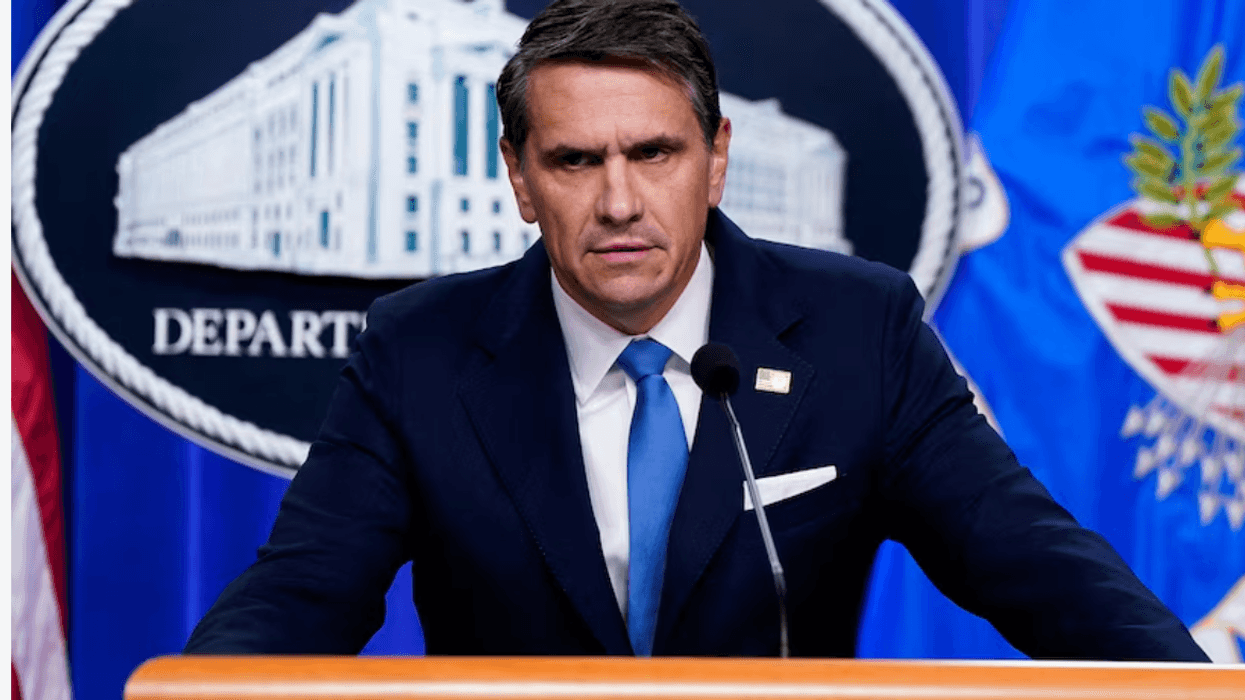
Of course, the filing does not come as the same sort of surprise this time. In his less than 4 weeks as Acting Attorney General, Todd Blanche has quickly reached new lows of lawlessness and shameless servility to the president. It was entirely predictable that he was out front at the press conference preening about the latest charges against one of Trump’s most avowed enemies.

But the charge, if less stunning, is no less appalling. And the press conference included a series of lies and half-truths that not long ago would have been stunning to hear from the lips of the nation’s highest federal law enforcement officer.

Contrary to the multiple whoppers Blanche told at his press conference Tuesday afternoon, this is decidedly not a normal case nor one the Justice Department would bring against any other defendant. Moreover, like last week’s indictment of the Southern Poverty Law Center, it offers literally no evidence of the core alleged conduct, and the theory embedded in the charging document actually contradicts what Trump and his circle of sycophants have been publicly claiming for nearly a year.

The facts are almost too silly to state with a straight face, but here they are. Last May, James Comey was on vacation on the North Carolina coast. He came upon—did not arrange, did not commission, did not construct—a collection of seashells that someone else had assembled on the beach in the pattern “86 47.” He photographed it and posted it on Instagram with the caption, “Cool shell formation on my beach walk.”

That’s the case, the entire godforsaken case.

On that filament, the Department has tried to balance a federal indictment for threatening the life of the President of the United States.

Comey responded to the indictment Tuesday with calm resolve: “I’m still innocent. I’m still not afraid. And I still believe in the independent federal judiciary. So let’s go.”

The charging statutes are 18 U.S.C. § 871(a), which prohibits knowingly and willfully threatening the life of or bodily harm to the president, and § 875(c), which prohibits transmitting such a threat via interstate commerce.

Both are real statutes that real prosecutors charge in real cases. Actual examples include the defendant who mailed President Reagan a series of letters specifying the exact date, time, and place he planned to kill him. Or the security guard who told a coworker he was going to Washington to kill President Nixon, and repeated it days later with a Secret Service agent listening from the trunk of his patrol car.

As these examples illustrate, § 871 carries a high intent requirement. To gain a conviction, the DOJ will have to prove that Comey “knowingly and willfully” transmitted a threat to kill or harm Trump.

Compare those to the wan facts in the Comey indictment. Most glaringly, the Department has not proffered a shred of evidence to suggest that in posting the found seashell pattern to his Instagram account, Comey was knowingly threatening the president.

To the contrary, the record points entirely the other way. Within hours of the post, Comey sat voluntarily with Secret Service agents and told them flatly that he had no idea the image would be read as a threat; that he understood “86 47” as a political sentiment, not a call to violence; and that he opposed violence of any kind. He deleted the post the same day.

Knowing all this for nearly a year, the government, or really Blanche, decided now to bring the charge that surely delighted Trump. But it included no evidence of the core element in the statute, namely, Comey’s intent.

Pressed on the point Tuesday, Blanche prevaricated. A reporter asked Blanche directly, how do you prove intent when Comey said he associated the numbers with politics, not violence, and took the post down immediately, Blanche had nothing to offer. He fumfered a generic, “Witnesses, documents, the defendant himself.” In other words, "beats me."

And in fact, there is no answer. I wrote about the SPLC indictment that the absence of any fraudulent statement is a hole you can drive a truck through; the same is true here of the absence of any proof of intent to threaten.

The paucity of proof of intent also puts the lie to both Blanche’s and Kash Patel’s assurances that this indictment is the fruit of a painstaking, eleven-month federal investigation marshaling the full resources of the FBI. Nonsense. Every fact necessary to evaluate this case was on the table within forty-eight hours of Comey’s post: the photograph, the caption, the deletion, and Comey’s on-the-record disavowal to federal agents. The three-page indictment adds nothing. The eleven months were not spent developing evidence. They were spent waiting for the right moment and the right acting attorney general.

No less than the first indictment, this filing is destined to go nowhere.

A brick wall stands only a few feet from the indictment in the form of the leading Supreme Court case interpreting § 871. Watts v. United States arose from the Vietnam War era. A man at a political rally declared, “If they ever make me carry a rifle, the first man I want to get in my sights is L.B.J.” The Supreme Court reversed Watts’s conviction under § 871. The Court held that Watts’s statement was political hyperbole protected by the First Amendment.

Watts presents an insurmountable barrier to the Comey charge. The government knows that full well. It knows, therefore, that it should never have brought the case, which requires (or did before the Trump DOJ shredded the Principles of Federal Prosecution) a determination that a conviction beyond a reasonable doubt is probable.

If “the first man I want in my sights is LBJ” spoken aloud at a rally does not constitute a true threat, a photograph of seashells on a public beach—arranged by a stranger, captioned as a curiosity, posted and deleted within hours, and absent any additional proof of intent—is D.O.A. The courts will never countenance it, even if the Department is banking on a sympathetic jury in the Eastern District of North Carolina.

It’s one of the more heartening signs of a broader pushback against authoritarianism that Trump’s reprisal prosecutions have consistently run aground. In this crucial area, the rule of law has, so far, withstood the rule of one. I expect it will here as well. But that has to turn on the continued vigilance of courts and all of us, even when confronting ridiculous conduct from DOJ that should, and in better times would, collapse of its own weight.

To close with the words of the unjustly charged defendant who today appeared in court and was briefly placed under arrest, “It’s really important that all of us remember this is not who we are as a country…Keep the Faith.”

Harry Litman is a former United States Attorney and the executive producer and host of the Talking Feds podcast. He has taught law at UCLA, Berkeley, and Georgetown and served as a deputy assistant attorney general in the Clinton Administration. Please consider subscribing to Talking Feds on Substack.

Reprinted with permission from Talking Feds.


Trump 'Justice': Fascists Celebrate Bogus DOJ Indictment Of Southern Poverty Law Center

Trump 'Justice': Fascists Celebrate Bogus DOJ Indictment Of Southern Poverty Law Center

More than friendly to fascists both abroad and at home, the Trump administration is now seeking to destroy the Southern Poverty Law Center – historically one of the nation’s most powerful and effective opponents of the Ku Klux Klan, American neo-Nazis and other white supremacist movements.

On April 22, Acting Attorney General Todd Blanche and FBI Director Kash Patel announced – at a blatantly political press event – that the Justice Department has indicted the SPLC for “wire fraud, false statements, and conspiracy to commit money laundering.” The indictment, described by Patel as “massive” and “sweeping,” relies on the notion that the SPLC ‘s use of paid informants in violent white supremacist outfits such as the Klan and the neo-Nazi National Alliance and Atomwaffen somehow defrauded its donors.

Blanche and Patel went on to assert that those payments -- which over the years amounted to millions – had financed the continued existence of those groups, a claim echoed in right-wing media outlets. In the New York Post, for instance, FBI a columnist wrote that by paying its confidential informants, the SPLC “kept relic organizations like the Ku Klux Klan on life support.” The alleged motive was to justify the SPLC’s own continued existence and fundraising by maintaining a threat from fascist violence, which Republicans in Washington have persistently minimized or dismissed. Indeed, the Trump administration has hired and promoted any number of far-right extremists, especially since its return to power.

The absurdity of the indictment is obvious to anyone – including former federal prosecutor Blanche – who knows how the FBI prosecutes organized crime, terrorism, narcotics smuggling or violent extremism, in nearly every case depending on paid informants. In fact, over the past few decades, the FBI and the Justice Department have relied on information from SPLC and its informants to jail violent Klansmen and Nazis. The indictment also charges that SPLC “concealed” its identity behind false fronts when sending money to informants, just as the FBI and the Justice Department would do, so as not to expose their paid spies.

To suggest that the SPLC “supported” the activities of those criminal groups, as the DOJ indictment alleges, is precisely the same as saying that federal prosecutors and FBI agents were responsible for financing the Mafia, narcotics cartels and terrorism networks.

Under questioning from reporters, Blanche essentially admitted that the indictment’s fundamental claim is baseless. Asked whether the indictment specifically alleged that the SPLC payments benefited the Klan, Atomwaffen or other extremist groups, Blanche admitted that it offered no such evidence. “To the extent that there’s any link between that individual receiving the money and benefits to that organization,” he said, “that’s not in the indictment.”

Not surprisingly, perhaps, former federal prosecutors who have gone after the Klan and other violent extremists were appalled by the government’s attack on SPLC. Former federal prosecutor Doug Jones of Alabama described the indictment as “outrageous” and “pure political retribution” by Trump. Having taken down Klan groups in court, Jones recalled how the SPLC “helped dismantle the Ku Klux Klan’s oerations in Alabama and beyond” in 1981, when its attorneys and investigators secured justice in a Mobile lynching incident.

There are literally dozens of similar cases in the SPLC files.

It isn’t only liberal lawyers who can see through the phony arguments in the DOJ indictment. In The Free Press, Bari Weiss’s Trump-friendly publication, the conservative Yale law professor Jed Rubenfeld warns that “the Justice Department will have a hard time proving that the [SPLC’s] use of informants amounts to fraud.”

More than one conservative has welcomed the indictment as just desserts for an organization whose views they despise, particularly because the SPLC has defended Muslims, gays, and trans people as well as Blacks and Jews. So much for freedom of speech, a value that is upheld on the right only when convenient and comforting.

Still. the most telling commentary on this disgraceful frameup comes not from liberals or conservatives, however, but from the fascist right. Gleeful as they are, the fascists admit that the indictment is nonsensical and indeed view its legal falsification as evidence that Trump is truly on their side.

Curtis Yarvin, the fascist gadfly whose writings have influenced various Big Tech figures and others in the Trump circle, celebrated the indictment on X: “What’s cool is that I don’t really see a strong legal case that the SPLC shouldn’t be able to run these kinds of wacky black ops. That means DOJ is prosecuting the SPLC just because it (kind of) can. If so this would be an unusual sign of ‘finally getting it.’”

And on the "revolutionary fascist" American Futurist Telegram channel – whose authors include former members of the Atomwaffen neo-Nazi group, linked to at least five political murders – the indictment won praise for the same sickening reason. Far from secretly propping up violent white nationalists, they know that SPLC was their worst enemy.

“The SPLC was not funding racist groups to enable their racism — they, in fact, were not funding racist groups at all,” the American Futurist-linked TAF Private channel posted, according to Raw Story. “What they were doing was funding bad actors within groups, with the intention of destroying those groups from the inside.”

The enemy of my enemy is my friend, as the old saying goes – and for the Trump White House, the enemy of fascism is its enemy, too.

Joe Conason is founder and editor-in-chief of The National Memo. He is also editor-at-large of Type Investigations, a nonprofit investigative reporting organization formerly known as The Investigative Fund. His latest book is The Longest Con: How Grifters, Swindlers and Frauds Hijacked American Conservatism (St. Martin's Press, 2024). The paperback version, with a new Afterword, is now available wherever books are sold.

Worse Than The Old Boss: Todd Blanche Drives Justice To A New Low

Worse Than The Old Boss: Todd Blanche Drives Justice To A New Low

When Pam Bondi was sacked earlier this month, amid reports that her firing offense was, of all things, insufficient zeal in securing convictions of Trump’s enemies, the logical question was: just what more could she have done? Bondi had seemingly pulled out every possible stop to deliver the scalps to the King, foiled only by the checks that exist outside DOJ’s walls, especially grand juries that refused to indict the innocent targets she had placed before them.

At the time, the question seemed rhetorical. It wasn’t. In Todd Blanche’s three weeks as Acting AG, he has taken screws that seemed fully turned and tightened them another notch. His initial moves suggest that, hard as it is to conceive, he will be even more vicious, more slavish toward Trump, and more willing to jettison the public interest and the rule of law than was his consummately servile predecessor.

Meet the new boss. Worse than the old boss.

In 14 months, the shortest confirmed tenure of any Attorney General in 60 years, Bondi managed to eviscerate the mission and good faith of the DOJ to the point where courts that had always assumed the best of government lawyers had begun to assume the worst. It was the antithesis of justice without fear or favor, the Justice Department’s historic watchword: instead, Bondi’s DOJ delivered favor to Trump’s allies and tortured his enemies.

Yet in barely three weeks on the fifth floor, Blanche has done Bondi one better, which is to say the country one worse. The Department, in April, has moved to whitewash the criminal records of the worst January 6 offenders; fired career prosecutors for working righteous cases now in political disfavor; deployed loyalist assistants to intimidate the Federal Reserve in a manner both nakedly political and downright bizarre; and routed a reprisal perjury prosecution to a division with no conceivable jurisdiction over it.

Start with the most historically consequential. On Tuesday, the Department filed a bare-bones motion in the D.C. Circuit seeking to vacate the seditious conspiracy convictions of the worst January 6 offenders: eight Oath Keepers, including founder Stewart Rhodes, and four Proud Boys, including Joseph Biggs and Ethan Nordean.

These men were the architects of the worst assault on democratic self-governance in our lifetimes. Their prosecutions, for seditious conspiracy, arguably the most serious and demanding charge in the federal arsenal, were the hardest and proudest achievement of the largest criminal investigation in DOJ history.

The seditious conspirators had already received an outrageous windfall when Trump commuted their sentences on his first day back in office. Since then, he has embraced them as “hostages,” “unbelievable patriots,” and “warriors,” and called January 6 itself “a day of love.” The motion to vacate takes this grotesque revisionism to its logical conclusion.

The four-page motion offered no legal argument, no claim of innocence, no suggestion of prosecutorial error. It simply declared that dismissal “is in the interests of justice.”

Whose justice might that be?

On remand, the government will move to dismiss with prejudice, meaning no retrial is ever possible. The legal system will formally reflect that Stewart Rhodes and company committed no January 6-related crimes. At that point, these newly exonerated defendants will be positioned to sue the United States for malicious prosecution, just as Michael Flynn did, walking away with 1.25 million taxpayer dollars. A collection of pardoned January 6 defendants has already brought a class action against the Capitol police officers they overran that day, alleging excessive force. Rhodes and company can now wave their own dismissals with prejudice.

This is not, as Bondi and Trump might suppose, the triumph of one political faction over another. The whitewashing of the worst January 6 crimes is an offense against the entire country, Republicans and Democrats, MAGA and never-Trump alike. The convictions Blanche erases belonged to all of us.

The second item involves firing people for doing their jobs, and smearing them on the way out.

This week, the department fired at least four career prosecutors who had worked FACE Act cases under Merrick Garland, simultaneously releasing a 900-page “weaponization” report accusing those same prosecutors of selective enforcement. They got the knife and the smear at the same time.

The Freedom of Access to Clinic Entrances (FACE) Act was passed in 1994 with bipartisan support, its primary target the physical blockading of abortion clinics, with protections for houses of worship added to bring Republicans along.

The felony cases Garland’s prosecutors brought involved defendants who physically blockaded clinic entrances. Not people standing peacefully with signs. The cases were not close calls. In Washington, D.C., defendants forced their way into a clinic and blockaded the doors while a co-conspirator livestreamed it. In Mount Juliet, Tennessee, a coordinated group physically blocked a patient from receiving care while two ringleaders ran a deliberate deception operation to delay police. That is the conduct Blanche has now declared a firing offense to prosecute.

What makes this doubly perverse is the asymmetry Blanche has enshrined as policy: FACE Act cases involving houses of worship get the Justice Department’s full attention, as with the tenuous prosecution of Don Lemon for covering a protest in a St. Paul church; cases involving abortion clinics are now restricted to “extraordinary circumstances.” Same conduct, same statute, different outcomes depending on the political valence of the victim.

Then there is Tuesday’s drop-in visit to the Federal Reserve by two prosecutors in Jeanne Pirro’s office and an investigator.

Chief Judge James Boasberg had already quashed Pirro’s subpoenas targeting the Fed in March, finding that the government had produced “essentially zero evidence to suspect Chair Powell of a crime” and that the investigation was transparently designed to pressure Powell on interest rates. So Pirro dispatched two prosecutors, Steven Vandervelden and Carlton Davis, to show up unannounced at the Fed’s Washington headquarters and request a tour of the renovation project Trump has cast as the source of Powell’s supposed criminal exposure.

It is hard to overstate how anomalous this is. Prosecutors don’t make unannounced visits to subjects of an investigation and ask for a tour. Beyond that, the Fed is represented by counsel, Robert Hur, the former United States Attorney who investigated Biden’s handling of classified documents and found no basis for charges. Contacting a represented party without counsel present is a blatant ethical violation. Hur responded with a tart letter advising Pirro’s office that if it wished to challenge Boasberg’s ruling, the courts provided an avenue. That avenue is called an appeal. Pirro has yet to file one.

A word about Vandervelden and Davis. They are also the same Pirro soldiers who previously tried to indict six sitting Democratic members of Congress for taping a video urging military personnel they need not comply with illegal orders. Vandervelden has no prior federal prosecutorial experience; Davis previously served as a congressional staffer and has a single brief stint as an AUSA to his name.

The result: not a single vote to indict. It’s the first total shutout in federal grand jury practice that I’ve ever even heard about. The old saw is that a grand jury will indict a ham sandwich. It wouldn’t bite on the very different malodorous sandwich Vandervelden and Davis were serving.

The only plausible explanation for the Fed field trip is raw intimidation, a rattling of sabers, saying we still have you in our sights. Trump confirmed as much the next morning, telling Fox Business the probe would continue and that it was “more than a criminal probe.” The President of the United States, on camera, volunteered that his prosecutors are doing something other than pursuing criminal justice.

Finally, there is Cassidy Hutchinson, the then-25-year-old former White House aide whose June 2022 testimony remains one of the most consequential public accounts of Trump’s conduct on January 6. She was a loyal Republican staffer with no political animus toward Trump. She simply told the truth under oath, at considerable personal cost, against documented pressure from her Trump-supplied attorney not to, an attorney she eventually discharged.

The prospective perjury charge centers on her relaying what she had been told by White House Deputy Chief of Staff Tony Ornato about Trump lunging for the steering wheel of the presidential vehicle. The Secret Service agent in the car disputed the account; Ornato himself later claimed not to remember telling her. Relaying in good faith what a senior White House official told you is not perjury, by any stretch. The willful and material falsehood the charge requires is nowhere in evidence.

Bondi opened the inquiry in her final weeks as a last-ditch bid to please Trump. Blanche greenlighted the next step: assigning the matter to Harmeet Dhillon’s Civil Rights Division. Dhillon is a longtime Trump personal attorney, an ardent promoter of his 2020 election fraud claims, and an official who has described her mission as not merely slowing civil rights enforcement but “turning the train around and driving in the opposite direction.”

But perjury prosecutions are not her job. Every division in the Department has its own bailiwick. I don’t know of a single instance in which the Civil Rights Division has handled a congressional perjury case. There is no institutional authority to do so. The assignment is designed for one purpose: to show Trump that the Hutchinson prosecution is in the hands of a trusted enforcer.

What distinguishes Blanche, and has earned him particular contempt among former DOJ colleagues, is that he knows better. Bondi was over her head from day one, a Fox News personality dropped into the nation’s premier law enforcement institution. Blanche is a former Assistant United States Attorney who spent years in the Southern District of New York. He knows that the career prosecutors he has fired acted with integrity and dedication to justice. He knows the value of the traditions he is feeding through a meat grinder, because he was formed by them.

Blanche served in a Justice Department where it was forbidden for the White House even to communicate with DOJ about a pending case, and he knows precisely why that rule existed and what its abandonment means. Now he takes pride in turning that rule upside down.

At his first press conference as Acting AG, asked about Trump’s explicit public demands that DOJ investigate his political opponents, Blanche said: “It is true that some of them involve men, women, and entities that the president in the past has had issues with and believes should be investigated. That is his right, and indeed it is his duty to do that, meaning to lead this country.”

Whoa. The Acting Attorney General of the United States describes it as the president’s duty, and a function of his leadership, to order prosecutions of his political enemies. It is a breathtaking characterization of Trump’s corrupt agenda, now become the Department of Justice’s mission statement.

In three weeks, Blanche has made clear there is no floor he recognizes. He is all in, past Bondi, past any limiting principle. We thought we had seen the bottom. We hadn’t.

And that gives rise to one question, also unfortunately not rhetorical: how much lower can he drive the Department of Justice?

Harry Litman is a former United States Attorney and the executive producer and host of the Talking Feds podcast. He has taught law at UCLA, Berkeley, and Georgetown and served as a deputy assistant attorney general in the Clinton Administration. Please consider subscribing to Talking Feds on Substack.

Reprinted with permission from Talking Feds.

Self-Abasement Theatre: The Curious Case Of Acting Attorney General Blanche

Self-Abasement Theatre: The Curious Case Of Acting Attorney General Blanche

Trump White House cabinet meetings are always opportunities for his appointees to humiliate and prostrate themselves before Dear Leader, but they usually keep the spectacle inside the West Wing. Last week, Acting Attorney General Todd Blanche brought the full Theater of Servility to the Justice Department, at a press conference that was supposed to be about fighting fraud (conveniently timed as the number of allies, donors and others convicted of fraud that President Trump has pardoned approached 70 and taxpayer repayment losses neared $2 billion).

Discussing his role as temporary – or quite possibly permanent – replacement for Pam Bondi, the aptly named Mr. Blanche (blanch is, fittingly, another word for whiten) used the occasion to publicly declare his devotion.

“As to whether or not I want this job, I did not ask for this job. I love working for President Trump,” he said. “If he chooses to nominate somebody else and asks me to go do something else, I will say, ‘Thank you very much. I love you, sir.’”

I love you sir.

I am something of a student of Mr. Blanche, having pored over some 500 pages of the insane softball interview he did with sex monster Ghislaine Maxwell before rewarding her with a transfer from a high-security penitentiary to a puppy and cupcakes Camp Fed.

The heartfelt “I love you” struck me as worthy of further research.

What, exactly, would provoke a smart man with a law degree and a decent reputation to this level of public self-abasement?

A little digging turned up what looks like Todd’s Rosebud.

Blanche was born in 1974, a solid Gen X guy, son of a preacher man. When he was about ten years old, his father, Rev. Richard Blanche of Faith Bible Fellowship International, lost his church building and started hosting his flock at the family’s split-level ranch on a suburban cul-de-sac in Colorado Springs.

Three or four times a week, Rev. Blanche would set up folding chairs for 60 to 70 people in his living room and preach. Faith Bible International is a Pentecostal church, a “charismatic” sect, where speaking in tongues and other emotional noise-making is encouraged.

Soon enough, neighbors complained. Since the area was not zoned for such gatherings, the City of Colorado Springs ordered him to stop.

The order is somewhat surprising, given that Colorado Springs is a locus of hyper-Christianity – home to NORAD and the US Air Force Academy (about seven miles away from the Blanche home), totally proselytized by evangelical Christians to this day.

The presence of so many religious wackos around the tip of the fearsome nuclear spear is one of the great symbols of the American superpower.

Todd’s dad did not take the city’s orders lying down. He resisted, got a six-month prison sentence and multiple fines. Rev. Blanche’s case was no minor pro se zoning defense — it escalated into organized constitutional litigation with lawyers from the nascent (now powerful) national religious-liberty legal groups.

Eventually, he became something of a minor cause célèbre. The conservative Rutherford Institute was the first to step in, followed by the Christian Legal Association, which used the case to mount a deliberate constitutional confrontation over religious land use.

For context: In the 1980s, religious proselytizers warned that American secularism was on the verge of using state power to crush believers and drive them into secret meetings in basements, as had supposedly happened in Soviet Russia. The paranoia of the American Christianity with which we are so familiar today – the persistent claim of being “under assault” – was just ginning up.

In 1986, Liberty University’s The Fundamentalist Journal published a lengthy article on Rev. Blanche’s travails. In it, he claimed the stakes were extremely high: “A prayer before a meal or devotions among family members could constitute religious activity,” he warned – and could be banned.

We can surmise a few things about the effect this might have had on Todd in his formative years, growing up in a fervent white Protestant Pentecostal family with in-home churching.

Psychologists and sociologists have long documented a persistent link between sectarian Protestantism and authoritarian parenting ideologies. In its more rigid expressions, Christian nationalist parenting produces a certain type of adult in whom obedience to authority, including submission to – if not a deep need for – a powerful daddy figure, is thoroughly embedded.

As a boy, Todd witnessed the spectacle of state power crushing his dad’s freedom to worship in their home. Despite the Christian legal community’s best efforts, eventually the liberals won.

The Blanche family eventually moved to Florida. Todd went off to a four-year military high school in New Mexico, then bounced through LSU, Beloit and American University (he was a stellar athlete). Unsurprisingly, given his youthful exposure to the legal system, he chose to go into law. No Ivy League for this preacher’s son… he took classes at Brooklyn College of Law at night, while grinding as a paralegal during the day.

Blanche eventually worked his way into Cadwalader, Wickersham & Taft, one of Manhattan’s whitest white-shoe law firms. He was reportedly in the running for a federal judgeship, but those hopes were dashed when Sen. Chuck Schumer announced that he would not be appointing white males for a while – a DEI affront Blanche has never forgotten.

During Trump 1.0, he defended some Trumpworld denizens, including Paul Manafort, who was serving a 47-month federal sentence for bank fraud, tax fraud, and failure to disclose foreign bank accounts. Blanche managed to prevent New York prosecutors from bringing state charges (brought specifically to fend off an expected Trump pardon) and Manafort soon walked.

From there, he moved up the food chain: Trump lawyer Boris Epshteyn, Rudy Giuliani pal Igor Fruman, and other figures from the extended underworld. All that success caught Trump’s attention and Blanche left the firm to become the Big Man’s personal lawyer. That decision, he has said, was made in part out of disgust with the New York legal community’s supposed unwillingness to defend Trump (though Trump’s litigation probably kept plenty of lawyers well-fed for years).

Blanche now plays Tom Hagen to Trump’s Godfather – the indispensable chill consigliere, the one non-blood-related member of the trusted circle. He ran defense in the Stormy Daniels hush money case, the Georgia election scheme, and Mar-a-Lago classified documents mess.

As Deputy Attorney General, Blanche has continued to prioritize defending Client Number One over the American people. He sat by while his boss pardoned more than a thousand J6 criminals and dozens of fraudsters. After the DOJ pulled a thousand FBI agents off of crime-fighting duties to scour the Epstein files for mentions of Trump before the releases began, Blanche spent two days in a Tallahassee women’s prison gently and obsequiously interviewing Ghislaine Maxwell before she was transferred to a low-security facility with puppies and a comfy room for family visits where prison staff provide snacks.

And last summer, as DOJ panic over the Epstein files release demands reached a fever pitch, Blanche ordered the FBI to place images from the sealed trafficking cases – including material related to Epstein’s jail death – on a thumb drive, then somehow “lost” it, provoking a frenzy of concern. The end result? Nothing was released.

Blanche appears to have found his life’s calling – using state power to defend an autocrat who provides him and the rest of the MAGAs with a Big Daddy to cower to, venerate and obey.

During the Stormy Daniels trial, Blanche subjected himself to withering abuse. According to Jonathan Karl’s book, Tired of Winning, Trump at one point accused Blanche of making decisions that would destroy his chances of a second term (blaming a lawyer rather than the entitled decisionmaking that created the crisis in the first place… of course).

“You little fucker!” Trump shouted in Blanche’s face, according to Karl’s source. “You are going to cost me the presidency!” He went on to lash out against other lawyers on his team, saying: “They want me to be indicted! That’s in the middle of the primaries! If I lose the presidency, you are going to be the reason!”

One of the first things Blanche did after replacing Bondi was to declare the Epstein case over and done with, with no more releases planned – despite three million pages of documents still secreted in the vault. Tomorrow, Todd Blanche is scheduled to be questioned by the House Oversight Committee in a closed-door session.

Fear not, oh Donald, my liege; the Epstein cover-up is in good hands.

Mr. Whiteout is on the case.

Nina Burleigh is a journalist, author, documentary producer, and adjunct professor at New York University's Arthur L. Carter Journalism Institute. She has written eight books including her recently published novel, Zero Visibility Possible.

Reprinted with permission from American Freakshow
Shop our Store

Headlines

Editor's Blog

Corona Virus

Trending

World