'Trad Wife' Influencers Spreading Far Right Disinformation Against Birth Control
Cancer. Infertility. Unintended abortion.
These are just a few of the fears young patients bring to Dr. Bayo Curry-Winchell, a family physician in Reno, Nevada. For some of her patients, she said, taking birth control pills is like wearing a scarlet letter.
“Taking the pill has almost become a bad thing, where you won’t fit in if you’re taking it.”
Curry-Winchell, medical director for the Saint Mary’s Urgent Care Group, said the trend away from hormonal birth control has become pervasive in recent years among her patients between about 14 and 32 years old. According to a recent KFF poll, that’s the same age group most likely to say they get their health information from social media.
When she talks with young patients, Curry-Winchell hears concerns about sinister long-term impacts of hormonal birth control—and the language often echoes conservative influencers who have no medical training.
Doctors say what is at stake is not whether every patient chooses the pill or an IUD, but whether they can make evidence-based decisions about preventing pregnancy in a country with some of the highest maternal mortality rates among wealthy nations.
Misinformation is reshaping exam-room conversations
Curry-Winchell and other doctors interviewed for this story say they have no problem with patients who are not interested in hormonal birth control. What they’re worried about is a growing group of influencers who are robbing young women of the ability to make informed choices.
Dr. Mariko Rajamand, a Reno OB-GYN and founder of FEM Women’s Wellness, said she now meets about three to five patients a day, typically in their early 20s, who are completely resistant to hormonal birth control. On one recent day she saw six patients under 25; two had IUDs and four refused to consider any hormonal contraceptive method at all.
Rajamand said she now spends around 15 minutes in many new-patient appointments just dispelling misinformation. “I tell them that my goal is not to hurt you, it’s to help you,” she said. “I am going to partner with you. I will never push you to do something that you’re not comfortable with.”
Usually, after two or three visits, she said, patients who absolutely do not want to get pregnant but initially opposed hormones decide they are less afraid of hormonal birth control than they thought.
Curry-Winchell, a mother of two young daughters, said countering disinformation about hormonal birth control starts with building “a level of trust and comfort” and letting young women know she is not going to judge them. “I tell them that I want to be their co-pilot,” she said.
“I’ll just be curious and ask, ‘What do you know? Because I don’t know what you know,’” she said. “We just make it a conversation, and I can hit that misinformation in a more targeted way once I know where a patient is coming from in terms of her hesitancy and concerns.”
The problem is bigger than any one clinic. On social media, disinformation about the safety and side effects of the pill and other forms of hormonal birth control has become so pervasive that the American College of Obstetricians and Gynecologists issued a nationwide fact sheet on contraception misinformation in October. A National Library of Medicine study published in 2025 found it has become “increasingly difficult to distinguish accurate content from misleading information” about contraceptives on TikTok and urged providers to be ready to counter online myths in the exam room.
Influencers push fringe claims to massive audiences
Social media posts about health issues often lack context, and algorithms reward content that is sensational and emotionally charged. Influencers rely on such algorithms for views and, in turn, their paychecks.
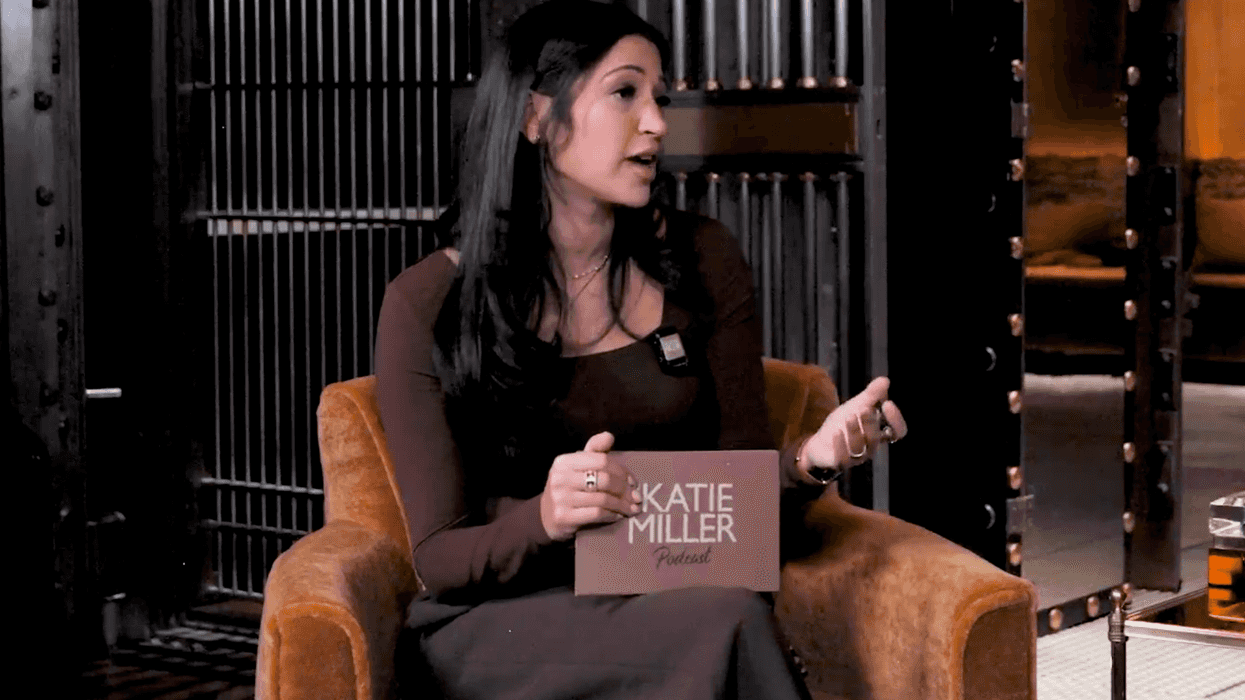
One such influencer is podcaster Candace Owens, who has millions of followers on YouTube, Instagram and TikTok and proudly describes herself as a “full-time wife and mother” who does not believe in birth control. Katie Miller, the wife of White House Deputy Chief of Staff Stephen Miller, told her hundreds of followers on X that the pill is “poison for your body and mind.”
Alex Clark, a conservative “health and wellness” podcaster, testified in the Senate and later told her hundreds of thousands of followers that women were “tricked” by pediatricians into going on the pill as teenagers to clear up acne or ease cramps. Clark has also claimed that women who stop taking the pill find they are no longer attracted to their husbands.
Then there is Elon Musk, who has fathered 14 children and has repeatedly insisted that declining birth rates are the “biggest danger to civilization.” In an interview with Tucker Carlson, he claimed hormonal birth control changes women’s personalities and preferences in partners. Carlson has more than 5 million subscribers on YouTube. A clip of that conversation now has hundreds of thousands of likes and more than 100,000 shares on TikTok.
Why women are primed to distrust
Dr. Sharon Thompson, an OB-GYN in Phoenix, said one reason influencers have made such headway sowing distrust is the way medicine has treated women for generations.
She said historically women have been brushed off and dismissed. “Medicine has a bad habit of attributing many things that women complain of to hormones,” Thompson said. “Always in history people just told women what to do—and now this is the pushback.”
“The sad truth for a woman is that she can take her symptoms to her primary doctor and she can not be listened to or she gets brushed off,” she said. “It drives me bananas… when women feel like they are getting the runaround or they aren’t getting equal treatment.”
Michigan-based OB-GYN physician assistant Nikki Vinckier has seen the fallout firsthand. She said she was having “multiple of the same conversations every single day” with young patients asking to come off hormones and try “natural family planning,” a method they had seen promoted on social media.
Vinckier said the challenge is to listen “without gaslighting their experiences and saying, ‘Oh no, none of these side effects exist.’” While studies show hormonal birth control is safe for most patients, she said, there are women who “don’t fit the mold,” and it is condescending to tell a patient her experience is not valid.
“It’s important not to negate the experience of any patient,” Vinckier said. “I want to educate them and empower them to make their own choice.”
“Natural” methods sound safer than they are
Because of fears being pushed on social media, doctors say many patients now come in asking for a “natural” form of birth control instead of the pill, an IUD, or another hormonal method of contraception.
Natural fertility awareness methods require women to take their temperature every morning at the exact same time, check their cervical mucus discharge daily, chart their cycles and abstain from sex for at least 11 days a month when they calculate they might be fertile.
In reality, natural family planning or fertility awareness fails 22to 25 percent of the time to prevent pregnancy in a given year, according to the National Library of Medicine.
“Young women patients often feel that ‘I should be doing it all natural’ or ‘You’re doing birth control the wrong way,’ or ‘You’re not in tune with your body if you do a medication,’” Curry-Winchell said. “They think that if it’s natural, it’s the safest and most in tune with their bodies.”
She said the “beautiful packaging” of natural fertility awareness kits makes the method look like a simple process, but in reality “takes a lot of consistency.” “Plus, our hormones, the way we work, the way we operate, we’re all different. We’re not one-size-fits-all.”
Rajamand said she has “a whole conversation about natural family planning—what it is and what it isn’t.”
“It really only works for the woman who is ovulating perfectly and I have yet to meet that woman,” she said. “If they are going to go that route, then I’ll have a serious discussion about the rate of pregnancy.”
“I’ll ask, ‘If you get pregnant, is that OK?’” she said. “If their answer is yes, then it’s a nonissue, but if they say, ‘That’s a problem,’ then I say, ‘Let’s come up with a Plan B.’”
Wisconsin OB-GYN and complex family planning specialist Dr. Carley Zeal said she is especially concerned about enthusiasm for “natural” methods in states with strict abortion bans. When patients tell her they want to avoid hormones, she works with them “to find whatever contraceptive method is going to work best for them.”
“It’s not my job to tell them they are wrong or that symptoms they may be experiencing are not real, because their experience is their experience and everybody’s side effects or experience with different medications is important to respect,” Zeal said. “But it’s my job to tell them the data.”
What the data actually say
There is cause for careful consideration before choosing a method of contraception, and doctors acknowledge that hormonal birth control can have side effects. Studies have linked hormonal methods to symptoms like altered stress responses and reduced libido, and one large study found a very small increase in depression among girls ages 15 to 19 using certain hormonal IUDs.
ACOG warns its members that while hormonal birth control can have minor side effects, “those minor side effects can be exaggerated to instill fear and uncertainty in people considering using contraception.”
One of the greatest concerns doctors hear now is a belief that hormonal birth control is “pumping” women full of extra hormones. Thompson said that is simply not true.
“The idea that hormones are harmful is false. Most people, including influencers, don’t realize this,” she said. “When you are using a hormonal method of birth control, if you were to average your hormones out over the month, they are actually less than your ovaries make naturally.”
“That’s why we can use hormonal birth control to treat some conditions,” she added. “Like migraines—they can get better if you have them cyclically—or endometriosis pain. We’re actually dialing your system down.”
Curry-Winchell said the hormones involved—estrogen and progesterone—are ones “you naturally have.” “Women all have a level of these hormones naturally,” she said. “If anything, the pill is just replicating what your body would do naturally to prevent a pregnancy. They’re not ‘pouring’ extra hormones into you.”
She also noted that estrogen and progesterone “aren’t just important to your reproductive health but to your brain health, your gut and your bones…. These are hormones that are vital to you being able to function.”
A political project to stigmatize the pill
Beyond individual influencers who build careers capitalizing on women’s fears, major conservative institutions have begun amplifying the same talking points about hormonal birth control.
The Heritage Foundation, an influential right-wing think tank that produced Project 2025—a blueprint Donald Trump’s administration has now implemented—has published several essays recycling influencer myths about contraception. A newer Heritage “family” blueprint goes further, calling for limiting contraception, IVF and other fertility treatments as part of a decades-long plan to “save the family” by undoing feminist gains.
In an October 2025 essay, Heritage analyst Jennifer Galardi, who is neither a doctor nor a scientist, urged Health and Human Services Secretary Robert F. Kennedy Jr. to “grill the pill” and questioned its safety. Another Heritage piece by policy analyst Emma Waters repeats similar claims without providing scientific evidence, while criticizing the FDA for approving an over-the-counter hormonal birth control pill.
This is not just about “concerns” over side effects. It’s part of a broader project sometimes branded as “pronatalist” or “trad wife” politics. Heritage and allied thinkers explicitly argue that women’s ability to control their fertility is a root cause of declining marriage and birth rates, and promote policies that would push women to marry young, have more children, and rely financially on husbands rather than on degrees or careers. Weakening access to contraception is one way to make that traditional, male‑headed family model harder to opt out of.
Vice President JD Vance has said he wants “more babies” in the US and derided women without children as “childless cat ladies” who are “miserable,” reinforcing a political narrative that casts delaying or preventing pregnancy as a social problem, not a personal decision.
Doctors say they now find themselves countering not only TikTok rumors but also the implied message from powerful politicians and think tanks that women who use birth control—or opt not to have children—are doing something wrong.
Pregnancy is more dangerous than contraception
For Dr. Alhambra Frarey, chief medical officer of Planned Parenthood Southeastern Pennsylvania and a complex family planning specialist, the core medical reality is simple: “Being pregnant is far more dangerous to a woman’s health than any contraceptive.”
“Pregnancy is much more common if you are not on birth control and the health risks of pregnancy are much more significant than from any form of contraception,” she said.
The United States has the highest maternal mortality rate of any high-income country in the world: 22 US women out of every 100,000 die during pregnancy, childbirth or in the months after giving birth. In Canada the rate is 8.4, and in Great Britain it’s 5.5.
“Let’s be real,” Thompson said. “This isn’t about women’s safety. Not having a baby is safer than carrying a pregnancy to term, especially in America where our maternal mortality rates are still way higher than other countries.”
Hormonal methods, by contrast, are extremely effective at preventing pregnancy when used correctly. The IUD is more than 99 percent effective and can last up to 10 years. The pill is about 99 percent effective with perfect use and 93 percent effective with typical use; implants like Nexplanon are also around 99 percent effective, and the Depo-Provera injection is about 95 percent effective.
Clinicians answer with facts—and trust
Thompson said her starting point with patients is not a specific method, but their lives. “My role isn’t to convince you to be on birth control pills,” she said. “What I want to do is talk to you about your life goals.”
“What will make your life enjoyable and fulfilling? And if one of your goals is to finish graduate school, to advance your career, or even to build your relationship with the person that you are with, then it may be in your interest to put off childbearing,” she said. “Birth control pills can help you do that, if that’s the right method for you. They’re not the only method. But if putting off childbearing is right for you, let’s talk about the tools I have to help you do that.”
Thompson and Curry-Winchell both said they are frustrated that, as physicians bound by medical ethics, they stick to evidence-based information while wellness influencers face no such constraint.
“Wellness content creators have no oversight,” Curry-Winchell said. “Versus, as a physician I’m beholden. I could be held liable if something happens to you.”
“I cannot lie to women. I must give them information that is evidence-based,” Thompson said. “We have to have scientific validity behind what we tell people, which social media influencers do not.”
“They made me go to school for a long time so I can give you quality information—pros and cons—and I put it in front of you like a great meal at a restaurant and you don’t have to like it,” she said. “You can pick and choose. But on social media they have no such obligation. They can tell you whatever. They can give you their opinion that they made up yesterday in their living room.”
To help patients find providers who will listen and offer that kind of counseling, Curry-Winchell has created the national directory Clinicians Who Care. The site lists physicians and medical providers who, she said, “take the time to listen to and believe in their patients.”
For Rajamand, the stakes could not be clearer. “The greatest liberating thing for women in our history of human culture has been birth control,” she said. “Thankfully society today says that we’re worth more than just as baby producers. That we have more value.”
Bonnie Fuller is the former CEO and editor-in-chief of HollywoodLife.com and former editor-in-chief of Glamour, Cosmopolitan, Marie Claire, and USWeekly. Follow her substack, Bonnie Fuller: Your Body Your Choice.
Reprinted with permission from The Nevadan.