Tag: trump corruption
America First? Corrupt Trump Family Business Sold Our National Security

America First? Corrupt Trump Family Business Sold Our National Security

The U.S. makes artificial intelligence chips so special, so advanced, that the Biden administration limited their export for national security reasons. They didn't want them to get into the hands of China or Russia.

But days before Donald Trump was sworn in for a second term, go-betweens for an Abu Dhabi royal signed a secret deal that delivered $187 million into Trump family ventures -- so far, as far as we know.

Sheikh Tahnoon bin Zayed Al Nahyan — nickname, the "spy sheik" — had long been frustrated in his campaign to obtain this highly sensitive AI technology. The fear was that our super chips could be diverted to China.

Under the private arrangement, Tahnoon's $1.3 billion fund paid $500 million for 49 percent of World Liberty Financial, the Trump family's crypto enterprise.

A few weeks after Trump returned to power, the United Arab Emirates was given yearly access to about half a million of the most advanced chips. Abu Dhabi is the most powerful of the seven UAE emirates. Tahnoon's brother is the UAE's president.

Zach and Alex Witkoff, both principals in World Liberty, were not left out. They are the sons of Steve Witkoff, the real estate developer whom Trump named U.S. special envoy to the Middle East. The Witkoff family is getting its cut of millions from the deal.

These machinations were complicated and secretive enough to fall under the radar of average Americans. But they amount to an underhanded sale of prized U.S. technology. To wade through the details, read The Wall Street Journal's excellent account of what went on.

Again, these controls were designed to prevent U.S. technology from aiding rival nations in developing military, surveillance and strategic AI expertise.

Another change from the Biden years: Back then, the crypto-based betting platform Polymarket was under a Justice Department probe into money laundering. Now it's made a highly lucrative deal with the New York Stock Exchange's parent company. And its founder, 27-year-old Shayne Coplan, is suddenly a billionaire.

The Commodity Futures Trading Commission considered Polymarket an unregistered exchange open to market manipulation. Thus, it limited Polymarket's U.S. bets to derivative trading.

Polymarket doesn't know the identities of most of the people who trade on its platform. It's been tagged for manipulation on all kinds of bets: What would happen in Russia's war on Ukraine? Who would win the Nobel Peace Prize? Not knowing exactly who's involved lets users trade on insider information. Such activity is illegal, but who would the Securities and Exchange Commission know to go after?

Hours before the "surprise" U.S. military operation to take down Venezuelan leader Nicolas Maduro, bets on that happening surged into Polymarket. One unnamed trader made more than $400,000.

Another form of manipulation is "washing." That's when trades are moved back and forth, creating the impression of an active market. A study out of Columbia University found evidence of wash trading in about 25 percent of Polymarket's volume.

Two months before Trump's second inauguration, FBI agents broke the door of Coplan's Manhattan penthouse apartment. They were probing charges that Polymarket was laundering money. Once Trump was in office, the Justice Department halted its investigation. Why the turnaround? Could it possibly be that Donald Trump Jr.'s venture capital firm is a Polymarket investor? (Junior is now listed as one of the company's advisers.) It should be no surprise that Coplan sat with Donald Jr. during the 2024 Republican National Convention. Thus, things are looking up for Polymarket and its founder.

What's good for America does not necessarily track the Trump family's fortunes. Historians someday will gather a compendium of the Trump era's corruption and self-dealing. And future generations will look on with appalled wonder that all this went on under the public's nose.

Froma Harrop is an award winning journalist who covers politics, economics and culture. She has worked on the Reuters business desk, edited economics reports for The New York Times News Service and served on the Providence Journal editorial board.

Reprinted with permission from Creators.

Will Corrupt Regime And Falling Innovation Signal The End Of American Greatness?

Will Corrupt Regime And Falling Innovation Signal The End Of American Greatness?

Bribery, inflation, plagues, crumbling trade links, stalled innovation — all these negatives helped bring down the once-mighty Roman Empire. But Rome needed centuries of bad leadership to collapse.

Donald Trump seems to be undoing American greatness at warp speed. Sure, the United States possesses strengths that will maintain an aura of power for some time to come. But Trump has turbocharged the kind of destructive governance that could undo us.

Start with bribery, gifts that buy special deals and access. Witness the bags of money going into the Trump family's crypto schemes. Also, Qatar's handing Trump a $400 million jetliner for his eventual personal use. A smaller but astounding act of submission was Amazon's $40 million "investment" in a Melania documentary, most of which goes to her. Grab some Tums as companies needing government favors hand over millions for a White House ballroom, bearing Trump's name.

Such a blatant grift recalls the Emperor Commodus (180-192 A.D.), who turned his palace into a marketplace for selling political payoffs or protection. Consulships and governorships were hawked openly. Roman historian Cassius Dio described Commodus' court as a "shop for offices."

Trump is supercharging inflation, thanks in part to his price-raising trade wars and his spending — the highest peacetime spending outside pandemic disruptions. Add in his tax cuts, which drain the money to pay for the spending, and debt as a percent of GDP is at or near 100 percent.

High tariffs on China led that country — the American farmer's biggest customer — to go elsewhere for corn, wheat, and soybeans. China has already turned to Brazil and Argentina for these commodities.

Trump's response is to call for funneling $12 billion to the suffering farmers. But that's a one-time handout. His unhinged trade policies are fraying long-nurtured trading relationships that could hurt American agriculture for years.

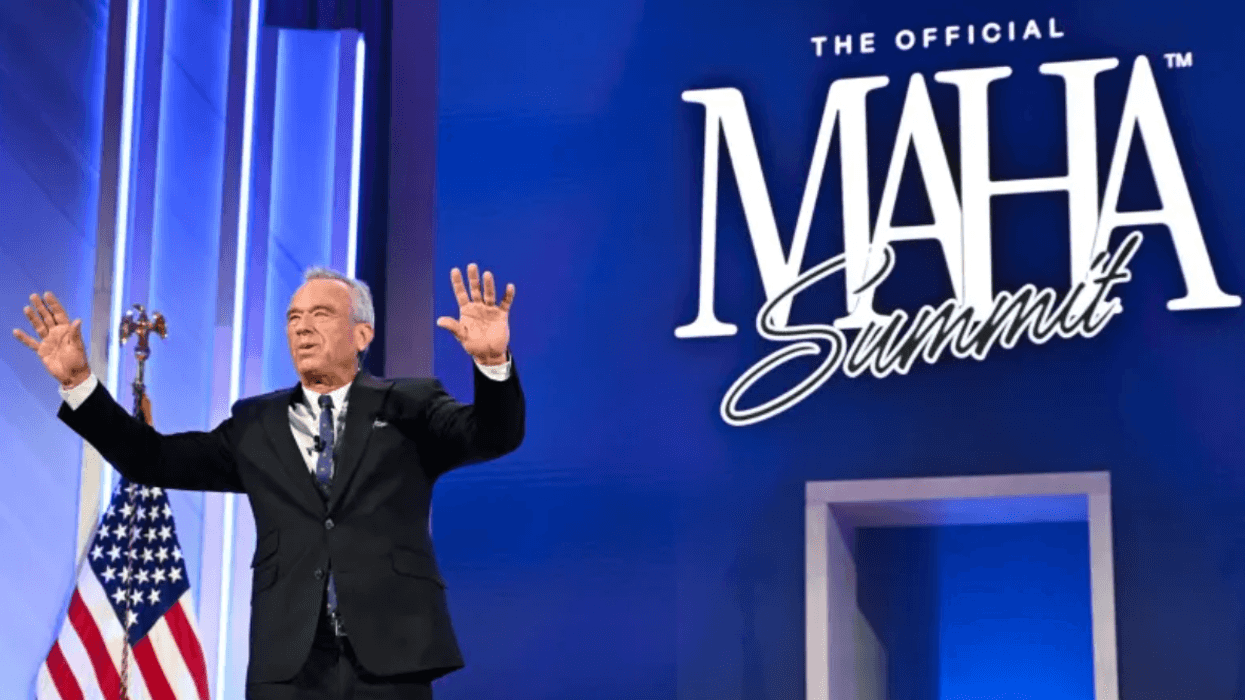
Plagues are not hard to imagine, given Trump's choice of lunatic Robert F. Kennedy Jr. to lead Health and Human Services. A lawyer who made money suing drug companies, RFK Jr. is determined to sow distrust in vaccine safety and seems to be succeeding.

Take the measles vaccine. Lacking serious scientific evidence, RFK Jr. falsely claims that the vaccine may cause autism in children. That has convinced a growing number of parents to withhold measles shots from their children. This rise in "vaccine hesitancy" is behind several measles outbreaks. Before that, the United States enjoyed official measles-free status. It's about to lose that.

Ancient Rome lacked the medical advances we enjoy today but offers examples of what that means. The Antonine Plague (A.D. 165-180), believed to largely be measles, killed as many as 10 million people across the empire.

Kennedy has overseen mass layoffs and buyouts at HHS, and his ignorant attacks on medical expertise have set off resignations of leading scientists. HHS had been a crown jewel of public health and medical research.

Which brings us to stalled innovation.

Especially jarring is the resignation of the top drug regulator Richard Pazdur — the fourth to bail — one month after he was appointed to the FDA. Such turmoil has reportedly made investors wary of backing cutting-edge treatments.

The National Institutes of Health is funding fewer grants. But so is the National Science Foundation, and in areas such as computer science, engineering, math, and physics. No surprise that top researchers are fleeing the U.S. for institutions in other countries.

Commodus, again. He dismissed senior scientific advisers and replaced them with entertainers. Domitian (A.D. 81-96) executed senators considered too educated.

To distract us from governmental chaos, Trump is building gilded ballrooms and staging colossal spectacles, seen in videos of missile attacks on boats that may or may not be carrying drugs.

Wherever he is, Caligula must be enjoying the show.

Froma Harrop is an award winning journalist who covers politics, economics and culture. She has worked on the Reuters business desk, edited economics reports for The New York Times News Service and served on the Providence Journal editorial board.

Reprinted with permission from Creators.

Why Congress Must Investigate Trump's Lies About The Hernandez Pardon

Why Congress Must Investigate Trump's Lies About The Hernandez Pardon

To ordinary MAGA voters in the American heartland — who may have witnessed the ravages of narcotics up close in their own families — the recent conduct of their favorite president must be troubling. While they may not know all the details, many have heard by now that President Donald Trump ordered deadly missile strikes against boats suspected of transporting drugs to the United States from Venezuela — and that he simultaneously pardoned Juan Orlando Hernandez, the former Honduran president serving 45 years in an American prison for trafficking tons of cocaine to our shores.

Even Fox News commentators have noticed a contradiction between Trump's wanton killing of alleged drug smugglers and his merciful beneficence toward the ex-boss of the biggest narco-state in the hemisphere. Yet Trump lapdogs in the right-wing media have tastefully refrained from examining exactly how this strange juxtaposition occurred, or the real reasons behind his actions.

So far, neither Trump himself nor Pete Hegseth, his self-styled secretary of war, have provided any evidence that the boats blown apart in the Caribbean and Eastern Pacific were transporting cocaine, fentanyl or any other narcotics — or that the people killed aboard them had committed any crimes at all. To label these attacks as "war crimes" when we have no declared hostilities with any state in the region is to elevate them above incidents of piracy and murder, which they in fact appear to be.

And while polls show that many Americans would like to see proof of White House assertions about the boat strikes, even including Congressional Republicans, too many Americans are content to see distant and foreign individuals' rights violated in the name of "fighting drugs."

Yet if Trump wants to fight drug smuggling, why did he pardon and release a convicted gangster like Hernandez, whose crimes range from election tampering and official corruption to trafficking and murder? Well, Trump and his minions — including the pardoned MAGA felon Roger Stone, who successfully advocated Hernandez's release — insist that he was a victim of "lawfare" by the Biden administration.

Indeed, Trump has repeatedly claimed that the Biden Justice Department treated Hernandez "very unfairly," without specifying how exactly he was wronged, and further explained that "many people" had urged him to issue the pardon because the prosecution was a "horrible witch hunt."

Trump's account, echoing Stone, reflects precisely none of the known facts concerning the felonious Hernandez. Not long before his indictment, his brother Juan Antonio (Tony) Hernandez, a former Honduran congressman, was convicted in a massive cocaine trafficking conspiracy. Among the charges against brother Tony, aside from assorted assassinations, was accepting a million-dollar bribe — on behalf of his presidential sibling — from kingpin Joaquin Guzman, better known as "El Chapo." Nobody has suggested pardoning Tony yet.

Perhaps that's because Tony's indictment was brought during the first Trump administration, with a prosecution team led by Emil Bove III, who represented Trump himself in private practice and was lately appointed to a lifetime position on the federal bench by his former client after serving several months in a top Justice Department position.

The enormous trove of evidence against both Juan Orlando Hernandez and his brother extended far beyond the testimony of the drug lords, killers and thugs who had sponsored their political careers. Verified exhibits included ledgers kept by the traffickers with entries of payoffs and drug transactions with "JOH," identified as Hernandez by his initials; taped phone calls and other data that discussed cash payments to him in exchange for his protection of drug routes; plus photo albums of Hernandez with cartel leaders at soccer games and other events.

To believe Trump's fantasy version is to discount all the evidence compiled by his trusted attorney Bove — and to assume that the Republican judges who oversaw the indictments and prosecutions were all somehow corrupted by former President Joe Biden. The hard truth is that Biden and the State Department in his administration coddled Hernandez, just as previous U.S. presidents had tolerated Honduran corruption for "geopolitical" reasons. There was no persecution or witch hunt.

So why did Trump pardon Hernandez? The right-wing narco boss had powerful friends close to the U.S. president, far more powerful than the loudmouthed gadfly Stone. Top industrial and tech leaders, including Peter Thiel and Marc Andreessen, and oil baron Kelcy Warren, all major Trump donors, have major interests in Honduras that benefit from Hernandez's National Party political machine.

It is a shadowy network that merits much deeper scrutiny — and possibly a congressional investigation when responsible and honest leadership returns to power.

Joe Conason is founder and editor-in-chief of The National Memo. He is also editor-at-large of Type Investigations, a nonprofit investigative reporting organization formerly known as The Investigative Fund. His latest book is The Longest Con: How Grifters, Swindlers and Frauds Hijacked American Conservatism (St. Martin's Press, 2024).

Reprinted with permission from Creators

Trump crypto

Lame Duck Trump Isn't Fretting Over Polls -- He's Too Busy Cashing Out

Donald Trump's approval numbers continue to crater. Even Republicans have cooled on the president's performance. But the president shows no sign of noticing, nor is he changing his ways. Even his gaslighting has gone wan. He's failed to make Americans believe that prices are going down when they're clearly not.

What gives? Why isn't he trying to win back the public's love? Perhaps because he no longer cares. The only infrastructure he seems interested in building is his family fortune.

Trump charmed farmers into supporting him twice. He's bankrupting them with his trade-war antics. Many farmers have finally turned on him, but so what? Trump's not running again. He no longer needs their affection or their votes.

This ability to seduce then abandon goes way back. In 1995, Trump was a near-broke developer whose Atlantic City casinos were going under. He needed suckers to bail him out and found them through an initial public offering of Trump Hotels & Casino Resorts stock. Rubes buying into his spinner-of-gold act poured $140 million into his empty coffers. In 2004, burdened by debt and never turning a profit, Trump Hotels & Casino Resorts filed for bankruptcy. For every $10 that his marks invested at that stock sale, they had $1 left.

"People don't understand this company" was his explanation.

The presidency offered new and powerful tools to get people to hand over their money. Days after returning to office, Trump's regulators dropped the fraud case against crypto entrepreneur Justin Sun. The Chinese-born speculator, target of an FBI investigation, fixed his problem by "investing" more than $40 million on $TRUMP coins — a crypto meme coin with no fundamental value.

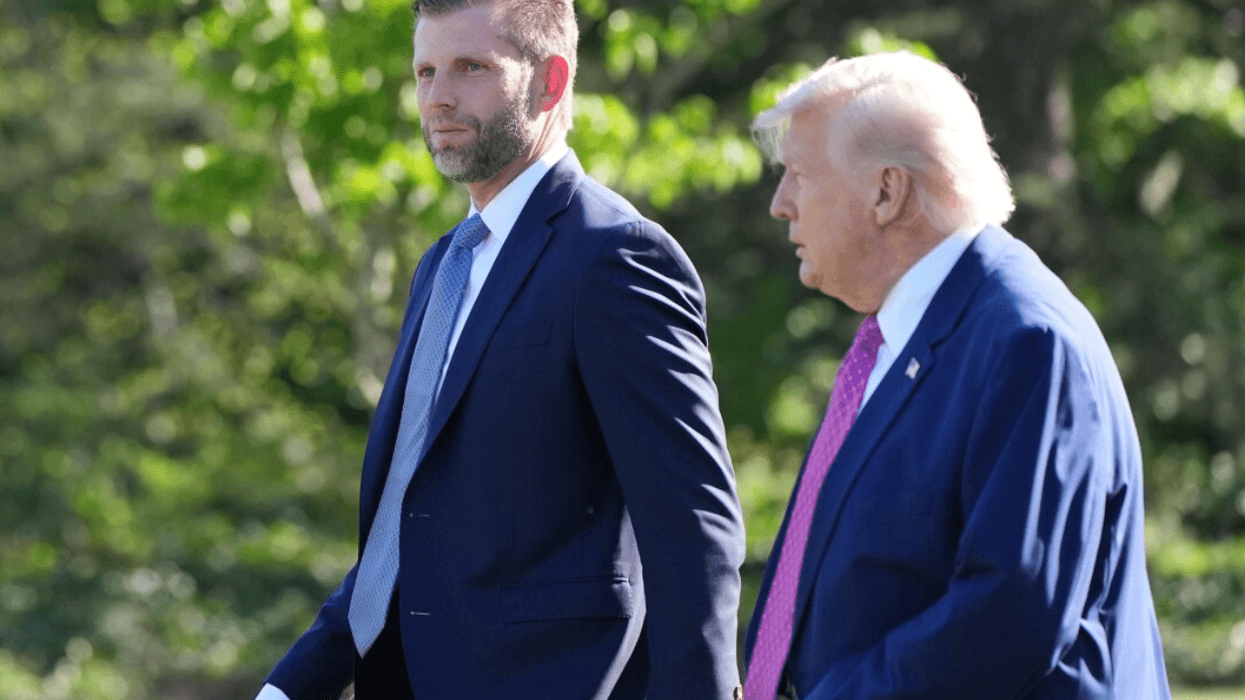
Last month, Trump pardoned Changpeng Zhao. The Chinese-born Canadian had spent four months in prison for failing to prevent his crypto exchange, Binance, from laundering money. Zhao made his woes go away by having Binance facilitate a $2 billion purchase of World Liberty Financial stablecoin. World Liberty was founded by Trump's sons, Eric and Donald Jr.

Asked about the pardon of Zhao, Trump said, "I don't know who he is."

By June, Trump and family had already taken in about $1 billion in crypto ventures alone, according to Forbes' calculations. That included profits from $100 million of World Liberty cryptocurrency tokens that a murky entity based in the United Arab Emirates said it was buying.

You enrich me and I'll get you off whatever hook you're hanging from. How better to embolden financial lawbreakers than a president saying, in effect, I've got your back — for a fee?

Being blatant about corruption is part of the mob boss' business model. Trump is telling those needing government favors that he's not shy about granting them, appearances be damned. Not only does he hand out pardons without blushing, he's been firing the regulators whose job it was to police wrongdoing.

Trump's agenda for a second term appears to be not giving a damn. He doesn't even care about the Republican Party, which just felt the sting of an unhappy electorate. Trump probably figures that Democrats will soon take control of at least the House in the midterms, so he might as well use the months left with a servile Republican Congress to increase his fortune.

He could also turn attention freed from the nation's concerns to immortalizing himself. Start by leveling an entire wing of the White House for a banquet hall that administration officials are already calling "The President Donald J. Trump Ballroom."

Asked about the naming, Trump said, "I won't get into that now."

It hardly needs mentioning that rich donors needing inside deals are paying for the ballroom.

Trump does care about numbers, but his job approval doesn't seem to be among them.

Froma Harrop is an award winning journalist who covers politics, economics and culture. She has worked on the Reuters business desk, edited economics reports for The New York Times News Service and served on the Providence Journal editorial board.

Reprinted with permission from Creators.


Shop our Store

Headlines

Editor's Blog

Corona Virus

Trending

World