America First? Corrupt Trump Family Business Sold Our National Security
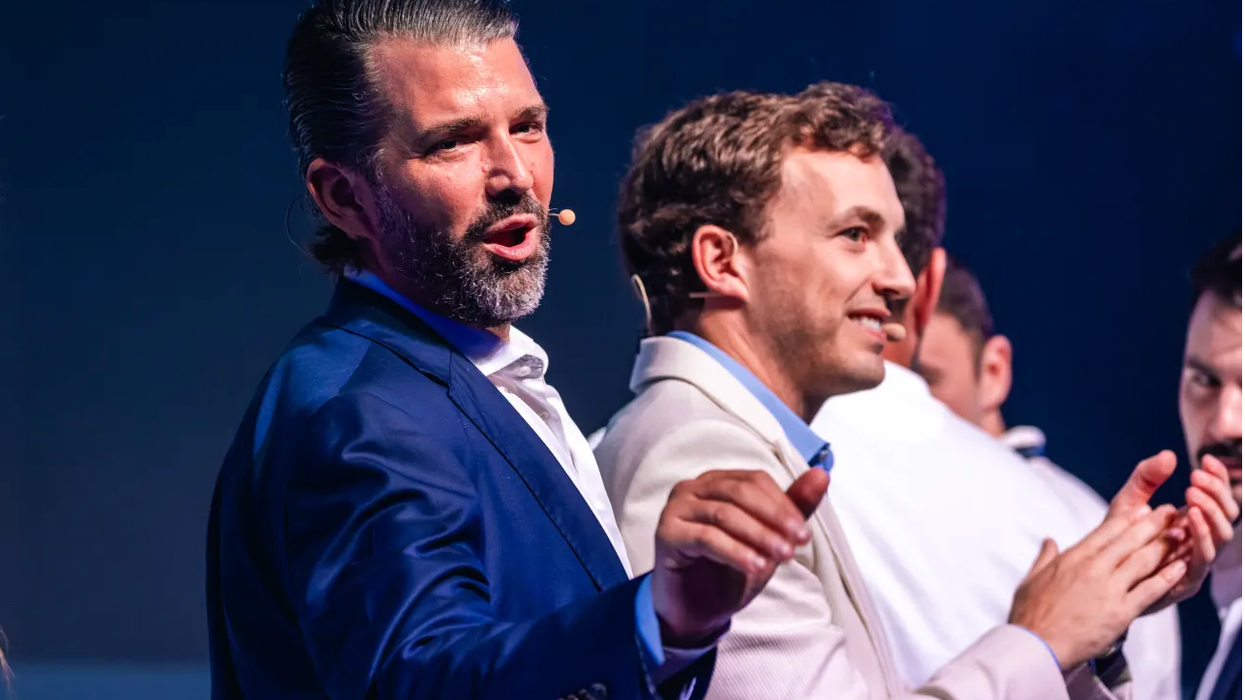
Donald Trump Jr. and Zach Witkoff, right, at a crypto conference in Singapore on October 1, 2025
The U.S. makes artificial intelligence chips so special, so advanced, that the Biden administration limited their export for national security reasons. They didn't want them to get into the hands of China or Russia.
But days before Donald Trump was sworn in for a second term, go-betweens for an Abu Dhabi royal signed a secret deal that delivered $187 million into Trump family ventures -- so far, as far as we know.
Sheikh Tahnoon bin Zayed Al Nahyan — nickname, the "spy sheik" — had long been frustrated in his campaign to obtain this highly sensitive AI technology. The fear was that our super chips could be diverted to China.
Under the private arrangement, Tahnoon's $1.3 billion fund paid $500 million for 49 percent of World Liberty Financial, the Trump family's crypto enterprise.
A few weeks after Trump returned to power, the United Arab Emirates was given yearly access to about half a million of the most advanced chips. Abu Dhabi is the most powerful of the seven UAE emirates. Tahnoon's brother is the UAE's president.
Zach and Alex Witkoff, both principals in World Liberty, were not left out. They are the sons of Steve Witkoff, the real estate developer whom Trump named U.S. special envoy to the Middle East. The Witkoff family is getting its cut of millions from the deal.
These machinations were complicated and secretive enough to fall under the radar of average Americans. But they amount to an underhanded sale of prized U.S. technology. To wade through the details, read The Wall Street Journal's excellent account of what went on.
Again, these controls were designed to prevent U.S. technology from aiding rival nations in developing military, surveillance and strategic AI expertise.
Another change from the Biden years: Back then, the crypto-based betting platform Polymarket was under a Justice Department probe into money laundering. Now it's made a highly lucrative deal with the New York Stock Exchange's parent company. And its founder, 27-year-old Shayne Coplan, is suddenly a billionaire.
The Commodity Futures Trading Commission considered Polymarket an unregistered exchange open to market manipulation. Thus, it limited Polymarket's U.S. bets to derivative trading.
Polymarket doesn't know the identities of most of the people who trade on its platform. It's been tagged for manipulation on all kinds of bets: What would happen in Russia's war on Ukraine? Who would win the Nobel Peace Prize? Not knowing exactly who's involved lets users trade on insider information. Such activity is illegal, but who would the Securities and Exchange Commission know to go after?
Hours before the "surprise" U.S. military operation to take down Venezuelan leader Nicolas Maduro, bets on that happening surged into Polymarket. One unnamed trader made more than $400,000.
Another form of manipulation is "washing." That's when trades are moved back and forth, creating the impression of an active market. A study out of Columbia University found evidence of wash trading in about 25 percent of Polymarket's volume.
Two months before Trump's second inauguration, FBI agents broke the door of Coplan's Manhattan penthouse apartment. They were probing charges that Polymarket was laundering money. Once Trump was in office, the Justice Department halted its investigation. Why the turnaround? Could it possibly be that Donald Trump Jr.'s venture capital firm is a Polymarket investor? (Junior is now listed as one of the company's advisers.) It should be no surprise that Coplan sat with Donald Jr. during the 2024 Republican National Convention. Thus, things are looking up for Polymarket and its founder.
What's good for America does not necessarily track the Trump family's fortunes. Historians someday will gather a compendium of the Trump era's corruption and self-dealing. And future generations will look on with appalled wonder that all this went on under the public's nose.
Froma Harrop is an award winning journalist who covers politics, economics and culture. She has worked on the Reuters business desk, edited economics reports for The New York Times News Service and served on the Providence Journal editorial board.
Reprinted with permission from Creators.
- Acting US Attorney Resigns Over Order To Drop Charges Against Mayor Adams ›
- Lame Duck Trump Isn't Fretting Over Polls -- He's Too Busy Cashing Out ›
- Is Donald Trump Pro-Crypto Or Pro-Crime? (Is There Really A Difference?) ›
- Soft On Crime: Trump Keeps Pardoning Corrupt Republican Fraudsters ›
- 'The Worst Food': Trump Hosts 'Orgy Of Corruption' Crypto Banquet ›
- Fox News Raged Over Biden 'Corruption' -- And Now Covers Up For Trump - National Memo ›
- Trump Gave Crypto Bros Everything They Wanted -- And Their Assets Tanked Anyway - National Memo ›
- Stock Market Has Performed Poorly Under Trump -- And Now Is Headed Down - National Memo ›
- 'Corruption': Trump's Support Of Betting Markets Protects Family Investments - National Memo ›
- Fox Anchor Bartiromo Celebrates Eric Trump's Company Winning $24M Pentagon Contract - National Memo ›
- Will Chinese AI Save Us From The Unaccountable Power Of Tech Trillionaires? - National Memo ›
- Has The Worm Finally Turned On Trump's Staggering Personal Corruption? - National Memo ›
- Danziger Draws - National Memo ›
- Insider Trading? Thousands Of Stock Transactions Display Trump's Newest Grift - National Memo ›
- How White House Steered $620M Pentagon Contract To Company Linked To Trump Jr. - National Memo ›
- Welcome To Trump Bank, The First Family's Latest Crooked Crypto Venture - National Memo ›
- 'Roadmap for corruption': Trump dive into cryptocurrency raises ... ›
- Newsom launches website tracking Trump's top 10 criminal cronies ... ›
- Anti-Crypto Corruption Week | U.S. House Committee on Financial ... ›
- 'I have never seen such open corruption': Trump's crypto deals and ... ›
- Trump's Crypto Corruption: A New Low in Pay-to-Play Politics ›