Tag: trump media
Legacy News Outlets That Bent The Knee To Trump Lost Credibility -- And Audience

Legacy News Outlets That Bent The Knee To Trump Lost Credibility -- And Audience

It turns out that there isn’t a ratings bump for MAGA capitulation.

David Ellison, the son of President Donald Trump’s megabillionaire ally Larry Ellison, took control of CBS last year following a corrupt deal that saw its parent company settle a lawsuit with the president and agree to implement a new conservative ombudsman for CBS News. As part of that takeover, he also installed conservative journalist Bari Weiss at the helm, promising that her “entrepreneurial drive and editorial vision” would “invigorate” the network. But six months into Weiss’ rightward makeover of CBS, the fruits of her labors include cheers from Trump and Defense Secretary Pete Hegseth for making the network more palatable to their aims, complaints from the CBS newsroom that she is dismantling its independence — and, it now appears, a viewer exodus.

Status’ Oliver Darcy got ahold of some CBS News ratings data from the first quarter of 2026, and it is brutal. CBS Evening News has lost seven percent of viewers year-over-year, placing it “on track for its lowest-rated first quarter of the 21st century in both total viewers and the advertiser-coveted 25-54 demographic,” while CBS Mornings plummeted 13 percent and “is pacing toward its lowest-rated quarter on record in both total audience and the key demo.” Meanwhile, the audiences of competitor shows at ABC News and NBC News grew over the same period.

The ratings collapse is a devastating indictment of the strategy Ellison and Weiss are executing at CBS — and a blaring warning for CNN if Ellison is able to complete his takeover of that network and let Weiss run the same playbook there.

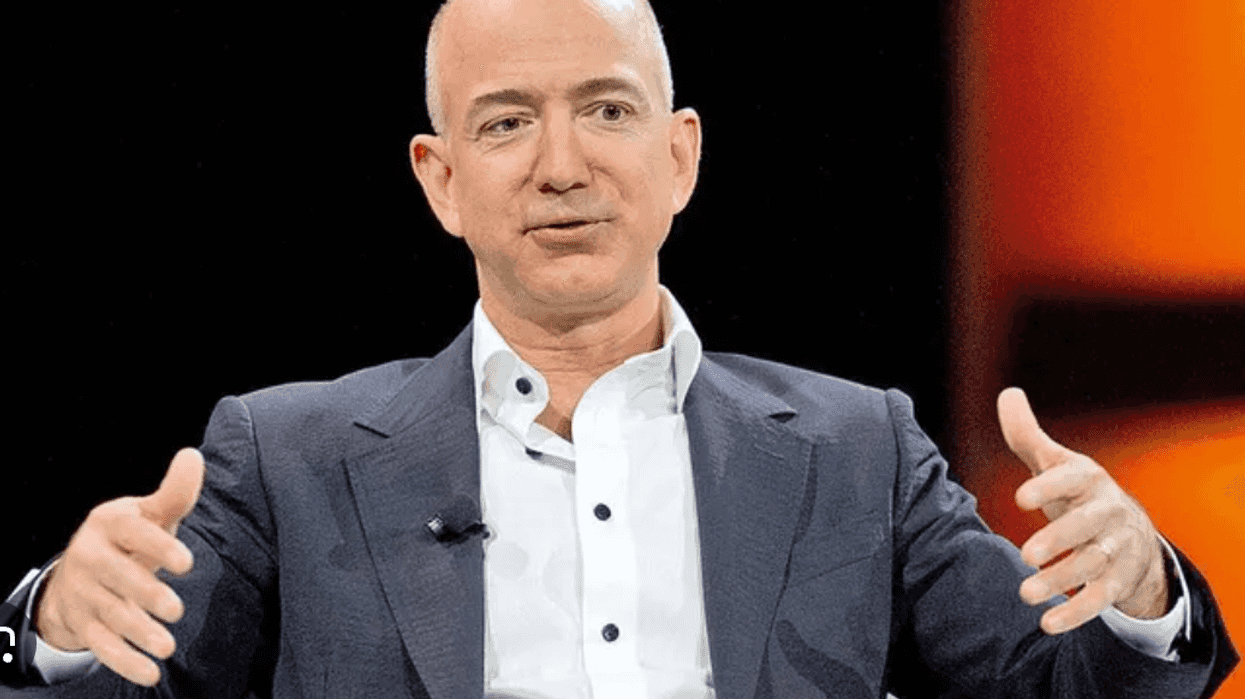
Meanwhile, new data from the Alliance for Audited Media show that while average daily print circulation among major audited newspapers saw year-over-year declines across the board in the six months running through the end of September 2025, the biggest drops came at The Washington Post, which fell 21.2 percent followed by the Los Angeles Times, down 19.8 percent. Their billionaire owners — Amazon founder Jeff Bezos and biotech mogul Patrick Soon-Shiong, respectively — had responded to Trump’s return to the White House by trying to shift their papers to the right.

None of this should come as a surprise

Ellison and Weiss have suggested that the core problem for American media is that the public does not trust news outlets, and that the reason for this is that the public perceives those outlets as too far left and too critical of the right. They propose to win over a larger audience by deliberately course-correcting in the opposite direction.

“We are not producing a product that enough people want,” Weiss said at a CBS News staff town hall in January. Weiss attributed this to two factors. “First: Not enough people trust us. Not you. Us. As in: the mainstream media,” she said. “Second: We are not doing enough to meet audiences where they are. So they are leaving us.”

Weiss is correct that trust in traditional media has fallen dramatically in recent decades, particularly among conservatives — indeed, this is a banal truth that everyone remotely connected to the media knows. But her strategy of conceding that potential viewers are correct to distrust journalists and seeking to “meet audiences where they are” by signaling that coverage will now be deliberately shifted to the right has had the obvious result of driving away the existing audience without adding a new one.

CBS News’ viewers either liked what they were already watching or they liked what watching Edward R. Murrow’s old network said about them. When the network’s new ownership and management proposed taking its programming in a dramatically different direction in search of a different audience — as the wildly unpopular president cheered — the existing viewers could see that, and some decided that CBS is no longer worth their patronage.

Weiss’ theory of the case is that these losses could be made up by new viewers with more right-leaning views. But the decline in public trust for traditional media among Republicans stems at least in part from a decades-long strategy pursued deliberately by the GOP and conservative movement. That effort revolves around simultaneously denouncing news outlets as liberal propaganda while encouraging conservatives to instead patronize new, deliberately right-wing news sources. And it’s been taken to another level under Trump, who relentlessly attacks the press while using state power to reduce its influence and lift up the MAGA media operation.

That dynamic makes it wildly implausible that the shift Weiss enacted would win over a sizable new segment of viewers. Her version of CBS may garner praise from Trump, but people who might be swayed by his comments already have — and are likely already patronizing — a plethora of pro-Trump outlets. You could imagine a scenario where some slightly more right-wing viewers of the ABC and NBC news shows switched to watching the new CBS. But instead, the data Darcy cited suggests, CBS appears to be shedding viewers who are instead watching its competitors — or exiting broadcast television altogether as their news source.

As for Bezos’ Post and Soon-Shiong’s Times, when the owners similarly bet on trying to make their outlets more acceptable to Trump, their existing audiences looked for the exits and were not replaced. The efforts may win over the likes of Tucker Carlson or even the president himself, but MAGA isn’t rushing to buy subscriptions.

For Ellison, Bezos, and Soon-Shiong, the declines in their news outlets may be a small price to pay to win over Trump. Each owner has massive business holdings outside of the press and can afford the losses from tearing down their news outlets if it wins the Trump administration’s support for their desired mergers, contracts, or patents.

The journalists facing layoffs from their outlets — and the public who lose access to their reporting — are the ones who will actually suffer from this doomed strategy.

Reprinted with permission from Media Matters
The Decline And Fall Of The (Trumpist) 'Wall Street Journal'

The Decline And Fall Of The (Trumpist) 'Wall Street Journal'

Many American institutions have beclowned themselves in the past 10 years — too many to list. To count the right-leaning institutions that have not succumbed to Trumpian populism takes only one hand. But the decline of The Wall Street Journal's editorial page has been particularly galling because, compared to the Heritage Foundation, Hillsdale College or the Claremont Institute, it had farther to fall.

In the pre-Trump era, the paper had some integrity. While the board was broadly aligned with the Republican Party, its editorials didn't hesitate to differ with Republicans on major questions.

In the Trump era, the Journal has become, if not Pravda, then something like The Nation magazine.The Nation reliably whitewashed the sins of the Soviet Union and other communist regimes because it regarded anti-communism as a greater threat to the world than communism itself. Similarly, The Wall Street Journal has gradually become a parody of itself on the grounds that Democrats are always and forever the greatest threat to the country.

With that guiding principle, there is simply no Republican, no matter how deranged or unfit, whom the Journal will not prefer to a Democratic opponent. In 2022, the Journal advised its Arizona readers to choose Kari Lake for governor despite the fact that Lake had called for the 2020 election to be decertified, denounced mask wearing and encouraged the use of hydroxychloroquine during the pandemic, promised to criminally pursue journalists who "dupe the public," and pronounced the nation "rotten to the core" when the FBI searched Mar-a-Lago. The Journal didn't mention most of that in its endorsement, claiming, hilariously, that Arizona's election was primarily about school choice.

This week, commenting on the drone kerfuffle, the Journal intoned that it couldn't be sure what people were seeing — but it was certain that the whole thing could be attributed to the erosion of trust in government.

Noting that "non-cranks" have reported seeing things that move strangely in the dark, the Journal quoted Jon Bramnick, a GOP state senator from New Jersey, who said, "It must be something going on that they can't tell us because they are so fearful of what the public's gonna do when they hear what the drones are doing."

You might think the paper would rebuke this state senator for getting out over his skis and encouraging conspiratorial thinking, but no, the editorial notes that "This is how deep the suspicion runs. And when that happens, conspiracy theories fill the air as much as drones do."

And guess who's responsible for this erosion of trust?

"The Biden administration has squandered its credibility to the point that it's rational not to believe what it says. Remember the Chinese spy balloon that traveled across the continental U.S.? The administration downplayed its importance while it was courting better relations with Beijing, only to shoot it down over the Atlantic Ocean."

Whoa. If you want to cite relations with Beijing as a source of mistrust, the Trump administration offers far more dire examples. While he was chasing a "great trade agreement" with Xi Jinping (the terms of which were never honored, by the way), Trump repeatedly lied about and minimized the risk of COVID-19, which had far more serious consequences for Americans' lives than waiting until the big spy balloon was over the ocean before shooting it down.

Nor did the Journal see fit to mention that Trump is, right on schedule and very on brand, stoking conspiracies of government malfeasance about the drones. He popped off: "Can this really be happening without our government's knowledge. I don't think so! Let the public know, and now. Otherwise, shoot them down!!!"

This is not to excuse President Joe Biden's betrayal of trust in repeatedly promising that he would not pardon his son and then doing so, or misleading the public about the degree of his physical and mental decline. But for the Journal to look at the world of 2024 and conclude that the erosion of trust in government is due to Biden without ever once mentioning that Trump and his minions are the most prolific bilge spillers imaginable is to be completely without scruple.

Just in the last few weeks of the campaign, Trump falsely alleged that FEMA was purposely withholding hurricane assistance in order to funnel funds to illegal immigrants, that the Congo was emptying its prisons to send convicts to the United States and that the 2020 election was stolen.Trust is crucial to the successful functioning of society. Many social science studies have found that nations with high trust have less corruption and greater prosperity than those with low trust. It makes sense.

If you believe that most people are untrustworthy, you will rely only on those within your own family or tribe and be less likely to engage with outsiders. Trust is a social and economic lubricant. It's also, as we've learned, quite easy to undermine when people get their information from online rumors and irresponsible politicians and other actors who stoke distrust for their own political ends.

The drone affair is fluff and will doubtless be forgotten in a month if not sooner. But the spectacle of the Journal chastising the Biden administration without a solitary word about Trump and his enablers (in whose ranks they stand) is breathtaking.

Mona Charen is policy editor of The Bulwark and host of the "Beg to Differ" podcast. Her new book, Hard Right: The GOP's Drift Toward Extremism, is available now.

Reprinted with permission from Creators.

Led By Nunes, Trump's Social Media Media Startup Falters

Led By Nunes, Trump's Social Media Media Startup Falters

Donald Trump, expecting to make lots of money off his upstart social media venture Truth Social, has turned down offers to work with other platforms such as Gettr and Parler already on the rise in a flood of right-wing media sites.

Trump is simply too greedy to cut in anyone else on what he's sure will be a rich payoff from the conspiracy-laden haven he’s itching to launch. There's just one problem: It's a Trump venture and, therefore, already flailing, per The Washington Post.

Sure, Trump had a knack for sending off bogus tweets that lit his MAGA cultists on fire. That was his daily, if not hourly, ritual for four full years at the White House. That was governance to Trump.

But actually starting up a company that supposedly does something other than bloviate is proving to be a touch more difficult of a task for ol' Trump. For months, that failure has reduced twitchy-finger Trump to releasing nothing but a string of disgruntled statements that limp along in the mediascape until they're soon forgotten.

Twitter has permanently suspended Trump following lies he spouted in the aftermath of the Jan. 6 insurrection. Facebook and Instagram ultimately imposed a two-year suspension on Trump, which pushes the prospect of his reentrance on the platforms past the midterm election. While blowing up Twitter with lies and outrage was Trump's favorite pastime, Facebook actually served as a better small-dollar fundraising tool for Trump.

In the meantime, Trump's “Truth” platform has fallen victim to a series of delays ranging from the dozens of hires necessary to staff it up to scrutiny from the Securities and Exchange Commission over a planned merger between Trump Media and a publicly traded company, Digital World Acquisition. Such mergers, made through a Special Purpose Acquisition Company or SPAC, typically take five to six months from the time the merger is announced to the time the deal closes, according to Michael Ohlrogge, an assistant law professor at New York University.

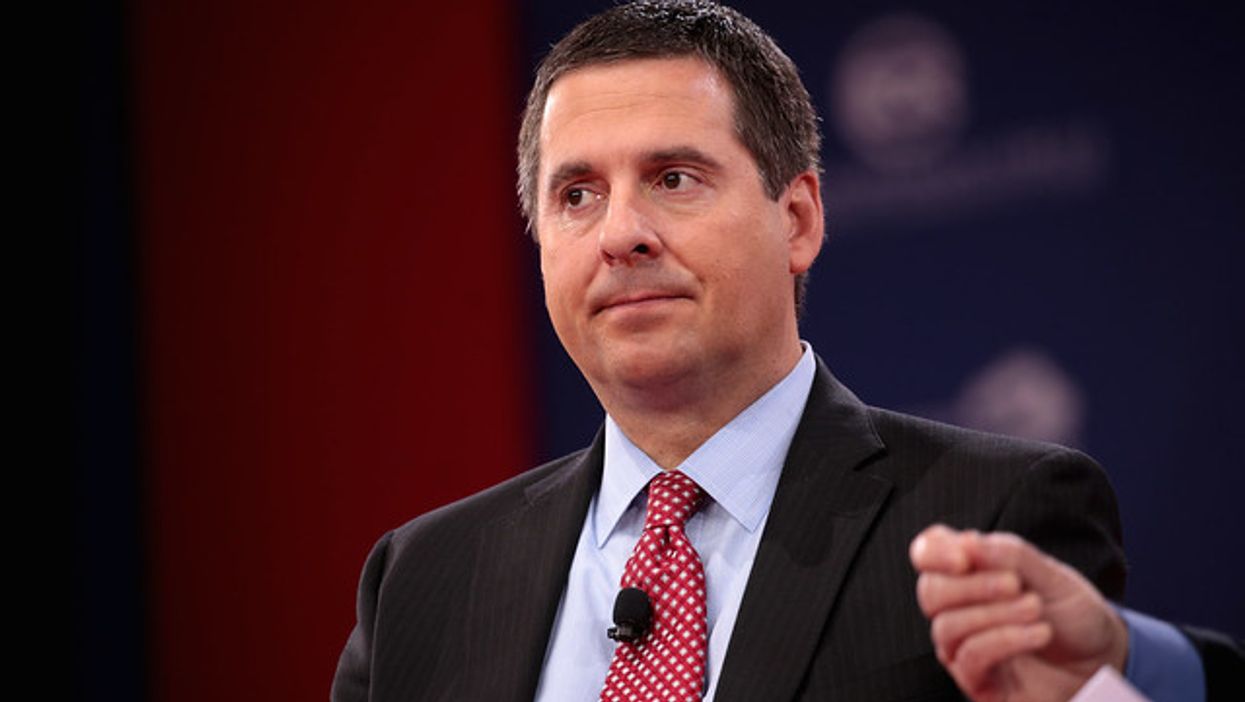
Enter new Trump Media CEO Devin Nunes, the newly resigned California congressman and former dairy farmer who appears to have no credentials equal to the task of standing up a social media startup.

Trump also didn't exactly hit it out of the park with his debut of TruthSocial.com last fall. The Post writes:

The early version of the site was quickly taken down after pranksters posted a photo of a defecating pig under the username “donaldjtrump.” Days later, the creators of the open-source social media software that the site used, Mastodon, sent Trump Media a letter saying Truth Social had violated the terms under which the software could be used.

Following that debacle, a planned beta launch in November never actually took place. Apple's App Store pegs the expected launch date for the Truth Social app at February 21.

Meanwhile, Nunes is reportedly burning up the phone lines with venture capitalists to get the lowdown on how to build a company.

Nonetheless, a Trump spokesperson said he remains undeterred.

“The demand for President Trump, his leadership, and his ‘America First’ solutions continue to grow despite Big Tech’s attack on his freedom of speech,” spokesman Taylor Budowich said.

If he could just find an outlet, Trump's special brand of paranoia would be super duper popular. Too bad he’s tripping over his greed.

Trump's Real-Estate Empire Pays Heavy Price For Poisonous Politics

Trump's Real-Estate Empire Pays Heavy Price For Poisonous Politics

By Joseph Tanfani

(Reuters) - Former U.S. president Donald Trump's slashing rhetorical style and divisive politics allowed him to essentially take over the Republican Party. His supporters are so devoted that most believe his false claim that he lost the 2020 election because of voter fraud.

But the same tactics that have inspired fierce political loyalty have undermined Trump's business, built around real-estate development and branding deals that have allowed him to make millions by licensing his name.

Trump's business brand was once synonymous with wealth and success, an image that now clashes sharply with a political brand rooted in the anger of his largely rural and working-class voter base. His presidency is now associated in the minds of many with its violent end, as supporters stormed the U.S. Capitol on January 6.

Those searing images, along with years of bitter rhetoric, are costing Trump money. Revenues from some of his high-end properties have declined, vacancies in office buildings have increased, and his lenders are warning that the company's revenues may not be sufficient to cover his debt payments, according to Trump's financial disclosures as president, Trump Organization records filed with government agencies, and reports from companies that track real-estate company finances.

Prospective tenants in New York are shunning his buildings, one real-estate broker said, to avoid being associated with Trump. Organizers of golf tournaments have pulled events from his courses.

Trump's focus on the political brand has increasingly overtaken his identity as a real-estate mogul, says one hospitality industry veteran.

“Prior to his political career, the Trump brand was about luxury - the casinos, the golf resorts," said Scott Smith, a former hotel executive and hospitality professor at the University of South Carolina. “When he entered into politics, he took the Trump brand in an entirely different direction."

Trump's business also remains under the cloud of a joint criminal fraud investigation by the Manhattan District Attorney's office and the New York Attorney General. The company and its longtime chief financial officer, Allen Weisselberg, have been charged with a scheme to evade payroll taxes, and investigators continue to probe whether Trump or his representatives committed fraud by misrepresenting financials in loan applications and tax returns. Weisselberg and the company deny wrongdoing and are contesting the charges.

As his development business struggles, Trump has announced his first major deal since leaving office — and it has nothing to do with real-estate. On October 20, he said he will build a new social media platform aimed in part at giving him a political forum after being banned by Facebook and Twitter, who said after the U.S. Capitol riots that Trump used their platforms to incite violence.

That deal could prove lucrative for Trump regardless of whether the platform succeeds. Investors rushed to buy shares in Digital World Acquisition Corp, the publicly traded blank-check acquisition company that plans to merge with the newly announced Trump Media and Technology Group. Digital World shares surged and are now worth about $2 billion. Trump's new media company will have at least a 69 percent stake in the combined company, but Trump has not disclosed his level of ownership in Trump Media.

Trump has also been raising money for his political operation, which reported having $100 million on June 30, as he hints at a 2024 presidential run.

Eric Trump, the former president's middle son and a Trump Organization executive, said in an interview that the company is now in “a phenomenal spot." He cited a refinancing of a loan on San Francisco office buildings that gave the Trump business about $162 million in cash, according to loan documents and a release by Vornado Realty Trust, the venture's majority owner.

“We're sitting on a tremendous amount of cash," Eric Trump told Reuters.

In an email, a spokesperson for Donald Trump denied that the business has slumped since he entered politics.

“The real estate company is doing extremely well, and this is evident in Florida and elsewhere," Liz Harrington said in an emailed statement. “Considering the coronavirus pandemic, in which the hotel industry was hit particularly hard, Mr. Trump's company is doing phenomenally well."

Financial records show Trump's real-estate business has declined. Income from the family's holdings, heavy on golf courses and hotels, took a beating during 2020 amid the coronavirus pandemic. Revenues at his Las Vegas hotel, for instance, fell from $22.9 million in 2017 to $9.2 million during 2020 and the first 20 days of 2021, according to Trump's financial disclosures.

Trump is now making a second attempt to sell his lease on one high-profile property, the Trump International Hotel, housed in a former federal building in Washington, D.C., after failing to secure a buyer at the original asking price of $500 million. Meanwhile, the business is paying the federal government $3 million annually in lease payments, according to documents released earlier this month by the House Oversight Committee of the U.S. Congress. Those records show Trump's Washington hotel lost more than $73 million since 2016.

The damage to Trump's business image started early in his presidency. One consultant for Trump, arguing in a 2017 public hearing for a lower tax bill at his Doral golf resort, said Trump's politics had damaged his business model.

“It's actually not about the property, it is about the brand," said consultant Jessica Vachiratevanurak, at a December 2017 hearing of the Miami-Dade Value Adjustment Board, in a video recording reviewed by Reuters. She cited a meeting she attended where top Trump Organization executives had described “severe ramifications" to his golf business from, for instance, tournaments and charity events being canceled by organizations wanting to avoid associating with Trump.

The resort saw revenues fall from $92 million in 2015 to $75 million in 2017, she said at another hearing the following year. Trump's presidential financial disclosure listed Doral revenues at $44 million last year.

Vachiratevanurak declined a Reuters request for comment.

“This is obviously false as Doral is doing very well," Trump spokesperson Harrington said.

In Trump's home base of New York, the Trump name has become increasingly toxic. One high-profile property, the Trump SoHo hotel in lower Manhattan, was rebranded the Dominick in 2017. New York City in January canceled his leases on a golf course, two Central Park skating rinks, and a carousel; Trump has sued the city for wrongful termination of the golf course lease.

At 40 Wall Street, the 72-story skyscraper that was among Trump's proudest acquisitions, problems that started before the pandemic have gotten worse, according to reports from firms that track real-estate performance. After the January 6 U.S. Capitol riots, some of Trump's large tenants, including the Girl Scouts and a nonprofit called TB Alliance, said they were exploring whether they could get out of their leases. One commercial real-estate broker says many prospective tenants won't consider the building because Trump's name is on it.

The Girl Scouts did not respond to comment requests, and TB Alliance said it was “exploring all options" for leaving the Trump building.

“Most New York tenants want nothing to do with it, and that's been the case for five years now," said Ruth Colp-Haber, who said she has placed seven clients in the building over the years, but can't interest anyone now. “It's the biggest bargain going, but they won't look at it."

Occupancy was 84 percent in March 2021, well below the average of about 89% for that downtown New York office market, according to Mike Brotschol, managing director of KBRA Analytics LLC. The rents Trump has been able to charge are lower, too – between $38 and $42 per square foot in a market where the average runs closer to $50, he said.

The property's financials have tumbled into risky territory, the reports say.

Trump took out a $160 million loan in 2015 to refinance 40 Wall Street – personally guaranteeing $26 million.Last year, the building was placed on an industry watchlist for commercial mortgage-backed securities at risk of defaulting, according to reports by KBRA and Trepp, which also monitors real-estate loans. In the first quarter of the year, according to the KBRA report, the debt-service coverage ratio, a statistic monitored by banks, dipped to a number indicating that the building's cash flow can't cover its debt payments.

In the statement for Trump, Harrington blamed “the disastrous policies of Bill de Blasio," New York's mayor, for the downturn in the city's office market. “Despite all these serious headwinds, Mr. Trump has very little debt relative to value and the company is doing very well," she said.

The Doral resort and Washington hotel, along with a hotel in Chicago, are secured by about $340 million in loans from Deutsche Bank AG, Trump's biggest lender. But the bank has no appetite for more business with Trump and has no plans to extend the loans after they come due in 2023 and 2024, a senior Deutsche Bank source told Reuters on condition of anonymity.

Asked about the bank's unwillingness to work with Trump, his spokeswoman said: “So what?"

Experts say the prospect of any new Trump-branded development faces long odds. One hotel industry executive said hotel developers – worried about cutting themselves off from the millions of customers turned off by Trump – will likely think twice before signing any branding deals to put the Trump name on their properties.

“People have choices. You can go to the Ritz Carlton, you can go to the Four Seasons, and not bring the politics into it one way or the other," said Vicki Richman, chief operating officer of HVS Asset Management, a hospitality industry consultancy and property manager.

The Trump Organization tried to take its premium luxury hotel brand downmarket with two new brands: Scion, a mid-priced offering, and American Idea for budget travelers. The company scrapped plans for both in 2019, citing difficulties doing business in a contentious political environment.

Harrington said nothing is off the table for Trump's business.

“We have many, many things under consideration," she said. “But we also have politics under consideration."

(Reporting by Joseph Tanfani; additing reporting by Peter Eisler, Greg Roumeliotis, and Matt Scuffham; editing by Jason Szep and Brian Thevenot)

Shop our Store

Headlines

Editor's Blog

Corona Virus

Trending

World