Tag: cuba embargo
Right-Wing Media Joins White House Push For Regime Change In Cuba

Right-Wing Media Joins White House Push For Regime Change In Cuba

Right-wing media figures are helping administration officials lay the groundwork for regime change in Cuba in what would potentially be the latest unprovoked act of military aggression by the Trump White House.

MAGA media figures have long embraced a Trumpy version of the Monroe Doctrine, the notion that the United States has the right to exert dominance over the Western Hemisphere. As the second Trump administration has pursued more openly imperialist ambitions, many conservative pundits have cheered on the White House every step of the way, including when the administration started to threaten Cuba.

If Trump does attack Cuba, it may be an attempt to replicate what he sees as the successful operation to capture Nicolás Maduro, the former president of Venezuela — in contrast to the administration’s increasingly unpopular war on Iran.

On May 20, deputy chief of staff Stephen Miller appeared on Fox News’ Jesse Watters Primetime to discuss the Justice Department’s indictment of former Cuban President Raúl Castro.

“Today, finally, accountability is coming for Castro,” Miller said, before offering the administration’s case for escalation.

“Cuba, positioned just a 45-minute flight from American shores, has been a staging ground for America's adversaries for decades,” Miller said. “It is the last outpost of communism. It is the last outpost of the Cold War. American presidents for generations have tried to deal with the problem, the threat of this communist foothold just miles away from American shores.”

“And President Trump,” Miller argued, “has brought us closer than ever to the day when Cuba will be free and when Cuba will no longer be a threat to America but Cuba will be a friend and partner to America, which is essential for our national security.”

Watters responded: “Absolutely, and it will be a historic achievement if that does happen.”

A week earlier, Fox’s Sean Hannity interviewed Secretary of State Marco Rubio, a longtime advocate for regime change in Cuba, aboard Air Force One.

“It’s my personal opinion, you cannot change the economic trajectory of Cuba as long as the people who are in charge of it now are in charge of it. That’s what’s going to have to change,” Rubio said.

Hannity agreed and speculated about the possibilities for U.S. capital to flood the country. “If these people are not in charge, I mean, I can envision American wealth and companies — it could become the destination.”

Amid a report that the Cuban government was considering using drones to attack the U.S. base at Guantanamo Bay or Key West, Florida, MAGA streamer Benny Johnson speculated the leaked intelligence could be a “pretext” for launching a war — though he appeared to support the administration’s overall goal.

“I don't buy this,” Johnson said. “Right? Like, why would Cuba ever consider doing this unless it was a false flag — unless it's a false flag that's getting set up by the American administration, and that's what I believe that this is.”

Despite acknowledging the intelligence could be false, Johnson concluded the segment by seemingly endorsing military action.

“Expect this to pop off any day now,” he said. “Hopefully, Iran signs a peace deal, and then we can get Cuba done, as they say.”

For months, some of the loudest voices suggesting regime change in Cuba have come from right-wing Spanish-language media, a trend that has continued into May.

On May 5, Fox Noticias host Andrea Linares said that before there could be any foreign investment in Cuba, “there would have to be a total regime change.”

On May 19, Augustin Acosta, co-host of Actualidad Radio's Cada Tarde, argued that if Trump “believes he can fix Cuba while leaving the regime in power, the president is either completely wrong or has started to lose his mind.”

“In Cuba there is nothing that can be fixed — absolutely nothing that can be fixed — while leaving the dictatorship in power,” Acosta added. “That is absolutely impossible.”

Still, there are already some signs of discontent in right-wing media. Newsmax host Rob Finnerty questioned the wisdom of “another foreign entanglement” in addition to the Venezuela operation and the Iran war, which has caused gas prices to skyrocket across the country.

“According to two new polls — and say what you want about the polling, but it's not good,” Finnerty said. “People are clearly losing their patience.”

He added: “I think people struggle with how this is America First when gas is $4.55 a gallon right now.”

Reprinted with permission from Media Matters
Clinton Says Trump May Have Violated U.S. Law On Cuba

Clinton Says Trump May Have Violated U.S. Law On Cuba

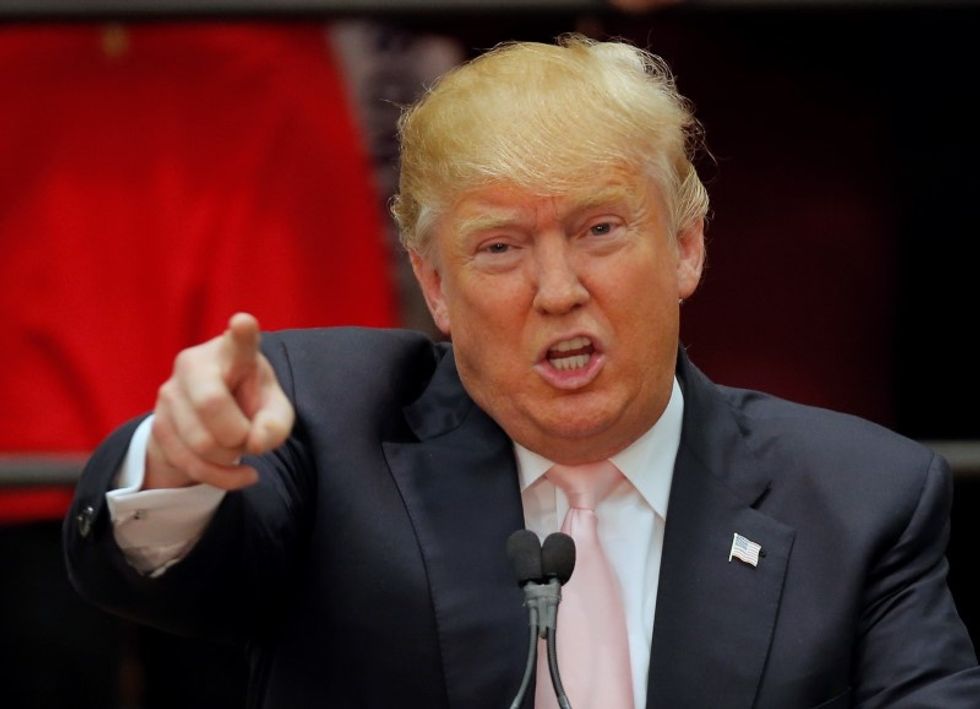
CHICAGO (Reuters) – U.S. Democratic presidential nominee Hillary Clinton said on Thursday that Republican opponent Donald Trump may have violated U.S. law, following a news report that one of his companies attempted to do business in Cuba.

Newsweek said on Thursday that a hotel and casino company controlled by Trump secretly conducted business with Cuba that was illegal under U.S. sanctions in force during Fidel Castro’s presidency of the Communist-ruled island.

(See the Newsweek article: http://bit.ly/2dmKH3e)

“Today we learned about his efforts to do business in Cuba which appear to violate U.S. law, certainly flout American foreign policy, and he has consistently misled people in responding to questions about whether he was attempting to do business in Cuba,” Clinton told reporters on her campaign plane.

Clinton and Trump are in a close race ahead of the Nov. 8 presidential election.

The Trump campaign did not immediately respond to a Reuters request for comment.

Newsweek, citing interviews with former Trump executives, internal company records and court filings, said the Trump company spent at least $68,000 for a 1998 trip to Cuba at a time when any corporate expenditure in the Caribbean country was prohibited without U.S. government approval.

The Trump company did not spend the money directly, but funneled the cash for the Cuba trip through an American consulting firm, Newsweek said.

Newsweek cited a former Trump executive as saying the goal of the Cuba trip was to give Trump’s company a foothold should Washington loosen or lift the restrictions under the U.S. trade embargo.

The former executive said Trump had participated in discussions about the Cuba trip and knew it had taken place, according to Newsweek.

“The efforts that Trump is making to get into the Cuba market, putting his business interests ahead of the laws of the United States … shows that he puts his personal and business interests ahead of the laws and the values and the policies of the United States of America,” Clinton said.

(Reporting by Amanda Becker; Writing by Eric Beech; Editing by Mohammad Zargham and Peter Cooney)

Photo: U.S. Republican presidential candidate Donald Trump gestures as he speaks during a campaign event in Radford

U.S. Airlines Vie For Limited Routes To Cuba

U.S. Airlines Vie For Limited Routes To Cuba

By Jeffrey Dastin

(Reuters) – Top U.S. airlines on Wednesday said they were seeking regulatory approval to start flying specific routes to Cuba, ramping up competition over a limited number of opportunities to serve one of the industry’s last frontiers.

Dramatizing their eagerness for the coveted flights, American Airlines Group Inc (AAL.O), JetBlue Airways Corp (JBLU.O) and others argued why they were best suited for the routes in memos that at times were critical of one another.

U.S. and Cuban officials signed an arrangement two weeks ago restoring commercial air service between the countries for the first time in decades. U.S. carriers had until March 2 to submit route applications to the U.S. Transportation Department.

The arrangement, in the works after the Cold War foes said they would normalize ties in Dec. 2014, allows 20 round-trip flights per day from the United States to Havana and 10 round-trip flights per day to nine other airports in Cuba.

But proposals by airlines appear to have exceeded the cap to Havana by at least 19 flights per day, with requests even higher for certain days of the week.

American Airlines Group Inc (AAL.O), which has the widest Latin America network of its peers, asked for 10 daily flights to Havana from its Miami hub, one per day from its hubs in Charlotte and Dallas/Fort Worth and one per week from Los Angeles and Chicago.

American said in its publicly filed application that there were 10 times the number of Cuban-Americans living in Miami-Dade county than in nearby Broward county, where its main rival to the Caribbean, JetBlue, has its large Fort Lauderdale operation.

Separately, JetBlue said Wednesday it requested four daily flights to Havana from Fort Lauderdale, two from Tampa, Orlando and New York and one from Boston and Newark.

In its application, JetBlue called American’s Miami hub “chaotic” and more expensive per passenger compared to Fort Lauderdale.

It added that the U.S. Transportation Department should support competition “rather than continuing the status quo by rewarding legacy carriers and increasing their market share.”

The government agency has said it will try to maximize public benefit in assigning the flights.

Southwest Airlines Co (LUV.N), United Continental Holdings Inc (UAL.N) and Delta Air Lines Inc (DAL.N) also filed extensive route requests, with Delta arguing its proposed Miami routes were necessary to counterbalance American’s otherwise market dominance.

Analysts expect strong demand for airline travel from Cuban-Americans visiting relatives, leisure travelers desiring a once off-limits experience and executives evaluating commercial opportunities.

“Our application is based on where the traffic is today,” American’s Vice President of Regulatory Affairs Howard Kass said in an interview, referring to high demand for its existing charter flights to the communist-ruled island.

The Republican majority in Congress has defied U.S. President Barack Obama’s call to rescind a long-standing trade embargo, which includes a general tourism ban to Cuba. Obama has used his executive authority to relax some travel restrictions, however.

U.S. travelers must meet at least one of 12 criteria to visit, such as taking part in educational tours or visiting family in Cuba.

(Reporting By Jeffrey Dastin in New York; Additional reporting by Daniel Trotta in Havana; Editing by Tom Brown, David Gregorio and Andrew Hay)

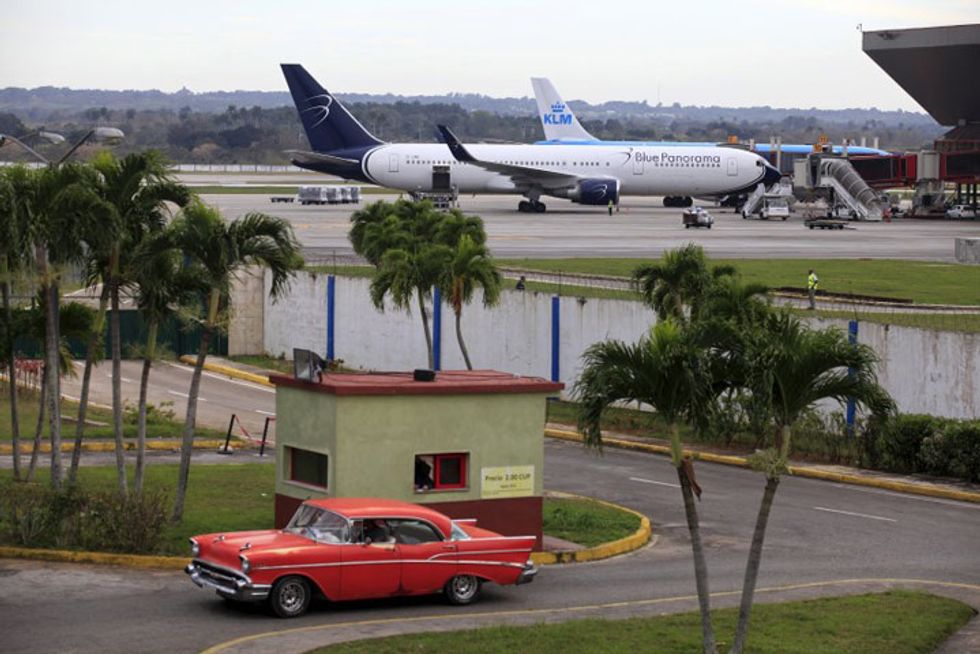
Photo: Blue Panorama and KLM aircrafts are seen as a taxi drives out of a parking lot at Havana’s Jose Marti International Airport February 15, 2016. REUTERS/Enrique de la Osa

United States, Cuba To Resume Scheduled Commercial Airline Service

United States, Cuba To Resume Scheduled Commercial Airline Service

By Arshad Mohammed and Jeffrey Dastin

WASHINGTON/NEW YORK (Reuters) — The United States and Cuba have agreed to restore scheduled commercial airline service between the two countries for the first time in more than five decades, exactly a year after they started the process of normalizing relations.

The latest step to restore U.S.-Cuba ties after 54 years of hostility will not go into effect immediately but should eventually increase tourism and business on the communist-ruled island.

Once implemented, the agreement will allow U.S. airlines to sell tickets on their websites for flights to Cuba, but they must first apply for permission from U.S. regulators to fly specific routes. Charter flights operated by U.S. carriers already connect the countries.

The United States and Cuba have agreed to allow 110 round-trip flights on U.S. airlines to Cuba per day, according to Thomas Engle, deputy assistant secretary for transportation affairs at the U.S. State Department. That includes 20 flights to Havana and 10 to each of the other nine international airports in Cuba.

He said no date has been set for final signing of the aviation agreement, but no issues were expected to stop it.

A group that promotes U.S.-Cuba trade said there was a 60-to-90 day process during which U.S.-based air carriers will submit proposed routes, suggesting scheduled flights would not begin until the first few months of 2016 at the earliest.

The decision to restore ties, made by U.S. President Barack Obama and Cuban President Raul Castro a year ago, in part reflected Washington’s judgment that its policy of isolating Havana politically, economically and diplomatically had failed.

While U.S. officials still oppose Cuba’s lack of political rights, Obama concluded these goals could be better served through engagement.

Although the agreement will eventually make it easier to travel back and forth between the countries, the U.S. ban on general tourism to the Caribbean island remains in force.

U.S. travelers still must meet at least one of 12 criteria to visit, such as being Cuban-American or taking part in educational tours or journalistic activity.

STILL MANY U.S.-CUBAN DIFFERENCES

“We continue to have differences with the Cuban government, but we raise those issues directly, and we will always stand for human rights and the universal values that we support around the globe,” Obama said in a written statement.

“Change does not happen overnight, and normalization will be a long journey,” he added.

The United States broke diplomatic relations with Cuba in 1961, two years after Fidel Castro ousted U.S.-backed dictator Fulgencio Batista in a revolution that steered the island on a leftist course and made it a close ally of the Soviet Union. For decades, Washington’s policy was to isolate the island.

Since last year’s detente, the countries have restored diplomatic ties and reopened their embassies. Obama has also taken steps to encourage closer business ties with the island.

However, the longstanding U.S. trade embargo on the island remains in place and the Republican-controlled Congress has resisted Obama’s calls to lift it. Cuba’s human rights record still draws criticism from Washington, and Castro’s government has made clear the diplomatic opening does not mean Havana plans to change its one-party political system.

SURGE IN TOURISM

Cuba’s embassy in Washington said in a statement on the airline deal that the countries reiterated their commitment to flight security and to protecting civil aviation “from acts of unlawful interference.”

Any planes landing in the United States will have to meet U.S. safety standards, so any old Russian planes in the Cuban fleet will likely only fly domestically within Cuba.

Under the deal, airlines from both countries will be able to make commercial agreements such as sharing flight codes and leasing planes to each other, it said.

New York-based JetBlue Airways Corp, which already operates charter flights to the island, said in a statement it plans to apply to schedule service once it has fully reviewed the terms of the aviation deal.

“Interest in Cuba has reached levels not seen for a generation,” its senior vice president for airline planning, Scott Laurence, said in the statement.

Other U.S. airlines – American Airlines Group Inc, Delta Air Lines Inc and United Continental Holdings Inc – have all expressed interest in scheduling flights to Cuba.

Obama relaxed travel restrictions to Cuba earlier this year. That has led to a boom in U.S. citizens’ visits to Cuba, which are up 71 percent this year, with 138,120 Americans arriving over the first 11 months.

(Additional reporting by Daniel Trotta in Havana; Editing by Will Dunham, Frances Kerry and Bill Rigby)

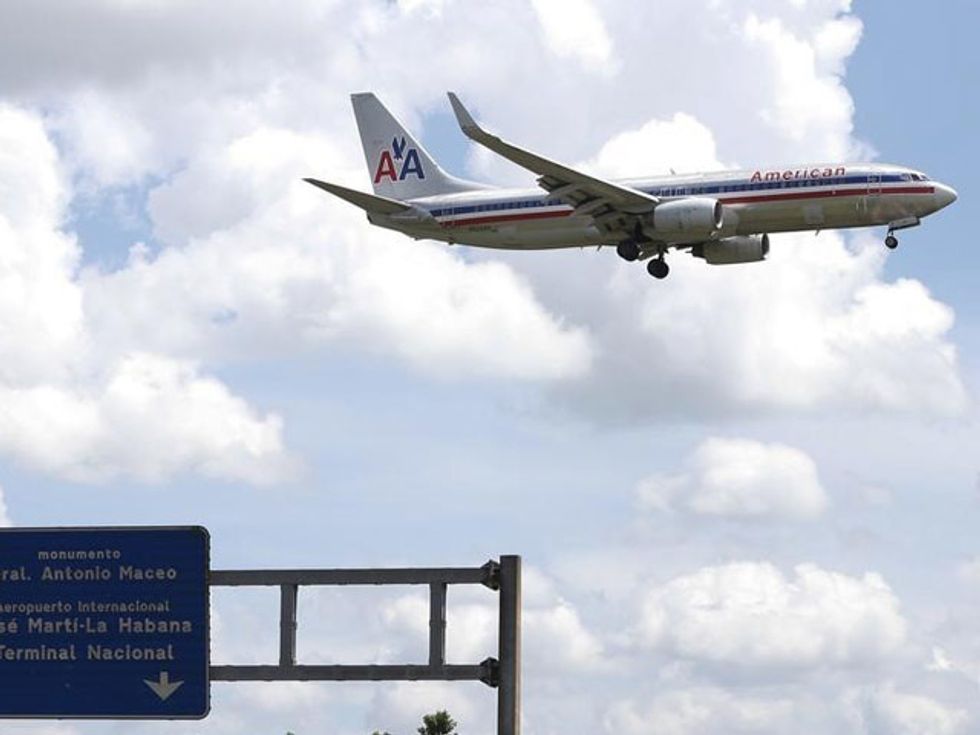
Photo: An American Airlines airplane prepares to land at the Jose Marti International Airport in Havana September 19, 2015. REUTERS/Carlos Garcia Rawlins

Shop our Store

Headlines

Editor's Blog

Trending

World