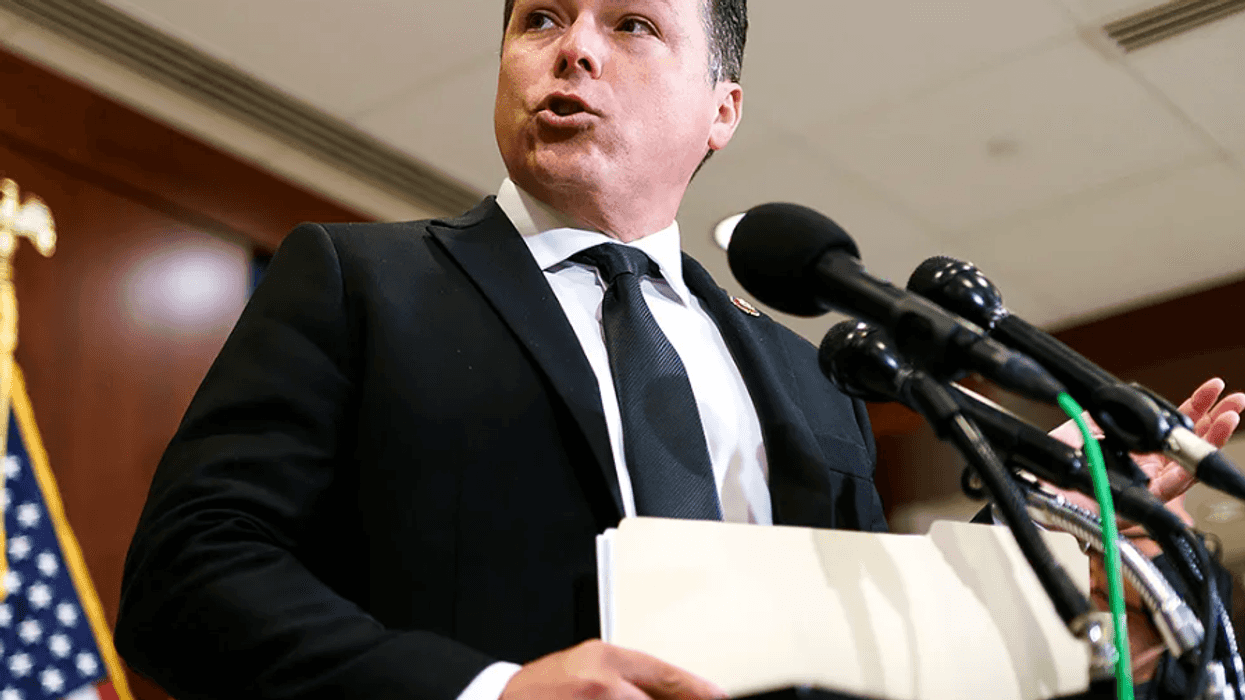
Tag: house budget committee
Surprisingly, Even (Some) Republicans Understand Trump Deficit Peril

Surprisingly, Even (Some) Republicans Understand Trump Deficit Peril


I testified last week in the House Budget Committee on the majority’s proposal to set a -3% of GDP cap on the budget deficit. Here’s my testimony that I’ll summarize below, but first, a few notes about the hearing, which was less fractious and a lot more substantive than these things typically are these days. It’s not so much that punches were pulled, but there was considerably more agreement on the basic facts of the case, both between the four witnesses and the many of the members. There was also, however, a strange cognitive dissonance pervading the room.

I’m not saying my testimony is any good, but I am saying that it’s the culmination decades of my thinking about and participation in American fiscal policy, and I hope there is some wisdom in there. So, please give it a read—it’s short(ish)! (The other witnesses’ testimonies are also worth reading—good points were made by all, which again, isn’t always the case.)

Here are the basic facts of the case, on which some members on both sides agreed (not all, but the front-benchers mostly did so):

—The current budget path is unsustainable. Our deficit and debt is growing in good times and bad.

—The budget math—growth, interest rates, primary deficits (these are the three horsemen of the apocalypse sustainability variables; ”primary” means non-interest spending)—has turned in ways that make the path less sustainable. Most in the room, including some members and my fellow witnesses, agreed that the interest rate was likely to climb relative to the growth rate and primary deficits are far more likely to grow than ease.

—This one will surprise you but it’s true: many members on both sides agreed that the politics of deficit reduction will require both spending cuts and tax increases. The latter, I know, is especially surprising, and was framed by the Republicans as roughly, “our side will have to swallow some tax increases and your side will have to do the same on spending cuts.”

I’m sure many readers are thinking two things at this point: “Yeah, right…” and, even more so, “Aren’t these the same Republicans that added >$4 trillion to the debt over 10 years with the budget bill they signed last year?”

That’s the dissonant part. Let us entertain the possibilities of what’s going on here.

  1. It’s all posturing: Republicans don’t mean any of this. It’s all optics and they couldn’t care less about the fiscal path.
  2. They supported the budget bill—the worst such bill I’ve seen in a long career in this biz—which cut taxes mostly at the top of the income scale, partially offsetting its cost by cutting health and nutritional supports for economically vulnerable families, on behalf of their president and their donors. They realize—again, I’m talking about the ones who understand budget math—that they sh*t the bed and are appropriately concerned about the implications of that for the future: debt service crowding out other spending, pressure on interest rates leading to a spiral of higher debt service feeding into higher deficits, etc…
  3. In their quest to shrink the federal government, they significantly worsened the fiscal path and now are crying wolf that we must reduce the size of government to accommodate the rising debt. They won’t touch defense or raise taxes on the wealthy, so they’re gunning for Social Security, Medicare, anti-poverty programs.
  4. They know they’re likely to soon be the minority and now that they’ve burned down the House, they want to place a cap on the availability of matches.

You’d have to be a better psychotherapist than I to know how to weight these options, all of which are in play. But do not wholly discount option 2. Both in the hearing and in private discussions afterwards, I believe that sentiment is at least partially in play. I’d also put heavy weight on option 4.

Where do we go from here? To me, that path is clear. If leadership on both sides seriously wants to do something about this—which, to be clear, will not be possible until Trump leaves the building, as he will block anything useful in this space—then the next series of hearings, hopefully under Democratic House leadership (ranking member Rep. Brendan Boyle of Pennsylvania is very solid on these issues) needs to focus on the path to get to three percent.

It’s easy to stay abstract about the need for budget sustainability. You can rant about “waste, fraud, and abuse,” which, for the record, is a tell that you’re not serious (if you were, you’d fully fund IRS enforcement to reduce tax evasion, “raising $12 for every $1 it spends on auditing the richest 10 percent of households”); you can argue supply-side nonsense about how upper-end tax cuts will boost growth such that tax cuts pay for themselves, another tell. But if Republican leadership is anywhere in option 2 space, that will quickly become clear once we start hammering out actual policy compromises.

I know I blew by the dispositive condition that Trump needs to be gone for any of this to get anywhere. This implies a multiyear project, one I’d start sooner than later so that we have a compromise agenda ready should the political degrees of freedom open up.

Here’s my testimony introduction and summary points, but again, please read the link above:

Mr. Chairman, Ranking Member, and Members of the Committee, I thank you for the opportunity to testify today.

For as long as we’ve debated fiscal policy in this country, the opposing sides in that debate have been called fiscal doves and fiscal hawks. The former, wherein I used to reside, argued that so long as the economy’s growth rate surpassed the interest rate of the government’s debt and the primary deficit stayed roughly in check, deficit spending was not particularly worrisome. The hawks took the other side of that argument.

Of course, even we doves were concerned about the fiscal trajectory post the temporary 1998-2001budget surpluses. And we always emphasized that it mattered what purpose the debt accumulation was serving. Investment in people and projects with expected future returns, including anti-poverty programs, made more sense than unnecessary tax cuts or wasteful spending.

There are surely some fiscal doves left but many of us have flown the coop. The reasons are that the budget math has become more threatening, primary deficits have been growing quickly, and almost every tax and spending measure enacted by Congress in recent years has worsened the fiscal outlook.

I therefore welcome this hearing which I take to be in the interest of finding a bipartisan path toward a more sustainable budget outlook. That task has been made more urgent, and considerably more difficult, by the deficit financing of the recently enacted budget bill, which is actively worsening the very fiscal path we seek to improve in the context of this hearing today.

My one other overarching framing point is that while deficit reduction is necessary and desirable, it is easy to do so in a way that does far more harm than good. Examples include deficit reduction that increases post-transfer poverty, that is a function of failing to offset negative economic shocks, that cuts productivity-enhancing investment in public goods, and that imposes indiscriminate, automatic cuts.

1: Fighting over whether the problem is too much spending or too little revenue is a dead end.

2: There is nothing wrong with aspiring to a deficit that’s capped at 3% of GDP, but it matters how you get there.

3. If setting a deficit target helps focus Congress on our unsustainable fiscal path, then sure, go ahead.

4. The flipside of deficits expanding in downturns is that they should contract in strong economies.

5. In considering how to get on a more sustainable path it is essential to recognize that spending is below where CBO thought it would be while revenues are much lower.

6. The tariffs reveal that we can raise new revenues.

7. The timing of a budget crunch is unknowable, but the shift in the budget math means it is closer than it used to be.

Jared Bernstein is a former chair of the White House Council of Economic Advisers under President Joe Biden. He is a senior fellow at the Council on Budget and Policy Priorities. Please consider subscribing to his Substack.

Reprinted with permission from Econjared.
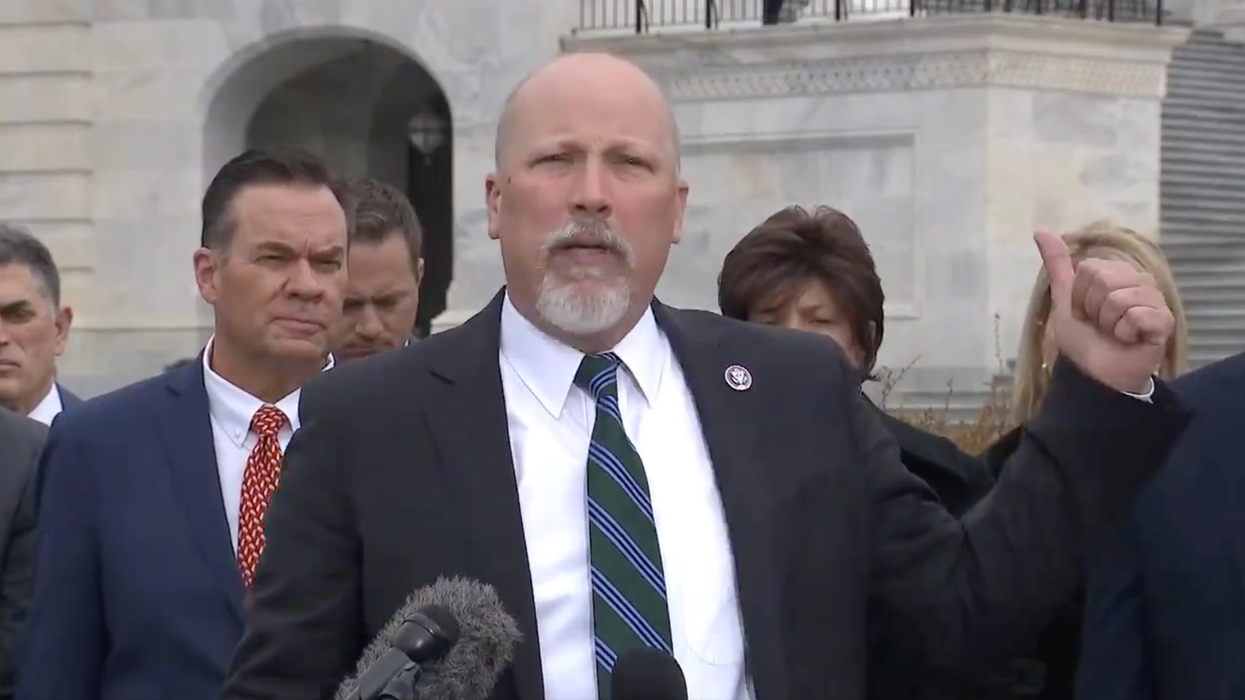
Chip Roy

GOP Hardliners In Congress Clashing With Trump Over Budget

During recent budget negotiations in the U.S. House of Representatives, President-elect Donald Trump not only clashed with Democrats — he also clashed with some GOP budget hawks, including Rep. Chip Roy (R-TX).

Trump, unlike Roy, favored raising the debt ceiling. And when Roy rejected one of the spending bills that Trump supported, the president-elect called for a primary challenge against him.

In an article published the day before Christmas 2024, Politico's Jordain Carney describes the tensions between Trump and hardline Republican budget hawks in Congress — including some members of the far-right House Freedom Caucus.

"Conservatives who want to slash the federal budget are hoping they can enlist President-elect Donald Trump and Elon Musk to their side come January," Carney explains. "But last week's meltdown over government funding underscored that Trump doesn't always share their fiscal restraint."

Carney adds, "Though Trump and Musk helped upend an initial bipartisan appropriations deal loathed by fiscal hardliners, 38 House Republicans later balked at Trump's big demand in the next bill: a looser limit on Washington's borrowing authority."

Another House Republican who voted against a Trump-supported spending bill was Rep. Andy Biggs (R-Arizona).

Biggs told Politico, "We allow the bureaucracy to grow. We pass CR after CR. That's going to be where the Trump bully pulpit is going to come in and actually try to deal with some of this stasis, this problem."

In 2025, Trump, according to Carney, Trump could either "be effective at pushing for cuts if he wants" or could "end up amplifying the GOP's existing internal fights and cause more chaos."

Rep. Don Bacon (R-NE) told Politico, "I think unified government helps us, because I think President Trump is going to tell some of these guys, 'Get in line.'"

Reprinted with permission from Alternet.

There’s Plenty of Money. Really.

There’s Plenty of Money. Really.

Don’t think for a second that congressional Republicans sincerely believe draconian cuts in federal spending stimulate the economy.

I know. They uniformly claim that spending cuts spark growth. But consider this.

During the 15-day shutdown of the federal government one and a half years ago, the United States lost some $24 billion in economic activity, according to a 2013 Standard & Poor’s report. Only Texas senator Ted Cruz and the conservative wing wanted the shutdown, while the rest of the Republican Party bore the brunt of cratering public opinion polls.

So when House Budget Committee chair Tom Price, a Georgia Republican, introduced a plan last month to cut more than $5 trillion in spending to balance the budget in nine years, take it for what it is — a purely political ploy to arouse conservatives in preparation for 2016.

The Price plan has no chance of becoming law with a Democrat in the White House, and a slim chance even with a Republican president. In repealing the Affordable Care Act and eviscerating food stamps while allocating tens of billions in defense spending (more than requested), it’s irresponsible. But in calling for the partial privatization of Medicare, it’s politically toxic. Beyond that, a Price plan put into law would be downright destructive. Sucking that much money out of the economy could possibly trigger, at the very least, another painful recession.

Still, congressional Republicans will continue to make believe that spending cuts are good for everyone, because like all make-believe stories, the Price plan has the advantage of sounding plausible. And because it sounds plausible, it feels persuasive to many voters. After all, growth is sluggish. Wages are flat. There isn’t enough money. It’s time to get serious and cut. That’s why Price titled his plan “A Balanced Budget for a Stronger America.”

In fact, there is enough money. Always has been. The trick is looking beyond one class of taxpayer dutifully paying its fair share to another class with the power, and the privilege, of avoiding paying its share.

According to a new report by Citizens for Tax Justice (CTJ), 304 of the 500 top U.S. corporations stashed more than $2 trillion in profits in offshore accounts in 2014, avoiding as much as $600 billion in U.S. taxes.

Among these are the most popular American brands: Apple, Nike, Microsoft, Safeway, and Clorox. These are among just 28 of the top 500 companies to report the tax rate they would pay if they had repatriated profits to the U.S. The rest didn’t bother. They don’t have to report.

But even those reporting to the IRS were probably lowballing their total U.S. tax liability. If they said they earned their enormous profits in tax havens, they probably didn’t, because the countries that shelter the money, like Bermuda or the Cayman Islands, don’t have economies that can produce such enormous profits. Those profits can only be earned in countries with robust economies like the U.S.

Furthermore, the foreign tax rate they paid was far lower than the tax rate they would have paid in the U.S. Indeed, the 28 firms bothering to tell the IRS what they would have paid in U.S. taxes paid a foreign tax rate of about 10 percent on a total of $470 billion. You almost certainly paid a higher percentage on less income.

Ironically, the offshoring trend has grown since the economic collapse of 2008, the very event Republicans cite when calling for more and deeper spending cuts. The CTJ survey found 77 firms increased their caches by at least $500 million while another seven U.S. companies — Apple, General Electric, Microsoft, IBM, Google, Oracle, and Gilead Sciences — piled high their cash hoards with more than $5 billion.

The trend is poised to become permanent. CTJ researchers report an acceleration of what’s known as “corporate inversions,” meaning American firms reincorporate in foreign countries to avoid paying most or all taxes on profits earned in the U.S.

And — no surprise here — the firms with the most money overseas are the first to lobby Congress to avoid paying taxes on that money. To stop this vicious cycle, CTJ researchers recommend putting an end to something called “deferrals,” an SEC rule that incentivizes tax sheltering. Then all profits earned by U.S. corporations anywhere in the world would be subject to U.S. taxes in the year they were earned.

The CTJ report does more than offer advice on creating a more equitable tax code. It reminds us that the frame of our budget debate is much too narrow. It is typically limited to spending, not revenues, much to the benefit of Republicans, while Democrats are left complaining about the unfair treatment of the middle class.

But the CTJ report does something else, something its authors don’t come right out and say. Our very narrow budget debate is as much about patriotism and national character as it is about justice and fiscal responsibility. Or at least it should be.

Billions and billions are hidden overseas while the rest of us are forced to fight over crumbs. That’s degrading and undignified but also unpatriotic. Prosperity is not only for the very few with the power to enjoy it. This isn’t feudal England.

This is America.

Photo: Brook Ward

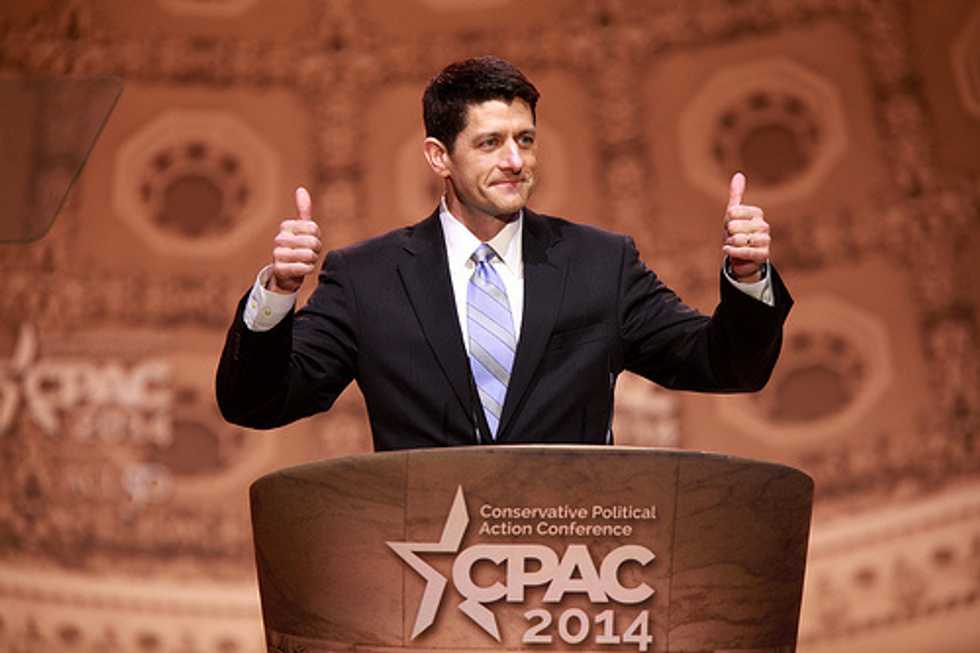
Expect More Cuts And Less Reality In Paul Ryan’s 2015 Budget

Expect More Cuts And Less Reality In Paul Ryan’s 2015 Budget

House Budget Committee chairman Paul Ryan’s (R-WI) latest budget proposal, which will be released on Tuesday, can be safely expected to follow his history of introducing legislation that includes steep cuts to safety-net programs to pay for increased defense funding and further tax cuts. But this year, his plan may be even more extreme.

In anticipation of Ryan’s upcoming budget – which will surely reflect his recent “War on Poverty” report – the Center on Budget and Policy Priorities offers a helpful preview of the 2012 vice-presidential nominee’s proposal, while examining the most serious flaws likely to plague the plan.

In his 2014 budget proposal, Ryan backed cuts to Medicaid and the Supplemental Nutritional Assistance Program (SNAP) – the program colloquially known as food stamps – and called for a repeal of the Affordable Care Act’s benefits. According to the CBPP, these cuts, which accounted for 72 percent of the budget’s total program cuts, would have “resulted in large increases in poverty and deprived many millions of affordable health insurance.”

And CBPP economists Sharon Parrott and Joel Friedman warn that Ryan’s new budget will be “as extreme as last year’s, if not more so,” even as they predict that the targeted programs might differ a bit from those included in the 2014 budget.

Assuming Ryan’s budget will maintain last year’s goal of balancing within the next decade, reversing sequestration cuts through increased defense funding, and maintaining current revenue levels, massive cuts to assistance programs are the only ways Ryan could partially achieve his goals.

Again: partially achieve. That is because the Congressional Budget Office deficit forecast, as CBPP points out, has worsened by an additional $1 trillion by 2024. If Ryan hopes to achieve any of his goals, he must first ensure that his proposed cuts meet the heightened inflation rates. Even the suggested cuts in his 2014 proposal cannot account for the projected inflation levels of 2024, which means that Ryan’s new budget must include additional hundreds of billions of dollars in cuts that are steeper than those in last year’s budget.

Imagining a budget, even one designed by Ryan, that includes more severe cuts to anti-poverty programs than those in the 2014 GOP-backed proposal is rather difficult. Considering that he avoids cuts to Medicare and Social Security altogether, it almost seems impossible.

That may explain why Ryan’s past budget proposals have been rather light on specifics, and why this year’s budget proposal will be similarly vague. He is going to have a tough time explaining politically palatable ways of actually achieving the cuts he calls for. After all, doing so would force him to address the consequences of the actual reductions.

As the CBPP notes, enacting Ryan’s 2014 budget would have resulted in increased rates of uninsured low- and middle-class Americans, 8 to 9 million more people forced off food stamp rolls, a $163 billion cut to civil service pensions and farm programs, and an additional $660 billion cut to other non-defense discretionary programs – many of which offer assistance to the poor and disabled. Expect more of the same in this week’s plan.

And while ordinary Americans suffer the wrath of Ryan’s budget proposal, wealthy Americans continue to prosper, due in no small part to his “dynamic scoring,” which posits that tax cuts for the wealthy will stimulate economic growth, which will then reduce the deficit. The primary problem with this idea is that no evidence exists to support a direct correlation between massive tax cuts and deficit reduction or economic growth.

If Ryan follows the basic outline of his 2014 plan, then his 2015 budget will surely be more severe. That is, of course, assuming that he accounts for the changing inflation rates. In the case that this budget disregards the CBO’s projections, however, his 2015 budget will represent little more than an outdated and unreasonable approach to maintaining current revenue levels and reversing sequestration cuts in defense funding. In either case, the American people lose.

Photo: Gage Skidmore via Flickr

Shop our Store

Headlines

Editor's Blog

Corona Virus

Trending

World