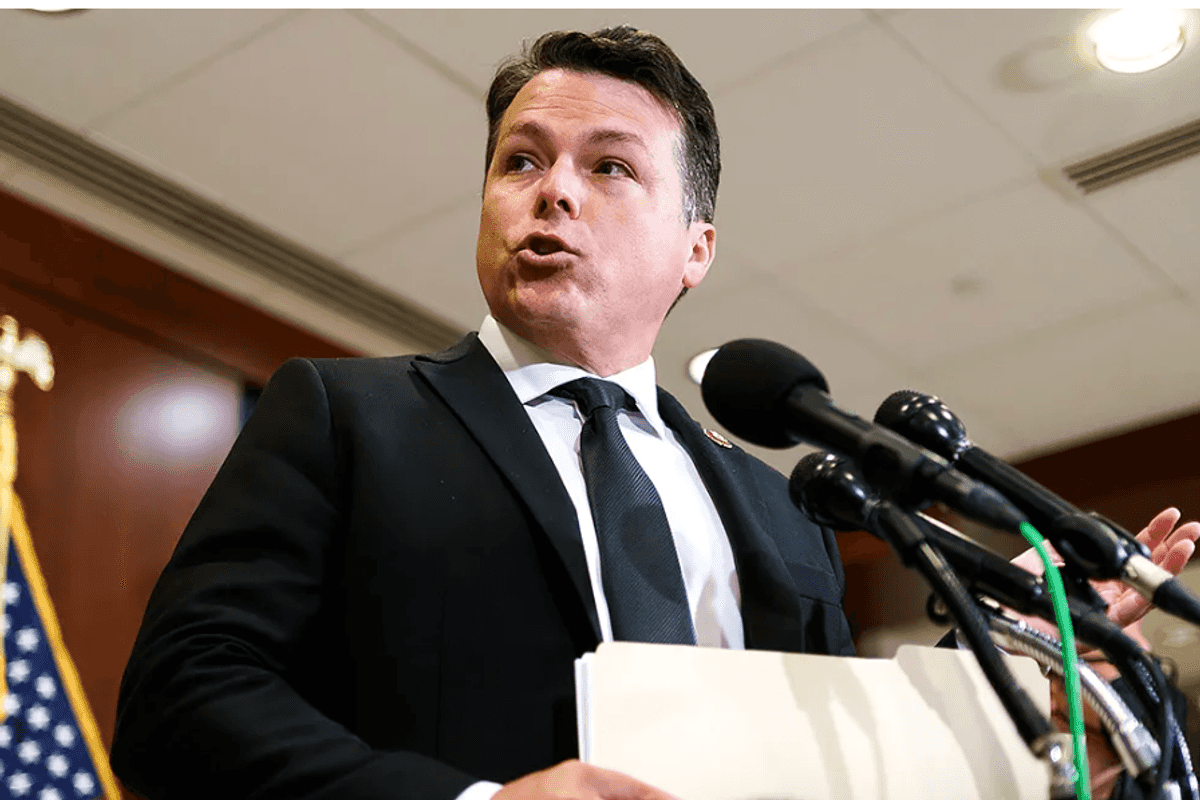
Rep. Brendan Boyle
I testified last week in the House Budget Committee on the majority’s proposal to set a -3% of GDP cap on the budget deficit. Here’s my testimony that I’ll summarize below, but first, a few notes about the hearing, which was less fractious and a lot more substantive than these things typically are these days. It’s not so much that punches were pulled, but there was considerably more agreement on the basic facts of the case, both between the four witnesses and the many of the members. There was also, however, a strange cognitive dissonance pervading the room.
I’m not saying my testimony is any good, but I am saying that it’s the culmination decades of my thinking about and participation in American fiscal policy, and I hope there is some wisdom in there. So, please give it a read—it’s short(ish)! (The other witnesses’ testimonies are also worth reading—good points were made by all, which again, isn’t always the case.)
Here are the basic facts of the case, on which some members on both sides agreed (not all, but the front-benchers mostly did so):
—The current budget path is unsustainable. Our deficit and debt is growing in good times and bad.
—The budget math—growth, interest rates, primary deficits (these are the three horsemen of the apocalypse sustainability variables; ”primary” means non-interest spending)—has turned in ways that make the path less sustainable. Most in the room, including some members and my fellow witnesses, agreed that the interest rate was likely to climb relative to the growth rate and primary deficits are far more likely to grow than ease.
—This one will surprise you but it’s true: many members on both sides agreed that the politics of deficit reduction will require both spending cuts and tax increases. The latter, I know, is especially surprising, and was framed by the Republicans as roughly, “our side will have to swallow some tax increases and your side will have to do the same on spending cuts.”
I’m sure many readers are thinking two things at this point: “Yeah, right…” and, even more so, “Aren’t these the same Republicans that added >$4 trillion to the debt over 10 years with the budget bill they signed last year?”
That’s the dissonant part. Let us entertain the possibilities of what’s going on here.
- It’s all posturing: Republicans don’t mean any of this. It’s all optics and they couldn’t care less about the fiscal path.
- They supported the budget bill—the worst such bill I’ve seen in a long career in this biz—which cut taxes mostly at the top of the income scale, partially offsetting its cost by cutting health and nutritional supports for economically vulnerable families, on behalf of their president and their donors. They realize—again, I’m talking about the ones who understand budget math—that they sh*t the bed and are appropriately concerned about the implications of that for the future: debt service crowding out other spending, pressure on interest rates leading to a spiral of higher debt service feeding into higher deficits, etc…
- In their quest to shrink the federal government, they significantly worsened the fiscal path and now are crying wolf that we must reduce the size of government to accommodate the rising debt. They won’t touch defense or raise taxes on the wealthy, so they’re gunning for Social Security, Medicare, anti-poverty programs.
- They know they’re likely to soon be the minority and now that they’ve burned down the House, they want to place a cap on the availability of matches.
You’d have to be a better psychotherapist than I to know how to weight these options, all of which are in play. But do not wholly discount option 2. Both in the hearing and in private discussions afterwards, I believe that sentiment is at least partially in play. I’d also put heavy weight on option 4.
Where do we go from here? To me, that path is clear. If leadership on both sides seriously wants to do something about this—which, to be clear, will not be possible until Trump leaves the building, as he will block anything useful in this space—then the next series of hearings, hopefully under Democratic House leadership (ranking member Rep. Brendan Boyle of Pennsylvania is very solid on these issues) needs to focus on the path to get to three percent.
It’s easy to stay abstract about the need for budget sustainability. You can rant about “waste, fraud, and abuse,” which, for the record, is a tell that you’re not serious (if you were, you’d fully fund IRS enforcement to reduce tax evasion, “raising $12 for every $1 it spends on auditing the richest 10 percent of households”); you can argue supply-side nonsense about how upper-end tax cuts will boost growth such that tax cuts pay for themselves, another tell. But if Republican leadership is anywhere in option 2 space, that will quickly become clear once we start hammering out actual policy compromises.
I know I blew by the dispositive condition that Trump needs to be gone for any of this to get anywhere. This implies a multiyear project, one I’d start sooner than later so that we have a compromise agenda ready should the political degrees of freedom open up.
Here’s my testimony introduction and summary points, but again, please read the link above:
Mr. Chairman, Ranking Member, and Members of the Committee, I thank you for the opportunity to testify today.
For as long as we’ve debated fiscal policy in this country, the opposing sides in that debate have been called fiscal doves and fiscal hawks. The former, wherein I used to reside, argued that so long as the economy’s growth rate surpassed the interest rate of the government’s debt and the primary deficit stayed roughly in check, deficit spending was not particularly worrisome. The hawks took the other side of that argument.
Of course, even we doves were concerned about the fiscal trajectory post the temporary 1998-2001budget surpluses. And we always emphasized that it mattered what purpose the debt accumulation was serving. Investment in people and projects with expected future returns, including anti-poverty programs, made more sense than unnecessary tax cuts or wasteful spending.
There are surely some fiscal doves left but many of us have flown the coop. The reasons are that the budget math has become more threatening, primary deficits have been growing quickly, and almost every tax and spending measure enacted by Congress in recent years has worsened the fiscal outlook.
I therefore welcome this hearing which I take to be in the interest of finding a bipartisan path toward a more sustainable budget outlook. That task has been made more urgent, and considerably more difficult, by the deficit financing of the recently enacted budget bill, which is actively worsening the very fiscal path we seek to improve in the context of this hearing today.
My one other overarching framing point is that while deficit reduction is necessary and desirable, it is easy to do so in a way that does far more harm than good. Examples include deficit reduction that increases post-transfer poverty, that is a function of failing to offset negative economic shocks, that cuts productivity-enhancing investment in public goods, and that imposes indiscriminate, automatic cuts.
1: Fighting over whether the problem is too much spending or too little revenue is a dead end.
2: There is nothing wrong with aspiring to a deficit that’s capped at 3% of GDP, but it matters how you get there.
3. If setting a deficit target helps focus Congress on our unsustainable fiscal path, then sure, go ahead.
4. The flipside of deficits expanding in downturns is that they should contract in strong economies.
5. In considering how to get on a more sustainable path it is essential to recognize that spending is below where CBO thought it would be while revenues are much lower.
6. The tariffs reveal that we can raise new revenues.
7. The timing of a budget crunch is unknowable, but the shift in the budget math means it is closer than it used to be.
Jared Bernstein is a former chair of the White House Council of Economic Advisers under President Joe Biden. He is a senior fellow at the Council on Budget and Policy Priorities. Please consider subscribing to his Substack.
Reprinted with permission from Econjared.
- Trump Budget Will Hit Medicaid And Food Stamps, But Boost Military ›
- The Big Lie of the Day: Republicans Balance Federal Budgets ›
- Trump's New Military Buildup Will Require A $6 Trillion Tax Hike ›
- Not Too Soon To Ask How We Can Repair Trump's Wreckage ›
- Can The Damage Trump Is Doing Be Stopped? Can It Ever Be Repaired? ›
- $20 Trillion Investment? Searching For Trump's Imaginary Economic Boom ›
- Congressional Republicans Veer Between Musk And Trump Over Budget Bill ›
- Danziger Draws - National Memo ›
- How Trump Republicans Cut Down The Child Tax Credit And Drove Up Child Poverty - National Memo ›
- Worrying About $40 Trillion In Debt? Trump's Corruption Is A Far Worse Threat - National Memo ›
- Trump's economic claims contradicted by statistics ›
- The national debt just crossed $39 trillion—almost doubling since Trump vowed to erase it | Fortune ›
- US budget deficit to keep growing amid Trump tax cuts, tariffs, CBO forecasts show | Reuters ›
- Donald Trump Built a National Debt So Big (Even Before the Pandemic) That It’ll Weigh Down the Economy for Years ›
- Donald Trump Built a National Debt So Big (Even Before ... ›