Scam! Why Blanche Is Rushing To Settle Trump's Bogus $10 Billion IRS Lawsuit
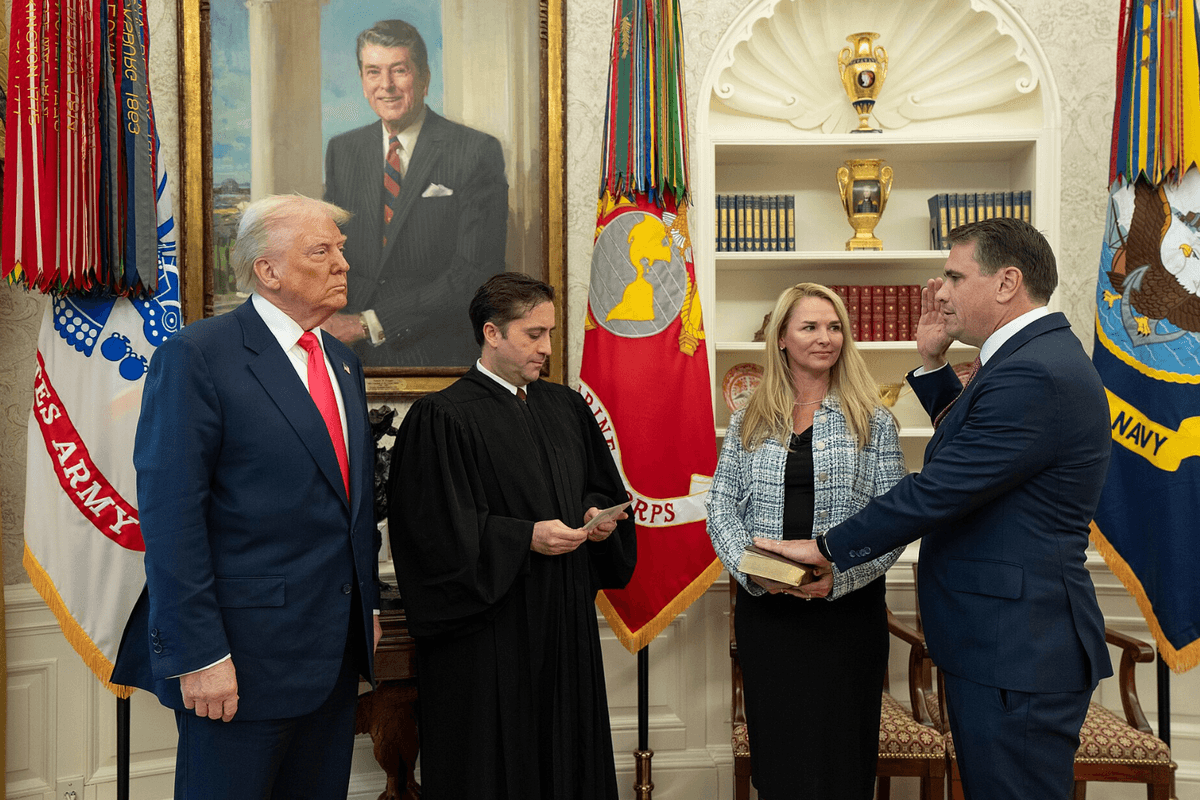
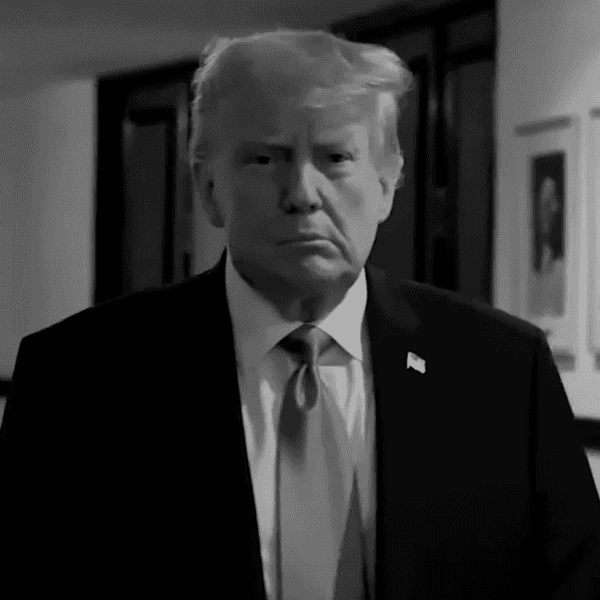
President Donald Trump swears in Todd Blanche, right, as Deputy Attorney General on March 6, 2025
I recently wrote a long piece explaining the greater importance of what looked like a routine briefing order in Trump’s $10 billion lawsuit against the IRS.
The order signaled that Judge Kathleen Williams of the Southern District of Florida was on to the administration’s scam of letting friends and allies—and maybe Trump himself—scoop up large sums of money from the treasury under the pretense of settling lawsuits that weren’t really lawsuits at all, as the court and constitution use the term.Instead, they are collusive schemes in which the United States has “jumped the v.” By that I mean that the administration has cozied up to nasty characters that the previous DOJ had charged. And they may be poised to do it on a much larger scale, including the worst January 6 offenders whose convictions they recently wiped away.
A paradigm case is the recent “settlement” with Michael Flynn. Flynn pleaded guilty twice, Merrick Garland’s DOJ won the motion to dismiss his civil suit, and Blanche’s DOJ then turned around and paid him $1.25 million anyway—unabashedly calling it a remedy for “historic injustice.” The government had already won. It paid anyway. That’s the scheme in miniature: jump the v, shake hands across the caption, and invite your pal to help himself to federal tax dollars.
The New York Times report suggests the DOJ is scrambling to settle Trump’s lawsuit against the IRS before its brief is due in Judge Williams’s court. The report raises the prospect of a relatively lowball settlement, for example, a promise to Trump that the IRS won’t audit him or his businesses going forward, and perhaps a little cash. (Note, however, that in Trump’s case, that would be worth quite a lot; a 2024 Times report found that a pending audit loss could cost Trump more than $100 million.)
Don’t let the supposed modesty of the settlement distract you. The real point of the deal is to get Todd Blanche and the DOJ out of the tight corner Williams has put them in. The low amount is to make it look palatable. It isn’t, but for different reasons.
Yes, Trump filed a $10 billion lawsuit against the IRS in January—a grandiose number premised on a real underlying wrong: Charles Littlejohn, a former IRS contractor, stole Trump’s tax returns and delivered them to The New York Times and ProPublica. Littlejohn pleaded guilty and went to prison for five years.
So unlike, for example, the Flynn lawsuit, the problem here wasn’t that the whole suit was bogus. The privacy violation was genuine. The problem, though, is that Trump was suing the government he presides over and controls with an iron fist.
For that reason, the case—filed by Trump against an agency he controls, defended by a DOJ that exists to do his bidding—is not a bona fide lawsuit in the constitutional sense. The Constitution requires a genuine case or controversy with parties on opposite sides. Here, the two parties are rowing in precisely the same direction and under Trump’s command.That’s the point that gave Judge Williams pause, and led her to order briefing on, among other questions, “whether a case and controversy exists in this matter.” Moreover, she appointed a gold-plated set of legal talent to present the other side that neither Trump nor the DOJ could be counted on to do.
That put Blanche and the DOJ firmly between a rock and a hard place. Blanche cannot credibly claim the DOJ stands in genuine opposition to Trump: his entire tenure as Acting AG has been a demonstration of the opposite. But he also cannot concede the court lacks jurisdiction, because that unravels not just this case but the Flynn settlement and every other collusive arrangement the administration has quietly stitched together (including, according to a letter Democratic Rep. Jamie Raskin of Maryland sent Blanche on Tuesday, many awards to Trump-friendly FBI agents without even going through the farce of a lawsuit.) Either answer is ruinous.
Blanche has apparently hit on a third option: turn tail and run.
The Times piece reports that the DOJ is holding internal discussions about settling the case “in the coming days,” citing three people familiar with the deliberations.
This is for a case in which the government has yet to enter an appearance or answer Trump’s complaint, and in which it previously asked for 90 days to do so. The “coming days” is the obvious reveal that it’s Judge Williams’s May 20 deadline that is driving the department’s deliberations. The deliberations have nothing to do with the merits or strategy of the case, and everything to do with avoiding the patent embarrassment of having to respond to the court.
The real prize here is escape. Escape from Judge Williams’s courtroom, from the amici she appointed, and from the likely determination that the lawsuit never presented a genuine case or controversy under Article III at all. Rather, from the jump, the case was a sham, as was the Flynn settlement and other contrived rewards to Trump’s friends.
There’s a certain irony here. The point of the lawsuit was to treat the federal court as a spot to launder a collusive deal and gain a judicial imprimatur. Now that a judge is actually doing her job, actually probing whether the whole enterprise is constitutionally void, they want to withdraw.
Williams’s hands are largely tied if the parties simply settle or withdraw before she rules. There would be nothing left on her docket to oversee. Even so, she can call it out for what it is, and receive the briefs the amici are preparing. That spotlight matters greatly in itself. And now that she’s called attention to the government’s corrupt and unconstitutional maneuvers, other judges will have occasion to pick it up in other cases.
So keep your eyes on the calendar. If a settlement materializes before May 21st—before the amici file, before Williams gets her answer—you’ll know exactly what it means. It means the DOJ assessed its options and opted to run for cover, hoping nobody notices. It means they are scared of their own shadow, and the shadow of the Constitution.
Harry Litman is a former United States Attorney and the executive producer and host of the Talking Feds podcast. He has taught law at UCLA, Berkeley, and Georgetown and served as a deputy assistant attorney general in the Clinton Administration. Please consider subscribing to Talking Feds on Substack.
Reprinted with permission from Talking Feds.
- 'Damning' Prosecution Memo Suggests Trump Sought Profit From Classified Papers ›
- Has The Worm Finally Turned On Trump's Staggering Personal Corruption? ›
- Blanche's 'Odd' Visits With Child Trafficker Maxwell Are Indefensible ›
- Worse Than The Old Boss: Todd Blanche Drives Justice To A New Low ›
- Self-Abasement Theatre: The Curious Case Of Acting Attorney General Blanche ›
- In Trump's Department Of Justice, Bootlicking Blanche Wields 'Weaponization' ›
- Danziger Draws - National Memo ›
- The Only Promise Todd Blanche Can Honestly Make Is Dishonesty - National Memo ›
- Blanche warns lawyers who criticize Justice Department - POLITICO ›
- Raskin alleges Todd Blanche oversaw payouts to FBI agents accused of misconduct - Live Updates - POLITICO ›
- Exclusive: Acting AG Todd Blanche was told last year to recuse from Justice Department matters involving Trump | CNN Politics ›
- Impeachment of the Day: Todd Blanche’s Conflict-of-Interest and Ethics Violations - Daily Kos ›