Tag: budget deficits
Surprisingly, Even (Some) Republicans Understand Trump Deficit Peril

Surprisingly, Even (Some) Republicans Understand Trump Deficit Peril


I testified last week in the House Budget Committee on the majority’s proposal to set a -3% of GDP cap on the budget deficit. Here’s my testimony that I’ll summarize below, but first, a few notes about the hearing, which was less fractious and a lot more substantive than these things typically are these days. It’s not so much that punches were pulled, but there was considerably more agreement on the basic facts of the case, both between the four witnesses and the many of the members. There was also, however, a strange cognitive dissonance pervading the room.

I’m not saying my testimony is any good, but I am saying that it’s the culmination decades of my thinking about and participation in American fiscal policy, and I hope there is some wisdom in there. So, please give it a read—it’s short(ish)! (The other witnesses’ testimonies are also worth reading—good points were made by all, which again, isn’t always the case.)

Here are the basic facts of the case, on which some members on both sides agreed (not all, but the front-benchers mostly did so):

—The current budget path is unsustainable. Our deficit and debt is growing in good times and bad.

—The budget math—growth, interest rates, primary deficits (these are the three horsemen of the apocalypse sustainability variables; ”primary” means non-interest spending)—has turned in ways that make the path less sustainable. Most in the room, including some members and my fellow witnesses, agreed that the interest rate was likely to climb relative to the growth rate and primary deficits are far more likely to grow than ease.

—This one will surprise you but it’s true: many members on both sides agreed that the politics of deficit reduction will require both spending cuts and tax increases. The latter, I know, is especially surprising, and was framed by the Republicans as roughly, “our side will have to swallow some tax increases and your side will have to do the same on spending cuts.”

I’m sure many readers are thinking two things at this point: “Yeah, right…” and, even more so, “Aren’t these the same Republicans that added >$4 trillion to the debt over 10 years with the budget bill they signed last year?”

That’s the dissonant part. Let us entertain the possibilities of what’s going on here.

  1. It’s all posturing: Republicans don’t mean any of this. It’s all optics and they couldn’t care less about the fiscal path.
  2. They supported the budget bill—the worst such bill I’ve seen in a long career in this biz—which cut taxes mostly at the top of the income scale, partially offsetting its cost by cutting health and nutritional supports for economically vulnerable families, on behalf of their president and their donors. They realize—again, I’m talking about the ones who understand budget math—that they sh*t the bed and are appropriately concerned about the implications of that for the future: debt service crowding out other spending, pressure on interest rates leading to a spiral of higher debt service feeding into higher deficits, etc…
  3. In their quest to shrink the federal government, they significantly worsened the fiscal path and now are crying wolf that we must reduce the size of government to accommodate the rising debt. They won’t touch defense or raise taxes on the wealthy, so they’re gunning for Social Security, Medicare, anti-poverty programs.
  4. They know they’re likely to soon be the minority and now that they’ve burned down the House, they want to place a cap on the availability of matches.

You’d have to be a better psychotherapist than I to know how to weight these options, all of which are in play. But do not wholly discount option 2. Both in the hearing and in private discussions afterwards, I believe that sentiment is at least partially in play. I’d also put heavy weight on option 4.

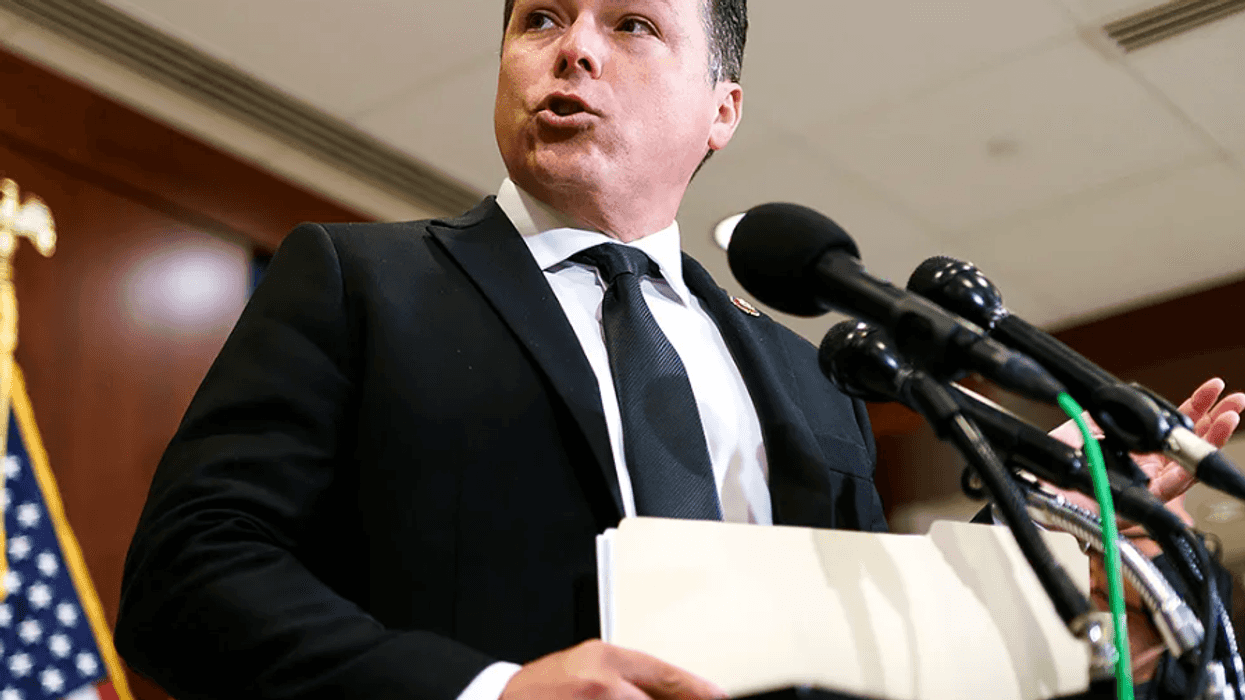
Where do we go from here? To me, that path is clear. If leadership on both sides seriously wants to do something about this—which, to be clear, will not be possible until Trump leaves the building, as he will block anything useful in this space—then the next series of hearings, hopefully under Democratic House leadership (ranking member Rep. Brendan Boyle of Pennsylvania is very solid on these issues) needs to focus on the path to get to three percent.

It’s easy to stay abstract about the need for budget sustainability. You can rant about “waste, fraud, and abuse,” which, for the record, is a tell that you’re not serious (if you were, you’d fully fund IRS enforcement to reduce tax evasion, “raising $12 for every $1 it spends on auditing the richest 10 percent of households”); you can argue supply-side nonsense about how upper-end tax cuts will boost growth such that tax cuts pay for themselves, another tell. But if Republican leadership is anywhere in option 2 space, that will quickly become clear once we start hammering out actual policy compromises.

I know I blew by the dispositive condition that Trump needs to be gone for any of this to get anywhere. This implies a multiyear project, one I’d start sooner than later so that we have a compromise agenda ready should the political degrees of freedom open up.

Here’s my testimony introduction and summary points, but again, please read the link above:

Mr. Chairman, Ranking Member, and Members of the Committee, I thank you for the opportunity to testify today.

For as long as we’ve debated fiscal policy in this country, the opposing sides in that debate have been called fiscal doves and fiscal hawks. The former, wherein I used to reside, argued that so long as the economy’s growth rate surpassed the interest rate of the government’s debt and the primary deficit stayed roughly in check, deficit spending was not particularly worrisome. The hawks took the other side of that argument.

Of course, even we doves were concerned about the fiscal trajectory post the temporary 1998-2001budget surpluses. And we always emphasized that it mattered what purpose the debt accumulation was serving. Investment in people and projects with expected future returns, including anti-poverty programs, made more sense than unnecessary tax cuts or wasteful spending.

There are surely some fiscal doves left but many of us have flown the coop. The reasons are that the budget math has become more threatening, primary deficits have been growing quickly, and almost every tax and spending measure enacted by Congress in recent years has worsened the fiscal outlook.

I therefore welcome this hearing which I take to be in the interest of finding a bipartisan path toward a more sustainable budget outlook. That task has been made more urgent, and considerably more difficult, by the deficit financing of the recently enacted budget bill, which is actively worsening the very fiscal path we seek to improve in the context of this hearing today.

My one other overarching framing point is that while deficit reduction is necessary and desirable, it is easy to do so in a way that does far more harm than good. Examples include deficit reduction that increases post-transfer poverty, that is a function of failing to offset negative economic shocks, that cuts productivity-enhancing investment in public goods, and that imposes indiscriminate, automatic cuts.

1: Fighting over whether the problem is too much spending or too little revenue is a dead end.

2: There is nothing wrong with aspiring to a deficit that’s capped at 3% of GDP, but it matters how you get there.

3. If setting a deficit target helps focus Congress on our unsustainable fiscal path, then sure, go ahead.

4. The flipside of deficits expanding in downturns is that they should contract in strong economies.

5. In considering how to get on a more sustainable path it is essential to recognize that spending is below where CBO thought it would be while revenues are much lower.

6. The tariffs reveal that we can raise new revenues.

7. The timing of a budget crunch is unknowable, but the shift in the budget math means it is closer than it used to be.

Jared Bernstein is a former chair of the White House Council of Economic Advisers under President Joe Biden. He is a senior fellow at the Council on Budget and Policy Priorities. Please consider subscribing to his Substack.

Reprinted with permission from Econjared.

President Trump

Tariff Dividend Checks For Dummies (Who Run America's Policy Debates)

I learned basic arithmetic skills in third grade. I wasn’t exceptional, everyone in my public school third grade class learned them. Of course, we all can now use computers to have calculations done for us in a fraction of a second. But still somehow, we have major national debates that show zero understanding of even the most basic arithmetic.

The latest example is the $2,000 tariff dividend check that Trump is promising us. The arithmetic here is about as simple as it gets. We have roughly 340 million people in the country. Let’s say 10 percent don’t get the check because they meet Trump’s category of “high-income.”

That leaves over 300 million people getting Trump’s $2,000 checks. That comes to more than $600 billion. Trump’s tariffs are raising around $270 billion. That means we will be paying out $330 billion more in Trump tariff dividend checks than he is raising in tariff revenue. That is adding $330 billion to the deficit. That is from the same guy who is making an obsession of paying down our national debt.

And just to be clear, we were already looking at a budget deficit for 2026 of $1.8 trillion. If we add $330 billion, the deficit for the fiscal year will be $2.1 trillion. To put this in simple language that even a reporter for a major national news outlet can understand, Trump is proposing to add $2.1 trillion to the debt in 2026, he is not paying it down.

I acknowledge not being a deficit hawk and am not terrified by a deficit of this size, which is roughly seven percent of GDP. But I suspect most of the politicians in Washington are, and certainly anyone who thinks we need to be paying down the debt should be screaming bloody murder.

But watching the reaction in major media outlets, there seems almost no appreciation of the fact that Trump was floating what would ordinarily be considered a very large increase in the deficit. In fact, if Trump were to give this tariff dividend check every year over the next decade, it would add close to $4 trillion to the debt (counting interest payments), almost as much as the big tax cut Congress approved earlier this year.

It’s also worth comparing Trump’s tariff dividends to other items in the news. The government shutdown was in large part over the $35 billion in annual payments for enhanced subsidies for people buying insurance in Obamacare exchanges. Trump and Republicans in Congress claimed that we didn’t have the money to pay for these subsidies. Trump’s tariff dividend checks would cost more than 17 times as much as the enhanced insurance subsidies.

To make another comparison, Trump saved us around $6 billion a year by shutting down PEPFAR, the program that has saved tens of millions of lives by treating people in Africa for AIDS. This means that Trump’s tariff dividend checks will cost us 100 times as much as the AIDS program that he said we couldn’t afford.

And just to throw in one more comparison, the annual appropriation for public broadcasting was $550 million. Trump’s tariff dividend checks would cost more than 1000 times as much as the government’s payments for public broadcasting.

People can differ in their views on how important it is to save lives in Africa or provide people here with healthcare. They may also differ in their assessments of how important deficits are, but it really would be good if media outlets could make knowledge of third grade arithmetic a job requirement for reporters who deal with budget issues. It should be their job to provide meaningful information to the public on the topic. Letting someone talk about $2,000 dividend checks, and also about paying down the debt, is a sick joke.

Dean Baker is a senior economist at the Center for Economic and Policy Research and the author of the 2016 book Rigged: How Globalization and the Rules of the Modern Economy Were Structured to Make the Rich Richer. Please consider subscribing to his Substack.

Reprinted with permission from Dean Baker.

Yes, Republicans Are Happy To Raise Taxes -- On Poor And Working People

Yes, Republicans Are Happy To Raise Taxes -- On Poor And Working People

Here’s the latest fiscal data from Congressional Budget Office, a first look at fiscal year 2025 outlays and receipts (the table shows the latter):

The solid job market contributed to higher income and payroll taxes, but you’ll note that the largest percentage changes occurred for corporate taxes, down 15 percent, $77bn, and import taxes, up 153 percent, $118bn.

According to CBO, the decline in corporate receipts partly reflects early impacts of the Trump/Republican budget bill, in this case larger deductions for investments. The “customs duties” are, of course, the tariffs.

Two points.

First, contrary to ancient lore, clearly Republicans raise taxes. It’s just a matter of whose taxes they raise.

Now, as someone who is worried about our longer-term fiscal outlook—I didn’t used to feel that way, but the combination of rising interest rates1 and bipartisan disregard for the outlook flipped me—I’m the last person to blanketly condemn a tax increase.

But, and here’s the second point, why would you do so on the most vulnerable taxpayers, which is who tariffs mostly hit, versus the wealthy, which is who corporate taxes mostly hit? That there’s one of them rhetorical questions.

Here’s the distribution of corporate taxes from the excellent ITEP:

Note that 84% of the benefits of a corporate tax break accrue to the richest 20%, and 29% to the top 1%.

Here’s the tariff impact on household income, from Yale Budget Lab via Axios:

The “tax incidence” of tariffs falls more on middle- and low-income households, as imports are a larger share of their consumption baskets relative to higher-income households. Thus, tariffs are a regressive tax.

Because corporate taxes fall mostly on shareholders, who tend to have higher incomes, the corporate tax is considered to be progressive.

So, yes, we need more tax revenue. The CBO data show that the FY25 deficit will amount to ~6 percent of GDP, way too high for an economy that spent much of that year near full employment. In fact, the disconnection of revenue flows to the US Treasury from economic growth is a foundational fiscal problem, one born largely of decades of high-end tax cuts.

When I was in the Biden administration, I and many other revenue seekers always bridled at our policy of “not one penny!” of tax increases on households under $400,000. But the idea that you’d address this revenue shortfall by taxing the purchases of working class families already in the relentless grip of the affordability squeeze while cutting far more taxes for the wealthiest households makes no sense on either fiscal or fairness grounds. And I’m not even getting into the cuts in the health coverage of low- and middle-income households to partially offset the cost of those high-end cuts.

Speaking of health coverage, remember these tables and figures, and more importantly, the $4 trillion in debt-financing for their budget bill, when you hear the Rs squawking about not being able to pay for the restoration of the tax credits to help pay for health coverage, the terms Ds are demanding to end the shutdown.

At least for now, Ds are winning that fight, which makes a lot of sense to me, as we are in the middle of one of those moments where it’s crystal clear as to who is fight for whom.

Jared Bernstein is a former chair of the White House Council of Economic Advisers under President Joe Biden. He is a senior fellow at the Council on Budget and Policy Priorities. Please consider subscribing to his Substack.

Reprinted with permission from Econjared.

Welcome To The Dead On Arrival Congress, Where Rhetoric Is All That Matters

Welcome To The Dead On Arrival Congress, Where Rhetoric Is All That Matters

I’m going to be reporting on everything these Republican goofs do for the next two years. To help me cover their lying, scheming asses, you can buy a subscription right here.

The Republican-controlled House of Representatives has successfully navigated its way into its performative normative future by winning its first two votes. They passed the Kevin McCarthy Defenestration Act, otherwise known as the House rules, and they passed “The Family and Small Business Protection Act," otherwise known as the We Hate Taxes Act.

Big whoop. The new House rules allow Kevin to wield his gavel unless and until five of the Freedom Caucus decide to take that freedom away from him by invoking their new powers to vacate the chair – aka, fire the Speaker – on a motion that can now be made by a single member. Our boy Kev isn’t merely walking on eggshells, he’s dog-paddling through raging rapids trying to keep himself from going down the 100-foot falls that he can see lying straight ahead.

Then they made good on their promise to cut the money for the 80,000 or so new IRS employees scheduled to be hired over the next decade, funding for which was built into the Inflation Reduction Act, signed into law by President Joe Biden late last year. Republicans brought back the so-called “Holman rule,” a provision dating to the 19th Century which allows the House to amend spending bills at will, cutting out stuff they don’t like (new money for the IRS), also allowing them to terminate federal employee positions they oppose, such as the 80,000 or so new IRS employees funded by the passage of last year’s spending bill.

That little legislative jewel is dead on arrival in the Democrat-controlled Senate, not to mention if it were ever to reach the president’s desk.

But who cares! They’re out there in the halls of Congress this morning giving interviews before any microphone they can find bragging about firing the 87,000 new IRS “agents” they claim will be hired over the next decade. A bald-faced lie, naturally: The Treasury Department has said that the money in the Inflation Reduction Act will be used mainly to hire customer service representatives, computer scientists, and to replace the 52,000 IRS employees who are scheduled to retire over the next six or seven years.

Only a small percentage of the new employees will be serving as IRS agents, but you won’t be hearing that from Marjorie Taylor Greene or any of her MAGA compatriots. They’re out there claiming they’re saving middle class Americans from being audited, when the truth is, none of the money appropriated for the IRS will be spent on enforcement of IRS rules on families making less than $400,000 a year. According to The Hill, IRS Commissioner Charles Rettig, an appointee of Donald Trump, sent a letter to the Senate last August stating “that the funds from the legislation would be used to up examination of large corporations and high-net-worth individuals.”

But try finding that bothersome little detail escaping the lips of a Republican member of Congress.

The White House announced that President Biden woul veto the bill passed yesterday by the House if it somehow accidentally ends up on his desk: “With their first economic legislation of the new Congress, House Republicans are making clear that their top economic priority is to allow the rich and multi-billion dollar corporations to skip out on their taxes, while making life harder for ordinary, middle-class families that pay the taxes they owe.”

Meanwhile, the nonpartisan Congressional Budget Office, which analyzes any spending legislation with respect to its possible effect on the deficit, announced yesterday that, if it were to become law, the Republican bill would lead to increases in the deficit over the next decade of $114 billion by reducing tax revenue by an estimated $186 billion.

So, every time a Republican member of the House opens his or her mouth and starts yapping about the deficit, a reporter on Capitol Hill should ask them about the more than $100 billion they just advocated adding to the deficit.

If I were a Capitol Hill reporter, I wouldn’t hold my breath waiting for an answer, however. With a Democratic Senate and a Democrat in the Oval Office, exactly nothing the House passes on a party-line vote over the next two years will become law. Everything the Republican House says and does will be performative, from Jim Jordan’s Judiciary subcommittee that is supposed to investigate “the weaponization of the federal government” to any sort of tax cuts they might be contemplating. The 118th Congress won’t be about legislating and laws but rather about rhetoric, pure and simple.

Lucian K. Truscott IV, a graduate of West Point, has had a 50-year career as a journalist, novelist, and screenwriter. He has covered Watergate, the Stonewall riots, and wars in Lebanon, Iraq, and Afghanistan. He is also the author of five bestselling novels. You can subscribe to his daily columns at luciantruscott.substack.com and follow him on Twitter @LucianKTruscott and on Facebook at Lucian K. Truscott IV.

Please consider subscribing to Lucian Truscott Newsletter, from which this is reprinted with permission.

Shop our Store

Headlines

Editor's Blog

Corona Virus

Trending

World