How Trump Republicans Cut Down The Child Tax Credit And Drove Up Child Poverty
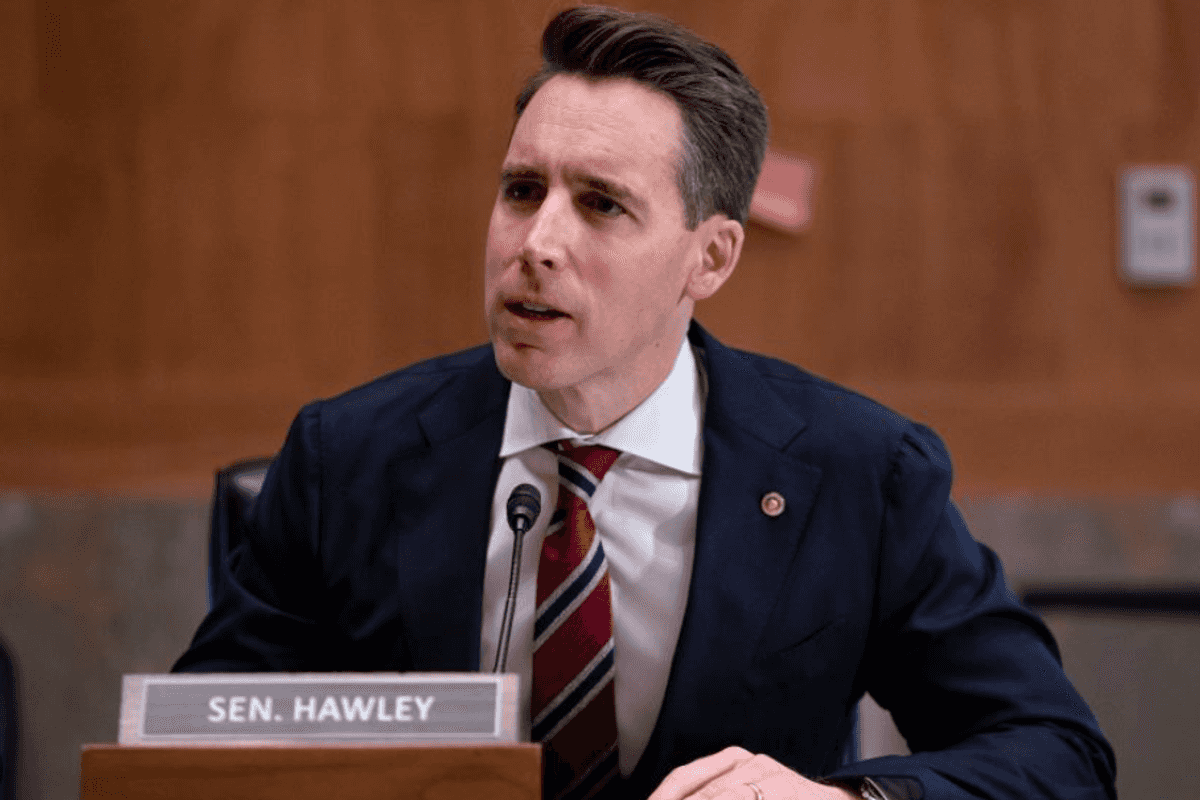
Sen. Josh Hawley
A few days before President Trump’s second inauguration, Republican Senator Josh Hawley of Missouri gave an impassioned speech on the floor of the Senate calling for a dramatic increase in the child tax credit.
The Biden administration’s first pandemic relief bill had temporarily lifted the maximum credit to $3,600, which had the salutary effect of dramatically lowering the childhood poverty rate to five percent, the lowest ever recorded. But the expiration of the increase after 2022 caused the child poverty rate to surge back to previous levels – more than 12 percent. Unless the new GOP-run 119th Congress acted, the credit would drop to $1,000 from $2,000 due to a sunset provision stuck in Trump’s first corporate tax giveaway, which passed in 2017.
“For every Republican who has hailed the new working-class majority that President Trump has delivered, now is the time to deliver,” Hawley proclaimed. “Delivering results in this body is the acid test.”
Last July, Hawley’s resolve disappeared faster than Washington’s cherry blossoms in spring. He voted, along with all but five members of the GOP, for the $2 trillion tax giveaway to corporations and the rich known as the One Big Beautiful Bill. It did not include his $5,000 child tax credit. Instead, Trump and the GOP, in their search for revenue to offset a tiny fraction of the tax cut, limited the increase in the child tax credit to $200, which didn’t even make up for the past four years’ inflation.
Support for child tax credit has long been a bipartisan affair. It has received renewed attention from the GOP in recent years with the political ascendancy of the Christian right. Groups like Susan B. Anthony Pro-Life America, Eagle Forum, and the National Association of Evangelicals see it as government support for natalism, a part of their anti-abortion and family values agenda. Some Christian Nationalists support it because it provides support for “biblical” families where men work and women focus on cooking, cleaning and raising children.
Of course, few families in today’s economy, especially those in the bottom half of the income distribution, can afford to raise children with a single wage earner. Both parents work in 66 percent of the 33 million two-adult households with children (this data comes from the Bureau of Labor Statistics for 2024). In the 10 million households with single parents (three-quarters headed by women), 76 percent hold down full- or part-time jobs. For single fathers with kids, it is 85 percent.
Clearly, most of the parents taking the child tax credit (CTC) at tax time are more likely to spend the extra cash on day care as support their desire to send a young mother back to the kitchen. But the fact that it is a cash grant allows each family to make that choice and gives politicians on both sides of the aisle arguments for supporting its expansion.
Recognition of the underlying economic realities led Hawley to call for a big increase in the CTC. He also wanted it extended to families expecting children, and included in every paycheck throughout the year, not given as a lump sum at tax time. People living paycheck to paycheck don’t need an enforced savings program, they need the cash now.
How would he accomplish that? By basing the credit not just on federal income taxes, which are low to non-existent for most low- and modest-income families, but also on Social Security and Medicare payroll taxes, which take 7.65% out of every dollar they earn.
Democrats have very different reasons for supporting a big expansion of the CTC. They see it as an essential part of the social safety net, and a component of a growing movement to create a guaranteed family income in the U.S., which has strong backing from urban mayors. It also could help offset a small part of the more than $1 trillion in cuts to food assistance and health care contained in the Trump administration’s One Big Ugly Bill.
The roots of income supplements
The Republican Party’s support for income supplementation traces its roots to the late 1960s when Daniel Patrick Moynihan, the centrist academic then serving as President Nixon’s chief domestic policy adviser, proposed a negative-income tax for low-income families with children. He argued that providing string-free cash to poor families was more empowering and administratively simpler than forcing them into the hands of separate government bureaucracies doling out housing, food or welfare subsidies.
Moynihan’s Family Assistance Plan also tied benefits to work – a forerunner of today’s GOP imposition of work requirements in Medicaid and the Supplemental Nutrition Assistance Program (colloquially known as food stamps, although today it comes in the form of a debit card). Such requirements never lead to alleged shirkers seeking work. Rather, they erect bureaucratic barriers that keep underpaid workers from receiving benefits that by law should be theirs.
The first cash subsidy tied to work became law in 1975 when Congress passed and President Ford signed the Earned Income Tax Credit (EITC), whose maximum benefit today is twice as large as the CTC. Later, after becoming the Democratic Senator from New York, Moynihan continued to push for a CTC to provide extra support for low-income families with kids. Though President Reagan endorsed the idea, nothing came of it during his or George H.W. Bush’s time in office.
House Speaker Newt Gingrich included the CTC in his mid-1990s Contract with America, which became law with President Clinton’s signature in 1997. The original $400 credit was gradually increased by succeeding Congresses (again with bipartisan support) to keep pace with inflation.
Things changed in the current MAGA-controlled Congress, however. In last year’s massive tax break bill, which passed six months after Hawley’s fiery speech, most of the tax breaks again went to the wealthy and corporate America. The GOP failed to include Hawley’s $5,000 credit. Instead, it increased the CTC to $2,200, which in inflation-adjusted dollars is less than where in stood when Trump left office in 2021. Hawley voted yes on the bill, flunking his own acid test.
The CTC’s flaws left unaddressed
The One Big Ugly Bill also left each of the CTC’s well-documented flaws intact. An estimated 21 million low-income households do not qualify for the maximum credit because they don’t earn enough money. An estimated 2 million children live in households that receive nothing at all because they make so little they have no taxes to offset.
The GOP also ignored Hawley’s plea to restructure how payments are made. The money is still doled out at tax time in a lump sum, not over the course of a year when it would be most helpful in paying monthly bills or buying school supplies and winter clothes for their kids.
“A check at tax time is a very paternalistic approach to policy,” said Jane Waldfogel, a professor of social work at Columbia University. “We’ll enforce savings, and then, once a year, we will give you a check you can use for something big like furniture for the kid’s bedroom or getting your car on the road.”
Her recent book, “Child Benefits,” analyzed child support programs in the 38 countries belonging to the Organization for Economic Cooperation and Development. “All the wealthy countries have them,” she said. “In some countries, they’re scaling them back for wealthy families. Perversely, in the U.S., we’re doing the opposite. We now include all the middle- and high-income families but exclude the lowest income families.”
Pilot projects proliferate
This disparity, and the lack of federal action amidst massive cutbacks in safety net programs like Medicaid and food assistance, has led many local governments and some states to experiment with their own cash assistance programs, many with help from charitable foundations. Over 150 local officials belonging to Mayors for a Guaranteed Basic Income report there are more than 200 pilot projects underway in the U.S. They offer low-income residents as much as $1,000 a month to supplement their meager incomes.
One in Chicago and Cook County where I live was launched in 2022. It used $42 million in Covid relief funds to provide $500 a month to 3,250 households for two years. A survey completed early last year found 75% of recipients reported feeling more financially secure; 94% said they used the program to deal with financial emergencies; and 70% said the program improved their mental health. Based on those findings, Cook County government last November appropriated $7.5 million to continue the program for another year on a more limited basis.
The Family Health Project in the Boston area focuses on low-income, single, expectant mothers with children or about to have their first child. Since 2022, it has provided $400 a month for three years to two cohorts of 15 mothers. The cash arrives on a debit card each month on the same day as their baby’s birth. “It underscores that this is about the baby, not about the mom,” said Joe Knowles, the CEO of the non-profit Institute for Health Metrics, which helps hospitals develop the community needs assessments required by the IRS to maintain their non-profit status.
He began the Family Health Project after speaking with Jeffrey Madrick, the author of The Invisible Americans: The Tragic Cost of Child Poverty. Said Knowles: “In it, he posits a direct cash benefit program is a way to begin to control poverty and help make it go away. It turns out that poor people aren’t lacking motivation, intelligence, or integrity or know-how. Poor people lack money,” he said. “A big piece of this is trust philanthropy. Don’t give mom services. Give her the money and she’ll know what to do in almost all cases.”
His small organization tracks the results through in-depth interviews with the mothers. When asked how they spent the money by relationship manager Kelly Journey, the mothers invariably say it is on things like diapers, toys, and clothes. “The biggest thing I see is that these moms get the assurance that somewhere someone believes they’re going to be a good mother. It’s powerful,” she said.
There is little question that extra cash helps the financial, physical and mental well-being of adults caring for small children. A research review conducted by Megan Curran of Columbia University in late 2022 found the expanded CTC, which had just expired, was mostly spent on basic needs. It reduced food insecurity and did not lead to less employment – a frequent charge by right wing think tanks opposed to the program.
But whether the CTC makes a difference in the life of the baby remains an open question. In recent years, researchers like Jack Shonkoff, who runs the Center on the Developing Child at Harvard School of Education, and advocates like former Kaiser Permanente CEO George Halvorson, whose book, Three Key Years, was published by the Institute for InterGroup Understanding, have focused on the importance of the first three years of a child’s life in determining their long term prospects. Income support in the form of direct cash transfers, according to Shonkoff’s Pre-natal-to-3 Policy Impact Center’s literature review, “improve household resources, child health and development, and parent health.”
A flawed study
But in the largest randomized controlled trial testing that claim, researchers found few positive impacts after four years of monthly payments to mothers of small children. The study, called Baby’s First Years and partially funded by the National Institutes of Health, recruited 1,000 mothers and their newborns from hospitals in Minneapolis/St. Paul, New Orleans, New York and Omaha. The researchers provided 400 moms with a monthly debit card worth $333 and 600 moms with a card worth $20.
The trial lasted four years, with recruiting beginning in 2018 and ending in 2023. The follow-up measured maternal depression, anxiety and body mass index, and whether the babies in families with larger cash infusions were more likely to develop language skills or avoid developmental delays. The researchers even used EEGs to measure brain activity, which can signal greater cognitive development.
In each case, there was little difference between the two groups. “The families with higher cash subsidies spend more on their children, on books, toys, and things like that,” said Lisa Gennetian, a professor of public policy at Duke University. “They’re reporting they spend more time with their children, reading, playing, activities.”
But, she said, “the cash otherwise is not having a lot of impact on family life. No impacts on mom’s subjective well-being, their happiness, their lifestyle satisfaction, their emotional well-being. We’re not finding impacts on measures of material hardship like food or housing security. We’re not finding this modest amount is changing things for family,” she told me in a telephone interview.
The researchers admit several issues may have confounded the study. First and foremost, the Covid pandemic struck in the middle of the study period, which disrupted everyone’s life and low-income people most of all. In addition, the amount offered the new moms was small – about equal to the expanded CTC – which mothers in both arms of the trial received. The fact that everyone received some money – there was no null set – may have biased the control arm participants toward being grateful for what they’d been given, no matter how small, and that may have affected their self-reported results.
“Everyone in all the studies tells you how helpful the money has been,” said Gennetian. “It increases autonomy and agency. That’s what we’re hearing from our families.”
One of the lead authors in the study, Greg J. Duncan, a distinguished professor in the Education Department at the University of California, Irvine, says the next follow-up with the children and their moms will begin in July with results expected in 2029. He also co-authored a National Academies study released two years ago that reviewed all policies aimed at reducing intergenerational poverty.
That report concluded that other forms of income support had a far greater effect on improving the life prospects of children raised in poverty than the limited CTC. “We had studies backed by strong evidence that showed when kids and their families received support from the earned income tax credit, Medicaid and SNAP, the kids benefited in the long run. The CTC has not yet shown long-run improvements.”
He hopes the next follow-up on Baby’s First Years will. He recalled how one Minnesota mom took pictures of a winter coat she purchased with the money. Before that, her child had piled on sweaters and was socially castigated for not having money in her family.
Getting a coat “won’t improve her vocabulary scores,” Duncan said. “Providing a normative childhood for their kids isn’t the kind of thing that changes electrical activity in the brain.” But it might improve relations between the child and the mother and lead to better relations with their peers. “That might support differences at age 8 and 10,” he said.
Merrill Goozner, the former editor of Modern Healthcare, writes about health care and politics at GoozNews.substack.com, where this column first appeared. Please consider subscribing to support his work.
Reprinted with permission from Gooz News
- Trump's Tariffs Are Actually A Tax That Democrats Can Cut ›
- As Trump Fumbles War, The Human And Economic Costs Keep Rising ›
- New Data: Rich Got Richer, But Most Americans Fared Worse Under Trump ›
- No, You Won’t Be Getting A $2,000 Child Tax Credit Check ›
- Surprisingly, Even (Some) Republicans Understand Trump Deficit Peril ›