Tag: martin luther king jr.
To Mark King Holiday, Trump Once More Dishonors A National Hero (And Himself)

To Mark King Holiday, Trump Once More Dishonors A National Hero (And Himself)

To paraphrase a famous line from the filmography of one of our president’s least favorite people, Donald Trump can’t handle the truth — about the country, the Constitution, or himself.

If he studied history, the current leader of the free world would discover that the truth will out, and eventual judgment is harsh for those who tried to bend the world to their will, to erase history instead of learning from it.

Ultimately, cruel strongmen end up looking very weak indeed.

However, until the truth comes back to bite them, they can do a lot of damage. And, unfortunately, what Trump can’t handle, he tries to control with the power he now wields, backed by compliant sycophants in the halls of Congress and across powerful institutions.

Using “alternative facts,” Trump has created his own truth, with January providing the perfect opportunity for maximum outrage. He and his followers started the year trying to cast the violent mob that attacked law enforcement and stormed the Capitol on January 6, 2021, as “patriots.”

How else could he rationalize pardoning criminals while calling himself the law-and-order president?

Though Trump fancies himself an original thinker, in his recent transgressive tirade attacking the progress that the civil rights movement ushered in, the man who has shown he is interested in leading only selected Americans didn’t say anything that hasn’t been said before.

But that doesn’t matter if he says it loud enough for his supporters to get the message.

Trump leaned on the tired rhetoric of the insecure that surfaces every time privilege is threatened. Plus, he got to mark the upcoming Dr. Martin Luther King Jr. Day by trying to grab attention from a legacy he could only dream of earning.

It’s sad how much the president is obsessed with the assassinated civil rights leader, removing the King holiday from the list of admission-free days at national parks, while adding his own birthday.

Talk about a DEI move.

Reliably and divisively, Trump told The New York Times that the civil rights movement that extended America’s promise to all wasn’t fair — to white people, who were “very badly treated.”

While acknowledging civil rights legislation “accomplished some very wonderful things,” Trump said, “it also hurt a lot of people.”

“Reverse discrimination,” he called it.

Trump is old enough to have witnessed this history, the landmark progress that came only after bloody images of brave civil rights activists being beaten and killed made their way from TV screens to the world’s consciousness.

What he knows, however, is how to capitalize on the lingering resentments of those who always need an “other” to blame for life’s disappointments. It beats self-reflection and taking responsibility every time.

After all, even many of those who left the lynchings and cross burnings to others sympathized with the suspicion that sharing the American dream at some point becomes encroachment, and robs them of someone to look down on.

In that interview, Trump’s words provided context for administration policies that weaken enforcement of the Civil Rights Act of 1964, the Voting Rights Act of 1965, the Fair Housing Act of 1968 and any remedies “to rectify the long history of this country denying access to people based on race in every measurable category,” as NAACP president Derrick Johnson put it.

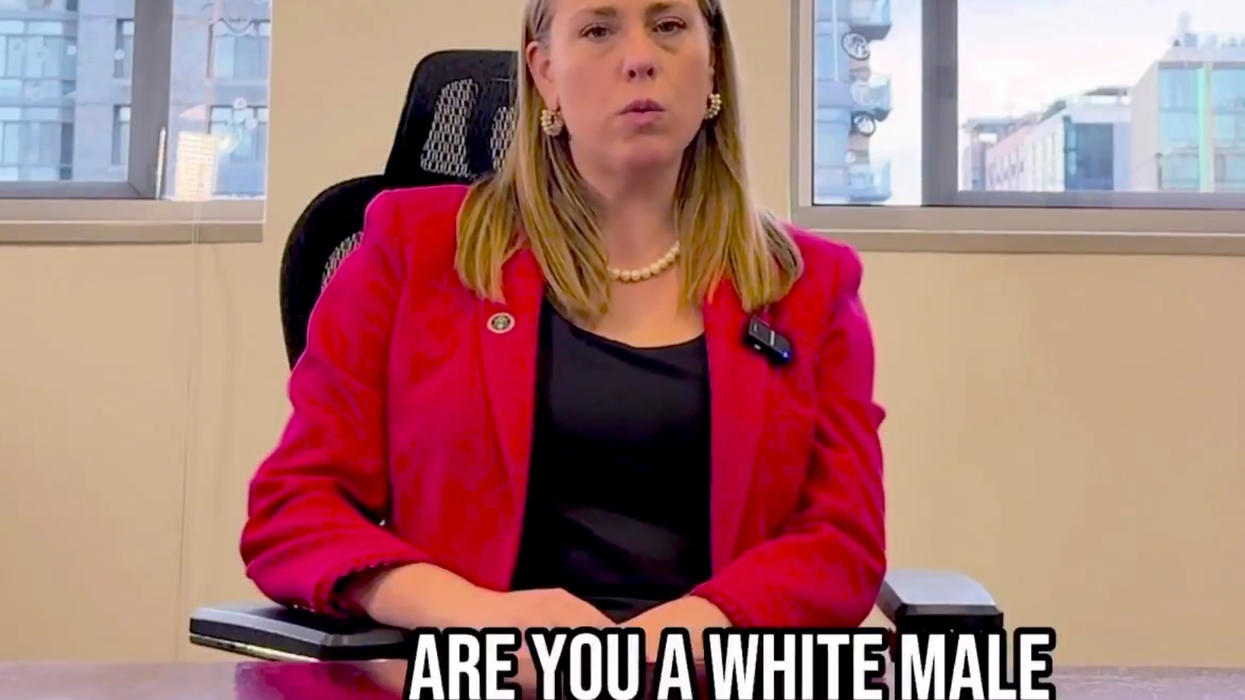
The Equal Employment Opportunity Commission, with Andrea Lucas as current chair, has turned its historical mission on its head with a recent video message inviting every “white male who has experienced discrimination at work based on your race or sex” to file a claim.

Might as well put up a sign that says no woman, minority, person with disability, veteran, member of the LGBT community or other underrepresented American need apply.

No surprise that Trump found himself on the wrong side of civil rights history. There was nothing “reverse” about it when, in the 1970s, the Justice Department charged the real estate company Trump and his father ran with locking out well-qualified prospective renters because of skin color. The company settled without admitting guilt.

The war on truth inevitably leads to museums, and the Smithsonian, where the Trump administration’s propaganda machine is working overtime. The institution is being pressured to run all exhibits through a MAGA lens, though I was surprised when the wall text next to a new portrait of the president in the Smithsonian’s National Portrait Gallery in Washington scrubbed mention of his two impeachments.

I mean, maybe he can’t match President Obama in eloquence, achievement or Nobel Prize count, but with those impeachments under his belt, at least Trump could brag that he beat Obama in something.

What Trump doesn’t seem to realize is that text removed can be restored. The Smithsonian’s National Museum of African American History and Culture is extremely popular, and won’t come down as easily as the East Wing of the White House — not without a fight.

And when the building is no more, the achievements and sacrifices honored will live on in books, documents and stories shared and passed down through generations.

I can personally attest to that.

Americans know the truths that all the men, women and children in the civil rights movement elevated, against enormous odds, truths that can withstand any malicious words from the temporary occupant of the White House.

King’s prescient prescription for a better world proves how much he knew and how little some current leaders understand: “We need leaders not in love with money but in love with justice. Not in love with publicity but in love with humanity. Leaders who can subject their particular egos to the pressing urgencies of the great cause of freedom.”

Mary C. Curtis has worked at The New York Times, The Baltimore Sun, The Charlotte Observer, as national correspondent for Politics Daily, and is a senior facilitator with The OpEd Project. She is host of the CQ Roll Call “Equal Time with Mary C. Curtis” podcast. Follow her on X @mcurtisnc3.

Reprinted with permission from Roll Call
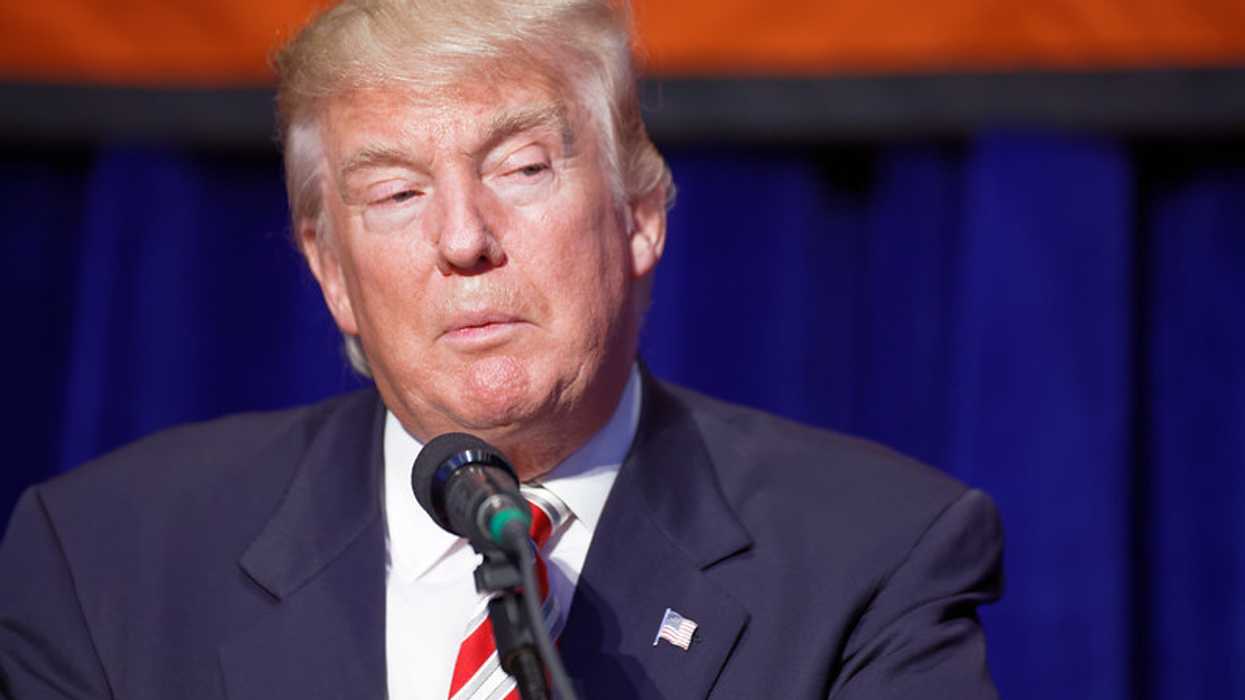
Donald Trump

What Presidents Must Do When Violence Erupts -- And What Trump Did Instead

On the evening of April 4, 1968—barely two hours after Martin Luther King Jr. was assassinated on a motel balcony in Memphis—President Lyndon B. Johnson addressed the nation from the White House. His words were brief, solemn, and unmistakably presidential:

“America is shocked and saddened by the brutal slaying tonight of Dr. Martin Luther King.”

Johnson condemned the assassination in unambiguous moral terms. He called on “every citizen to reject the blind violence that has struck Dr. King, who lived by nonviolence.” And then he offered a prayer that King’s death would “strengthen the determination of all men of good will to work for understanding, and for justice, and for the rule of law.”

In the same breath, Johnson turned his remarks outward. He urged Americans to “stand against the poison of hatred which has led to this tragedy.” And he reminded a country reeling from yet another political murder that “we can achieve nothing by violence. We can achieve everything by working together.”

The Johnson who delivered those words was in profound political trouble. Just a week earlier, battered by public opposition to the Vietnam War and facing revolt from within his own party, he had stunned the country by announcing that he would not seek reelection. The very man who now appealed to nonviolence had spent much of the previous year clashing bitterly with King over the war in Southeast Asia.

By any cynical calculus, Johnson might have tried to spin the assassination into political advantage. He might have underscored the rupture between himself and King, or cast the tragedy as vindication of his own beleaguered presidency. Instead, he rose to the occasion.

And, not incidentally, the Democrats lost the bitterly divided election to Richard Nixon, who ran on a program of law and order. (Nixon too was appropriately mournful, suspending all political activity in the two weeks after the assassination.) Historians often point to this moment as marking the country’s political transition—from the broad consensus of the Great Society to the bitter polarization of the Southern strategy and its aftermath that afflicts us still. Yet Johnson, the consummate political animal, chose a higher road.

The following day, Johnson spoke again, this time in longer form. His message was consistent:

“Together, a nation united, a nation caring, a nation concerned, and a nation that thinks more of the Nation’s interests than we do of any individual self-interest or political interest—that nation can and shall and will overcome.”

Johnson passed the test of presidential leadership. It is, in truth, not a very high bar: every American president, faced with a national tragedy born of violence, has understood the duty to call for unity and reject violence.

Nearly 100 years earlier, Lincoln set the template in his second inaugural, conjuring “malice toward none” amid the carnage of civil war. Chester Arthur, elevated by Garfield’s assassination, called for calm. John F. Kennedy, after the murder of Medgar Evers, urged reconciliation.

Bill Clinton, in the wake of Oklahoma City, urged Americans: “Let us teach our children to resolve their conflicts with words, not weapons.” It was classic presidential cadence—words that sought not only to soothe the nation but to call out the better angels of our national character. These are the moments when Americans look to the president not as a partisan combatant but as a custodian of the national soul and a healer of bitter divides.

That is, until Trump.

After last week’s shooting of Charlie Kirk, Trump delivered what was likely the pettiest and most hateful presidential response to a national tragedy in American history. Instead of rising above partisanship, he canonized Kirk as a martyr for “truth and freedom.” He rattled off a list of supposed right-wing martyrs without acknowledging that political violence has touched all sides. He cast his own base as uniquely persecuted and left deliberately unmentioned the victims of hate crimes and political violence outside his camp. So in the days following the assassination of Minnesota Speaker Melissa Hortman and her husband earlier this year, Trump couldn’t even bother to offer condolences to Governor Tim Walz, saying, “I could be nice and call, but why waste time?”

Worse, Trump moved directly to assign blame: not to the shooter, not to the broader forces of hatred, but to his political adversaries. “Radical left” forces, Trump declared, had created the climate that encouraged this violence. In one press exchange he went further:

“We have radical left lunatics out there, and we just have to beat the hell out of them.”

The words, far from a call to calm and shared purpose, were an incitement to further confrontation. They came from the same place as his refusal on January 6, 2021, to condemn the insurrectionists who stormed the Capitol on his behalf. His instinct then, as now, was not to quell chaos but to feed it. Where other presidents have instinctively sought to dampen the flames, Trump reaches for gasoline.

Other presidents have stumbled at critical junctures. Nixon in the heat of Vietnam, Grant amid Reconstruction violence, Hoover during the Depression. But Trump’s embrace of hate and division is unerring and bottomless. He never fails to take the worst choice.

Trump is a dark figure, and this is a dark moment for America. Never before has a commander in chief so thoroughly conflated the nation’s needs with his own political fortunes, so reflexively exploited tragedy to sow greater discord. At a time when the country needs a call to unity, he supplies a fresh wave of division.

And he is not alone. Trump’s champions amplify his message. Hungarian Prime Minister Viktor Orbán, a favorite of the Trump right, echoed the line almost verbatim: “Charlie Kirk’s death is the result of the international hate campaign waged by the progressive-liberal left.” In the U.S., figures like Laura Loomer and others in Trump’s orbit repeated the script: blame the opposition, stoke grievance, sow chaos all while ignoring the political violence committed against their so-called enemies. It is a vile lie, but one that patriots are forced to fight against day after day.

The presidency has never been the province of saints. Johnson himself, brilliant and venal, lied relentlessly about Vietnam. Nixon resigned in disgrace. Grant’s administration was mired in scandal. Yet when tragedy struck, even flawed presidents understood the difference between personal ambition and national duty. Trump is the singular exception. He is simply incapable of unifying the country he proclaims to want to make great again. His compass points only toward division, hatred, and self-interest.

The question for the country is how to respond when the highest officeholder is the one modeling the worst instincts. Americans cannot rely on the president to supply the words of unity that once seemed automatic. That responsibility falls to us, and to leaders outside the Oval Office on all sides of the political spectrum who are willing to say plainly that violence is never an answer.

We already have our hands full trying to parry Trump’s weekly outrages against the Constitution.

But this is the added tragedy of the Trump presidency: in the moments when America most needs a voice of unity, it receives only the echo of its own divisions, amplified and distorted by the man charged with healing them.

And so we are left with the questions that Johnson and other presidents answered correctly without hesitation: Will America stand united against the poison of hatred? Will it reject violence as a political tool, even as it embraces diversity of thought? Will it choose the difficult path of working together? The answers, this time, must come not from the president, but despite him.

Reprinted with permission from Harrylitman.

If Black Voters Abandon Biden, What Will They Get Instead?

If Black Voters Abandon Biden, What Will They Get Instead?

Should Donald Trump win the presidency in November, he will probably owe his victory to Black and Hispanic voters. If that prediction startles you, then perhaps you haven't been reading the most recent polls. Trump is maintaining a small but persistent lead over President Joe Biden in national averages — and the apparent reason is that those minority voters, who voted overwhelmingly Democratic in 2020, show much less enthusiasm for Biden in this election.

Waning support for the incumbent among his own partisan base appears to cross racial, generational and geographic lines, with many asking whether he should have stepped aside by now. Others blame him for inflation, although prices spiked across the developed world after the pandemic. But the dramatic decline in Black support for Biden is deeply puzzling — especially when the only alternative is returning Trump to power.

Exactly how Biden has disappointed those voters remains mysterious, given his own political history and behavior. He was the loyal vice president of America's first Black president and chose a Black woman as his running mate. He has named many Black appointees to top positions in government, including Supreme Court Justice Ketanji Brown Jackson. Other than Barack Obama, he is the most outspoken opponent of white supremacy ever to occupy the Oval Office.None of that appears to have made any impression on a substantial segment of Black voters, however, especially among the youngest — whose alienation is now growing because of Biden's support for Israel in Gaza. (One wonders what they, or anyone planning to abandon the Democrats over that conflict, believe Trump would have done or will do in such circumstances.)

But let's ask the question a different way and forget about Biden for a moment. What would happen to Black America — and other minorities in this country — if Trump regains power in 2025?

Begin by glancing back to the time when Trump entered presidential politics, even before he came down the escalator in his gilded tower to slander Mexicans as rapists and murderers. He first signaled those ambitions with his conspiratorial campaign claiming that Obama was not a native-born citizen, and therefore ineligible to be president, but a secret immigrant from Kenya. It was a big lie, the precursor of many more to come, culminating in the very Big Lie that the 2020 election had been "rigged" against him. And it was a racist falsehood, calculated to evoke the ugliest kind of hostility among the Tea Party Republicans who later swarmed into Trump's MAGA cult.

Since then, Trump has demonstrated repeatedly how he uses racial tension to promote himself and his politics. It is a habit that recalls his aggressive campaign to execute the since-exonerated Central Park Five, young Black men falsely accused of a gang rape, and continues today when he ridiculously proclaims that he could have "negotiated" the Civil War, a conflict over human bondage that was not subject to compromise.

The future that a Trump presidency would portend is bleak indeed for a diverse and multicultural democracy whose citizens hope to move forward together, not backward in division. Turning Point USA, the MAGA "youth wing," will mark Martin Luther King Jr.'s birthday this month with an expensive campaign to demonize him and to persuade Americans that the landmark civil rights legislation he helped to win was "a huge mistake," according to its leader Charlie Kirk.

Kirk has used his organization and his close connection with Trump to enrich himself and his cronies, but that is hardly the worst of his offenses. His forthcoming crusade to roll back civil rights will be overseen by someone named Blake Neff, a Turning Point staffer who once worked on Tucker Carlson's Fox News show — until the exposure of his voluminous racist and misogynist online messaging. Try to imagine how bad those had to be for a Fox executive who described them as "abhorrent" when the network announced Neff's dismissal.That the Trump movement would aspire to repeal the Civil Rights Act, after everything their leader has done to undermine the rights of minorities and women, shouldn't surprise anyone who has been paying attention. "Make America Great Again" always carried a dubious undertone, loudly hinting this county was better when we lived under the stale hierarchies of a bygone century.

Come November there will be only one effective way to reject that mentality and its implications for us and our children. No American of good will, regardless of race, creed or color, should harbor any illusions otherwise.

Joe Conason is editor-in-chief of The National Memo and editor-at-large of Type Investigations. He is a bestselling author whose next book, The Longest Con: How Grifters, Swindlers, and Frauds Hijacked American Conservatism, will be published in 2024.

'Tennessee Three' Revive King's Message For Those Who Need To Hear It

'Tennessee Three' Revive King's Message For Those Who Need To Hear It

Since I could not say it any better than the Rev. Dr. Martin Luther King Jr., I’ll just quote him: “I have almost reached the regrettable conclusion that the Negro's great stumbling block in his stride toward freedom is not the White Citizen's Counciler nor the Ku Klux Klanner, but the white moderate, who is more devoted to ‘order’ than to justice; who prefers a negative peace which is the absence of tension to a positive peace which is the presence of justice.”

His Letter from Birmingham Jail, written and published in 1963, was King’s answer to the well-respected white clergy members who deemed his civil rights protests “unwise,” and published their disapproval in an ad in a Birmingham newspaper.

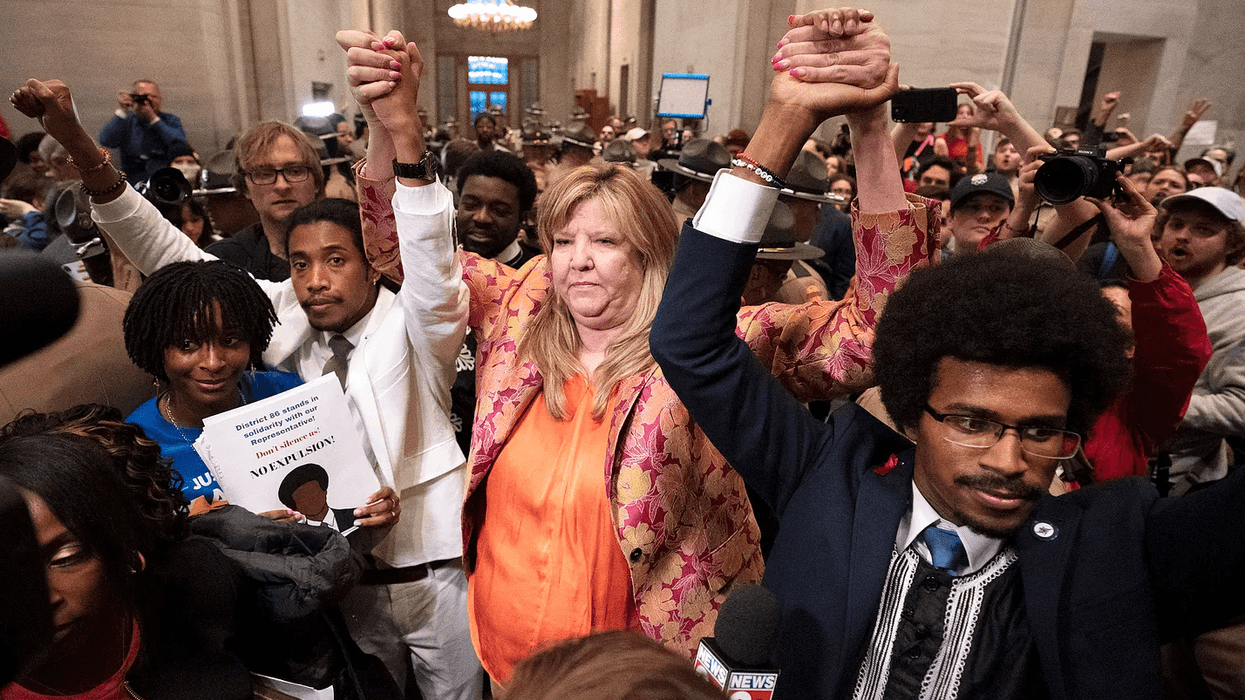
But the message could just as easily apply to the Republican state legislators in Tennessee who last week expelled two Black Democratic colleagues for breaking “decorum,” even as children afraid for their lives continued to plead for gun reform that might make them feel just a bit safer in their schoolrooms. There was shouting but no arrests, no violence, no property damage — just peaceful demands for “justice.”

That Republicans called these demonstrators “insurrectionists” was a disgusting touch that might have had those 1960s-era white clergymen, clueless as they were back then, shaking their heads.

It’s ironic that Tennessee is one of many states peering into a microscope for any sign that classroom lessons on race might cross some vague line, after a law forbidding discussion of so-called divisive concepts was signed by Republican Gov. Bill Lee in 2021. A chapter of “Moms for Liberty” didn’t spare a book about King from its wrath.

The actions by Republican lawmakers in Nashville prove that more, not less, teaching on the truthful history of America and Tennessee, birthplace of the Ku Klux Klan, is sorely needed because, clearly, they haven’t learned a thing.

Trying to make uncomfortable truths go away by admonishing and punishing those who bring them into the light has never worked for long.

The fact that three adults and three children at a Christian school in Nashville had been murdered by an assailant wielding a semi-automatic weapon seemed to disappear as GOP members of the Tennessee General Assembly took turns dressing down the “Tennessee Three,” reaching for the most condescending words in their vocabularies.

“Just because you don’t get your way, you can’t come to the well, bring your friends, and throw a temper tantrum with an adolescent bullhorn,” Republican state Rep. Andrew Farmer said to Rep. Justin Pearson. He responded by deriding Farmer’s tone: “How many of you would want to be spoken to that way?”

Better to have listened rather than lectured, and felt the urgency of colleagues who do not look like them, who have backgrounds as activists, who were elected overwhelmingly by constituents, tens of thousands of them, who were stripped of representation when the lawmakers had their microphones cut off, their IDs invalidated and their bodies, finally, cast out.

Better for the legislators from a different political party to have learned from them, and from parents and children in the galleries and outside the chambers.

The third member of the trio, Rep. Gloria Johnson, a teacher, recalled seeing students fleeing a shooting at her school in 2008. She honored the names and memories of those killed at Covenant School. Johnson, spared expulsion by a single vote, unlike the two she stood alongside, is a white woman in her 60s. Just let that sink in for a moment.

And remember, since most of the GOP legislators hypocritically rolling in moral high dudgeon did not, that the disgraceful scene took place in the week of the 55th anniversary of the murder of King by an assassin’s bullet — across the state in Memphis.

What did they accomplish with the swift move? Well, after the events of last week, three state legislators whom few outside of their districts knew much about have had their profiles and causes elevated.

'Built on a protest'

Pearson sounded more preacher than politician when he said: “You are seeking to expel District 86's representation in this House — in a country that was built on a protest,” adding: “In a country built on people who speak out of turn, who spoke out of turn, who fought out of turn to build a nation. I come from a long line of people who have resisted.”

The expelled Democratic Rep. Justin Jones was equally eloquent when he asked: “How can you bring dishonor to an already dishonorable House? How can you bring disorder to a House that is out of order, where the speaker refuses to let representatives elected to speak for their people even be heard?”

Their fight recalled the legacy of King, who traveled to Memphis to raise the voices of that city’s neglected and disrespected sanitation workers, toiling in dangerous conditions for low pay.

The world has also learned about the members of the Tennessee legislature’s Republican caucus, predominantly white and male. Past comments about bringing back “hanging by a tree” as a method of execution, charges of criminal and sexual misconduct and persistent instances of reflexive racism have not been enough to earn the expulsion handed to Jones and Pearson.

Now, Jones is back after the Nashville Metropolitan Council voted on Monday to return him to his seat as “interim” representative before a special election is held. Though he drew the attention and visits from national Democratic leaders, including President Joe Biden and Vice President Kamala Harris, he did not really need their words to craft a way forward.

Upon his return, speaking from the steps of the Tennessee State Capitol, Jones said: “Today we are sending a resounding message that democracy will not be killed in the comfort of silence.” After a vote is held in Shelby County, Pearson may not be far behind.

But how much will politics as usual really change?

With gerrymandered districts and a supermajority that can do pretty much what it wants, Tennessee Republicans may not be worried about their power slipping away, not anytime soon. In states throughout the country, with blue dots of cities overwhelmed by surrounding red, any meaningful political swing would certainly be an uphill battle.

But I have a feeling the young people who crowded into the Capitol and the elected officials who echoed their concerns are hardly going to shut up.

Mary C. Curtis is an award-winning columnist for Roll Call and hosts its "Equal Time" podcast host. She is a contributor to NPR and The Op-Ed Project.

Reprinted with permission from Roll Call.

Shop our Store

Headlines

Editor's Blog

Corona Virus

Trending

World