Standing room rally for Democratic Senate nominee James Talarico in Arlington, Texas on August 5, 2026
When we last checked the Senate map on June 22, Democrats had a path to the majority. Today, they’re slight favorites.
The fact that Democrats are even in this position is a testament to how badly Republicans have screwed this up. They currently hold a three-seat majority and are defending some of the friendliest Senate territory imaginable. Democrats should be worried about losing seats—not talking seriously about pickups in Alaska, Ohio, Texas, and yes, even Kansas.
Here’s how the battlefield looks today.
1. Georgia (D-incumbent, Likely D)
There hasn’t been much recent polling in Georgia, but what we’ve seen confirms the existing trend: Democratic Sen. Jon Ossoff appears headed for a comfortable reelection in this lean-red state.
The bipartisan Fabrizio Ward/Impact Research poll for AARP found Ossoff leading MAGA Republican Mike Collins 52-43. It’s difficult to see Collins, who is facing an ethics investigation, overcoming that kind of deficit. Larry Sabato’s Crystal Ball recently upgraded the race to Likely Democratic, while the Cook Political Report continues to rate it Lean Democratic.
2. North Carolina (R-open, Likely D)
North Carolina topped the first two editions of these rankings. Sliding to second isn’t a downgrade—it simply reflects how strong Ossoff’s position has become.
Former Democratic Gov. Roy Cooper remains enormously popular and has led every public poll since early 2025, when he was first matched against retiring Republican Sen. Thom Tillis.
This remains Democrats’ clearest pickup opportunity and likely would be even in a neutral political environment.
Senate Republicans recognized the danger, with the Senate Leadership Fund spending $17 million beginning in July to rescue former RNC Chair Michael Whatley. So far, it hasn’t worked. A late-July Fox News poll found Cooper ahead 53-44. If that margin doesn’t narrow soon, Republicans may decide their money is better spent elsewhere.
3. Maine (R-incumbent, Lean D)
This race looks very different than it did a month ago.
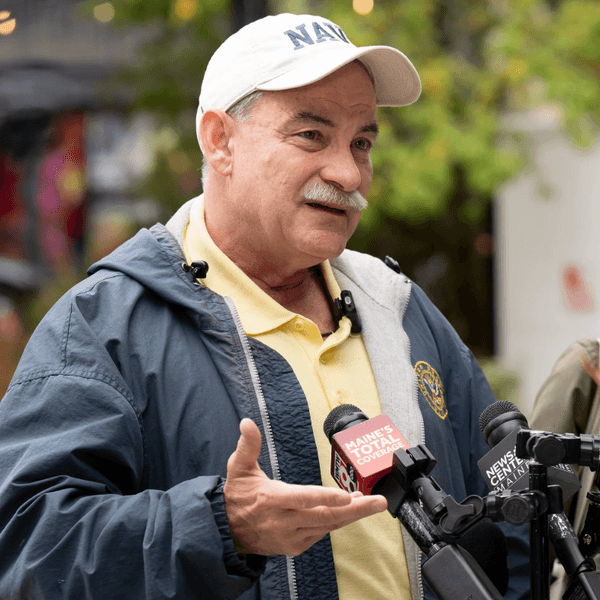
Former Democratic nominee Graham Platner has exited the race, replaced by former state Senate President Troy Jackson. Incumbent Republican Sen. Susan Collins had managed to pull ahead during Platner’s troubled campaign, but Jackson has quickly restored Democratic momentum, leading 49-45 and 49-46 in the two most recent polls.
Given Maine’s partisan lean, undecided voters should generally break toward Jackson. But Collins has survived seemingly impossible races before, so writing her off would be foolish.
4. Alaska (R-incumbent, Lean D)
When I upgraded Alaska last month, the reasoning was straightforward: former Democratic Rep. Mary Peltola kept leading.
Alaska Survey Research—the state’s gold-standard pollster—showed Peltola ahead by five points in consecutive surveys while Republican Sen. Dan Sullivan remained stuck below 45 percent. Its ranked-choice simulations also suggested Peltola would comfortably clear 50 percent after later rounds of counting.
A late-June New York Times/Siena poll showed Sullivan ahead 47-45, though it didn’t model ranked-choice voting. That’s enough to inject some uncertainty, but not enough to change the rating. I’ll wait for another Alaska Survey Research poll before reconsidering.
5. Michigan (D-open, Toss-up)
Michigan has certainly become dramatically more interesting after Dr. Abdul El-Sayed won the Democratic primary.
Whether you’re celebrating that outcome or dreading it probably depends on where you fall in the Democratic Party’s ideological debates. What isn’t debatable is that it introduced uncertainty into one of the party’s most important races.
Polling before the primary suggested Democrat Haley Stevens would have run slightly stronger against Republican Mike Rogers. But political analyst G. Elliott Morris has argued the difference was marginal, writing that “the two candidates look like they would have done roughly the same this November.”
That assessment makes sense. This election is being driven overwhelmingly by national conditions—namely Donald Trump—with candidate quality mattering mostly around the margins.
Still, uncertainty is uncertainty. Recent polling has shown El-Sayed narrowly trailing Rogers, so Michigan drops from Lean Democratic to Toss-up.
"The good news is that the broader outlook remains encouraging in this must-win race,” G. Elliot wrote in his email newsletter, “[W]hen we run all the data through our forecasting model, El-Sayed holds Michigan 64% of the time with Democrats taking the Senate 55% of the time.”
If Democrats hold Michigan while winning the four races above, they need just one more pickup to reclaim the Senate majority.
6. Ohio (R-incumbent, Toss-up)
A recent New York Times/Sienna poll gave Republican-appointed Sen. Jon Husted a 50-47 lead on former Democratic Sen. Sherrod Brown.
The latest Fox News poll gave Brown a 53-45 lead.
Who knew we’d be rooting for Fox News to be right?
The reality is that most polling on this race is like that: all over the place. Throw it all into a cauldron, mix it up, and what you get is the same toss-up status we’ve been seeing for the past several months.
That’s actually encouraging. When Brown entered the race, Ohio looked permanently out of reach. Trump’s political environment has transformed what once looked like a long shot into a genuine pickup opportunity.
7. Texas (R-incumbent, Lean R)
We had an energetic internal debate about moving Texas into Toss-up territory.
The case is compelling. Democratic state Rep. James Talarico has led every public poll since late June—seven straight surveys.
Even more striking, he’s hit between 47 percent and 51 percent in the past five polls, including a Fox News survey showing him ahead 51-48. In a deeply Republican state, undecided voters usually drift toward the GOP. The closer Talarico gets to 50 percent, the more realistic an upset becomes.
Republicans didn’t have to be here.
Had they renominated incumbent Sen. John Cornyn, they’d almost certainly be cruising toward another comfortable victory. Instead, with Trump’s enthusiastic backing, they nominated Ken Paxton—one of the country’s most ethically compromised politicians, impeached by the overwhelmingly Republican Texas House before being rescued politically by Trump.
It will be something if Democrats take the Senate. But if they do so because of Trump’s love for despicable humans like Paxton? That would be the cherry on top.
8. Iowa (R-open, Lean R)
Democratic state Sen. Josh Turek continues to run a surprisingly competitive race against Republican Rep. Ashley Hinson in this open seat. Since the last update, Fox News showed Turek leading 50-46, while Emerson and New York Times/Siena polls gave Hinson narrow leads.
The Fox News poll is the outlier Democrats hope proves correct. The other surveys point toward an extremely close race, but one where Iowa’s Republican lean should eventually pull undecided voters toward Hinson in a state where Trump won by more than 13 points.
Even so, Republicans aren’t behaving like this is a safe seat. They’ve already reserved $11 million in advertising in Iowa—an enormous investment for such an inexpensive media market. Republicans don’t spend that kind of money unless they’re worried.
9. Nebraska (R-incumbent, Likely R)
Nebraska has been unusually quiet.
Independent Dan Osborn, the former union leader who came within seven points of defeating GOP Sen. Deb Fischer in 2024, is now taking on Republican Sen. Pete Ricketts in a climate where being a billionaire isn’t a helpful flex.
The biggest recent development wasn’t polling but ballot access. Democrats successfully cleared the field behind Osborn and blocked an effort by another Democrat to qualify, avoiding the possibility of splitting the anti-Republican vote.
Osborn still faces a steep climb in one of the nation’s reddest states. But in this political environment, Republicans can’t completely ignore the race.
10. Kansas (R-incumbent, Likely R)
Back in May, I wrote: “[D]id someone say Kansas? No one did, but I’m saying it. Education remains one of the strongest predictors of partisan alignment. Of the 20 states with the highest percentage of those with a bachelor’s degree or higher, only two voted for Trump in 2024: Utah and Kansas. Utah politics are heavily shaped by the Mormon church. But Kansas should be bluer than it is, and it does have a Democratic governor in Laura Kelly.”
I then added, “I’m not saying this is the year Kansas flips at the Senate level. A Democrat hasn’t won a Senate race there since 1932. But in this environment? Weird things may happen.”
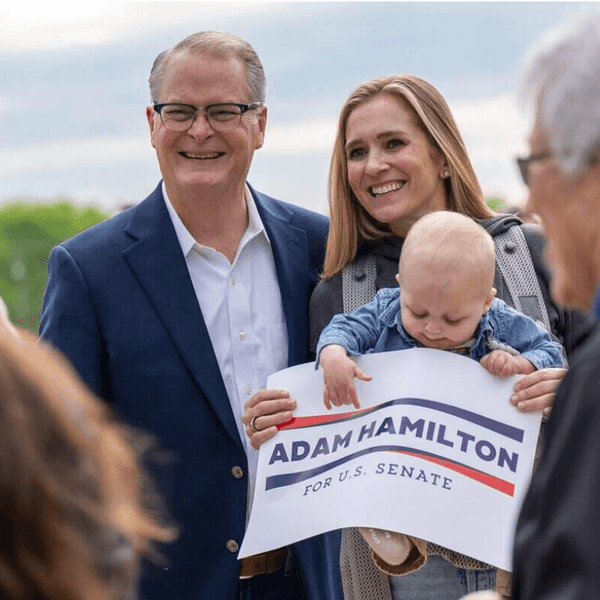
Since then, Democratic polling has shown Democratic megachurch pastor Adam Hamilton trailing incumbent Republican Sen. Roger Marshall by just four to six points. That’s enough to make the race interesting, though probably not enough to make it competitive. In a Republican-leaning state like Kansas, undecided voters usually break toward the GOP, making it difficult to see Hamilton reaching 50 percent.
Still, Republicans are acting more nervous than you’d expect.
“I still don’t think Kansas Democrats have woken up … to really what they have here,” Washburn political scientist Bob Beatty told the Kansas Reflector. “They will, but Roger Marshall knows. That’s why it’s going to be a big-time race, and I think that’s why people are going to look at it nationally, maybe, and be surprised. We got two candidates that we’ll be seeing a lot on the national TV.”
Marshall’s own attacks have bordered on bizarre.
“Look, this guy is a woke, big megachurch pastor,” he told Fox News. “He’s too woke for Kansas. I think all we have to do is share his own sermons … with the Kansas people, and they’re gonna realize that he’s too woke for Kansas.”
So now being a megachurch pastor is “woke”? The Dem response was brutal: “Roger Marshall would rather attack a church whose community is one of the largest sources of food donations in his alleged home state than talk about why he constantly votes for higher prices, why he’s been hiding from Kansans for over 500 days, and why only 27 named Kansans donated to his campaign last quarter.”
Guys, this is going to be a good one. National Republican orgs haven’t engaged yet, but odds are good that they will.
Both Cook and Sabato recently updated the race from “safe” to “likely” Republican.
The bottom line is remarkably simple: Democrats no longer need everything to go right.
Georgia and North Carolina increasingly look like the party’s to lose. Maine and Alaska have moved into Democratic-leaning territory. Michigan remains the pivotal hold. Win those five races, and Democrats need just one more breakthrough—from Ohio, Texas, Iowa, Nebraska, Kansas, or somewhere else Republicans never expected to be playing defense.
That’s a dramatically different Senate map than anyone expected last year.
Markos Moulitsas is founder and editor of the blogging website Daily Kos and author of three books.
Reprinted with permission from Daily Kos
- 'It's A Tsunami!' CNN Analyst Says Democratic Lead Dooms GOP In Midterm ›
- As Midterm Polls Signal Blue Tsunami, GOP Is Frantically Waving The Flag ›
- Senate Turnover May Be Within Reach As Democratic Candidates Surge ›
- 'Sabato's Crystal Ball': Odds Of Flipping Senate Blue Keep Getting Better ›
- 'Wipeout': Republicans Terrified 2026 Blue Wave Will Flip Senate And House ›
- What Will It Take For Democrats To Flip The Senate? A State-By-State Cheat Sheet ›
- Danziger Draws - National Memo ›
- Senate Republicans Beg Big Tech To Boost Husted's Failing Ohio Campaign - National Memo ›
- Hey, Mr. President! Please Hit The Campaign Trail (Where You Can Only Help Democrats) - National Memo ›
- 'I Don't Speak Politician'! Nor Does Lindsey's Sister Speak Foreign Policy - National Memo ›
- What's The Matter With Kansas' Senators? Republicans May Soon Find Out - National Memo ›