Hapless Hassett: Will Trump's Next Fed Chair Transform America Into Argentina?
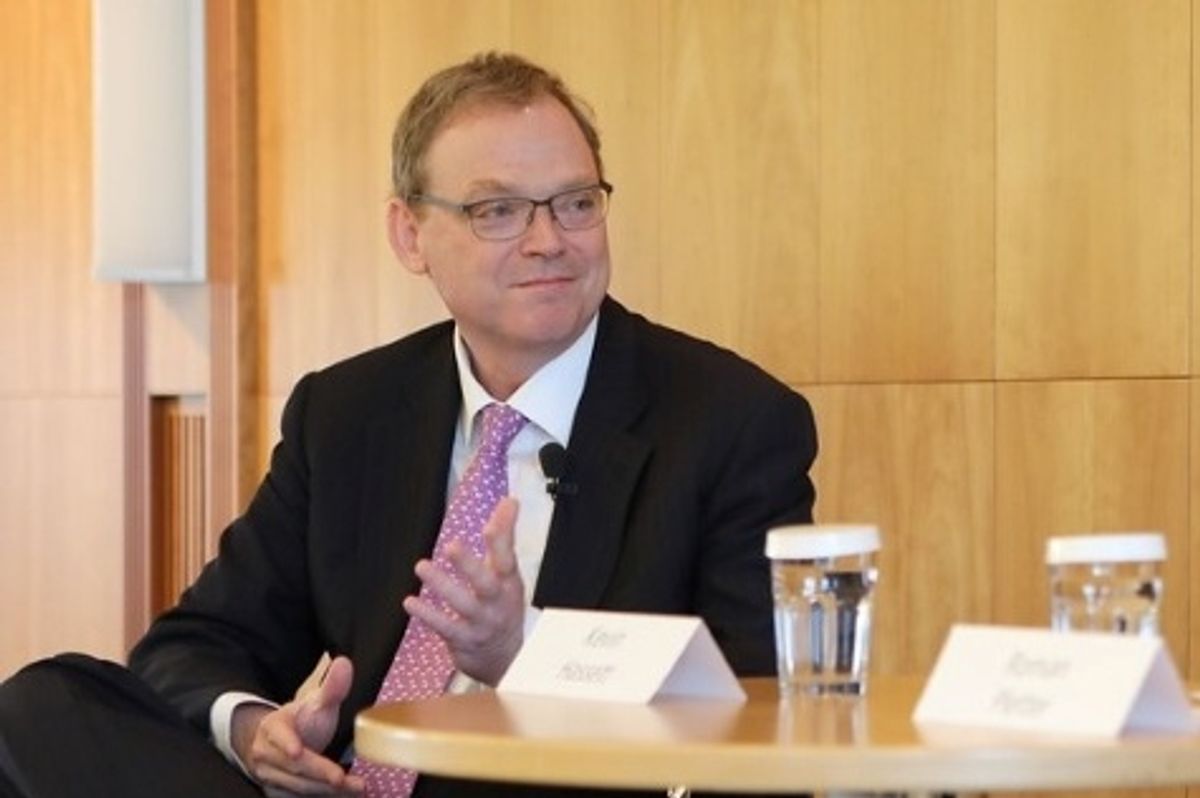
Kevin Hassett
In one of his rants last weekend Donald Trump said that the Fed should set the federal funds rate at 1.0 percent. This is the short-term rate immediately under its control. While the Fed is likely to lower this rate at its meeting next week, the most likely move would be a drop of a quarter point to a range of 3.5 percent to 3.75 percent. Given the weakness of the labor market, this cut makes sense, even though the inflation rate is running close to a full percentage point above the Fed’s 2.0 percent target.
While the current Fed is not likely to take Trump’s late-night rants seriously when setting interest rate policy, that may not be the case when the Fed gets a Trump-appointed chair next May. According to the gossip mill, Kevin Hassett, the head of Trump’s National Economic Council, is the likely pick.
Hassett has shown extraordinary obedience to Trump in his current position, routinely pushing outright lies to be in sync with his boss. The most extreme case was when Trump fired Erika McEntarfer, the commissioner of the Bureau of Labor Statistics (BLS), over the absurd claim she was cooking the jobs data. Hassett was soon seen on the national news shows defending the firing on the only slightly less crazy grounds that the problem was the data was inaccurate and a lack of transparency.
Hassett knows that BLS is completely transparent in its methodology. Furthermore, it is extremely difficult to get solid data on a $30 trillion economy and labor force of 170 million people. If Hassett has any ideas for improving data quality, he has been keeping them to himself.
Anyhow, this history makes it very plausible that if Trump gives Fed Chair Hassett a call telling him that he wants the interest rate to be 1.0 percent, Hassett will respond with a “Yes Sir.” Therefore, we might start thinking about what the world looks like with a 1.0 percent federal funds rate.
The most important point to keep in mind is that the Fed doesn’t directly control the longer-term interest rates that matter most for the economy through car loans, corporate bonds, and mortgage rates. That could change. The Fed could decide that it will buy enough 10-year or 30-year Treasury bonds to set these rates at a lower level, but we have not heard that one put on the table yet, so let’s assume that it sticks to setting the federal funds rate at a very low level.
This creates a likely situation where a sharp drop in the federal funds rate is not met with a corresponding reduction in the 10-year or 30-year Treasury bond rate. This sort of divergence between movements in short-term rates and longer-term rates is common, but it is especially likely in response to a sharp downward movement in the federal funds rate.
The issue would be that investors in bonds would be worried about inflation reducing the value of their bond holdings. Inflation is not a big factor in short-term lending, but if someone is looking to hold a bond for 10 years, or even 30 years, they would be worried that the real value will be eroded by inflation.
While the link between Fed policy and inflation is somewhat less direct than is often claimed, a Fed that lowers the federal funds rate by almost three full percentage points, when inflation is already one percentage point above the Fed’s target inflation, is not a Fed committed to fighting inflation. People investing billions in bond markets will take this into consideration in their willingness to hold Treasury bonds.
This is even truer in an international context where investors can easily switch their holds to bonds or other assets in foreign currencies. A 1.0 percent short-term yield in U.S. dollars, that might be losing value due to inflation, is not going to look good compared to higher yields in other currencies that look more stable. That story applies even more clearly with longer-term bonds.
This means that we are not likely to see a sharp fall in longer-term interest rates as a result of Chair Hassett’s aggressive rate cut. It’s possible that long rates would even rise as people flee the dollar, causing its value to fall. That would be one route to the higher inflation investors fear, as a sharp fall in the dollar will lead to higher import prices.
Where the economy ends up in this sort of story is difficult to say since we have never been there. Inflation can be slowed, without the Fed’s cooperation, by sharp budget cuts and/or tax increases, but that course seems unlikely with Donald Trump in the White House. Perhaps he will just fire more people at the BLS until he can find someone who will tell us that inflation is over.
I have long ridiculed the promulgators of the “bond market vigilantes” story, where we have investors who will send long-term interest rates through the roof and the dollar plummeting in response to large budget deficits and/or an irresponsible Fed. I would still ridicule them, since many of them say we already are facing a situation that should prompt panic.
But I do believe there is a point where their story is correct. There are countries where investors have no confidence in the government’s ability to limit inflation. Argentina could be the poster child here. They have very high interest rates and weak currencies. Given the strength of the U.S. economy and its importance to the world economy, there is a long way between the United States and Argentina.
However, when you have a government that arbitrarily imposes high tariffs on trading partners, whose trade agreements are worthless, that issues large government contracts for bribes, that deports millions of workers and engages in many other forms of blatant corruption, and whose president routinely makes utterly absurd claims about the economy and the world (has anyone seen the $20 trillion in foreign investment?), we have moved much of the distance towards Argentina. Putting a total hack in as Fed chair, who sets monetary policy based on orders from this president, can get us much of the rest of the way there.
Dean Baker is a senior economist at the Center for Economic and Policy Research and the author of the 2016 book Rigged: How Globalization and the Rules of the Modern Economy Were Structured to Make the Rich Richer. Please consider subscribing to his Substack.
Reprinted with permission from Dean Baker.
- When Scott Bessent Claims Trump Is Making Life Affordable, Who Believes Him? ›
- We Are All Lisa Cook: Trump's Weaponized Government Endangers Everyone ›
- Warning: Here's Why The Fed Can't Rescue Markets From AI Bubble ›
- Who will Trump nominate as Fed Chair? | Trade on Kalshi ›
- Trump says he has picked the next Fed chair as affordability issues ... ›
- What to know about Trump's finalists to replace Powell as Fed chair ›
- Jerome Powell's era of consensus at the Fed is over | CNN Business ›
- Trump is soon expected to announce his Fed chair pick. Here's ... ›