The stock market plunged on Monday, with the Dow Jones Industrial Average falling 400 points at the opening bell, as economists and investors alike fear that the Federal Reserve Bank's independence is in doubt.
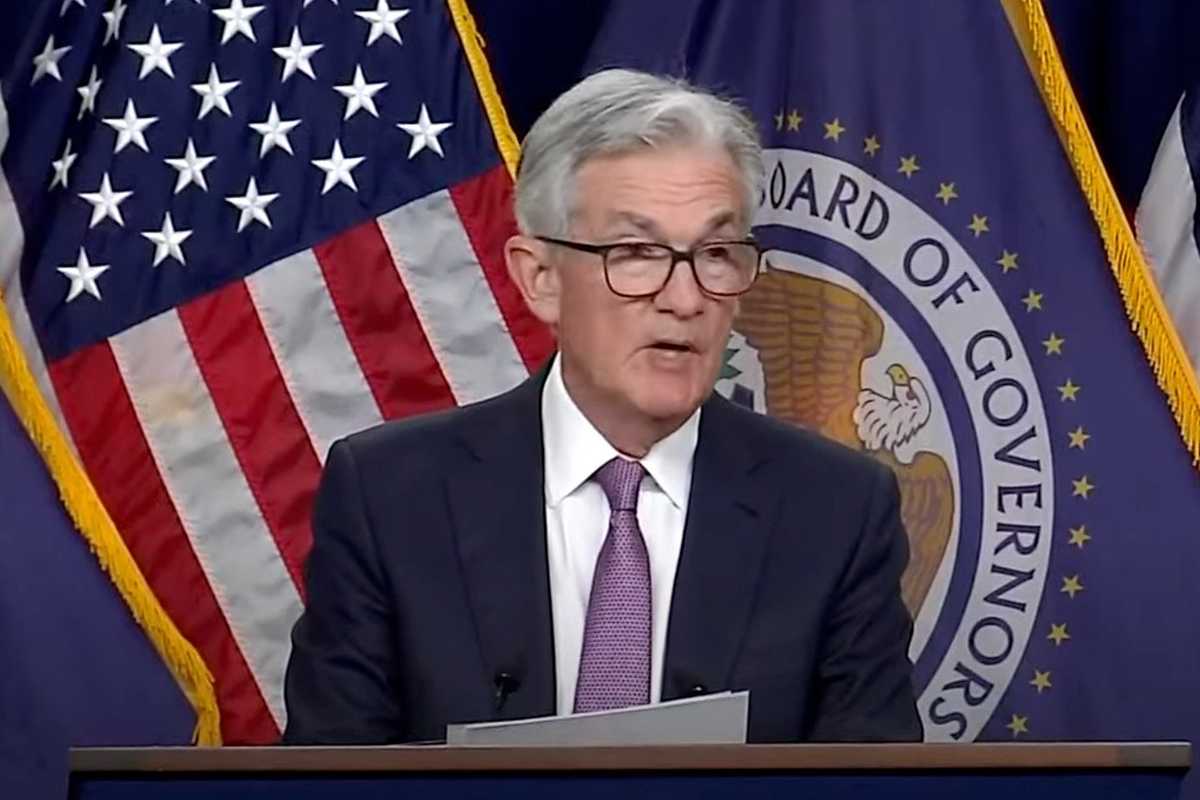
The stock market slide came the day after Federal Reserve Board Chair Jerome Powell issued a rare and forceful video statement accusing Trump of opening a criminal investigation into him in order to pressure Powell into lowering interest rates.
"This new threat is not about my testimony last June or about the renovation of the Federal Reserve buildings. It is not about Congress's oversight role; the Fed through testimony and other public disclosures made every effort to keep Congress informed about the renovation project. Those are pretexts. The threat of criminal charges is a consequence of the Federal Reserve setting interest rates based on our best assessment of what will serve the public, rather than following the preferences of the President," Powell said. "This is about whether the Fed will be able to continue to set interest rates based on evidence and economic conditions—or whether instead monetary policy will be directed by political pressure or intimidation."
President Donald Trump has publicly chastised Powell numerous times for not lowering interest rates, a move that would make borrowing money for Americans cheaper but likely would spike inflation even further.
Trump has even threatened Powell with removal, though he backed off those threats after U.S. markets revolted.
Now, however, he is trying to coerce Powell to step down by opening a criminal investigation into Powell's congressional testimony about renovations to the Fed's buildings. Powell leaving early would allow Trump to install his own chair, whom he would be able to direct to bend to his will on monetary policy.
But the threats have clearly not worked on Powell, who instead of acquiescing to Trump's demands instead forcefully criticized the president.
And even typically sycophantic GOP senators are revolting against Trump's attempt to use lawfare to force Powell out.
Sen. Kevin Cramer (R-ND) said that while he thinks Powell is a bad Federal Reserve chair, he is not a criminal. “I hope this criminal investigation can be put to rest quickly along with the remainder of Jerome Powell’s term,” Cramer said in a statement. “We need to restore confidence in the Fed.”
Sen. Thom Tillis (R-NC) went a step further, saying he would put a hold on any future Federal Reserve nominees until the investigation ceases.
“If there were any remaining doubt whether advisers within the Trump Administration are actively pushing to end the independence of the Federal Reserve, there should now be none. It is now the independence and credibility of the Department of Justice that are in question,” Tillis said in a statement. “I will oppose the confirmation of any nominee for the Fed—including the upcoming Fed Chair vacancy—until this legal matter is fully resolved,” he added.
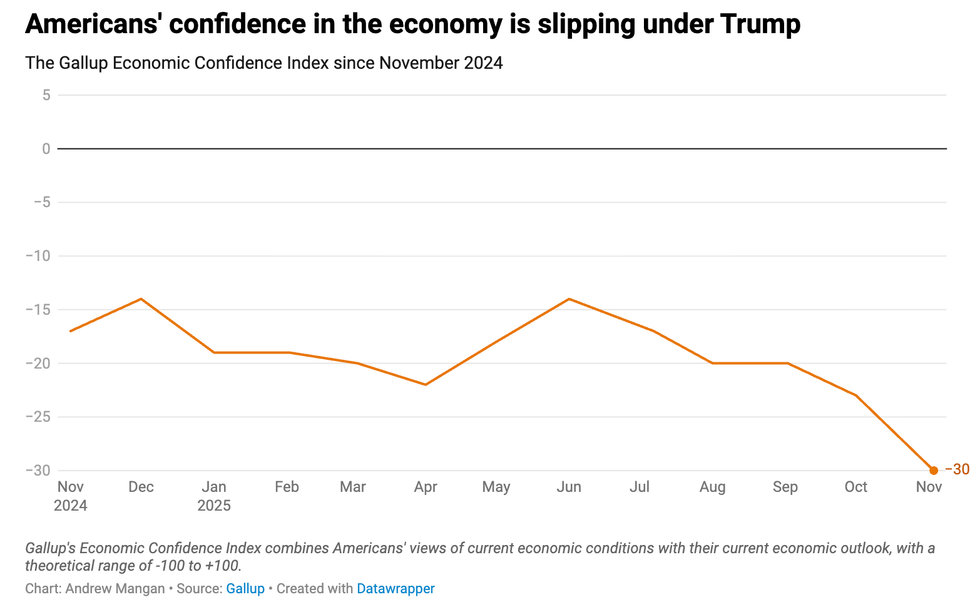
Economists and investors fear a politicized Federal Reserve because chaotic monetary policy would hurt the economy and leave investors weary about putting their money into U.S. assets, which according to the Council on Foreign Relations would “cause long-term economic harm."
Justin Wolfers, an economics professor at the University of Michigan, used Turkey as an example of what can happen if a despotic leader influences monetary policy. Wolfers posted a chart on X that showed after Turkish President Recep Tayyip Erdoğan took control of his country’s central bank, inflation spiked massively, peaking at a stomach churning 86 percent before falling to 38 percent currently.
Sounds like something voters, who are desperate to see inflation cool, would be super jazzed about.CFR also said that, "independence enhances the Fed’s credibility and fosters market confidence in its decisions. Crucially, it also empowers the Federal Reserve to take difficult but necessary actions, even when they are unpopular."
Indeed, countries with despotic leaders do not have independent banks like the Federal Reserve, which has caused their countries economic harm.
“Some countries that have prosecuted or threatened to prosecute central bankers for the purpose of political intimidation or punishment for monetary policy decisions: Argentina, Russia, Turkey, Venezuela and Zimbabwe,” Harvard economics professor Jason Furman wrote in a post on X. None of those countries have sound economies, and are not a list of nations the United States should want to be associated with.
Reprinted with permission from Daily Kos