If Trump Cancels Midterms, The Tech Billionaires Wouldn't Even Blink
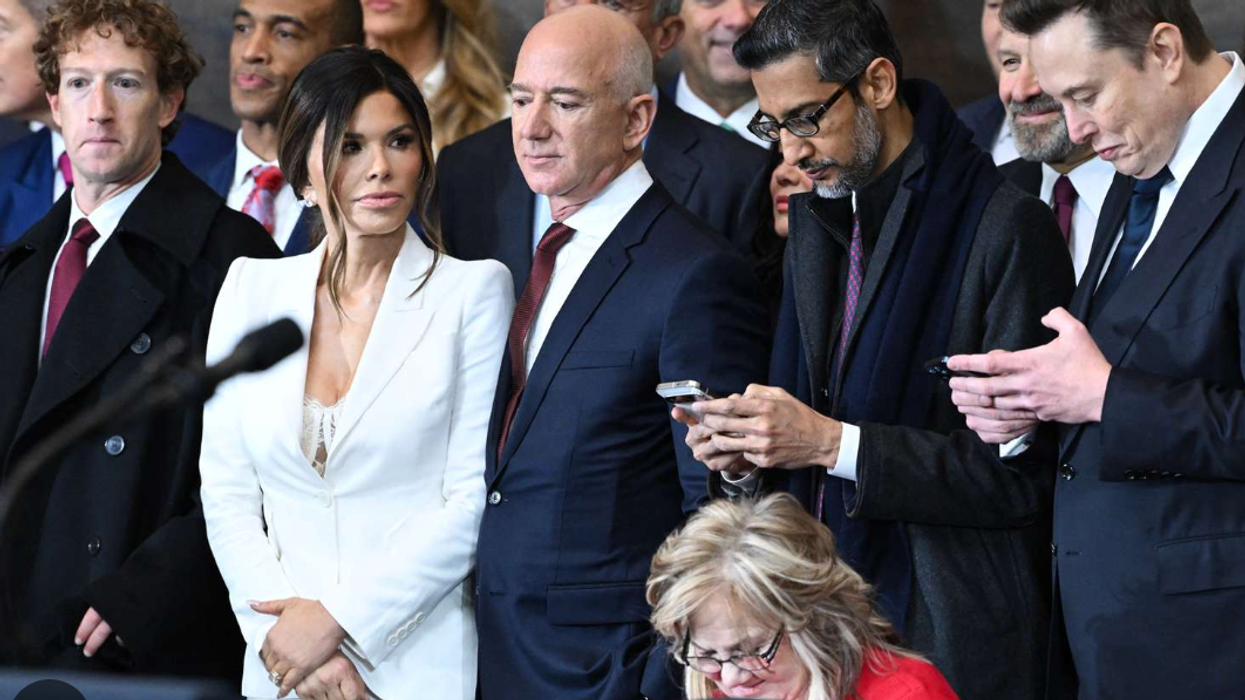
Mark Zuckerberg, far left, Jeff Bezos, center, and Elon Musk, far right, at Trump inauguration on January 20, 2025
The lack of market reaction to the news that Trump ordered his Justice Department to investigate criminal charges against Fed Chair Jerome Powell surprises many people. After all, everyone knows that the claims about cost overruns being the basis for the investigation is nonsense. Trump wants to threaten Powell with criminal charges because he ignored Trump’s demand that he lower interest rates.
This ordinarily would be seen as a very big deal. Ever since Nixon, presidents have been reluctant to be seen as pressuring the Fed. In fact, their concern on this issue often seemed absurd to my view. President Biden didn’t want his Council of Economic Advisors to even comment on interest rate policy, as though giving a view based on the economic data would be undue pressure.
There is a big difference between presenting an economic argument and threatening to imprison a Fed chair who disagrees. And we now see which side Trump comes down on.
But apparently, the markets are just fine with this new threat. The major stock indexes all rose on Monday, although bond prices fell slightly, pushing long-term rates higher. The dollar also fell modestly.
The non-reaction of the stock markets might seem surprising. After all, the independent Fed is considered a sacred feature of U.S. prosperity. There is no shortage of economists who will insist that a Fed that is subordinate to the whims of a president is a quick route to double-digit or even triple-digit inflation. (I’m more agnostic on this one, but the markets generally don’t listen to me.)
Anyhow, Trump is now not just looking to fire an insubordinate Fed chair, he’s looking to throw him in prison. And the markets just yawned.
This reaction should cause us to start asking how the markets might react if Trump just cancels or outright steals the 2026 elections in order to keep his lackeys in control of Congress. Under any other modern president, the fear of a cancelled or stolen election would be silly. While they might have used dubious tactics leading up to an election, we could be comfortable that the votes would be counted, and the outcome would be binding. (Florida in 2000 is a major exception.) No one ever suggested that an election would be cancelled.
But Trump has made it clear that he considers both cancellation and ordering that some votes not be counted as serious options in his recent New York Times interview. No one can be safe in assuming that we will have a normal democratic election this year.
Given this reality, we might want to speculate on how the markets would react in the event that Trump does decide to end American democracy. We now know that most of the big money boys couldn’t care less about democracy. Jeff Bezos, Mark Zuckerberg, and Tim Cook have been happy to cozy up to Trump in Mar-a-Lago, even as he violates one democratic norm after another. Elon Musk has made it clear that he has contempt for democracy, insofar as it means allowing non-white people to vote.
This gang would obviously have no moral issues with a cancelled or stolen election. But what about the economics?
Trump has already made it clear that he will favor businesses whose leaders praise him and punish those who criticize him. His most recent effort in this direction was saying that he intended to ban Exxon-Mobil from access to Venezuelan oil because its CEO said what every oil analyst has said since Trump became president of that country: it will be difficult for companies to profitably invest there.
The economies of countries where the leader can reward or punish companies on a whim tend to not do very well. The courts have provided a limited check on Trump’s whims as has even this pathetic Congress. However, if Trump is deciding who serves in Congress, the checks will be gone. We will have full rule by our demented 79-year-old president.
Perhaps markets will be fine with that. With enough rear-end licking some companies may still do fine, but it would seem on the straight economics most people with money would probably prefer to invest in a serious country. Let’s hope we don’t have to find out.
Dean Baker is a senior economist at the Center for Economic and Policy Research and the author of the 2016 book Rigged: How Globalization and the Rules of the Modern Economy Were Structured to Make the Rich Richer. Please consider subscribing to his Substack.
Reprinted with permission from Dean Baker.
- New Commerce Secretary Embodies Same Old Corporate Greed ›
- Why Would Billionaire Thiel Care How And When Women Ovulate? ›
- Musk's 'DOGE' Cuts Will Hit Red States (And Trump Voters) Hard ›
- Musk Blowup's Fallout: Trump Allies Keep Turning On Each Other ›
- Mamdani Won Big -- So Why Aren't The Wealthy Fleeing New York City? ›
- 'Civil War' Erupts As MAGA Factions Feud Over Kirk Legacy ›
- 40 of Trump's Richest Backers: Elon Musk, Steve Schwarzman, Marc ... ›
- Maga vs the billionaires ›
- Trump-friendly billionaires remake America's media landscape ›
- Trump has tapped an unprecedented 13 billionaires for his ... ›
- The billionaires around Trump - Modern Diplomacy ›
- MAGA BILLIONAIRES ARE TRYING TO CONFUSE VOTERS AND ... ›