Mamdani Won Big -- So Why Aren't The Wealthy Fleeing New York City?

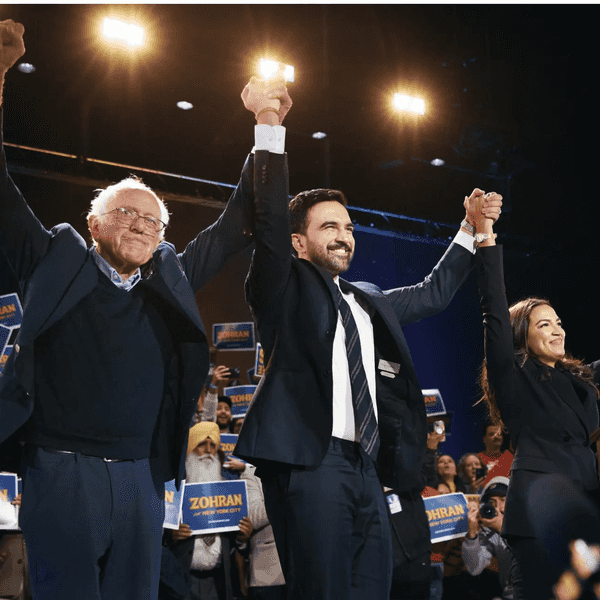
New York City Mayor-elect Zohran Mamdani
One of the silliest preelection narratives around the New York City mayoral race was the supposed fear that a victory by democratic socialist Zohran Mamdani would spark an exodus of the city’s wealthy elite.
Billionaire investor and all-around Trumpian asshole Bill Ackman was typical of the lot, crying on X this past summer that both businesses and wealthy people had “already started making arrangements for the exits.” Barstool Sports founder Dave Portnoy, another obnoxious MAGA bro, claimed he might move his company out of New York “because I hate the guy.” His grand plan? Move to New Jersey. Equally high-tax, equally liberal. So … yeah.
Grocery mogul John Catsimatidis, who runs the Gristedes and D’Agostino Supermarkets chains, also threatened a move to New Jersey.
“We may consider closing our supermarkets and selling the business,” the 76-year-old entrepreneur told The Free Press. “We have other businesses. Thank God, we have other businesses.”
And it wasn’t just right-wingers. NewYork’s Democratic Gov. Kathy Hochul fretted about a potential Mamdani win because “I don’t want to lose any more people to Palm Beach. We’ve lost enough.”
Experts have been rolling their eyes at these threats all along.
“There is tax-induced mobility. It’s not non-existent but it’s very small,” Quentin Parinello, a tax expert, told ABC News.In major cities like New York, people value the arts, business opportunities, and the ability to hire talent. ABC’s reporting includes several researchers making the same point: While the wealthy love to complain and posture, they rarely follow through.
“Movement of rich people on the basis of tax differentials is relatively small,” said Northwestern University professor Jeffrey Winters. “It’s very common for them to threaten to move. The risk is grossly overstated.”
Think of everyone who said they’d move to Canada if Donald Trump won the presidential race. Talking is always easier than acting.
Still, the New York Post—being the right-wing tabloid it is—keeps trying to manifest this fantasy.
“‘Mamdani effect’: Miami realtors report 166% spike in inquiries from wealthy NYC residents,” blared a recent headline. But even the story immediately contradicts itself: “Manhattan luxury contracts actually jumped 25% in November… a surge some brokers said shows ‘there is no Mamdani effect.’” The only sources in the Post story claiming otherwise are Miami real estate agents who make money convincing New Yorkers to relocate.
And since the Post didn’t bother providing raw numbers, that “166% spike” could literally mean inquiries went from three to eight. A phone call isn’t a move. Honestly, the number is almost certainly made up.As for real numbers?
“Sales of luxury homes in Manhattan jumped in November, countering fears that the election of Zohran Mamdani as mayor would drive out wealthy residents,” Bloomberg reported. Buyers signed contracts on 176 homes priced at $4 million or more, up 25 percent from the month prior. These included condos purchased for around $24 million each. Not exactly a market in retreat.
There’s an even more telling statistic: Luxury housing inventory is down.
“Inventory actually fell 16 percent in the luxury market from October 2024 to October 2025, indicating that there is no flood of New Yorkers selling their homes and leaving town,” reported USA Today. If the wealthy were running for the exits, inventory would be skyrocketing. Instead, it’s tightening.
Of course no one likes paying higher taxes. Even those of us who believe in a functional government don’t enjoy writing the check every year—we just see it as the cost of a society that works. So it’s natural for wealthy New Yorkers to gripe about an extra two percent tax on incomes over $1 million (which likely won’t happen anyway; Albany leaders seem uninterested in backing Mamdani’s campaign proposal).
But the reality is that New York City’s wealthy residents get a lot for what they pay. Another Bloomberg story features David Bahnsen, a Republican wealth manager who sits on the board of the conservative National Review. He despises the city’s liberal politics, calling them “contemptible.” And while he frets about potential tax increases, he isn’t going anywhere.Bahnsen openly acknowledges that New York gives him advantages he can’t get anywhere else—the clients, the talent, the nonstop drive of the place. What really hooks him, he says, is “the energy of the city, the ambition.” That spark doesn’t exist in the low-tax red-state enclaves conservatives claim are paradise. Certainly not in Florida.
And he’s not just staying—he’s thriving: morning jogs in Central Park, Broadway shows, dining out every night, walking 40,000 steps on a typical weekend, even working out of offices that are steps from the Museum of Modern Art. Sounds pretty good, actually.
And that’s really the dynamic at play: The wealthy stay because New York gives them a lifestyle they can’t replicate anywhere else. The city’s appeal isn’t just the museums, the theater, the restaurants, or the talent pool—though all of that matters. It’s the density of opportunity. It’s being in a place where the most ambitious people in the world cross paths every single day. Deals get made over coffee because everyone who is anyone is already there. Entire industries cluster on the same few blocks. For people with the freedom and means to take advantage of all that, the cost of living is simply baked into the price of admission.
For them, the taxes aren’t a deterrent because New York City delivers something tangible in return: world-class public amenities, a creative and economic ecosystem unmatched anywhere in the country, and an energy that makes even the most stubborn conservative wealth manager admit the city is worth it. As Bahnsen said—perhaps after skimming another anti-tax screed in the magazine he bankrolls—Central Park alone is “worth the cost of living in the city.”
And he’s right. Where else can you step out of a skyscraper, walk a few blocks, and be surrounded by 843 acres of urban wilderness, all maintained and accessible because New Yorkers collectively pay for it? And nothing Mamdani has proposed threatens any of that.But New York City’s price of admission isn’t the same for everyone. The amenities, energy, and opportunity that make New York irresistible to the wealthy don’t trickle down—they get walled off by the city’s staggering cost of housing, child care, transit, and daily life. If you can’t buy your way into the version of the Big Apple that’s thriving, you get squeezed into the version that isn’t. And eventually, you get pushed out entirely.
Northwestern University professor Winters highlights that point.
“We are worried about the outflow of the very wealthiest people… when in fact the biggest outflow of people is among those who can’t afford even the basics of staying there,” he warned.
The rich aren’t fleeing Mamdani’s New York. But the working class and the struggling middle class? They’ve been leaving for years because the price of admission keeps rising while their access to the city’s prosperity keeps shrinking.
That is the energy Mamdani tapped into. That’s what led to his resounding victory.
And that is New York City’s real challenge in the years ahead.
- New York Republicans Beg Trump To Deport Zohran Mamdani ›
- No Fear: Why New Yorkers Are About To Elect A Democratic Socialist Mayor ›
- Going Nowhere, Or Learning To Ignore The Plutocrats Who Cried 'Commie!' ›
- Socialist Mamdani Sweeps Aside Billionaire-Backed Cuomo In New York Primary ›
- 'Earthquake': 2025 Democratic Sweep Elects First Woman Mayor In Miami - National Memo ›
- If Trump Cancels Midterms, The Tech Billionaires Wouldn't Even Blink - National Memo ›
- California's Tax On Billionaires May Work -- But There's A Better Solution - National Memo ›
- Fearmongers Fail: Major Crimes Hit Record Low In Mamdani's New York - National Memo ›
- Despised Team Owner Dolan Shouldn't Make Knicks Visit Trump's White House - National Memo ›