There's A Profound Lesson In Purdue Pharma's Implosion, But Will We Learn?
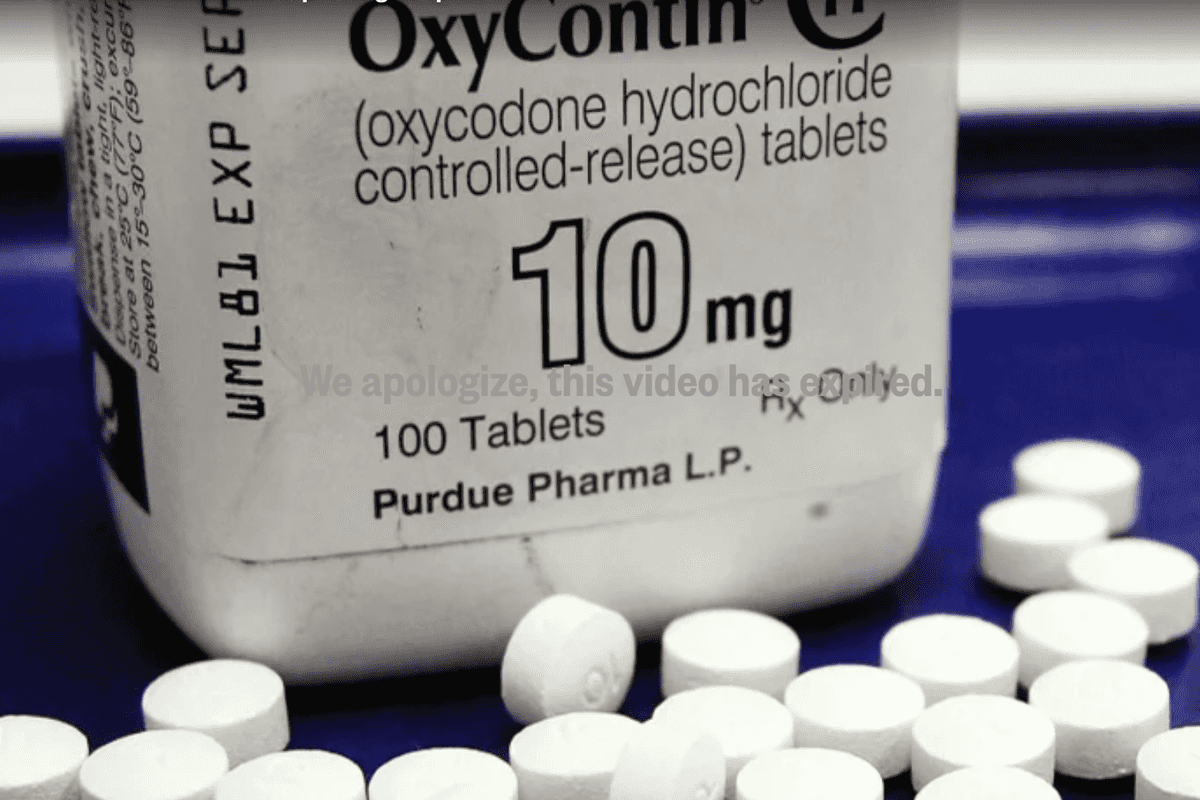
Oxycontin pills
Suppose there was an explosion at an oil refinery that killed hundreds of people. Presumably, there would be a major investigation to determine what went wrong and how to prevent a similar accident in the future.
But it’s different with the pharmaceutical industry. Purdue Pharma, one of the drug companies at the center of the opioid crisis, was finally put to death as the result of lawsuits over its pushing of OxyContin. The allegation is that the company misrepresented the addictiveness of the drug in order to have it promoted more widely.
The money paid to the families of victims cannot compensate for the deaths of loved ones, but the other part of the story is that no one is asking how to make sure this sort of disaster does not happen again. And unlike the example I gave of an exploding oil refinery, we are talking about the death of hundreds of thousands, not hundreds.
The key issue is the incentives the government gave to Purdue Pharma and the other opioid manufacturers. It gave them patent monopolies that allowed them to markup the price of their drugs by several thousand percent, selling them at prices that were twenty or thirty times what they would sell for in a free market.
This sort of extraordinary profit gives drug companies an incentive to lie about the safety and effectiveness of their drugs, which they do routinely. The consequences generally are not as disastrous as with the opioid crisis, but patients often end up taking drugs that are not best for them because drug companies misrepresented their products to researchers, doctors, and the public at large.
To be clear, companies always have incentive to sell their products widely. That’s the point of advertising. But they won’t go to the same length to sell a plastic cup or shovel, where they expect a profit of a dollar or two, as they will in selling a prescription on a patent-protected drug, where the profits can be hundreds or even thousands of dollars.
Patent monopolies are also the reason for high drug prices. Drugs are almost always cheap to manufacture and distribute; the reason they are expensive is the monopolies the government gives the drug companies.
This is the whole story of people struggling to raise the thousands or tens of thousands needed to pay for drugs to treat cancer or other serious illnesses. If these drugs were sold in a free market, paying twenty or thirty dollars for a prescription would not be a big deal, except for low-income people. And the government could afford to pick up the tab for them.
And patent monopolies are a big part of the story in redistributing income upward. While this is true in many areas, it is very striking in the case of pharmaceuticals. We will pay around $750 billion this year for drugs that would cost in the range of $150 billion in a free market. The savings of $600 billion comes to almost $5,000 per household.
That $600 billion is money that goes to drug companies and their shareholders. It has created many billionaires. In the case of the Covid vaccine alone, we created 5 Moderna billionaires.
Patent monopolies do provide an incentive for developing new drugs, but there are other ways to provide this incentive, most obviously paying people. If that sounds bizarre, the government already spends around $50 billion a year supporting biomedical research through the National Institutes of Health and other government agencies. We would have to triple or quadruple this sum to replace the patent-supported research, but we would still come out way ahead and wouldn’t have to worry about drug companies lying to us to push their drugs.
It is more than a bit bizarre that we have a large contingent of progressives focused on ways to tax back the wealth of the very rich, but who have no interest in restructuring the system in ways that don’t make them so rich in the first place. Just as a refinery explosion would be expected to lead to a renewed focus on industry safety, we might have expected the opioid crisis to lead to new thinking on the way we finance the development of drugs. But that has not been the case.
There is a bill put forward by Michigan Democratic Rep. Rashida Tlaib that would be a big step in this direction, but unfortunately it has gotten little attention to date. It would be great if something positive could come out of the opioid crisis, but that can’t happen until people at least can see the issue clearly. For whatever reason, that has not yet happened.
Dean Baker is a senior economist at the Center for Economic and Policy Research and the author of the 2016 book Rigged: How Globalization and the Rules of the Modern Economy Were Structured to Make the Rich Richer. Please consider subscribing to his Substack.
- Plunder: How Trump's Greed Is Turning America Toward Piracy And Autocracy ›
- Will Corrupt Regime And Falling Innovation Signal The End Of American Greatness? ›
- Dumping American Stock: Why Doing Good May Also Be Doing Well ›
- Trump Lawsuits: Of All His Grifts, They Are By Far The Most Efficient ›
- Bankruptcy judge clears $7.4bn Purdue Pharma settlement ›
- Purdue Pharma, Sacklers reach new $7.4 billion opioid settlement : NPR ›
- Many Opioid Victims Will Be Shut Out of Purdue’s $7.4B Bankruptcy Settlement — ProPublica ›
- Supreme Court Overrules Purdue Pharma Opioid Settlement, Rejects Immunity for Sacklers ›
- OxyContin maker Purdue Pharma set to dissolve after judge approves its criminal sentence - OPB ›