Right-Wing Media Sparring Over Iran War's Impact On Fertilizer And Food Supply
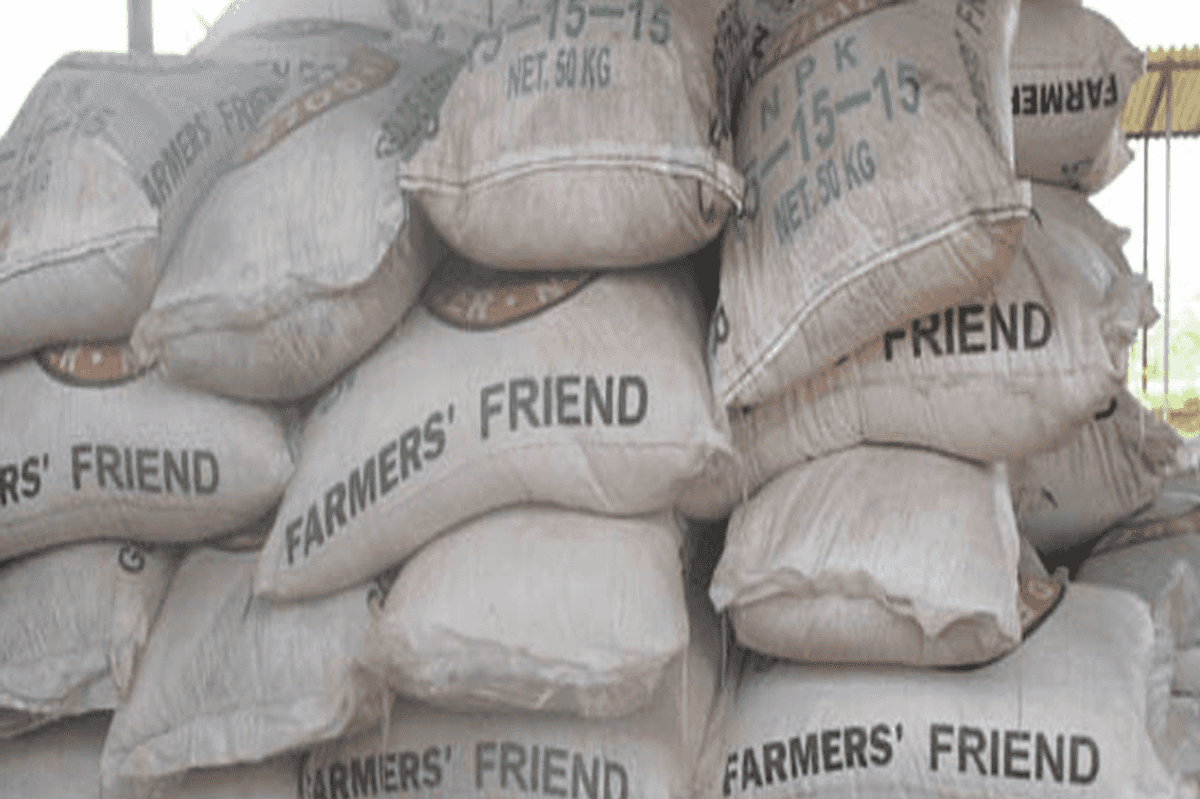
The U.S.-Israeli war on Iran — which has been largely but not entirely supported by major right-wing media outlets — is threatening to upend not just international oil markets but also world food production, with fertilizer costs soaring just as farmers in the global north enter the spring planting season.
Some figures in right-wing media have taken notice, alarmed that a spike in domestic food prices could be disastrous for President Donald Trump and Republicans in the fall midterms. Globally, poor countries are set to take the brunt of the disruption, which could trigger famine or political instability in especially vulnerable areas.
The right-wing comments on the potential looming food crisis largely break along two lines. The first is pro-war voices, mostly at Fox and Newsmax, who have argued that Iran’s closing of the Strait of Hormuz (the primary driver of the fertilizer shortages) is proof that the United States and Israel should escalate the war to ensure that Tehran can’t close the passage in the future. On the other side are figures like Tucker Carlson and Megyn Kelly who have been more critical of the war effort and now cite rising prices as one reason to oppose it.
According to the United Nations, about one-third of global seaborne fertilizer passes through the Strait of Hormuz. Gulf countries export about half of the world’s urea and 30 percent of its ammonia, common fertilizers that farmers need for their crops. CNBC reported on March 25 that “urea and ammonia prices had surged by around 50 percent and 20 percent, respectively, since the war began,” citing a note from Oxford Economics’ Alpine Macro. Rising costs for fertilizer and oil could both cause food prices to rise, especially in poor countries, but will almost certainly affect costs in the U.S. as well. There are second-order concerns as well, as low crop yields for corn and other staples used to feed livestock could make beef much more expensive in the coming months.
Pro-war pundits use fertilizer crisis to justify escalation against Iran
Several figures in right-wing media have opportunistically latched onto the looming food crisis as another reason to escalate the war.
In a March 26 segment focused on the rising costs from the war, Fox News host Brian Kilmeade — a major booster of Trump’s campaign against Iran — praised the president’s decision to send additional troops to the region, possibly to prepare for a ground invasion.
“We’ve got the 82nd Airborne coming in, two Marine ships coming in, 5,000 Marines — it looks like we’re looking to ratchet this up to bring this thing to a rapid close and get those prices down,” Kilmeade said.
He then listed the commodities that normally flow through the Strait of Hormuz, including fertilizer, to underline the importance of Trump taking further military action.
“If we just look at how susceptible we are in the Strait of Hormuz, look at what they do in terms of the amount of oil that passes through there, helium that passes through there, fertilizer that passes through there,” Kilmeade said.
Fox News host Jesse Watters argued on March 24 that “Iran is blocking the flow of fertilizer — a lot of people are going to go hungry if the regime doesn't surrender.”
Watters has previously advocated for regime collapse in Iran and for the United States to seize Kharg Island, a key node for Iranian oil exports. (Notably, Watters failed to mention the Strait of Hormuz prior to the launch of the U.S.-Israeli war with Iran.)
Fox Business host Taylor Riggs appeared on the March 19 episode of Fox & Friends to discuss the effect of the strait’s closing on global commodity prices despite high levels of domestic energy production. “That’s where things get tricky,” Riggs said. “We do import diesel, for example, or things like nitrogen for fertilizer. We’re in spring planting season."
Riggs’ solution to the commodity price spike is to “get the snake off of that head of Iran,” which would “make the world a safer place” and urged viewers to “let that play out and see what oil prices do from there — it is painful in the meantime though, I recognize that."
Retired Air Force brigadier general and Newsmax contributor Blaine Holt argued on the March 23 episode of Rob Schmitt Tonight that the Iranian government “has to go away, because if we let the regime survive they’ll be revenge-minded mullahs for the rest of our lives."
Later in the segment, he explained that “the straits right now is the most important thing, and it's not just the oil markets, it's actually the food, Rob. It's the sulfur and the urea that needs to get out of the straits so that in planting season, which is right now, they can make that fertilizer."
“We’re setting up for a fall famine if we can’t bust those straits open really, really soon,” Holt added. “This is extremely important, and if the Marines need to secure Kharg [Island], well then they’ll do just that."
Some in right-wing media, however, have claimed that rising costs are proof the war was a bad idea from the outset.
Right-wing media voices warn of higher costs from the war
Fox News has been a primary driver of Trump’s war against Iran even prior to its launch, but there have been some lonely voices on the network warning the conflict could make life in the United States more unaffordable.
On the March 21 edition of Saturday in America, John Byrnes of the Concerned Veterans for America argued that “there’s issues with affordability, oil prices and fertilizer prices, the stock market tanked yesterday,” suggesting Trump “would have done himself a bigger favor if he'd made a better case for the need for imminence” in attacking Iran.
Nominally liberal Fox host Harold Ford similarly raised the issue of affordability and paired it with muted criticism of the Trump administration’s ability to “convey” what “a win looks like” to allied countries.
“How do we police the Strait of Hormuz?” Ford asked on March 19. “We shouldn't kid ourselves. The reason this is as big of an issue as it is is because gas prices are up, it’s because food prices are up."
Outside of Fox, Iran war critics Megyn Kelly and Tucker Carlson have raised similar alarms.
During the March 19 episode of his podcast, Carlson laid the blame for the war squarely at Israel’s feet and argued that the conflict isn’t in the interests of people in the United States.
“Increasingly as the days pass, it becomes obvious to everyone why it's not good for us,” Carlson said. “And if you don't believe that then check the prices of food and fuel and everything you buy, because everything you buy is dependent on the price of energy and the production of fertilizer, both of which are affected almost immediately by the closure of the Straits of Hormuz."
During her March 13 episode with pundit Saagar Enjeti, Kelly discussed the ripple effects of the war on rising oil costs, especially diesel fuel. “It’s not only going to hurt people who drive cars with diesel engines, it’s going to hurt the entire world economy,” Kelly said.
Enjeti expanded on the point, describing how fertilizer shortages could have global ramifications. “Fertilizer is skyrocketing in price,” he said. “A significant portion of it actually comes through the Straits of Hormuz — already our own farmers are reporting spot price increases of up to 70%. All of us know that’s going to be passed on to us with food."
“What's actually even more tragic is that what that means is that while Americans and First World countries will just have to pay a lot for food, Third World countries will actually go without," Enjeti continued. “We could have a full-blown crop shortage if this war continues going on.”
The Trump administration now appears to be on the verge of staging some sort of ground operation on Iranian territory, and opening the Strait or Hormuz looks to be a key objective. Iran could respond by mining the strait, a process that CBS News reports is already in its early stages. Iran might also ask the Houthis in Yemen, who until now have stayed on the sidelines, to close the Bab al-Mandeb Strait, another critical waterway for global shipping.
Should any of those situations come to pass, the divisions over the war that are already present in right-wing media are likely to intensify — and those calling for escalation will almost certainly double down and demand Trump push for further military confrontation with Iran.
Reprinted with permission from Media Matters