Tag: alexandria ocasio-cortez
Ayanna Pressley

Why Did Ayanna Presley Issue An Unhelpful (And Inaccurate) Attack On The Democrats?

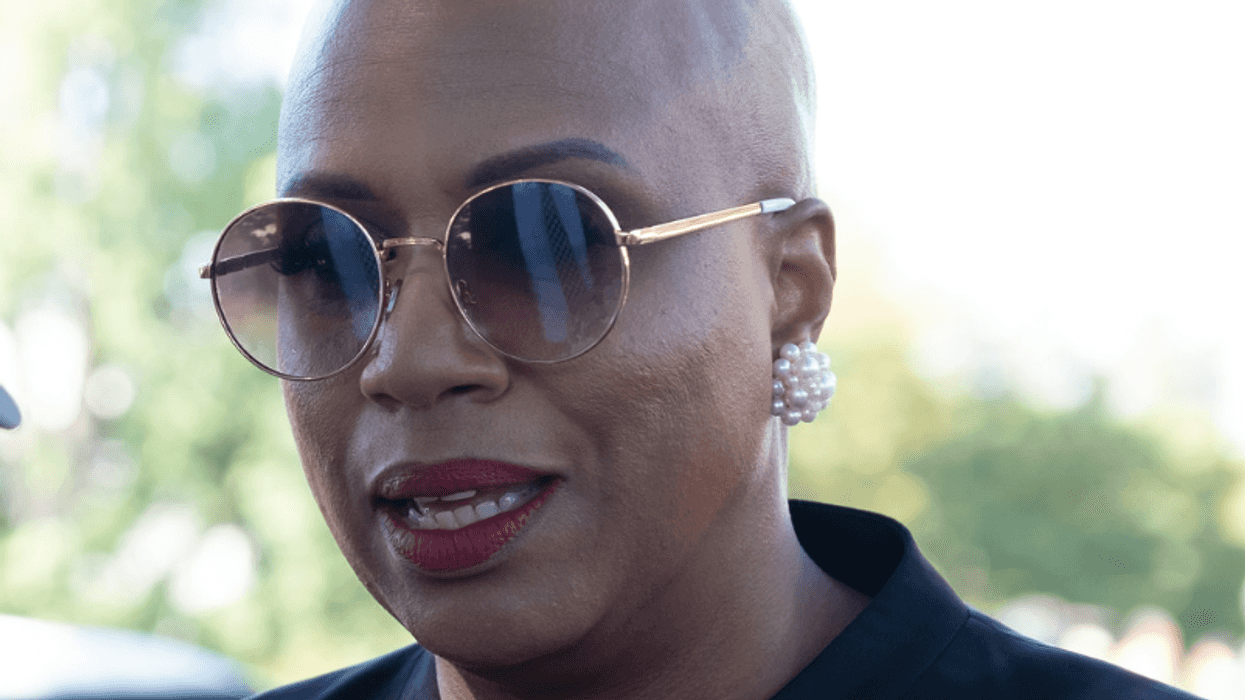
Rep. Ayanna Pressley (D-MA) decided to inflame intraparty tensions last Friday by accusing the Democratic establishment of failing to invest equitably in progressive and diverse candidates, including Michigan Senate nominee Abdul El-Sayed.

“The DSCC should take note because it is shameful that we are not seeing an equitable investment in progressive and diverse candidates like Abdul El-Sayed, like [Democratic Florida Senate candidate] Angie Nixon, like [Democratic Mississippi Senate candidate] Scott Colom,” Pressley said, while praising Rep. Alexandria Ocasio-Cortez (D-NY) for donating $1 million to El-Sayed’s campaign.

It was great that AOC donated that money from her ample fundraising stash, currently sitting at $37 million. Pressley could’ve praised her generosity, and that would’ve been wonderful. Heck, she could’ve celebrated the remarkable full-party press to get El-Sayed elected.

Instead, she chose to manufacture an ideological grievance that doesn’t square with the extraordinary resources the party is already committing to his election.

To wit:

  • Is there any more establishment figure than Sen. Chuck Schumer? His Senate Majority PAC has spent $35M and counting on the race.
  • DSCC Chair Sen. Kirsten Gillibrand has been unequivocal in her support, saying, “He’s a great candidate. He’s going to win, and we are all united.”
  • I’ve seen reports of $14 million to $16 million in DSCC spending commitments, though I haven’t been able to independently verify those figures. But top Democratic strategist Guy Cecil says the DSCC and Senate Majority PAC are spending more than $50 million combined in Michigan.
  • Such hated “establishment” figures as former Vice President Kamala Harris and former President Barack Obama are campaigning for him.

That’s a remarkable amount of institutional support for a candidate who defeated the party’s more moderate wing in the primary. So what, exactly, is Pressley complaining about?

Yes, it would be nice to see more money spent in places like Florida and Mississippi, where Democrats have outside opportunities to expand the Senate map. But those are reach seats, and every dollar spent defending Michigan is a dollar unavailable elsewhere.Furthermore, El-Sayed is one of only two Democratic Senate nominees—the other being Maine’s Troy Jackson, whose race has been a clusterfuck—underperforming the cycle’s strong Democratic lean.

According to Nate Silver’s models, El-Sayed leads Republican Mike Rogers 48.5% to 45.1%. Meanwhile, Democratic gubernatorial nominee Jocelyn Benson enjoys a much more comfortable 50.4% to 42.4% advantage.

That’s a significant gap between two Democrats running statewide in the same political environment.There are undoubtedly multiple factors at play, but it’s hardly unreasonable to wonder whether El-Sayed’s leftist politics are somewhat out of sync with a closely divided purple state that President Donald Trump won two out of the last three presidential elections.

Perhaps a more mainstream nominee would have required less spending to defend this seat, freeing up resources for those opportunities in Florida and Mississippi. Or maybe Michigan was always fated to be a fierce and closely fought battleground, no matter who the nominee. We can’t know for sure, nor does it matter much now. The state’s Democratic primary electorate made their choice, and the Democratic establishment has opened its wallet and is working hard to elect that choice.

And that’s what makes Pressley’s attack so frustrating.

El-Sayed would be a great addition to the Senate. Almost everyone in our party is united in working to make that happen.

If El-Sayed comes up short in November, it won’t be because the Democratic establishment refused to invest time, money, and political capital in his campaign.

It would be nice if Pressley acknowledged that.

Markos Moulitsas is founder and editor of the blogging website Daily Kos and author of three books.

Reprinted with permission from Daily Kos

Does 'Democratic Socialism' Help Candidates To Win Elections? Numbers Say No

Does 'Democratic Socialism' Help Candidates To Win Elections? Numbers Say No

Democratic socialism appears to be ascendant in the Democratic Party, but when it comes to winning elections, is that a good thing?

There is perhaps no more fraught intraparty discussion at the moment. Democratic socialists have notched some impressive primary victories, dethroning an incumbent or two along the way. But most of these have been in dark blue areas, like New York City, or in states like Florida, where Angie Nixon, a democratic socialist who won a Democratic Senate primary this past Tuesday, has very little chance of being elected in November.

In other words, democratic socialists’ victories have typically been in primaries that are not expected to lead to a competitive general election. In contrast, the movement’s most visible recent loss—Francesca Hong in Wisconsin’s Democratic gubernatorial primary—came in a swing state that will be competitive.

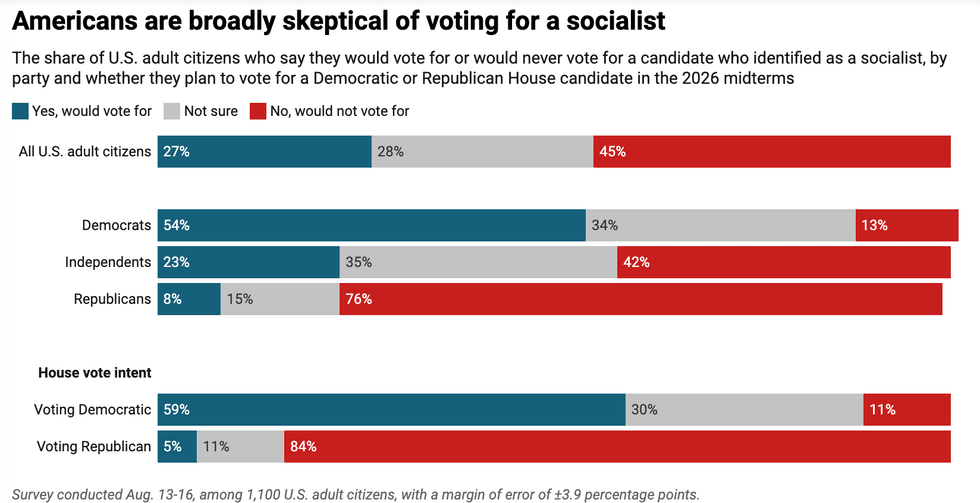
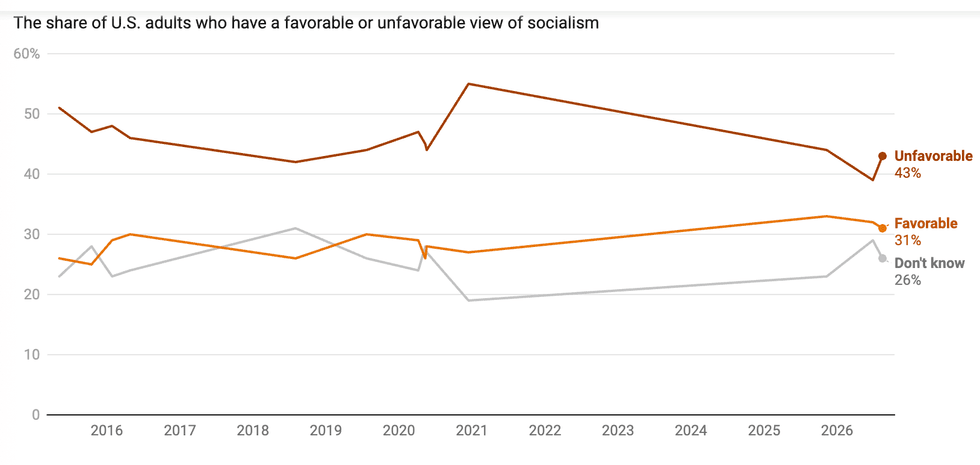
In high-stakes races, Democratic primary voters seem aware of jeopardy posed by the public’s largely negative view of socialism. Across 13 polls conducted by YouGov since 2015, the share of Americans who have a favorable view of socialism has never risen above 33 percent. Across every survey, more Americans have held a negative view of it than a positive one.

Americans Generally Don't Like Socialism

As a result, 45 percent of Americans say they would never vote for a self-identified socialist, according to a new YouGov survey. That includes 42 percent of independents and 11 percent of Americans who plan to vote for a Democratic House candidate this year. (For what it’s worth, the numbers don’t change much if pollsters ask about a “democratic socialist” candidate or a “socialist” one.)

Of course, Republicans indiscriminately brand even moderate Democrats as socialists. But does a political candidate embracing the term defuse that line of attack—Yeah, I’m a socialist, so what?—or does it hurt them to pick up a label much of the electorate deems toxic?

Chart by Andrew Mangan, created with DatawrapperSource: YouGov

:

The thing is, Americans aren’t always aware a politician is a socialist—even when they call themselves one. Relatively small majorities of Americans correctly identify Vermont Sen. Bernie Sanders (61 percent), New York City Mayor Zohran Mamdani (54 percent), and New York Rep. Alexandria Ocasio-Cortez (51 percent) as democratic socialists, per the new YouGov poll. And roughly a third incorrectly deem former Vice President Kamala Harris (37 percent) and former President Barack Obama (34 percent) to be socialists.

We shouldn’t take too much away from any one race, but Hong’s surprising loss in Wisconsin suggests the “democratic socialist” label weighed her down more than lifted her up. Democratic voters there were indeed worried that a socialist nominee—especially one with deeply unpopular views on Thanksgiving and the police—would help Republicans win the governor’s mansion this fall.

Likewise, William Lawrence, the Democratic nominee in Michigan’s Seventh District, left the Democratic Socialists of America days ahead of his August 4 primary, clearly aware that the affiliation would not help him in a district that President Donald Trump won by one percentage point in 2024. As Lawerence told CNN after winning the primary, he let his membership lapse “because I want to make clear my constituents that I’m here to represent them.”

Clearly, the label poses some jeopardy to the party in competitive races. And in this way, it’s possible that the rise of democratic socialists may slightly worsen the public’s already negative view of the Democratic Party, but there’s also reason to believe their ascendence doesn’t hurt other, non-socialist Democratic candidates all that much. A recent New York Times/Siena University poll found that while 53 percent of voters in battleground Senate races saw the national Democratic Party as “too far to the left,” only 35 percent saw the Democratic Senate candidate in their state the same way.

Of course, both shares might be smaller if democratic socialism were a lower-profile element of the Democratic Party. But that’s hard, if not impossible, to sort out at the moment.There is also a twist to all of this: Voters may be averse to self-branded socialists and “socialism” as a concept, but they often don’t feel the same way about socialist policies.

Sixty-five percent of Americans consider free universal healthcare to be a socialist policy, according to the new YouGov poll. And roughly the same share (64%) also support the concept of Medicare for All, per a recent YouGov/Economist poll.

The same is true for tuition-free college. Sixty-one percent of Americans see it as socialist—and yet 55% support the idea of the government covering the cost of tuition for all college students, according to a YouGov/Economist poll from earlier this summer.Other policies that Americans consider socialist also enjoy broad public support: 69% of Americans support providing more government subsidies for housing, 62% support rent control, and 68% support having publicly owned utility companies.

It seems that even when Americans peg a policy as socialist, that doesn’t stop them from wanting it.

The bigger question is, will the public eventually embrace socialist politicians like it’s embracing many of their policies? We may find out in two short years.

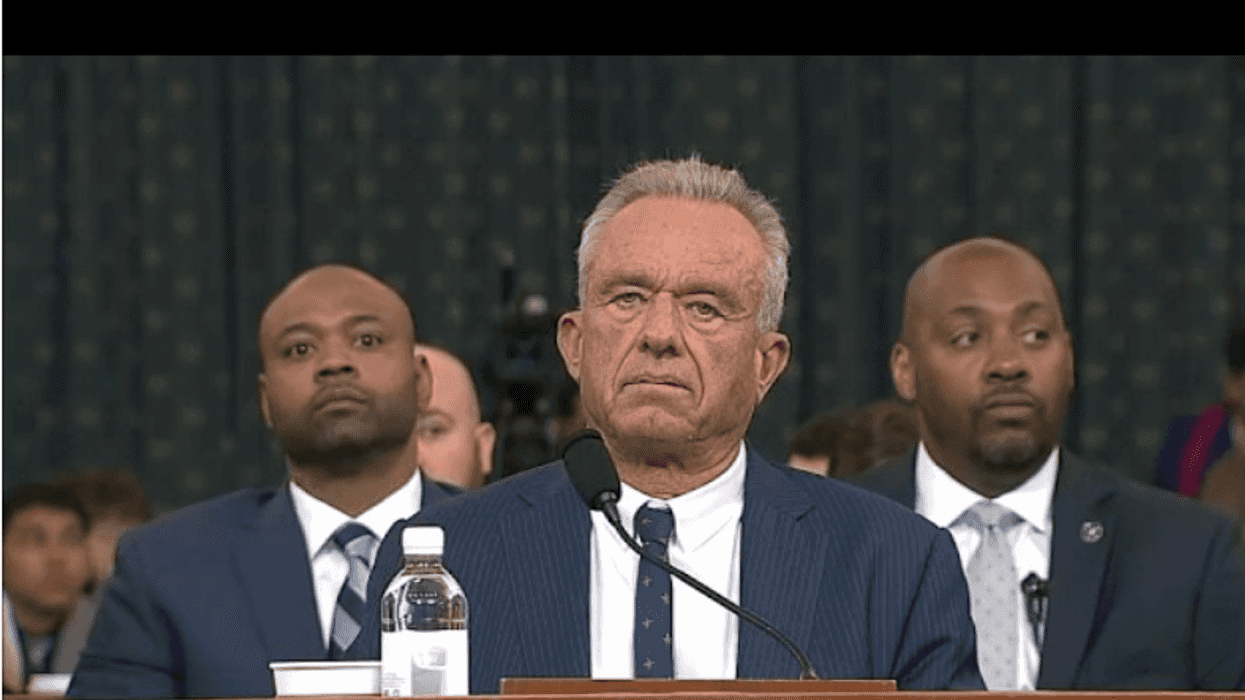
Watch AOC And Democrats Strip The Bark Off RFK Jr. In House Hearing

Watch AOC And Democrats Strip The Bark Off RFK Jr. In House Hearing

House Democrats dragged Health and Human Services Secretary Robert F. Kennedy Jr. during a hearing on Tuesday in which he attempted to defend President Donald Trump’s latest budget proposal. While last week’s hearings focused on RFK Jr.’s failures to protect public health, this round focused on his complicity in the corruption of the administration’s health care policies.

Democratic Rep. Alexandria Ocasio-Cortez of New York led the charge, highlighting the contradiction between Kennedy’s rhetoric and his recent policy decisions—specificially, sending billions to major health insurers he has previously accused of fraud.

“United [Healthcare], CVS, Aetna—they’re defrauding the American public to the tune of $80 billion a year,” Ocasio-Cortez said. “And so I was surprised to see, about two weeks ago, you had decided to give them another $13 billion, and it was used through the mechanism of the MA [Medicare Advantage] reimbursement rates, but I want to know, why did you do that?”

After Kennedy acknowledged concerns about the industry, he offered up a meandering response, which Ocasio-Cortez politely threw back in his face.

“The industry is saying that they’re increasing these costs, but the industry is defrauding the public. So we know they’re lying,” she responded. “They’re lowering their reimbursement rates, they’re increasing denial. So we know that these folks are lying. We know that they’re bad actors. And if I’m hearing you correctly, we are giving them more money because they’re saying that they need it?”

Things didn’t get easier when Rep. Greg Landsman, Democrat of Ohio, pressed the health secretary on the nearly $1 trillion in health care cuts the Trump administration has used to give tax breaks to the wealthy.

“You had mentioned the rural-hospital piece—$50 billion, largest investment—but there’s a reason why the Senate Republicans asked for a $50 billion rural-hospital investment,” Landsman said. “[It’s] because of the nearly trillion-dollar cut to Medicaid.”

“There’s no cut in Medicaid,” Kennedy replied. “Look at the CBO [Congressional Budget Office] report from this week.”

“Then just do the math with me,” Landsman responded. “That means that they added $3.5 trillion to the deficit. You gotta find a trillion dollars. You either added a trillion dollars to the deficit, or you cut Medicaid by a trillion dollars.”

Finally, Democratic Rep. Jake Auchincloss of Massachusetts took off the kid gloves, focusing on the Food and Drug Administration’s National Priority Voucher Program—an initiative widely criticized for being vulnerable to corruption. Auchincloss pointed to the recent controversy involving podcaster Joe Rogan, who boasted about texting the president in order to get the FDA to fast-track research for the psychedelic ibogaine.

“Secretary, this flies in the face of your stated commitment to putting science over politics,” Auchincloss said. “We are literally seeing politics put over science.”

“Do you want to grandstand, or do you want an answer?” Kennedy interrupted.

“I want safety and efficacy to be the standards by which psychedelics are approved, not the president’s attempt to shore up support from his base for a disastrous war in Iran,” Auchincloss shot back.
Like all of Trump’s unqualified cabinet members, Kennedy’s glaring inadequacies continue to haunt Americans.

Reprinted with permission from Daily Kos

How Fox News Is Hiding Trump's $200 Billion Iran War Funding Request

How Fox News Is Hiding Trump's $200 Billion Iran War Funding Request

Fox News isn’t bothering to sell the staggering cost of the ill-conceived war President Donald Trump launched against Iran.

The Trumpist propaganda network provided roughly 11 minutes of coverage through Thursday to the administration’s request for an eye-popping $200 billion in supplementary spending from Congress — and less than 1 minute of discussion on its prime-time block, according to a Media Matters review.

The Washington Post reported Wednesday night that the Pentagon “has asked the White House to approve a more than $200 billion request to Congress to fund the war in Iran,” a figure subsequently confirmed by other news outlets. Defense Secretary Pete Hegseth did not dispute the number at a Thursday morning press conference, though he indicated it “could move.”

The request “is expected to face a rocky path in Congress,” according to The Wall Street Journal, as lawmakers say “they want to see more details of the proposal amid concerns that the U.S. could become embroiled in another costly long-term war,” and even Republicans are expressing skepticism about its odds of passage.

But so far, Trump’s Fox propaganda wing isn’t engaged in trying to make the case for the funds.

The $200 billion figure has not been mentioned on the programs of Fox stars Laura Ingraham, Sean Hannity, or Greg Gutfeld, or on the panel show The Five.

On Jesse Watters Primetime, guest host Charlie Hurt spent 44 seconds of Thursday’s show accusing Democrats who refuse to support the spending of siding with Iran and against the troops.

“The Pentagon is asking for more money to eliminate the bad guys, and it's not just for Iran,” Hurt claimed. “Trump says it's for keeping the whole world safe. And guess whose side the Democrats are on?”

He then aired a video of a reporter telling Rep. Alexandra Ocasio-Cortez (D-NY), “They're asking for $200 billion now for this war,” and Ocasio-Cortez responding that she won’t support the request because “this administration has plunged the American people into a war that we don't want to be in.”

“Soldiers are risking their lives to do what every president of either party, going back decades, said had to be done,” Hurt responded. “The Democrats don't want to give them the money to finish the job.”

That was the only discussion of the $200 billion war funding figure on Fox’s 8-11 p.m. prime-time block.

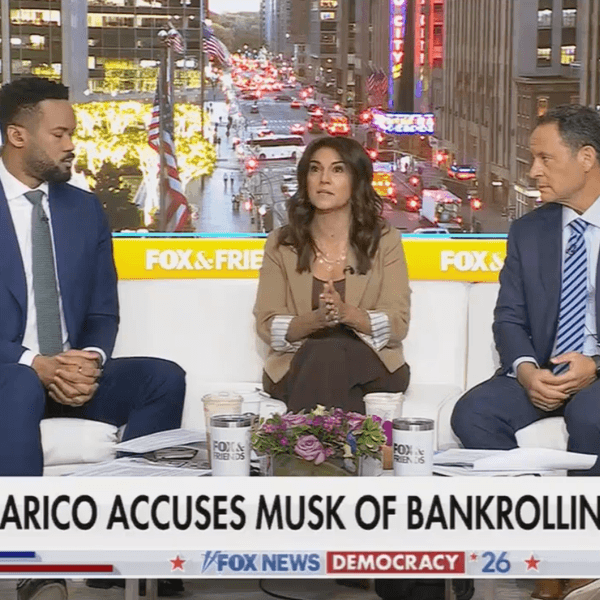
The request for war funding drew only 19 seconds of coverage on Thursday’s edition of the popular morning show Fox & Friends, with co-host Brian Kilmeade noting the $200 billion figure and asking, “Are Democrats gonna look to defund a war again?”

The remainder of the network’s coverage of the figure through Thursday consisted of reports from correspondents on America’s Newsroom and Special Report; a handful of passing mentions; and panel discussions on Special Report and Fox News @ Night.

Such lackluster coverage might suffice to help Trump ram a war spending bill through Congress if the war were popular, the consequences at home limited, and Republicans lawmakers united. But under the present circumstances, the network’s propagandists are going to need to develop some talking points if they hope to pull it across the finish line over the weeks to come.

Reprinted with permission from Media Matters

Shop our Store

Headlines

Editor's Blog

Trending

World